AI integration connects directly to Cority's Equipment Master and LOTO Procedure data objects. The primary workflow begins when a new or updated LOTO procedure is submitted for approval. An AI agent, triggered via a webhook or scheduled job, analyzes the procedure's text and associated equipment tags. It cross-references the listed isolation points (e.g., valves, electrical disconnects) against the official plant equipment hierarchy and P&ID data stored in Cority to identify discrepancies, missing energy sources, or points that have been decommissioned. This automated validation happens before human review, flagging potential issues for the procedure author or EHS coordinator.

Integration
AI Integration for Cority Lockout Tagout
Add AI to Cority's LOTO module to validate procedures against equipment hierarchies, identify energy isolation points, and ensure procedures stay current with plant modifications.
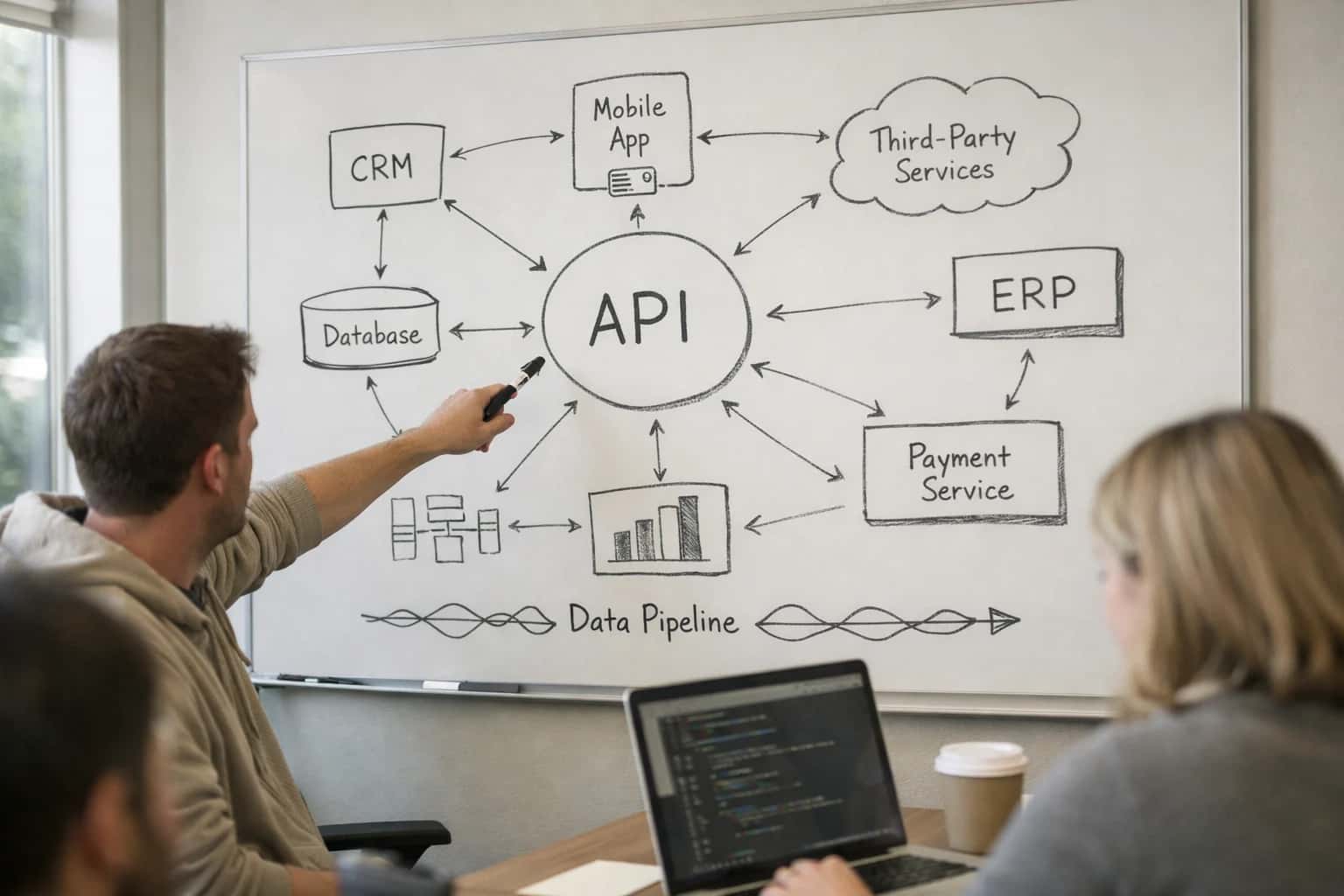
AUTOMATING ENERGY CONTROL VALIDATION AND PROCEDURE MANAGEMENT
Where AI Fits into Cority's Lockout Tagout Workflow
Integrating AI into Cority's Lockout Tagout (LOTO) modules automates the validation of procedures against equipment hierarchies and ensures they remain current with plant modifications.
The second major integration point is within the Management of Change (MOC) workflow. When an MOC for equipment modification is approved and closed in Cority, an AI process automatically scans all active LOTO procedures linked to that equipment or area. It assesses the impact of the change—such as a new valve, relocated panel, or changed energy source—and generates a task for the responsible party to review and update the affected procedures. This creates a closed-loop system where procedural documents are dynamically kept in sync with the as-built environment, a critical factor for audit readiness and frontline safety.
For rollout, this AI layer is deployed as a middleware service that calls Cority's REST APIs to read procedure and equipment data and write back validation results or tasks. Governance is managed through Cority's existing Role-Based Access Control (RBAC); the AI's outputs and suggested changes appear as system-generated comments or tasks within the standard LOTO approval workflow, requiring final human sign-off. This ensures the EHS team maintains oversight while eliminating hours of manual cross-checking and reducing the risk of procedures being outdated the moment they are printed.
AI-READY SURFACES
Key Integration Points in Cority's LOTO Module
AI for Procedure Creation and Review
The LOTO Procedure Library is the primary integration surface. AI can ingest equipment hierarchies, P&IDs, and maintenance histories to draft initial LOTO procedures. The integration validates energy isolation points (electrical, pneumatic, hydraulic, gravitational) against the equipment master data, ensuring no isolation point is missed.
Key API touchpoints include:
- Procedure Object API: For creating, updating, and retrieving LOTO procedure records.
- Equipment API: To fetch asset details, parent/child relationships, and energy sources.
- Document Attachment API: To associate AI-generated risk assessments or validation reports.
An AI agent can be triggered during the procedure approval workflow, acting as a reviewer to flag inconsistencies or suggest clarifications based on historical lockout events.
CORITY LOCKOUT TAGOUT
High-Value AI Use Cases for LOTO
Integrating AI with Cority's Lockout Tagout (LOTO) modules automates procedure validation, enhances equipment data accuracy, and ensures isolation plans remain current with plant changes. These use cases target the critical gap between static procedures and dynamic operational reality.
01
Automated Procedure Validation
AI cross-references new or updated LOTO procedures against the Cority Equipment Hierarchy and Energy Source Master List to flag missing isolation points, incorrect valve tags, or incompatible lock types before procedures are published. This prevents procedural errors from reaching the field.
Hours -> Minutes
Review time
02
Change Impact Analysis for MOC
When a Management of Change (MOC) is logged in Cority for equipment modifications, AI automatically scans all affected LOTO procedures and associated work permits. It generates a risk assessment and task list for procedure reviewers, ensuring safety documentation stays synchronized with physical assets.
Same day
Impact assessment
03
Intelligent Procedure Generation
For new equipment, AI drafts initial LOTO procedures by analyzing equipment manuals, P&ID diagrams, and historical procedures for similar assets within Cority. It structures steps, identifies energy sources, and suggests required PPE, giving LOTO specialists a 80% complete draft to refine.
1 sprint
Development cycle
04
Visual Verification via Image Analysis
Integrates with field photos uploaded to Cority work orders. AI analyzes images of locked-out equipment to verify lock placement, check tag information legibility, and detect non-conformances (e.g., missing locks, incorrect group lockbox use), automating a key part of field audit workflows.
Batch -> Real-time
Compliance check
05
Contractor & Multi-Crew Coordination
AI monitors the Cority Permit to Work and LOTO log to identify complex isolation scenarios involving multiple crews or contractors. It suggests sequencing for applying/removing locks, flags potential conflicts in energy control, and automates notification workflows to all affected parties.
Reduce manual triage
Coordinator effort
06
Predictive LOTO Audit Scheduling
Analyzes historical LOTO audit findings, procedure update frequency, and MOC activity within Cority to predict high-risk equipment or sites. It automatically recommends and schedules priority audits for the EHS team, optimizing limited audit resources towards the areas of greatest procedural drift.
PRODUCTION PATTERNS
Example AI-Augmented LOTO Workflows
These workflows illustrate how AI agents can integrate directly with Cority's LOTO module, acting on data objects like `Equipment`, `LOTO Procedure`, `Energy Isolation Point`, and `Work Permit`. Each pattern connects a business trigger to a concrete system action, reducing manual validation and keeping procedures current.
Trigger: A change order is approved in the connected Maintenance or Engineering system (e.g., SAP PM, Maximo) indicating equipment modification.
AI Agent Action:
- Queries Cority's
Equipmenthierarchy API using the modified equipment tag/ID. - Retrieves all associated
LOTO Proceduresand theirEnergy Isolation Pointrecords. - Uses an LLM to analyze the change order description against the procedure steps. The model checks for:
- New or de-energized energy sources not listed.
- Changes to isolation point locations or types.
- Obsolete steps due to removed components.
- Generates a structured review summary flagging specific sections of the procedure that may require update.
System Update: The summary and a link to the change order are posted as a Review Task on the LOTO procedure in Cority, assigned to the responsible EHS engineer. The procedure status is set to "Pending Review - Plant Modification."
HOW AI INTEGRATES WITH CORITY'S LOTO MODULES
Implementation Architecture: Data Flow & Guardrails
A production-ready AI integration for Cority Lockout Tagout connects to equipment hierarchies, procedure libraries, and work order data to validate isolation plans and keep them current.
The integration architecture is built around Cority's core LOTO data objects: Equipment Records, Energy Isolation Points, LOTO Procedures, and Work Permits. An AI agent, deployed as a secure microservice, listens for events via Cority's API or webhooks—such as a new procedure draft, a work permit creation, or an equipment modification. The agent retrieves the relevant procedure text, equipment hierarchy, and historical lockout data, then uses a configured LLM to perform validation tasks like cross-referencing isolation points against the equipment's documented energy sources or flagging procedures that reference decommissioned assets.
For ongoing governance, all AI-generated validations and suggestions are logged as System Notes within the corresponding Cority record, creating a full audit trail. Critical recommendations, such as identifying a missing isolation point for a high-energy piece of equipment, can be configured to trigger a Mandatory Review Task assigned to a qualified safety engineer before a procedure is approved. The AI service itself operates under strict role-based access controls (RBAC), mirroring Cority's permissions, and only processes data necessary for the specific validation task, never retaining it post-analysis. This setup ensures the AI acts as a copilot, enhancing human review without bypassing established approval workflows.
Rollout typically follows a phased approach: starting with a pilot on non-critical equipment procedures to tune prompts and build trust, then expanding to cover high-risk assets and integrating with the change management (Management of Change) module. The final architecture enables proactive compliance, where AI automatically reviews new plant modification requests in Cority, identifies affected LOTO procedures, and flags them for update—turning a manual, after-the-fact checklist into an integrated, preventive control loop.
CORITY LOCKOUT TAGOUT
Code & Payload Examples
AI-Driven Procedure Review
When a new or updated Lockout/Tagout (LOTO) procedure is submitted in Cority, an AI agent can be triggered via webhook to validate it against the plant's equipment hierarchy and energy source master data. This ensures isolation points are correctly identified and match the current asset register.
Example JSON Payload for Validation Request:
json{ "event": "loto_procedure_submitted", "procedure_id": "LOTO-2024-045", "equipment_codes": ["PUMP-101A", "VALVE-203B", "MCC-5"], "procedure_text": "Isolate pump PUMP-101A by closing valve V-203B and de-energizing at MCC-5...", "submitted_by": "jsmith", "timestamp": "2024-05-15T14:30:00Z" }
The AI service processes this payload, cross-references the equipment codes with the Cority asset API, and returns a validation report flagging mismatches or missing energy sources.
AI-ASSISTED LOCKOUT TAGOUT
Realistic Time Savings & Operational Impact
How AI integration reduces administrative burden and improves accuracy in Cority LOTO workflows, from procedure creation to validation against plant modifications.
| Workflow Stage | Before AI | After AI | Key Impact |
|---|---|---|---|
Procedure Creation & Validation | Manual cross-reference of equipment hierarchies, P&IDs, and isolation points | AI-assisted validation against asset register and energy source library | Reduces validation time from hours to minutes, minimizes human error in point identification |
Impact of Plant Modification (MOC) Review | Manual review of each MOC to assess LOTO impact; often reactive | AI automatically flags relevant MOCs and suggests procedure updates | Shifts from reactive to proactive compliance; ensures procedures are current |
Annual Procedure Review & Recertification | Time-intensive manual audit of all procedures by qualified personnel | AI pre-screens procedures, highlighting changes and potential gaps for human review | Focuses expert time on high-risk exceptions; accelerates recertification cycle |
Contractor & New Employee Training | Generic LOTO training; site-specific procedures reviewed manually | AI generates role and equipment-specific briefing summaries from approved procedures | Improves comprehension and relevance; reduces onboarding time for safe work |
Audit & Inspection Preparation | Manual compilation of procedure binders, verification logs, and training records | AI auto-generates audit-ready packages with version histories and compliance evidence | Cuts prep time from days to hours; provides defensible, organized documentation |
Incident Investigation Support | Manual search for related LOTO procedures during incident root cause analysis | AI instantly surfaces relevant procedures, isolation points, and training records | Accelerates RCA by providing immediate context; helps identify procedural gaps |
IMPLEMENTING AI IN A SAFETY-CRITICAL ENVIRONMENT
Governance, Security & Phased Rollout
Deploying AI for Lockout Tagout requires a deliberate, risk-aware approach that prioritizes procedural integrity and human oversight.
AI integration for Cority LOTO is implemented as a recommendation and validation layer, not an autonomous control system. The core architecture involves:
- API-first integration: AI services connect to Cority's
Equipment,Procedures, andEnergy Isolation Pointobjects via REST APIs to read existing data and write suggestions back as draft updates or review tasks. - Human-in-the-loop workflows: Every AI-generated suggestion—such as a new isolation point or a procedure update—creates a task in a designated review queue (e.g.,
LOTO_AI_Review) for a qualified safety engineer or maintenance planner to approve, modify, or reject. - Audit trail enforcement: All AI interactions are logged as system notes on the relevant Cority records, capturing the prompt, model response, reviewer identity, and final action, creating a defensible audit trail for compliance and internal audits.
A phased rollout minimizes operational risk and builds organizational trust:
- Phase 1: Read-Only Analysis (Weeks 1-4): The AI system runs in a parallel, non-production environment, analyzing historical LOTO procedures against equipment hierarchies and change logs. It generates "what-if" reports highlighting potential gaps or outdated steps without making any changes in Cority, allowing the team to calibrate its accuracy.
- Phase 2: Assisted Drafting in Sandbox (Weeks 5-8): For new procedures or major revisions, engineers use a dedicated sandbox interface where the AI suggests a complete draft procedure based on equipment tags, P&IDs, and similar historical LOTOs. All outputs remain in the sandbox until manually vetted and copied into the live Cority environment by the responsible party.
- Phase 3: Proactive Alerts & Change Tracking (Ongoing): The AI monitors Cority's
Management of Change(MOC) andWork Ordermodules for plant modifications. When a change potentially impacts an existing LOTO, it automatically generates a review task for the procedure owner, linking the MOC record and suggesting specific updates, ensuring procedures stay current with plant state.
Governance is anchored in role-based access control (RBAC) and clear accountability. Access to approve AI suggestions is restricted to roles like LOTO Coordinator or Area Safety Lead. A quarterly review of the AI's suggestion log—tracking approval rates, common rejection reasons, and any post-approval incidents—is conducted to continuously refine prompts and ensure the tool aligns with site-specific safety rules. This controlled, audit-friendly approach ensures AI augments the stringent safety culture around LOTO without introducing ungoverned risk.
Enabling Efficiency, Speed & Accuracy
Intelligent Analysis, Decision & Execution
We build AI systems for teams that need search across company data, workflow automation across tools, or AI features inside products and internal software.
Talk to Us
Search across company data
Give teams answers from docs, tickets, runbooks, and product data with sources and permissions.
Useful when people spend too long searching or get different answers from different systems.
Enterprise searchRAGPermissions
Read more
Automate internal workflows
Use AI to route work, draft outputs, trigger actions, and keep approvals and logs in place.
Useful when repetitive work moves across multiple tools and teams.
AI agentsWorkflow automationGovernance
Read more
Add AI to products and internal tools
Build assistants, guided actions, or decision support into the software your team or customers already use.
Useful when AI needs to be part of the product, not a separate tool.
AI integrationDecision supportModel routing
Read moreAI INTEGRATION FOR CORITY LOCKOUT TAGOUT
Frequently Asked Questions
Practical questions about implementing AI to validate LOTO procedures, identify isolation points, and ensure procedures stay current with plant changes.
When a new LOTO procedure is drafted in Cority, an AI agent is triggered via webhook. It performs a multi-step validation:
- Extracts Equipment IDs: The agent parses the procedure text to identify all referenced equipment tags (e.g.,
P-101A,V-202). - Queries the Hierarchy: It calls Cority's Equipment API to fetch the parent/child relationships and energy sources for each tag, building a system map.
- Checks for Gaps: Using a reasoning model, it compares the isolation points listed in the procedure against the energy sources in the hierarchy. It flags potential gaps (e.g., "Procedure lists isolation of electrical source for pump P-101A but does not address the hydraulic accumulator V-202 upstream").
- Returns Validation Report: The agent posts a structured JSON payload back to a custom object in Cority, creating a review task for the LOTO author with specific findings and recommendations.

About the author
Prasad Kumkar
CEO & MD, Inference Systems
Prasad Kumkar is the CEO & MD of Inference Systems and writes about AI systems architecture, LLM infrastructure, model serving, evaluation, and production deployment. Over 5+ years, he has worked across computer vision models, L5 autonomous vehicle systems, and LLM research, with a focus on taking complex AI ideas into real-world engineering systems.
His work and writing cover AI systems, large language models, AI agents, multimodal systems, autonomous systems, inference optimization, RAG, evaluation, and production AI engineering.
LinkedIn
Limited slotsGet a Free AI Consultation
Partnered with leading AI, data, and software stack.





How We Work
Custom AI workflows for your Business
One-fit-all AI don't work for modern businesses. At Inferensys, we aim to understand your business & custom requirements; which we use to define most efficient agentic workflows, the data, and the tools for your business.
01
Review the use case
We understand the task, the users, and where AI can actually help.
Read more02
Pick the right approach
We define what needs search, automation, or product integration.
Read more03
Build the first useful version
We implement the part that proves the value first.
Read more04
Improve from there
We add the checks and visibility needed to keep it useful.
Read moreThe first call is a practical review of your use case and the right next step.
Talk to Us