AI integration connects directly to EcoOnline's core data objects for hearing conservation: personal noise dosimetry records, area monitoring surveys, and audiometric test results. Instead of manual trend spotting, an AI agent continuously analyzes this data to identify high-risk patterns, such as specific tasks, equipment, or workgroups consistently exceeding action levels. This analysis surfaces within the same EcoOnline dashboards and reports safety managers already use, flagging anomalies and recommending targeted controls—like administrative changes or engineering reviews—before overexposures occur.

Integration
AI Integration for EcoOnline Noise Monitoring
Add AI to EcoOnline's noise monitoring modules to automate exposure analysis, predict protection gaps, and schedule audiometric testing—reducing manual review from hours to minutes.
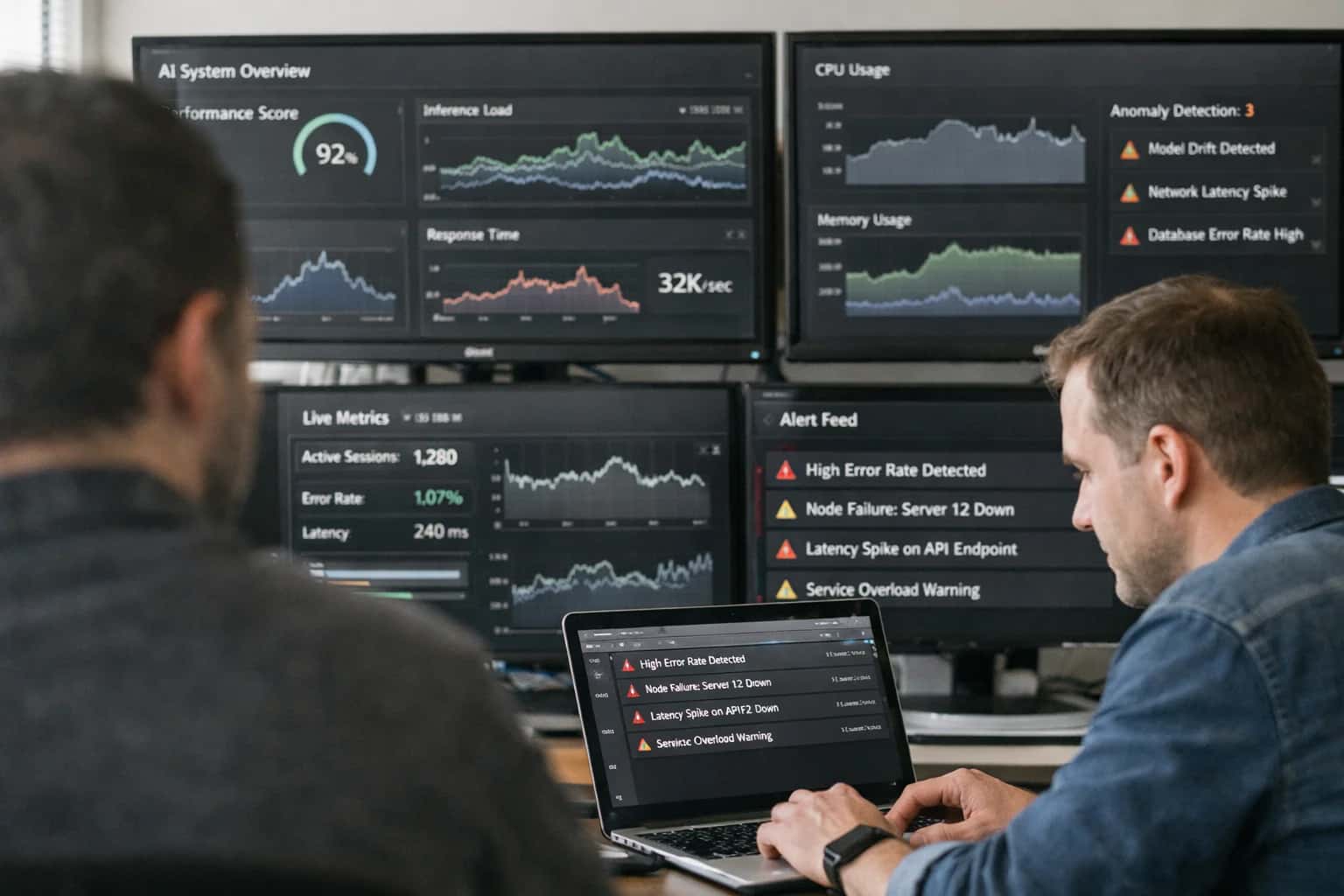
FROM REACTIVE MONITORING TO PREDICTIVE PROTECTION
Where AI Fits into EcoOnline's Hearing Conservation Workflow
Integrating AI into EcoOnline's noise monitoring modules transforms static data into actionable insights for proactive hearing conservation.
The implementation typically involves a secure API layer that pulls anonymized, time-series data from EcoOnline's Noise Monitoring and Health Surveillance modules. An AI model processes this data to predict hearing protection effectiveness by correlating dosimetry readings with known PPE attenuation ratings and compliance audit findings. For example, if a workgroup's dosimetry shows exposure variability inconsistent with proper protection use, the system can automatically trigger a refresher training task in EcoOnline's Training Management module or schedule a fit-testing session, creating a closed-loop, preventive workflow.
Rollout focuses on augmenting, not replacing, the industrial hygienist's expertise. Initial pilots often target a single facility or high-risk department. Governance is critical: all AI-generated recommendations (e.g., to schedule an audiometric test) are presented as suggestions within an EcoOnline Action Item, requiring a human reviewer's approval before assignment. This maintains accountability and allows for local nuance. The final output is a more dynamic, predictive hearing conservation program where EcoOnline doesn't just store data—it uses AI to interpret it and drive the next best action, helping move compliance from a calendar-based activity to a continuously managed risk.
NOISE MONITORING
Key EcoOnline Modules and Data Surfaces for AI Integration
Personal Dosimetry Data
This module stores individual employee noise exposure data, typically collected via wearable dosimeters. It's the primary data surface for AI-driven personal risk assessment.
Key Data Fields for AI:
- Time-weighted average (TWA) exposure levels (dB)
- Peak noise levels and durations
- Employee ID, job title, department, and work location
- Task codes or activity descriptions linked to exposure periods
- Sampling dates and shift patterns
AI Integration Points: AI models can analyze this granular data to:
- Identify High-Risk Tasks: Cluster exposure data by activity code to pinpoint which specific tasks (e.g., 'compressor maintenance', 'metal cutting') consistently exceed action levels.
- Predict Individual Exposure: Forecast an employee's 8-hour TWA based on their scheduled tasks for the day, enabling proactive interventions.
- Validate Hearing Protection Effectiveness: Compare dosimetry results against the assumed protection rating of issued PPE to flag potential 'real-world' protection failures.
ECOONLINE INTEGRATION PATTERNS
High-Value AI Use Cases for Noise Monitoring
Integrating AI with EcoOnline's noise monitoring modules transforms raw dosimetry and area data into actionable intelligence, automating compliance workflows and enabling proactive hearing conservation.
01
Automated Exposure Task Identification
AI analyzes personal dosimetry data logs against work order or shift schedules to pinpoint specific tasks, equipment, or locations causing peak noise exposures. This moves analysis from manual log review to automated correlation, enabling targeted engineering controls.
Batch -> Targeted
Analysis shift
02
Predictive Hearing Protection Effectiveness
Models combine dosimetry results, assigned Hearing Protection Device (HPD) types, and manufacturer attenuation ratings to predict real-world protection levels. Flags employees with potential under-protection based on actual exposure patterns, not just assumptions.
Proactive Alerts
Risk reduction
03
Intelligent Audiometric Testing Scheduling
AI reviews employee exposure histories, previous audiogram results, and regulatory thresholds (like OSHA's standard threshold shift) to automatically generate and prioritize testing schedules within EcoOnline. Ensures compliance and focuses clinical resources on highest-risk cases.
Same day
Schedule updates
04
Area Monitoring Trend Analysis & Alerting
Continuously analyzes data from fixed area monitors to identify abnormal noise patterns, time-of-day trends, and potential equipment failures. Automatically generates alerts in EcoOnline for EHS teams when thresholds are approached, not just exceeded.
Real-time
Anomaly detection
05
Compliance Report Automation
AI aggregates and validates noise exposure data across personnel, locations, and time periods to auto-populate regulatory reports (e.g., OSHA 300 logs, hearing conservation program summaries). Reduces manual data consolidation and audit preparation time significantly.
Hours -> Minutes
Report generation
06
Noise Control Recommendation Engine
Based on identified high-exposure tasks and equipment, AI cross-references a knowledge base of engineering controls (barriers, mufflers, dampeners) to suggest specific, actionable noise reduction measures. Outputs can be linked directly to EcoOnline's action tracking or CAPA modules.
1 sprint
Project scoping
PRACTICAL IMPLEMENTATION PATTERNS
Example AI-Powered Workflows for EcoOnline Noise Monitoring
These workflows demonstrate how AI can be integrated into EcoOnline's noise monitoring modules to automate analysis, predict risk, and drive proactive safety actions. Each pattern connects to specific EcoOnline data objects and surfaces.
Trigger: A new batch of personal noise dosimetry data is uploaded to EcoOnline via its API or a scheduled import from area monitors.
Context/Data Pulled: The AI agent retrieves the last 30 days of noise exposure data for the specific employee or location, along with work schedule data and historical audiometric test results from EcoOnline's occupational health module.
Model/Agent Action: A time-series analysis model identifies statistically significant upward trends in exposure levels, even if individual readings remain below the action level. It correlates spikes with specific job codes or tasks logged in the system.
System Update/Next Step: The agent creates a Proactive Alert record in EcoOnline, tagged to the relevant supervisor and EHS coordinator. It auto-populates a narrative summary (e.g., "Trending increase detected for Welder role in Bay 3; review task rotation") and suggests a follow-up task: "Conduct task-specific noise assessment within 7 days."
Human Review Point: The alert is routed via EcoOnline's workflow engine for supervisor acknowledgment and EHS review before any automated task assignment.
PRODUCTION-READY INTEGRATION
Implementation Architecture: Data Flow, APIs, and Guardrails
A secure, event-driven architecture to inject AI insights directly into EcoOnline's noise monitoring workflows.
The integration connects at two primary layers: the data ingestion API for personal dosimetry and area monitoring results, and the workflow automation engine for task creation and scheduling. We establish a secure service-to-service connection using OAuth 2.0, where our inference service acts as a middleware layer. Raw decibel readings, task metadata, and employee identifiers are streamed via EcoOnline's REST APIs or webhooks into a dedicated processing queue. This queue feeds a vector-enabled data pipeline that contextualizes the noise data with historical audiometric test results (from EcoOnline's health surveillance module) and equipment/task codes to build a rich profile for analysis.
Our core AI models—trained for task classification, exposure prediction, and protection factor analysis—process this enriched data. The outputs are structured payloads containing specific recommendations: high_risk_task_identified, predicted_hearing_protection_effectiveness_score, or audiometric_test_schedule_alert. These payloads trigger automated actions back in EcoOnline via its Automation Rules or direct API calls. For example, a high-risk task finding can auto-generate a Corrective Action in the associated module, assigning it to the site supervisor. A test schedule alert can create a calendar event in the Occupational Health schedule, populated with the list of affected employees pulled from the relevant exposure group.
Critical guardrails are implemented at multiple points. All PHI is pseudonymized before model processing. A human-in-the-loop approval step is configured for any automated task that modifies core records (like scheduling a medical test). Every AI-generated insight is logged with a full audit trail in our system, linking back to the source EcoOnline record ID, the model version used, and the confidence score. Rollout follows a phased approach: starting with a single-site pilot in 'insights-only' mode, where recommendations are surfaced in a custom dashboard widget without taking automated action, before progressing to full workflow automation.
ECOONLINE NOISE MONITORING
Code and Payload Examples for Common Integration Patterns
Ingesting and Structuring Raw Dosimeter Data
Integrating AI with EcoOnline's noise monitoring starts with programmatically ingesting raw data from personal noise dosimeters (e.g., from vendors like 3M, Cirrus, Casella). This pattern involves fetching CSV or JSON exports from cloud-connected devices, mapping readings to employee IDs and tasks, and pushing structured records into EcoOnline's exposure monitoring modules via its REST API.
A typical payload includes timestamps, A-weighted sound levels (LAeq), peak levels, and task codes. AI pre-processes this data to flag invalid readings (e.g., dropped devices) and calculate daily noise doses (percent exposure). This creates a clean, queryable dataset for downstream analysis.
python# Example: Transform raw dosimeter data for EcoOnline API import pandas as pd def transform_dosimeter_data(raw_csv_path, employee_map): df = pd.read_csv(raw_csv_path) # Clean and map data df['employee_id'] = df['DeviceID'].map(employee_map) df['task_code'] = df['Location'].apply(assign_task_from_gps) df['exposure_percent'] = df['LAeq'].apply(calculate_dose) # Structure payload for EcoOnline Exposure API payload = { "records": df[['timestamp', 'employee_id', 'task_code', 'LAeq', 'Lpeak', 'exposure_percent']].to_dict('records') } return payload
AI-ENHANCED NOISE MONITORING WORKFLOWS
Realistic Time Savings and Operational Impact
This table illustrates the operational impact of integrating AI into EcoOnline's noise monitoring workflows, focusing on time savings, data quality, and proactive intervention.
| Workflow / Task | Before AI Integration | After AI Integration | Notes & Implementation Nuance |
|---|---|---|---|
Dosimetry Data Review & Alerting | Manual weekly review of exposure reports; reactive alerts after thresholds are exceeded. | Automated daily analysis with predictive alerts for likely exceedances 1-2 days in advance. | AI models correlate noise data with shift schedules and task codes to predict high-exposure periods. |
Hearing Protection Effectiveness Validation | Annual review of audiometric results to spot trends; manual correlation with PPE records. | Quarterly automated analysis linking dosimetry spikes to specific PPE types and wear-time compliance. | AI cross-references noise data with PPE issue logs and training records to validate real-world protection factors. |
Audiometric Test Scheduling | Manual scheduling based on regulatory cycles (e.g., annual/biannual) or after an incident. | Dynamic, risk-based scheduling triggered by AI-identified exposure trends or inadequate protection. | Integration with HRIS for employee data; schedules prioritize high-risk employees, optimizing clinic time. |
Noisy Task Identification | Periodic manual analysis of job codes and employee interviews to identify high-noise tasks. | Continuous, automated task identification by analyzing dosimetry data tagged with work order or activity codes. | AI clusters exposure patterns to pinpoint specific tasks, equipment, or locations contributing most to noise dose. |
Report Generation for Compliance | Manual compilation of data from multiple sources into monthly/quarterly compliance reports (4-8 hours per report). | AI-assisted draft generation with automated data pulls, trend summaries, and exception highlighting (1-2 hours for review). | Reports include AI-generated narratives explaining trends and recommending control measures, requiring supervisor sign-off. |
Root Cause Analysis for High-Exposure Events | Reactive investigation after threshold exceedance, relying on employee recall and manual log review. | Proactive analysis with AI-suggested probable causes (e.g., missing barrier, altered procedure, PPE failure) based on correlated data. | AI presents a ranked list of likely contributing factors from maintenance logs, observation reports, and shift notes. |
Corrective Action Workflow Initiation | Manual creation of corrective actions (CAPAs) in EcoOnline after management review. | AI-recommended corrective actions (e.g., engineering control request, retraining) auto-populated into EcoOnline's action tracking module. | Actions are suggested based on historical effectiveness; a human manager must approve and assign before workflow begins. |
ARCHITECTING FOR PRODUCTION
Governance, Data Handling, and Phased Rollout
A production-ready AI integration for EcoOnline noise monitoring requires careful planning around data security, model governance, and a phased rollout to manage risk and demonstrate value.
The integration architecture typically connects to EcoOnline's Noise Monitoring and Health Surveillance modules via secure API calls, processing two primary data streams: personal dosimetry records (e.g., individual noise exposure over time) and area monitoring logs (e.g., task-based or location-based sound level measurements). A dedicated service layer ingests this data, applies AI models for pattern detection and prediction, and writes structured insights—such as noisy_task_identified, predicted_hearing_protection_effectiveness_score, or audiometric_test_recommendation—back to custom objects or comment fields within the relevant worker or monitoring records. All data flows are encrypted in transit and at rest, with API credentials and model keys managed in a secure secrets vault, never hard-coded.
Governance is critical for regulated EHS data. We implement role-based access controls (RBAC) so that only authorized personnel (e.g., Industrial Hygienists, Site EHS Managers) can view AI-generated insights and recommendations. Every AI-generated output is logged with an audit trail that includes the source data timestamp, model version, and confidence score. For high-stakes recommendations—like scheduling an off-cycle audiometric test—the system can be configured to require human-in-the-loop approval before creating a task in EcoOnline's action tracking system. This ensures the AI acts as a copilot, not an autonomous agent, maintaining professional oversight.
A phased rollout minimizes disruption and builds trust. Phase 1 (Pilot): Connect AI to historical, anonymized data for a single site to validate model accuracy in identifying noisy tasks and predicting protection effectiveness. Outputs are reviewed in a separate dashboard, not written back to EcoOnline. Phase 2 (Limited Production): For 2-3 volunteer sites, enable read/write integration for a single, high-value workflow—such as automated task categorization—with all outputs flagged as 'AI-Assisted' for review. Phase 3 (Scaled Deployment): After refining models and workflows, roll out predictive hearing protection scoring and test scheduling automation across sites, with continuous monitoring of model performance and user feedback loops integrated into EcoOnline's standard reporting.
Enabling Efficiency, Speed & Accuracy
Intelligent Analysis, Decision & Execution
We build AI systems for teams that need search across company data, workflow automation across tools, or AI features inside products and internal software.
Talk to Us
Search across company data
Give teams answers from docs, tickets, runbooks, and product data with sources and permissions.
Useful when people spend too long searching or get different answers from different systems.
Enterprise searchRAGPermissions
Read more
Automate internal workflows
Use AI to route work, draft outputs, trigger actions, and keep approvals and logs in place.
Useful when repetitive work moves across multiple tools and teams.
AI agentsWorkflow automationGovernance
Read more
Add AI to products and internal tools
Build assistants, guided actions, or decision support into the software your team or customers already use.
Useful when AI needs to be part of the product, not a separate tool.
AI integrationDecision supportModel routing
Read moreAI FOR HEARING CONSERVATION
Frequently Asked Questions: Technical and Commercial
Practical questions for EHS leaders and technical teams evaluating AI to enhance EcoOnline's noise monitoring and hearing conservation programs.
AI integrates via EcoOnline's APIs to access and analyze structured noise monitoring records. The typical connection points are:
- Data Ingestion: Pull personal dosimetry results (e.g.,
taskName,employeeId,Leq,peakLevel,duration) and area monitoring data from EcoOnline modules likeExposure MonitoringorIndustrial Hygiene. - Context Enrichment: Correlate noise data with work order or job code data from integrated systems (e.g., SAP, Maximo) to understand the noisy task being performed.
- Analysis & Writeback: Process the data using models, then write results back to EcoOnline as:
- New risk assessment records in the
Hazard Identificationmodule. - Recommended audiometric testing dates in the
Health Surveillancecalendar. - Annotated findings on dosimetry reports for review.
- New risk assessment records in the
Key API Objects: MonitoringEvent, EmployeeExposure, HealthSurveillanceSchedule, RiskAssessment.

About the author
Prasad Kumkar
CEO & MD, Inference Systems
Prasad Kumkar is the CEO & MD of Inference Systems and writes about AI systems architecture, LLM infrastructure, model serving, evaluation, and production deployment. Over 5+ years, he has worked across computer vision models, L5 autonomous vehicle systems, and LLM research, with a focus on taking complex AI ideas into real-world engineering systems.
His work and writing cover AI systems, large language models, AI agents, multimodal systems, autonomous systems, inference optimization, RAG, evaluation, and production AI engineering.
LinkedIn
Limited slotsGet a Free AI Consultation
Partnered with leading AI, data, and software stack.





How We Work
Custom AI workflows for your Business
One-fit-all AI don't work for modern businesses. At Inferensys, we aim to understand your business & custom requirements; which we use to define most efficient agentic workflows, the data, and the tools for your business.
01
Review the use case
We understand the task, the users, and where AI can actually help.
Read more02
Pick the right approach
We define what needs search, automation, or product integration.
Read more03
Build the first useful version
We implement the part that proves the value first.
Read more04
Improve from there
We add the checks and visibility needed to keep it useful.
Read moreThe first call is a practical review of your use case and the right next step.
Talk to Us