Cloud Threat Intelligence (CTI) workflows in platforms like Prisma Cloud, Wiz, and Lacework typically involve ingesting external threat feeds (e.g., MITRE ATT&CK, vendor advisories, OSINT) and manually correlating them with internal cloud asset inventories and vulnerability scans. AI integration automates this correlation at scale. An AI agent can continuously map Indicators of Compromise (IOCs), novel attack patterns, and TTPs from feeds to your specific cloud environment—checking for vulnerable software versions in your container registries, exposed storage buckets mentioned in threat reports, or IAM roles with permissions matching recent adversary techniques.

Integration
AI Integration for Cloud Threat Intelligence
A technical blueprint for augmenting CNAPP platforms (Wiz, Prisma Cloud, Orca, Lacework) with AI to correlate internal findings with external threat feeds, identify novel attack patterns, and automate IOC prioritization and rule updates.
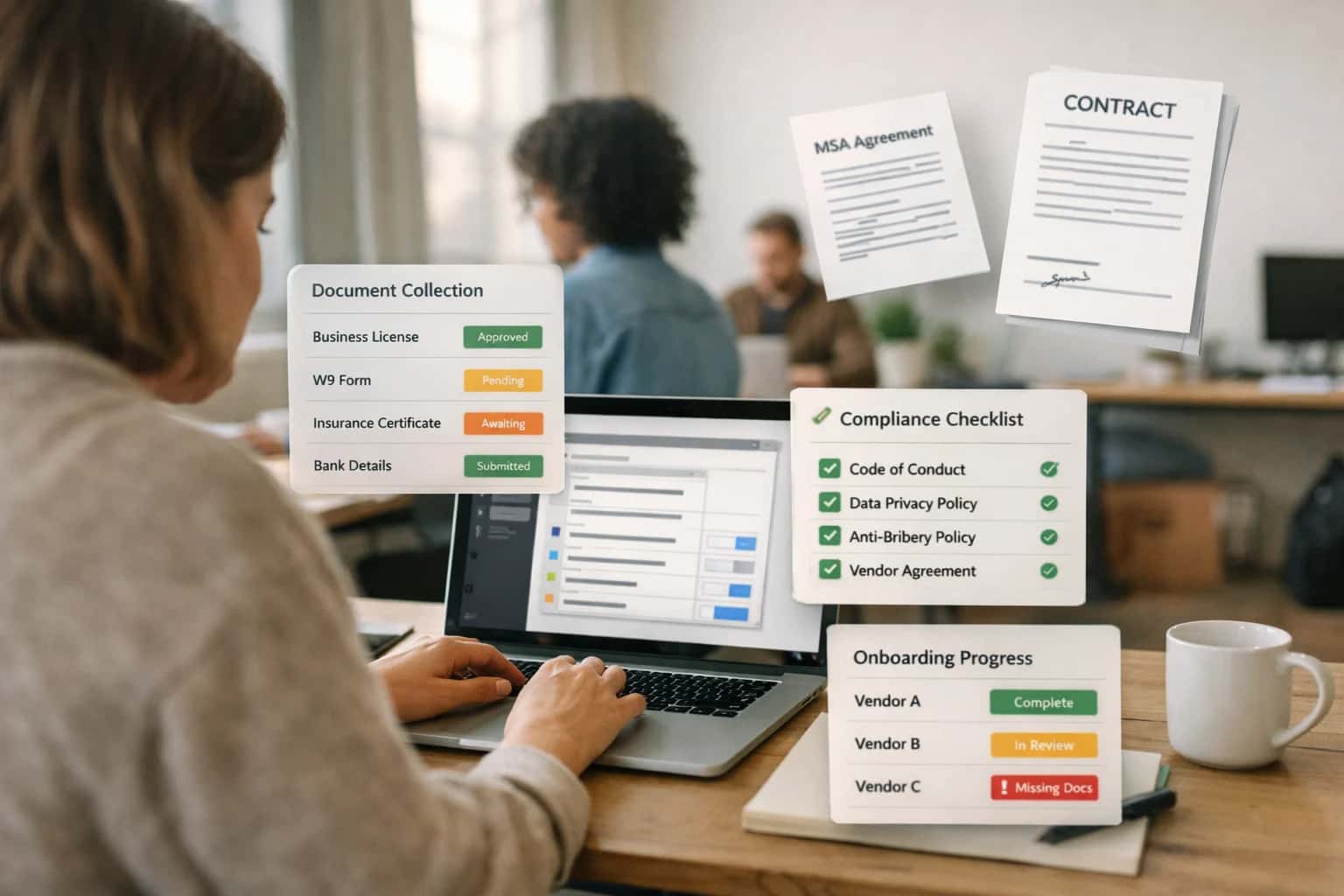
FROM REACTIVE ALERTS TO PROACTIVE DEFENSE
Where AI Fits into Cloud Threat Intelligence Workflows
Integrate AI to correlate CNAPP findings with external threat feeds, transforming isolated alerts into prioritized, actionable intelligence.
The implementation centers on an orchestration layer that sits between your CNAPP's APIs and your threat intelligence sources. This layer uses an LLM to normalize and contextualize disparate data: it parses unstructured threat reports, extracts relevant entities (CVE IDs, suspicious IPs, malware hashes), and queries the CNAPP's asset and vulnerability graph via its REST API. The output is a prioritized list of internal resources at risk, enriched with a plain-language explanation of the threat context and recommended actions—such as updating a security group rule, patching a specific EC2 instance AMI, or revoking a dormant IAM key. This moves analysts from sifting through raw data to reviewing AI-curated cases.
Rollout requires a phased approach, starting with a single high-fidelity threat feed and a specific resource type (e.g., container images). Governance is critical: all AI-generated recommendations should route through an approval workflow or create Jira tickets or ServiceNow incidents for human validation before any automated remediation is applied. This ensures an audit trail and maintains the security team's oversight. The final value is shifting cloud security operations from reacting to yesterday's alerts to proactively hardening defenses based on the evolving threat landscape, reducing exposure windows from days to hours.
WHERE TO CONNECT AI AGENTS AND LLMS
AI Integration Surfaces Across Leading CNAPPs
Alert & Incident Management
This surface covers the high-volume alert streams and incident consoles within CNAPPs like Wiz, Prisma Cloud, and Lacework. AI integration here focuses on triage automation and investigation support.
Key Integration Points:
- Alert Ingest APIs: Stream real-time findings (vulnerabilities, misconfigurations, anomalies) to an AI agent for initial classification.
- Incident/Ticket Objects: Use webhooks to create enriched tickets in the CNAPP's native case management or push to connected ITSM platforms like ServiceNow.
- Context Enrichment: AI agents call CNAPP GraphQL/REST APIs to pull related asset details, user activity logs, and network exposure data to provide root cause context.
Example Workflow: An AI copilot consumes a Critical alert for a publicly exposed S3 bucket. It retrieves the bucket's contents via the CNAPP's data security module, classifies the sensitivity, estimates potential blast radius, and drafts a remediation ticket with a pre-written Terraform fix, reducing triage time from 15 minutes to under 60 seconds.
CNAPP INTEGRATION PATTERNS
High-Value AI Use Cases for Cloud Threat Intel
Move beyond static rules by integrating AI with your CNAPP platform (Wiz, Prisma Cloud, Orca, Lacework) to correlate internal findings with external threat intelligence, prioritize novel risks, and automate detection updates.
01
Threat Feed Correlation & IOC Prioritization
AI agents ingest external threat feeds (e.g., MITRE ATT&CK, vendor advisories, dark web) and correlate IOCs with your CNAPP's asset inventory and vulnerability data. The system ranks IOCs by contextual relevance, suppressing noise for assets you don't own and highlighting critical matches for your cloud environment.
Batch -> Real-time
Threat ingestion
02
Novel Attack Pattern Detection
LLMs analyze aggregated CNAPP findings (misconfigurations, vulnerabilities, network paths) alongside threat intelligence to identify emerging attack chains that wouldn't trigger individual rules. For example, linking a new exploit technique to a vulnerable container image and an over-permissive IAM role in your environment.
1 sprint
Detection lead time
03
Automated Detection Rule Generation
When a high-fidelity novel pattern is identified, an AI workflow drafts a new detection rule in the syntax of your CNAPP (e.g., Wiz Security Graph query, Prisma Cloud policy). The rule is submitted for human review and deployment, closing the loop from intelligence to enforcement.
Hours -> Minutes
Rule drafting
04
Threat-Centric Alert Enrichment
As the CNAPP generates alerts, an AI layer appends relevant threat context. For a critical vulnerability alert, it fetches and summarizes recent exploitation activity, likely attacker tactics, and observed payloads from external intel, giving SOC analysts immediate investigative context.
Same day
Context for triage
05
Predictive Risk Scoring
Beyond CVSS scores, AI models weigh CNAPP findings against real-world threat actor behavior and campaign data. Assets are scored on likelihood of exploitation, generating a dynamic, threat-informed risk priority list for remediation teams, focusing effort where it matters most.
06
Executive & Board Threat Briefings
AI agents periodically query the CNAPP and integrated threat intel to generate narrative reports on the threat landscape specific to your cloud estate. These cover top exposure areas, trending adversary techniques, and business impact analysis, automating a critical CISO workflow.
CORRELATING CNAPP FINDINGS WITH EXTERNAL THREATS
Example AI-Powered Threat Intelligence Workflows
These workflows illustrate how AI agents can connect your CNAPP platform (Wiz, Prisma Cloud, Lacework, Orca) to external threat feeds, internal logs, and ticketing systems to automate the identification, prioritization, and response to emerging cloud threats.
Trigger: A new threat intelligence feed update containing IOCs (IPs, domains, file hashes) is ingested.
Workflow:
- An AI agent receives the raw feed data and uses an LLM to extract, normalize, and contextualize the IOCs.
- The agent queries the CNAPP platform's API (e.g., Wiz's GraphQL API) to search for any cloud resources (VMs, containers, storage buckets) that have communicated with or contain the identified IOCs.
- For each match, the agent pulls additional context: resource owner, environment (prod/dev), exposure level, and associated vulnerabilities.
- Using a scoring prompt, the LLM generates a composite risk score (1-10) and a plain-language summary: "High Risk: Production Kubernetes pod
payment-apiin AWS us-east-1 communicated with malicious C2 domainevil[.]com12 hours ago. Pod is externally exposed and has a critical vulnerability (CVE-2024-12345). Owner: Platform Team." - System Update: The enriched finding and risk score are written back to the CNAPP as a custom issue or sent to the SIEM/SOAR platform as a high-priority alert.
Human Review Point: Alerts with a risk score above a defined threshold (e.g., 8) automatically create a ticket in ServiceNow or Jira for the security team, with the AI-generated summary pre-populated.
FROM THREAT FEED TO ACTIONABLE DETECTION
Implementation Architecture: Data Flow, APIs, and Guardrails
A practical architecture for correlating CNAPP findings with external intelligence using AI to identify novel attack patterns and automate rule updates.
The integration connects to your CNAPP platform's Findings API (e.g., Wiz's /v1/issues, Prisma Cloud's /v2/alert, Lacework's /api/v2/Activities/Events) to stream posture misconfigurations, workload vulnerabilities, and runtime alerts. This raw telemetry is enriched in real-time by pulling from external threat intelligence feeds (e.g., MITRE ATT&CK, vendor advisories, OSINT) and internal configuration management databases (CMDBs). An AI orchestration layer, built on a secure inference platform, processes this combined data stream to perform three core functions: correlate disparate signals into potential attack chains, prioritize indicators of compromise (IOCs) based on your unique cloud asset context and exploitability, and draft new detection logic in the native syntax of your CNAPP (like Prisma Cloud's RQL or Wiz's GraphQL-based filters).
The drafted detection rules are not auto-deployed. They enter a human-in-the-loop approval workflow, typically integrated with your team's existing ServiceNow, Jira Service Management, or Slack channels for review by a senior security engineer. Approved rules are pushed back to the CNAPP via its Policy/Compliance API (e.g., Prisma Cloud's /v1/policies, Wiz's /v1/security-scans). The entire flow is governed by audit logs capturing the source data, AI inference rationale, reviewer decisions, and the final policy payload. This creates a closed-loop system where external threat intelligence actively shapes your internal security posture, moving from a reactive to a predictive model.
Rollout follows a phased approach: start with a read-only analysis phase where AI generates proposed rules for manual review without making API writes, providing a sandbox to evaluate accuracy. Next, implement staged deployments in a non-production cloud environment to test new detections. Critical to success is establishing clear guardrails: defining which CNAPP policy categories the AI can modify (e.g., only 'Custom' policies, not 'System' defaults), setting rate limits on API calls to avoid platform throttling, and implementing prompt chain validation to ensure all AI-generated logic includes explanatory comments for human auditors. This architecture turns your CNAPP from a scanner into an adaptive defense system, continuously tuned by the latest threat landscape.
AI-ENHANCED THREAT CORRELATION
Code and Payload Examples
Enriching CNAPP Findings with External Intelligence
This pattern uses an AI agent to fetch and correlate external threat intelligence (e.g., from AlienVault OTX, VirusTotal, or commercial feeds) with internal CNAPP findings. The agent analyzes the context of a cloud resource alert—like a vulnerable EC2 instance—and queries threat feeds for related IOCs, CVEs, or TTPs. It then generates a consolidated risk assessment, appending novel attack patterns to the original finding.
Example Workflow:
- CNAPP webhook triggers on a high-severity finding.
- AI agent extracts key entities: IP, domain, CVE ID, resource metadata.
- Agent queries threat feed APIs in parallel.
- LLM synthesizes results, scoring relevance and updating the finding's priority.
- Enriched payload is sent to SIEM or SOAR for case creation.
This moves teams from reactive alerting to predictive threat hunting by contextualizing internal data with the external threat landscape.
AI-ENHANCED THREAT INTELLIGENCE WORKFLOWS
Realistic Time Savings and Operational Impact
How AI integration transforms manual, reactive threat intelligence processes into proactive, prioritized workflows within CNAPP platforms like Prisma Cloud, Wiz, and Lacework.
| Workflow / Task | Traditional Process | AI-Augmented Process | Operational Impact |
|---|---|---|---|
Threat Feed Correlation | Manual review of 1000+ daily IOCs against asset inventory | Automated IOC matching with AI scoring for relevance & exploitability | Focus shifts from data sifting to analyzing high-fidelity matches |
Attack Pattern Identification | Analyst-driven research to link disparate findings into campaigns | AI clusters related alerts & external intel to surface novel TTPs | Reduces time to connect dots from days to hours for proactive hunting |
Detection Rule Tuning | Manual analysis of alert fatigue; trial-and-error rule adjustments | AI analyzes false positives, suggests rule logic refinements | Improves signal-to-noise ratio without extensive manual testing cycles |
Risk Prioritization | CVSS-based scoring, lacking business context for cloud assets | Context-aware scoring incorporating threat intel, exposure, and business criticality | SOC focuses remediation on assets with highest actual business risk |
Executive & Board Reporting | Manual data aggregation and narrative writing for monthly reports | AI auto-generates narrative summaries of threat landscape & response efficacy | Frees up senior analysts for strategic work; reports shift from monthly to weekly |
Remediation Playbook Selection | Analyst matches incident type to a predefined playbook from memory | AI recommends most effective playbook based on enriched threat context | Reduces human error in response; accelerates initial containment steps |
Indicator Enrichment & Vetting | Manual lookup in multiple external databases (VirusTotal, etc.) | AI agents perform parallel enrichment, returning synthesized context | Cuts initial investigation time per IOC from 15 minutes to under 2 minutes |
ARCHITECTING CONTROLLED, PRODUCTION-GRADE INTEGRATIONS
Governance, Security, and Phased Rollout
Integrating AI with cloud threat intelligence requires a secure, governed architecture that aligns with SOC workflows and compliance mandates.
A production integration connects your CNAPP platform (Wiz, Prisma Cloud, Lacework) to external threat feeds via a secure middleware layer. This layer, often a dedicated service or serverless function, performs the core AI workflow: it ingests new CNAPP findings (misconfigurations, vulnerabilities, anomalous activity), enriches them with real-time threat intelligence from sources like VirusTotal, AlienVault OTX, or commercial feeds, and uses an LLM to correlate patterns. The LLM's role is to identify novel attack vectors—for instance, linking a newly discovered container vulnerability in Wiz with active exploitation campaigns reported in threat feeds—and generate prioritized, actionable insights. These insights are then formatted and pushed back into the CNAPP as a new finding, a custom alert, or an update to an existing detection rule, closing the intelligence loop.
Security is paramount. The integration must operate under a strict least-privilege IAM model, where the middleware service possesses only the specific API permissions needed to read findings and write back recommendations. All data in transit is encrypted, and sensitive threat feed API keys are managed in a secrets vault like HashiCorp Vault or AWS Secrets Manager. The LLM call itself should be configured for zero data retention and should never send raw customer resource identifiers (like instance IDs or IPs) to external models unless fully anonymized. For maximum control, the architecture can be designed to use a privately hosted or fine-tuned model, keeping all correlation logic and data within your own cloud environment.
A phased rollout mitigates risk and builds confidence. Start with a read-only pilot: deploy the integration to analyze a subset of non-critical production data (e.g., development environment findings) and generate internal reports without taking automated action. Use this phase to tune the LLM prompts, establish accuracy baselines, and refine the correlation logic. Phase two introduces human-in-the-loop approvals: the system creates draft detection rules or prioritized IOC lists in a staging area of your CNAPP or a separate ticketing system like Jira, requiring a senior analyst to review and approve before promotion to active monitoring. The final phase enables controlled automation for high-confidence, low-risk actions, such as auto-tagging high-severity findings correlated with active threats. Throughout, maintain comprehensive audit logs of all AI-generated outputs, the source data used, and any user approvals to satisfy compliance and provide a clear lineage for incident investigation.
Enabling Efficiency, Speed & Accuracy
Intelligent Analysis, Decision & Execution
We build AI systems for teams that need search across company data, workflow automation across tools, or AI features inside products and internal software.
Talk to Us
Search across company data
Give teams answers from docs, tickets, runbooks, and product data with sources and permissions.
Useful when people spend too long searching or get different answers from different systems.
Enterprise searchRAGPermissions
Read more
Automate internal workflows
Use AI to route work, draft outputs, trigger actions, and keep approvals and logs in place.
Useful when repetitive work moves across multiple tools and teams.
AI agentsWorkflow automationGovernance
Read more
Add AI to products and internal tools
Build assistants, guided actions, or decision support into the software your team or customers already use.
Useful when AI needs to be part of the product, not a separate tool.
AI integrationDecision supportModel routing
Read moreAI INTEGRATION FOR CLOUD THREAT INTELLIGENCE
Frequently Asked Questions
Practical questions and workflow blueprints for teams integrating AI with CNAPP platforms (Wiz, Prisma Cloud, Lacework, Orca) to correlate findings with external threat feeds, prioritize IOCs, and automate detection updates.
This workflow uses an AI agent to enrich CNAPP alerts with real-time threat context.
- Trigger: A new critical or high-severity finding is generated in your CNAPP (e.g., a publicly exposed S3 bucket in Wiz, a critical vulnerability in Prisma Cloud).
- Context Pulled: The AI agent queries the CNAPP API for details: resource ID, IP addresses, domain names, involved user/service principals, and vulnerability CVE IDs.
- Agent Action: The agent simultaneously queries configured external threat intelligence APIs (e.g., VirusTotal, AlienVault OTX, Recorded Future, commercial feeds) using the extracted indicators.
- Analysis & Correlation: An LLM analyzes the threat feed results (IOC prevalence, malware associations, exploit kits) alongside the CNAPP finding's context (environment sensitivity, data classification, attached IAM roles). It generates a correlation score and a plain-language summary of the novel attack pattern.
- System Update: The enriched finding, with correlation score and summary, is posted back to the CNAPP as a comment or custom field and/or creates a high-priority incident in the connected SIEM or SOAR platform.
Key Integration Point: This requires configuring secure API access between your AI agent layer, the CNAPP platform, and the chosen threat intelligence providers.

About the author
Prasad Kumkar
CEO & MD, Inference Systems
Prasad Kumkar is the CEO & MD of Inference Systems and writes about AI systems architecture, LLM infrastructure, model serving, evaluation, and production deployment. Over 5+ years, he has worked across computer vision models, L5 autonomous vehicle systems, and LLM research, with a focus on taking complex AI ideas into real-world engineering systems.
His work and writing cover AI systems, large language models, AI agents, multimodal systems, autonomous systems, inference optimization, RAG, evaluation, and production AI engineering.
LinkedIn
Limited slotsGet a Free AI Consultation
Partnered with leading AI, data, and software stack.





How We Work
Custom AI workflows for your Business
One-fit-all AI don't work for modern businesses. At Inferensys, we aim to understand your business & custom requirements; which we use to define most efficient agentic workflows, the data, and the tools for your business.
01
Review the use case
We understand the task, the users, and where AI can actually help.
Read more02
Pick the right approach
We define what needs search, automation, or product integration.
Read more03
Build the first useful version
We implement the part that proves the value first.
Read more04
Improve from there
We add the checks and visibility needed to keep it useful.
Read moreThe first call is a practical review of your use case and the right next step.
Talk to Us