Traditional Cloud Security Posture Management (CSPM) engines rely on predefined rules and compliance benchmarks to flag misconfigurations. While effective for known risks, they struggle with business logic flaws, nuanced architectural risks, and explaining the 'so what' to developers. AI integration injects reasoning into this process. By connecting LLMs to the rich context from CNAPP platforms—asset inventory, network paths, IAM relationships, and vulnerability data—you can analyze configurations for intent. For example, an AI agent can review an overly permissive S3 bucket policy not just as a rule violation, but in the context of the data it contains, its exposure to the internet, and its access patterns, generating a risk-prioritized narrative and a precise, secure alternative policy snippet.

Integration
AI Integration for Cloud Misconfiguration Detection
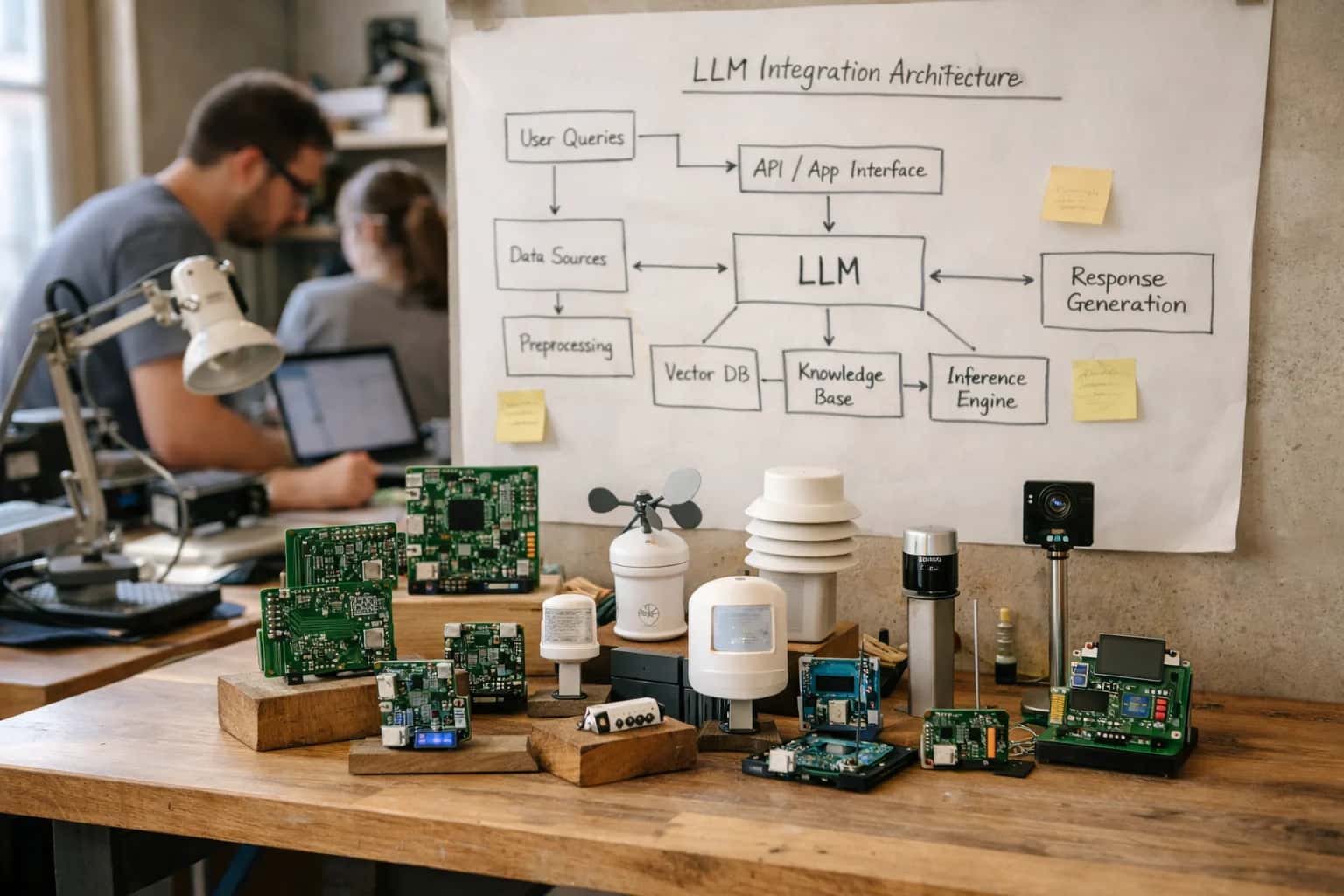
Where AI Fits in Cloud Misconfiguration Detection
Integrating LLMs into CNAPP platforms like Wiz, Prisma Cloud, and Orca Security to move beyond static rule matching and understand the intent and business risk behind cloud configurations.
Implementation focuses on augmenting the CNAPP's existing data pipeline. The typical pattern involves: 1) Triggering on new or high-severity findings from the CSPM module via webhook or API. 2) Enriching the finding with related context from the CNAPP's unified graph (e.g., "this misconfigured EC2 instance is part of the payment processing cluster and has a critical vulnerability"). 3) Processing with an LLM to generate a plain-language explanation, a business impact assessment, and a fix instruction tailored for the team owning the resource (DevOps vs. Data Engineering). 4) Actioning by posting the enriched analysis back as a comment on the finding, creating a Jira or ServiceNow ticket with pre-populated remediation steps, or, for low-risk false positives, suggesting automated suppression.
Rollout and governance are critical. Start with a pilot on a specific resource type (e.g., cloud storage or Kubernetes clusters) and integrate the AI's output into existing ticketing and chatops workflows (Slack, Microsoft Teams) for human review. Implement audit trails to track AI-suggested changes and their outcomes. The goal isn't fully autonomous remediation but a copilot for cloud security engineers and platform teams, reducing triage time from hours to minutes and providing developers with actionable, context-aware guidance that accelerates secure deployment.
AI Integration Surfaces in CNAPP Platforms
AI for Intelligent Misconfiguration Detection
Cloud Security Posture Management (CSPM) modules in Wiz, Prisma Cloud, and Orca generate thousands of findings. Traditional rule-based detection flags deviations but lacks context about business intent or acceptable risk. AI integration surfaces here to:
- Interpret Configuration Intent: Analyze Terraform code, CloudFormation templates, and runtime configurations together to determine if a permissive security group was intentional (e.g., for a temporary migration) or a genuine oversight.
- Generate Contextual Fixes: Instead of generic "restrict port 22," an LLM can draft a precise, context-aware remediation. Example:
"This EC2 instance in the 'payment-processing' VPC has SSH open to 0.0.0.0/0. Restrict to the corporate VPN CIDR range 10.10.0.0/16 and tag the resource owner for review." - Prioritize by Business Impact: Correlate misconfigurations with asset criticality tags, data classification, and network exposure data already in the CNAPP to calculate a narrative risk score, moving beyond CVSS.
Integration is typically via the platform's Findings API or GraphQL endpoint, where new misconfigurations trigger an AI enrichment workflow before being routed to Jira, ServiceNow, or Slack.
High-Value AI Use Cases for Cloud Misconfiguration Detection
Traditional CSPM tools excel at flagging violations but often lack context. These AI integration patterns add intent understanding, business logic analysis, and actionable remediation to your CNAPP platform.
Intent-Aware Policy Violation Explanation
Instead of just listing a rule violation (e.g., S3 bucket is public), an LLM analyzes the surrounding resource configuration, IAM policies, and network settings to infer the developer's probable intent. It then explains the risk in the context of that intent and suggests a secure alternative configuration that meets the goal. This transforms generic alerts into contextual coaching for DevOps teams.
Business Logic Flaw Detection
Rule engines miss complex, multi-resource risks. AI agents can analyze interconnected resources (e.g., a Lambda function with a public API Gateway that writes to an overly permissive DynamoDB table) to identify insecure data flows and architectural anti-patterns. This uncovers risks that span multiple cloud services and security groups, which traditional scanning often overlooks.
Automated Remediation Ticket Enrichment
When a critical misconfiguration is detected in Wiz or Prisma Cloud, an AI workflow automatically creates a ticket in Jira or ServiceNow. It doesn't just link the finding; it drafts a context-rich description, suggests a precise CLI command or Terraform snippet for the fix, tags probable owner teams based on resource metadata, and estimates blast radius. This slashes SOC-to-Dev handoff time.
Natural Language Compliance Querying
Enable security and compliance teams to ask questions of their cloud environment in plain English via a copilot interface connected to the CNAPP API. Examples: "Show me all databases in PCI scope that have encryption disabled" or "Summarize our top 5 exposure risks in AWS us-east-1." The AI translates the query into API calls, structures the results, and provides a narrative summary.
AI-Powered Drift Correction Workflows
When infrastructure drifts from a secure baseline (e.g., a security group rule is manually added), AI doesn't just alert. It compares the current and desired states, determines if the drift introduces risk, and can orchestrate a corrective action. This could be via a pull request to the IaC repository, a runbook in an RPA tool, or a step in a SOAR platform, with human approval gates for high-risk changes.
Risk-Based Vulnerability & Misconfiguration Correlation
AI agents consume findings from both CSPM (misconfigurations) and CWPP (workload vulnerabilities) modules within a platform like Wiz or Prisma Cloud. They correlate them to identify exploitable attack paths (e.g., a public-facing VM with a critical CVE + an overly permissive IAM role). The AI generates a unified risk score and a consolidated remediation plan, prioritizing fixes that close the most dangerous paths first.
Example AI-Powered Misconfiguration Workflows
Traditional CSPM tools excel at detecting violations against static rules. AI integration adds contextual reasoning, business logic understanding, and automated remediation workflows. Below are concrete examples of how LLM agents can be wired into your CNAPP platform to move from detection to intelligent correction.
Trigger: A CSPM scan flags an S3 bucket with a policy allowing "Principal": "*".
Context Pulled: The agent retrieves:
- The full bucket policy JSON.
- Bucket tags (e.g.,
env:production,data-classification:internal). - CloudTrail logs for the last 30 days to see actual access patterns (which AWS accounts/users accessed it).
- Associated IAM roles from the account.
AI Agent Action: The LLM analyzes the context to answer:
- Intent: Was this overly permissive policy likely a mistake, or is there a legitimate public access requirement (e.g., a static website)?
- Risk Context: What data is in the bucket? Is it in a production VPC?
- Recommendation: Drafts a new, least-privilege policy. Example output:
json{ "Version": "2012-10-17", "Statement": [ { "Effect": "Allow", "Principal": { "AWS": "arn:aws:iam::123456789012:root" }, "Action": "s3:*", "Resource": ["arn:aws:s3:::example-bucket", "arn:aws:s3:::example-bucket/*"] } ] }
System Update: The agent creates a Jira/ServiceNow ticket with:
- The original finding link.
- The AI-generated analysis of intent and risk.
- The recommended policy JSON in the description.
- An optional automated pull request to the Infrastructure-as-Code (IaC) repository (e.g., Terraform file) if the bucket is managed by code.
Human Review Point: The ticket is assigned to the bucket owner (via tag) for approval. The agent can be configured to auto-apply the policy upon approval via a secure workflow.
Implementation Architecture: Data Flow and Guardrails
A production-ready AI integration for cloud misconfiguration detection connects CNAPP data to LLM reasoning, then triggers secure, auditable remediation workflows.
The core data flow begins with your CNAPP platform—Wiz, Prisma Cloud, Orca Security, or Lacework—pushing high-fidelity findings via webhook or API to a secure ingestion queue. Key payloads include resource metadata (ARN, tags, owner), configuration drift details, severity scores, and compliance framework mappings. An orchestration layer filters and batches these findings, then passes the enriched context to a reasoning agent powered by a model like GPT-4, Claude 3, or a fine-tuned open-source LLM. The agent’s prompt is engineered to analyze the intent behind a misconfiguration (e.g., "This S3 bucket is public to host a static website") and evaluate the business logic risk, moving beyond simple rule violation.
The AI layer outputs a structured recommendation: a secure alternative configuration, a risk-accepted justification for review, or a request for more context. This output is routed based on policy: high-confidence, low-risk fixes (like adjusting a non-public S3 bucket policy) can be auto-remediated via the CNAPP’s native API or infrastructure-as-code (IaC) update. Complex or high-risk items generate a ticket in Jira, ServiceNow, or GitHub Issues with the AI’s analysis pre-populated, and trigger an alert in Slack or Teams for the designated resource owner. All actions are logged with a full audit trail linking the original finding, AI reasoning, and the resulting action.
Critical guardrails are implemented at each step: Prompt injection defenses and output schemas constrain the LLM to safe operations. A human-in-the-loop approval step is mandatory for any action modifying production resources or IAM policies. Rate limiting and cost controls are applied to LLM API calls. The system’s decisions are continuously evaluated against a ground-truth dataset of past remediations to detect and correct reasoning drift. This architecture ensures the integration augments your security team’s judgment, automating the routine while escalating the nuanced, without introducing ungoverned change into your cloud environment.
Code and Payload Examples
Analyzing Terraform for Business Logic Flaws
Move beyond static rule checks by using an LLM to understand the developer's intent within Infrastructure as Code (IaC). This pattern consumes raw Terraform or CloudFormation from a CNAPP scan, evaluates it against security best practices and business context, and generates a risk-explained finding.
Example Python Workflow:
python# Pseudo-workflow for AI-powered IaC review def analyze_iac_intent(tf_code, business_context): """Send IaC and context to LLM for intent analysis.""" prompt = f""" Analyze this Terraform for security misconfigurations and business logic flaws. Business Context: {business_context} Terraform Code: {tf_code} Provide: 1. A short summary of the intended resource. 2. Any security misconfigurations (e.g., public S3 bucket). 3. Any business logic flaws (e.g., cost risk from unlimited scaling). 4. A secure, corrected code snippet. """ # Call LLM (e.g., via OpenAI, Anthropic, or open model) analysis = llm_client.chat_completion(prompt) # Parse and structure result for CNAPP ticket creation return structure_finding(analysis)
This creates findings that explain why a configuration is risky within its specific use case, accelerating developer remediation.
Realistic Time Savings and Operational Impact
How AI integration transforms manual, rule-based detection into intelligent analysis and remediation guidance for cloud security teams.
| Workflow Stage | Traditional CSPM | AI-Augmented CSPM | Key Impact |
|---|---|---|---|
Finding Triage & Prioritization | Manual review of 100s of alerts | AI clusters & explains related risks | Focus time shifts from sorting to decision-making |
Root Cause Analysis | Hours correlating configs across services | Minutes with AI-generated attack path narrative | MTTR for critical exposures reduced by 60-80% |
Remediation Instruction Drafting | Generic, copy-paste policy snippets | Context-aware, resource-specific fix code | Developer acceptance rate for fixes increases significantly |
Compliance Gap Explanation | Manual mapping to control frameworks | AI auto-maps misconfigs to SOC2/ISO/HIPAA | Audit preparation time cut from days to hours |
Policy Exception Review | Manual ticket analysis for each request | AI pre-assesses risk & suggests conditions | Security team handles 2-3x more exception volume |
Executive & Board Reporting | Manual data aggregation and narrative writing | AI generates risk summaries and trend analysis | Reporting cycle time reduced from 1 week to same-day |
Developer Security Education | Generic training docs and rule lists | AI provides in-context, just-in-time guidance in PRs | Repeat misconfiguration rates drop over successive sprints |
Governance, Security, and Phased Rollout
A production-grade AI integration for cloud security requires a strategy that prioritizes control, auditability, and incremental value.
Governance starts with defining the AI's operational boundaries. We architect integrations where the LLM acts as an analytical assistant, not an autonomous actor. It consumes findings from your CNAPP platform (like Wiz or Prisma Cloud) via secure API calls, but all remediation actions—such as creating a Jira ticket, triggering a CI/CD rollback, or modifying an IAM policy—are executed through your existing, RBAC-controlled automation pipelines. This ensures every AI-suggested action is logged, attributable, and subject to existing approval workflows. The AI's prompts, model choices, and outputs are version-controlled and logged alongside the security finding for a complete audit trail.
Security is non-negotiable. Your cloud security data never leaves your environment. We implement the integration using your private cloud or VPC, with the LLM deployed as a containerized service behind your API gateway. All data exchanged with the CNAPP platform uses the platform's native, encrypted APIs and service accounts with least-privilege permissions. For highly sensitive environments, we can implement a pattern where only anonymized metadata (e.g., resource type, misconfiguration ID) is sent to the LLM for analysis, while the full context and credentials remain securely within your security tool's ecosystem.
A phased rollout de-risks adoption and demonstrates quick wins. We recommend starting with a read-only analysis phase: connect the AI to a single CNAPP module (e.g., CSPM misconfigurations) and have it generate plain-English explanations and fix instructions, delivered as comments within the CNAPP console or to a dedicated Slack channel. This builds trust without changing any state. Phase two introduces workflow automation: the AI categorizes findings and auto-creates enriched, prioritized tickets in ServiceNow or Jira, slashing manual triage time. The final phase enables context-aware remediation: the AI suggests precise CLI commands or Terraform patches, which are presented to engineers for one-click approval and execution within their existing deployment pipelines.
Enabling Efficiency, Speed & Accuracy
Intelligent Analysis, Decision & Execution
We build AI systems for teams that need search across company data, workflow automation across tools, or AI features inside products and internal software.
Talk to Us
Search across company data
Give teams answers from docs, tickets, runbooks, and product data with sources and permissions.
Useful when people spend too long searching or get different answers from different systems.

Automate internal workflows
Use AI to route work, draft outputs, trigger actions, and keep approvals and logs in place.
Useful when repetitive work moves across multiple tools and teams.

Add AI to products and internal tools
Build assistants, guided actions, or decision support into the software your team or customers already use.
Useful when AI needs to be part of the product, not a separate tool.
Frequently Asked Questions
Practical questions for teams planning to augment their Cloud Security Posture Management (CSPM) with AI for smarter misconfiguration detection and remediation.
Traditional CSPM rules (e.g., "S3 bucket is publicly readable") are excellent for known, binary conditions. AI augments this by analyzing the context and intent behind configurations to find risks that rules miss.
AI-powered detection adds:
- Business Logic Flaws: Identifying that a development database is accessible from a production web server cluster, even if both are in "approved" VPCs.
- Architectural Anti-Patterns: Detecting that a new Lambda function is using an IAM role with permissions far exceeding its runtime needs, suggesting a potential privilege escalation path.
- Intent Inference: Understanding that a CloudTrail log configured without SNS notifications for
DeleteTrailevents defeats its forensic purpose, even if the trail itself is "enabled." - Natural Language Correlation: Linking a misconfigured security group (technical finding) to a specific compliance control (e.g., PCI DSS Requirement 1.2.1) and explaining the gap in plain language for auditors.
The AI layer consumes the rich resource graph and configuration data from your CNAPP (Wiz, Prisma Cloud, Orca) and applies reasoning to identify these nuanced risks.

About the author
Prasad Kumkar
CEO & MD, Inference Systems
Prasad Kumkar is the CEO & MD of Inference Systems and writes about AI systems architecture, LLM infrastructure, model serving, evaluation, and production deployment. Over 5+ years, he has worked across computer vision models, L5 autonomous vehicle systems, and LLM research, with a focus on taking complex AI ideas into real-world engineering systems.
His work and writing cover AI systems, large language models, AI agents, multimodal systems, autonomous systems, inference optimization, RAG, evaluation, and production AI engineering.
Partnered with leading AI, data, and software stack.





How We Work
Custom AI workflows for your Business
One-fit-all AI don't work for modern businesses. At Inferensys, we aim to understand your business & custom requirements; which we use to define most efficient agentic workflows, the data, and the tools for your business.
01
Review the use case
We understand the task, the users, and where AI can actually help.
Read more02
Pick the right approach
We define what needs search, automation, or product integration.
Read more03
Build the first useful version
We implement the part that proves the value first.
Read more04
Improve from there
We add the checks and visibility needed to keep it useful.
Read moreThe first call is a practical review of your use case and the right next step.
Talk to Us