Modern CNAPP platforms like Wiz, Orca Security, and Prisma Cloud generate a massive, real-time inventory of cloud assets—from VMs and containers to serverless functions, storage buckets, and managed services. This raw inventory data, while comprehensive, creates operational bottlenecks: security teams struggle to prioritize risks without context, FinOps teams can't optimize what they can't categorize, and DevOps wastes cycles manually tagging resources. AI integration addresses this by layering intelligence directly onto the asset graph. Key surfaces for AI include: automated resource tagging using natural language descriptions of configurations and network patterns; ownership attribution by correlating deployment metadata, cost centers, and code repositories; and lifecycle state detection to identify orphaned, idle, or non-compliant assets that require action.

Integration
AI Integration for Cloud Asset Inventory and Discovery
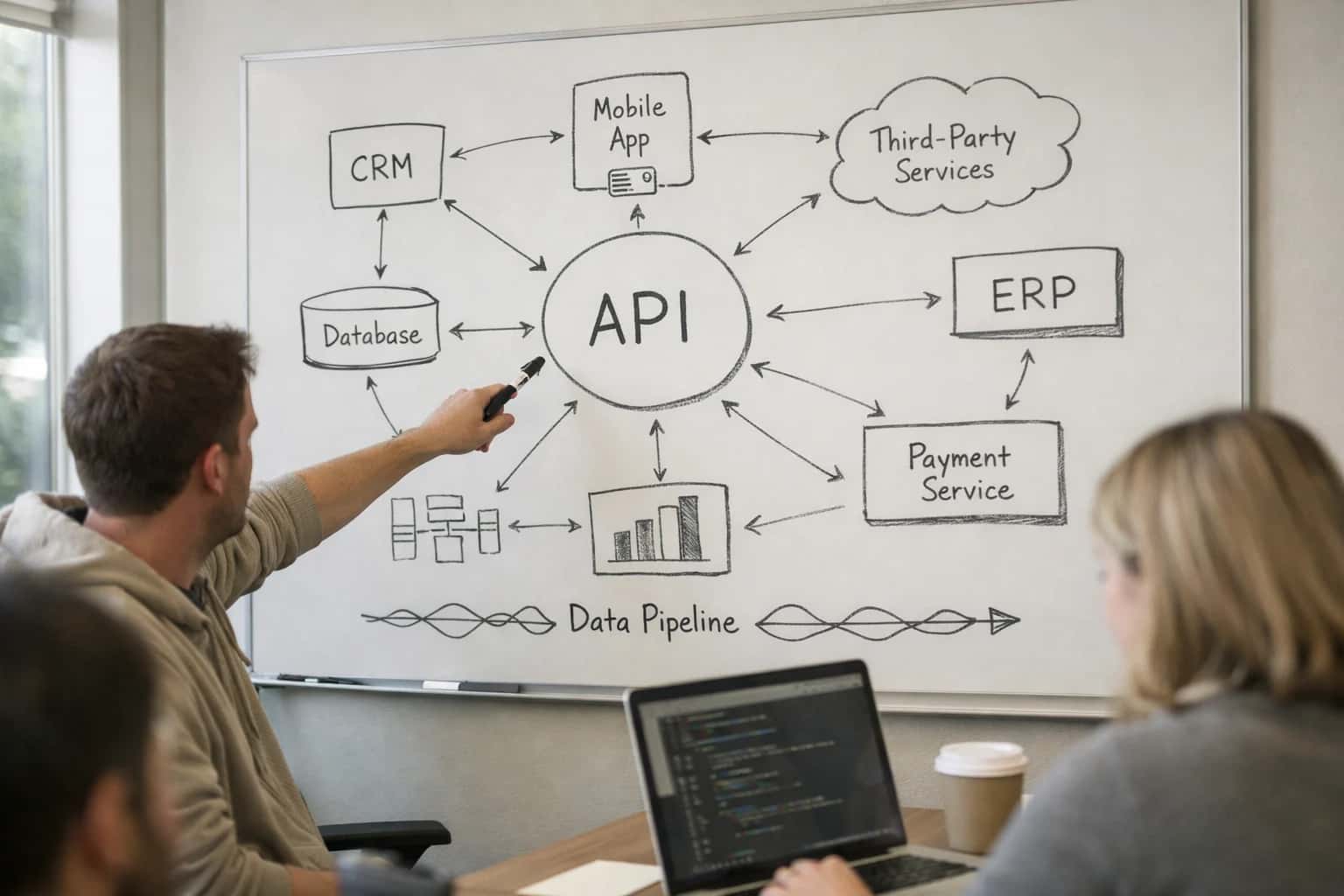
Where AI Fits into Cloud Asset Inventory
AI transforms cloud asset inventory from a passive list into an active system for governance, cost control, and security by automating classification, attribution, and lifecycle decisions.
Implementation typically involves an AI agent that subscribes to the CNAPP platform's asset API stream (e.g., Wiz's /graph/resources or Orca's /assets). For each new or changed asset, the agent enriches the record by calling an LLM with context about the resource's properties, network exposure, and associated findings. The output—structured tags like owner:platform-engineering, env:production, cost-center:marketing, lifecycle:active—is then written back via the CNAPP's API or to a sidecar database. This creates a feedback loop: the enriched asset data improves the CNAPP's own risk scoring and alerting, enabling workflows like automatically routing high-cost, untagged assets to a FinOps review queue in ServiceNow or triggering an access review in Okta for an over-permissive production database.
Rollout should be phased, starting with a single cloud or asset type (e.g., all S3 buckets) to tune the AI's classification logic. Governance is critical: implement a human-in-the-loop review step for the first 1,000 asset classifications to validate accuracy, and establish a clear RBAC model for who can approve AI-generated tags. The architecture must also include an audit trail linking the original asset, the AI's prompt/context, and the final enrichment decision for compliance. The result is not just a better inventory, but a foundational data layer that makes every downstream process—security posture management, cost allocation, compliance reporting—more accurate and automated.
AI Integration Surfaces in CNAPP Platforms
AI Integration for Cloud Asset Inventory
CNAPP platforms like Wiz, Orca, and Prisma Cloud maintain a real-time, queryable inventory of cloud assets (VMs, containers, serverless functions, storage buckets, databases). This is the primary surface for AI-driven tagging, ownership attribution, and lifecycle management.
Key Integration Points:
- Asset Discovery APIs: Use AI to analyze asset metadata (name, tags, network exposure) and infer missing business context (e.g., "This untagged RDS instance likely belongs to the payments team based on its security group rules").
- Ownership Attribution Workflows: Build agents that cross-reference asset data with Git commits, CI/CD pipelines, or service catalogs to suggest or assign resource owners automatically.
- Lifecycle Prompts: Trigger AI-generated notifications for FinOps ("This EBS volume has had zero I/O for 30 days") or security ("This development EC2 instance is running in production VPC").
AI transforms the inventory from a passive list into an intelligent system of record for cloud operations.
High-Value Use Cases for AI-Enhanced Asset Inventory
Modern CNAPP platforms like Wiz and Orca Security generate deep asset inventories, but turning that data into operational decisions is still manual. These AI integration patterns automate tagging, attribution, and lifecycle workflows to close the loop between discovery and action.
Automated Resource Ownership Attribution
AI agents analyze cloud resource metadata, commit history, and network patterns from CNAPP scans to infer and assign resource owners. Automatically tags assets in the CNAPP console and creates Jira tickets or Slack messages for orphaned resources, reducing the unowned asset backlog from weeks to hours.
AI-Powered Environment & Lifecycle Tagging
LLMs classify untagged assets (EC2 instances, storage buckets) as production, staging, or development based on configuration patterns, network exposure, and associated services found in the CNAPP inventory. Generates Terraform or policy updates to enforce tagging standards and trigger appropriate security controls.
FinOps-Driven Resource Right-Sizing
Connects CNAPP asset data (instance types, attached volumes) with cloud billing APIs. An AI copilot analyzes utilization metrics and security posture to recommend downsizing or deletion of idle, over-provisioned, or non-compliant resources. Drafts change tickets for platform teams with cost/risk trade-off analysis.
Compliance Context for Asset Risk
For assets flagged with high-severity misconfigurations, an AI agent queries the CNAPP API for surrounding context (network paths, IAM roles, data classification) and maps the finding to specific regulatory requirements (e.g., PCI DSS 1.2.1). Generates plain-language risk explanations and audit-ready mitigation steps for compliance teams.
Intelligent Decommissioning Workflows
Identifies candidate assets for sunsetting by correlating CNAPP scan data (last runtime activity, vulnerability age) with CMDB and service catalog entries. An AI orchestrator drafts decommissioning runbooks, identifies dependencies, and routes approval workflows to application owners in ServiceNow, preventing service disruption.
Attack Surface Explanation & Visualization
Takes complex CNAPP-generated attack path graphs and uses an LLM to generate narrative summaries of the highest-risk exposure chains. Explains how a vulnerable container in a private subnet could be reached via a misconfigured IAM role, helping SOC analysts and cloud architects prioritize remediation.
Example AI-Driven Asset Management Workflows
These workflows illustrate how to augment static cloud asset inventories from Wiz, Orca, Prisma Cloud, and Lacework with AI-driven context, turning raw resource lists into intelligent systems for FinOps, security, and platform operations.
Trigger: A new cloud resource (e.g., EC2 instance, Storage Account, Cloud SQL database) is detected in the CNAPP platform's inventory.
Context Pulled: The agent retrieves the resource's metadata (name, type, region, network configuration, attached security groups), any existing tags, and recent activity logs from the cloud provider's API.
Agent Action: An LLM analyzes the resource name, configuration context, and surrounding resources (e.g., "prod-us-east-1-app-backend-05 is in the prod-vpc, has port 443 open, and was launched by CI/CD pipeline jenkins-prod"). It infers probable attributes:
- Owner:
team:platform-engineering(based on launching pipeline) - Environment:
env:production - Cost Center:
cost-center:cc-12345(mapped from team) - Data Classification:
data:internal(based on no public ingress and prod VPC)
System Update: The agent calls the CNAPP platform's API (e.g., Wiz's updateResource or Orca's entity API) to apply the inferred tags. It also creates a ticket in Jira Service Management or sends a Slack message to the inferred owner for confirmation.
Human Review Point: The resource owner receives a notification: "We've tagged your new resource prod-us-east-1-app-backend-05. Review or modify tags here." Unconfirmed tags are flagged for weekly review by the cloud governance team.
Implementation Architecture and Data Flow
A practical blueprint for integrating AI agents with your CNAPP to automate asset intelligence and lifecycle workflows.
The integration connects to your CNAPP's asset inventory API—be it Wiz's GraphQL API, Orca Security's REST API, or Prisma Cloud's v2 endpoints—to pull a real-time feed of discovered resources (VMs, containers, serverless functions, storage buckets, databases). This raw inventory, enriched with metadata like tags, configurations, and security findings, is streamed into a processing layer. Here, an AI orchestration agent uses LLMs to perform core tasks: normalizing inconsistent resource names, inferring missing ownership from IAM patterns or network metadata, suggesting FinOps tags (e.g., cost-center, environment), and flagging zombie or unclassified assets for review.
The processed, AI-enriched asset data flows two ways. First, it's written back to the CNAPP via its tagging or custom field API, updating the source of truth for security and FinOps teams. Second, it triggers automated workflows: generating Jira or ServiceNow tickets for asset owners to confirm or clean up resources, posting Slack or Microsoft Teams notifications for urgent zombie assets, or creating approval tasks in Asana or Monday.com for proposed lifecycle actions (stop, terminate, resize). The architecture is event-driven, often using a message queue (like AWS SQS or RabbitMQ) to handle bursts of discovery data and ensure idempotent processing.
Rollout starts with a pilot on a single cloud account or subscription, focusing on a high-value asset class like unattached storage or over-provisioned VMs. Governance is critical: all AI-generated tags and actions should be logged to an audit trail, and a human-in-the-loop approval step is recommended for any termination or significant change. The system's prompts and logic are version-controlled, allowing you to tune the AI's confidence thresholds and ownership inference rules based on your organizational naming conventions and cloud governance policies.
Code and Payload Examples
Automating Resource Categorization
Use LLMs to analyze cloud asset metadata (name, configuration, network flows) and apply consistent tags for owner, cost-center, and environment. This automates a critical FinOps and security control often done manually.
Example Python payload to call an LLM for tag suggestion based on Wiz asset data:
pythonimport openai import json # Payload from Wiz Asset API asset_data = { "name": "prod-payment-api-ec2", "cloudProvider": "AWS", "resourceType": "EC2", "vpcId": "vpc-123", "securityGroups": ["sg-payments"], "tags": {"CreatedBy": "jenkins-pipeline-5"} } prompt = f"""Analyze this cloud asset and suggest tags for 'owner' (team), 'cost-center' (3-letter code), and 'environment' (prod/stage/dev). Asset: {json.dumps(asset_data)} Return JSON: {{"owner": "", "cost-center": "", "environment": ""}} """ response = openai.chat.completions.create( model="gpt-4", messages=[{"role": "user", "content": prompt}] ) # Expected output: {"owner": "payments-team", "cost-center": "FIN", "environment": "prod"}
This output can be fed back into the CNAPP's tagging API or into ServiceNow CMDB for synchronization.
Realistic Time Savings and Operational Impact
How AI integration transforms manual, reactive cloud asset management into proactive, intelligent operations for FinOps and security teams.
| Workflow | Before AI | After AI | Implementation Notes |
|---|---|---|---|
Asset Tagging & Classification | Manual spreadsheet updates, inconsistent tags | Automated tagging via LLM analysis of resource names, configs, and logs | AI suggests tags; human review for governance. Integrates via CNAPP API/webhooks. |
Ownership Attribution | Time-consuming Slack/email chains to find owners | AI correlates resources with CI/CD metadata, commits, and org charts | Provides probable owner with confidence score. Reduces orphaned assets. |
Lifecycle State Identification | Periodic manual audits to find idle/stale resources | Continuous AI analysis of metrics (CPU, network, cost) to flag candidates | Triggers automated review workflows in ServiceNow or Jira for decommissioning. |
Risk Context Enrichment | Security findings lack business context for prioritization | AI links vulnerabilities/misconfigurations to asset criticality and exposure | Generates plain-language risk summaries for resource owners, speeding remediation. |
FinOps Cost Allocation | Manual chargeback processes using spreadsheets | AI-driven cost categorization and showback reporting by team/project | Automates report generation, answers ad-hoc cost queries via natural language. |
Compliance Evidence Gathering | Manual screenshot and configuration collection for audits | AI queries CNAPP APIs to assemble evidence packages for specific controls | Drafts audit narratives, reducing prep time from days to hours. |
Onboarding New Cloud Accounts | Manual baseline scanning and policy application | AI analyzes account setup, recommends security & tagging baselines | Accelerates secure onboarding, provides checklist for cloud platform teams. |
Governance, Security, and Phased Rollout
A production AI integration for cloud asset inventory must be built with security, auditability, and incremental value delivery in mind.
The integration architecture must respect the security boundaries of your CNAPP platform (Wiz, Orca, Prisma Cloud). AI agents operate as a downstream service, consuming asset inventory data via secure API calls with scoped service accounts, never storing raw cloud resource data long-term. All AI-generated outputs—like suggested tags, ownership attributions, or lifecycle actions—are written back to the CNAPP as annotations or custom fields, maintaining a single source of truth and a full audit trail within the security platform itself. This ensures all AI-suggested changes are attributable and reversible.
A phased rollout is critical for adoption and risk management. Start with a read-only analysis phase, where AI processes asset data to generate ownership and tagging suggestions for manual review in a separate dashboard. Next, implement a human-in-the-loop approval workflow, where suggestions are presented to FinOps or cloud center of excellence teams via a simple approval queue before being applied to the CNAPP. Finally, move to controlled automation for high-confidence, low-risk actions—like tagging resources with a cost-center based on clear naming conventions—while keeping critical actions like resource termination or security group changes fully manual.
Governance is built into the prompt chains and data flows. Each AI workflow includes instructions to cite the source CNAPP data (e.g., 'Based on Wiz resource ID: res-123') and to flag low-confidence predictions for human review. Integration with your existing IAM platform (Okta, Entra ID) controls who can approve or override AI suggestions. This approach delivers immediate value in clarifying cloud spend and security ownership while systematically building trust in the system, allowing you to expand AI's role in cloud operations over time without introducing unmanaged risk.
Enabling Efficiency, Speed & Accuracy
Intelligent Analysis, Decision & Execution
We build AI systems for teams that need search across company data, workflow automation across tools, or AI features inside products and internal software.
Talk to Us
Search across company data
Give teams answers from docs, tickets, runbooks, and product data with sources and permissions.
Useful when people spend too long searching or get different answers from different systems.

Automate internal workflows
Use AI to route work, draft outputs, trigger actions, and keep approvals and logs in place.
Useful when repetitive work moves across multiple tools and teams.

Add AI to products and internal tools
Build assistants, guided actions, or decision support into the software your team or customers already use.
Useful when AI needs to be part of the product, not a separate tool.
Frequently Asked Questions
Practical answers for teams looking to enhance cloud asset discovery and management in Wiz, Orca, and Prisma Cloud with generative AI.
AI agents analyze the configuration, network traffic, attached security policies, and resource naming patterns of untagged assets to infer their likely purpose, owner, and environment.
Typical workflow:
- Trigger: A daily scan from your CNAPP (e.g., Wiz) identifies resources missing critical tags like
owner,cost-center, orenvironment. - Context Pulled: The agent retrieves the resource's metadata, associated IAM roles, VPC/network placement, and any linked applications from the CNAPP and cloud provider APIs.
- AI Action: An LLM reviews this context to generate a probable tag set. For example:
Resource: i-123abc | Context: In 'prod' VPC, runs a Java process, attached to ALB 'app-frontend' → Inferred Tags: owner:platform-team, application:frontend-ui, environment:production. - System Update: The agent creates a ticket in Jira or ServiceNow for the inferred owner to confirm, or, if policy allows, applies the tags with an
ai-suggested: trueflag for audit. - Human Review: All auto-applied tags are logged and reported for weekly review by the cloud governance team.

About the author
Prasad Kumkar
CEO & MD, Inference Systems
Prasad Kumkar is the CEO & MD of Inference Systems and writes about AI systems architecture, LLM infrastructure, model serving, evaluation, and production deployment. Over 5+ years, he has worked across computer vision models, L5 autonomous vehicle systems, and LLM research, with a focus on taking complex AI ideas into real-world engineering systems.
His work and writing cover AI systems, large language models, AI agents, multimodal systems, autonomous systems, inference optimization, RAG, evaluation, and production AI engineering.
Partnered with leading AI, data, and software stack.





How We Work
Custom AI workflows for your Business
One-fit-all AI don't work for modern businesses. At Inferensys, we aim to understand your business & custom requirements; which we use to define most efficient agentic workflows, the data, and the tools for your business.
01
Review the use case
We understand the task, the users, and where AI can actually help.
Read more02
Pick the right approach
We define what needs search, automation, or product integration.
Read more03
Build the first useful version
We implement the part that proves the value first.
Read more04
Improve from there
We add the checks and visibility needed to keep it useful.
Read moreThe first call is a practical review of your use case and the right next step.
Talk to Us