For daycare centers using HubSpot, AI integration focuses on three primary surfaces: Contact and Company objects, Deal pipelines, and Marketing Email/Workflow modules. The goal is to create a bidirectional sync where family data from your daycare management platform (like Brightwheel or Procare) enriches HubSpot records, and AI-driven insights from HubSpot trigger personalized communications and enrollment nurturing. Key data flows include syncing child details as custom contact properties, updating Deal stages based on application milestones, and logging all parent interactions (messages, payments, attendance notes) as timeline events for a 360-degree view.

Integration
AI Integration for Daycares Using HubSpot CRM
A technical guide for daycare centers on integrating AI with HubSpot CRM to automate family data sync, personalize marketing, and track enrollment journeys. Focuses on practical workflows and implementation.
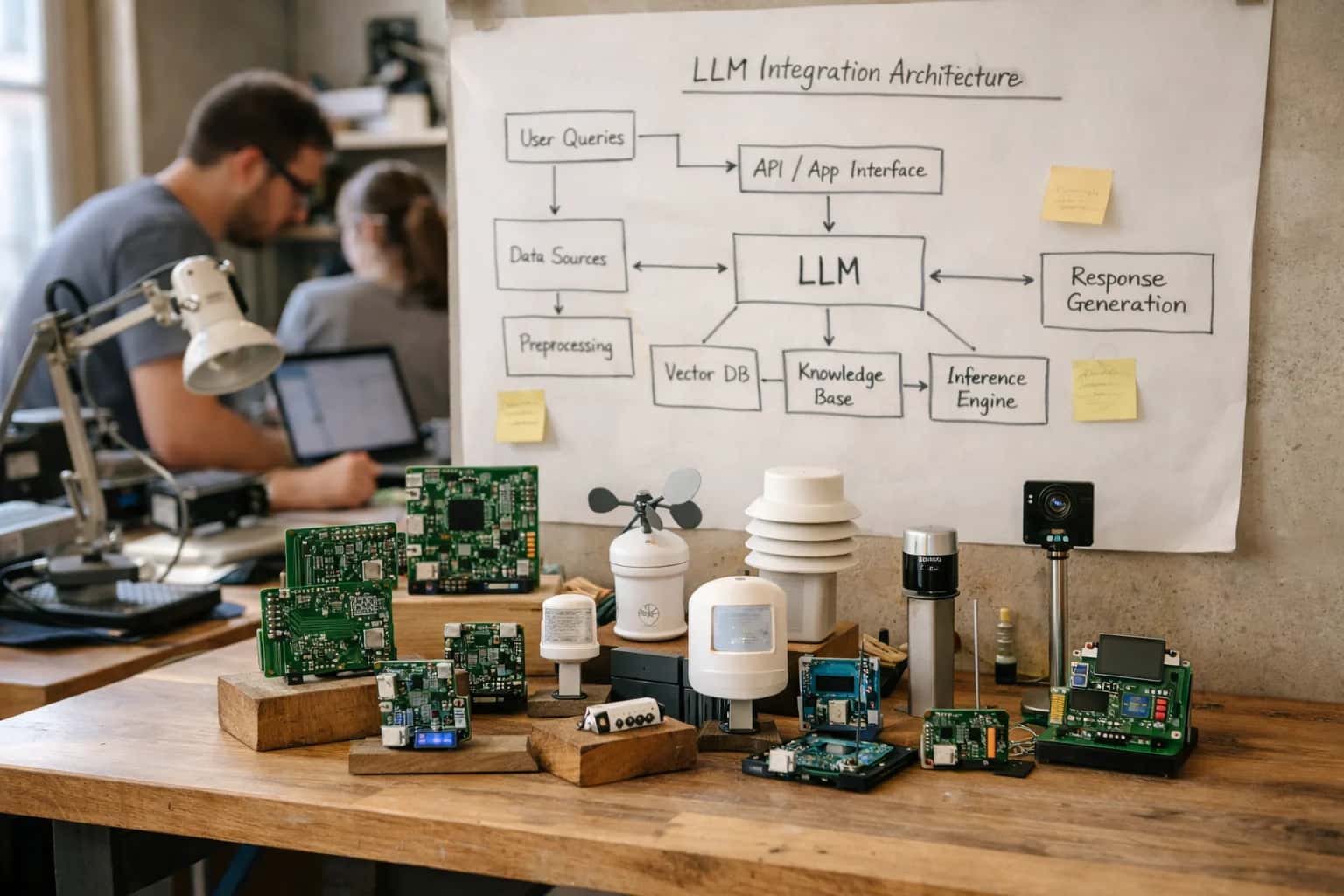
ARCHITECTURE FOR HUBSPOT INTEGRATION
Where AI Fits in the Daycare CRM Stack
A practical guide to connecting AI agents and workflows with HubSpot CRM to automate family engagement, enrollment tracking, and marketing for daycare centers.
Implementation typically involves a middleware layer or direct API calls. For example, an AI agent can monitor a webhook for when a family submits an inquiry form on your website (creating a HubSpot Contact). The agent can then: 1) Score the lead based on requested start date, preferred schedule, and location proximity, 2) Trigger a personalized email sequence with center information and virtual tour links, and 3) Create a corresponding child record in your daycare software via its API, initiating the internal onboarding workflow. Another high-value pattern is using AI to analyze communication sentiment from logged emails and SMS, automatically tagging at-risk families in HubSpot for director follow-up.
Rollout requires careful governance. Start by mapping your enrollment stages to a HubSpot Deal pipeline. Use AI to auto-populate deal properties like Estimated Tuition based on schedule selections and subsidy eligibility checks synced from your daycare platform. Implement audit trails for all AI-generated actions (e.g., emails sent, deal stage changes) and maintain a human-in-the-loop for critical steps like financial agreement approvals. For centers managing multiple locations, use HubSpot's Company objects and AI to route leads to the correct center based on capacity data, automating what is often a manual director task. Explore related architectural patterns for syncing financial data in our guide on AI Integration for Childcare Software with QuickBooks.
FOR DAYCARE AND CHILDCARE CENTERS
HubSpot CRM Surfaces for AI Integration
Family and Business Record Orchestration
HubSpot's Contact and Company objects are the core data model for syncing family and center information from your childcare management platform. AI integration here focuses on enrichment and segmentation.
Key AI Workflows:
- Automated Profile Enrichment: As a new family record is created from a platform like Brightwheel or Procare, an AI agent can append inferred details (e.g., preferred communication channel, likely service tier based on enrollment data).
- Dynamic Segmentation: Use AI to analyze engagement history (email opens, form submissions, payment timeliness) and automatically tag contacts with lifecycle stages like
At-Risk,Advocate, orNeeds Re-engagement. This powers targeted nurture streams. - Duplicate Resolution: AI models can intelligently merge duplicate family records that may arise from multiple enrollment touchpoints, preserving a unified communication history.
These enriched, segmented records become the foundation for personalized marketing automation and director-level reporting.
HUBSPOT CRM INTEGRATION
High-Value AI Use Cases for Daycare Hubs
Connecting your daycare management platform to HubSpot CRM unlocks AI-driven workflows for enrollment marketing, family engagement, and operational intelligence. These use cases show where to add automation without disrupting your core childcare operations.
01
Automated Lead Scoring & Nurturing
Sync inquiry data from your daycare software (Brightwheel, Procare) into HubSpot as leads. Use AI to score leads based on tour attendance, form completion, and communication responsiveness. Automatically trigger personalized email sequences and task assignments for your enrollment team.
Batch -> Real-time
Lead routing
02
Family Journey Analytics & Churn Prediction
Build a 360-degree view by linking HubSpot contact records with child attendance, billing history, and communication logs from your daycare platform. Apply ML models to identify families at risk of disenrollment based on engagement drops, payment delays, or feedback sentiment. Trigger retention workflows.
1 sprint
Model deployment
03
AI-Powered Campaign Personalization
Use child age, classroom, and attendance patterns (synced from your daycare system) to segment families in HubSpot for hyper-targeted communications. Generate personalized content for newsletters, event promotions, or re-enrollment campaigns using AI, directly within HubSpot Marketing Hub workflows.
Hours -> Minutes
Segment creation
04
Enrollment Funnel Forecasting
Connect HubSpot deal stages with your daycare software's actual enrollment and capacity data. Use AI to forecast future enrollment and revenue, predict bottlenecks in the application process, and recommend staffing or marketing adjustments based on pipeline health.
Same day
Insight generation
05
Integrated Parent Support Agent
Deploy an AI chatbot on your center's website, connected to both HubSpot knowledge base and real-time daycare platform APIs. It can answer FAQs about schedules, billing, and policies by querying live data, then log qualified inquiries as HubSpot tickets for staff follow-up.
24/7
Parent support
06
Automated Survey Analysis & Follow-up
Send parent satisfaction surveys via HubSpot and sync results back to family records in your daycare software. Use NLP to analyze open-ended feedback for sentiment and urgent issues. Automatically route critical feedback to directors in Slack and log positive reviews for marketing use.
Batch -> Real-time
Issue triage
HUBSPOT CRM INTEGRATION
Example AI Automation Workflows
These workflows illustrate how AI can connect to HubSpot CRM to automate enrollment marketing, personalize family communications, and provide actionable insights for daycare center growth.
Trigger: A new contact is created in HubSpot from a website form submission or imported inquiry list.
Context/Data Pulled: The AI agent retrieves the contact's source, requested program (e.g., infant, toddler), and any notes from the initial inquiry.
Model/Agent Action:
- Scores & Segments: The AI scores the lead based on profile completeness, requested start date proximity, and source quality.
- Generates Content: It drafts a personalized first-touch email, referencing the specific program of interest and including links to relevant virtual tour videos or parent testimonials.
- Schedules Tasks: It creates a follow-up task in HubSpot for the center director 48 hours after the email is sent if no reply is received.
System Update/Next Step: The drafted email is placed in a HubSpot marketing email draft folder for human review and sending. The lead score and segmentation tag are written back to the contact's properties.
Human Review Point: The marketing email draft and any proposed SMS follow-up messages require director approval before being sent.
SYNCING FAMILY DATA FOR MARKETING AUTOMATION
Implementation Architecture: Data Flow & Guardrails
A practical blueprint for connecting your daycare's HubSpot CRM to your center's operational data, enabling AI-driven marketing and enrollment journey analytics.
The integration architecture connects your primary childcare management platform (e.g., Brightwheel, Procare) as the system of record to HubSpot as the marketing and sales orchestration layer. Core data flows include:
- Family & Child Records: Bi-directional sync of contact details, child ages, and classroom assignments via platform-specific APIs (e.g., Brightwheel's
familiesandchildrenendpoints, Procare'sFamilyandChildobjects). - Enrollment Journey Stages: Pushing status changes (
prospect→tour scheduled→applied→enrolled) from your childcare software to HubSpot as custom deal stages or contact properties. - Engagement Events: Streaming key parent interactions—like opening daily reports, completing digital forms, or messaging teachers—as custom events in HubSpot for behavioral scoring.
AI workflows are triggered by this unified data. For example, an AI agent can analyze a family's engagement score and child's age to personalize email sequences from HubSpot, suggesting relevant program transitions (e.g., toddler to preschool). Another agent monitors deal stage stagnation and can automatically draft follow-up tasks for your enrollment coordinator in HubSpot. Guardrails are implemented at the integration layer:
- Field Mapping Governance: A central configuration manages which fields sync and their transformation rules (e.g., mapping
child_date_of_birthto a calculatedprogram_eligibilityproperty). - Consent & Privacy Enforcement: The system checks parental consent flags from your childcare platform before syncing any PII to HubSpot, logging all data transfers for audit.
- Error Queue & Alerts: Failed syncs (e.g., due to API rate limits) are placed in a retry queue, with alerts sent to your operations team if critical enrollment status updates fail.
Rollout follows a phased approach: start with a one-way sync of family contacts, then activate enrollment stage tracking, and finally layer on AI-driven automation. This allows for validation at each step. The architecture ensures your team maintains control—all AI-generated communications from HubSpot are drafted as drafts requiring human review before sending, and scoring models can be adjusted based on center-specific conversion data. For a deeper look at syncing financial data for advanced analytics, see our guide on AI Integration for Childcare Software with QuickBooks.
HUBSPOT CRM INTEGRATION PATTERNS
Code & Payload Examples
Syncing Family & Center Data to HubSpot
AI integration begins with a bidirectional sync between your daycare management platform (e.g., Brightwheel, Procare) and HubSpot. This creates a unified profile for each family and center location, enabling personalized marketing and analytics.
Key Data Objects:
- HubSpot Contact: Represents a parent/guardian, enriched with child details as custom properties.
- HubSpot Company: Represents the daycare center or a specific location.
- HubSpot Deal: Represents the enrollment journey from lead to enrolled family.
Example Payload for Creating/Updating a Contact:
json{ "properties": { "email": "[email protected]", "firstname": "Jane", "lastname": "Doe", "phone": "(555) 123-4567", "child_name": "Alex Doe", "child_age": "3", "center_name": "Sunshine Daycare - Downtown", "enrollment_status": "prospective", "last_attendance_date": "2024-10-15", "hs_lead_status": "NEW" } }
This payload is typically sent via a serverless function triggered by a webhook from your daycare platform when a family profile is created or updated.
AI-ENHANCED CRM OPERATIONS
Realistic Time Savings & Business Impact
How AI integration between your daycare management platform and HubSpot CRM transforms manual, reactive processes into automated, proactive workflows.
| Metric | Before AI | After AI | Notes |
|---|---|---|---|
Lead qualification & scoring | Manual review of inquiry forms | Automated scoring based on fit signals | Human approval for final enrollment decisions |
New family onboarding sequence | Generic email series sent manually | Personalized, event-triggered welcome journey | Content adapts based on child's age and program interest |
Enrollment follow-up timing | Ad-hoc calls based on staff memory | AI-prioritized call list with suggested outreach times | Predicts best contact windows to increase connection rates |
Re-engagement for past families | Quarterly manual list review | Automated detection of siblings' eligibility age | Triggers personalized outreach 6 months before child becomes age-eligible |
Campaign performance analysis | Monthly manual report compilation | Weekly automated insights on open rates & conversion | Highlights top-performing content themes for future use |
Data hygiene & field population | Quarterly bulk cleanup projects | Continuous validation and enrichment of contact records | Reduces duplicate entries and ensures accurate segmentation |
Multi-channel response handling | Separate monitoring of email, web chat, and phone | Unified inbox with AI-suggested replies for common questions | Maintains brand voice and ensures consistent, timely responses |
ARCHITECTING A CONTROLLED IMPLEMENTATION
Governance, Security & Phased Rollout
Integrating AI with HubSpot for a daycare requires a deliberate approach to data security, user adoption, and operational stability.
The integration architecture should treat HubSpot as the system of record for family and lead data, with AI acting as a copilot layer. This means AI workflows read from and write back to standard HubSpot objects—primarily Contacts, Companies (for families), Deals (for enrollment journeys), and Marketing Emails—via HubSpot's REST APIs and webhooks. All AI-generated content, such as personalized email drafts or lead scores, is stored as custom properties or activity notes within HubSpot, ensuring a complete audit trail and maintaining data sovereignty within your existing CRM.
Security is paramount when handling sensitive family information (PII) and children's data. Implement a zero-trust data flow: AI calls are routed through a secure middleware layer that enforces role-based access, strips unnecessary PII before optional external processing (e.g., for sentiment analysis), and logs all data access. For email campaigns, use human-in-the-loop approvals; AI can draft personalized nurture sequences for Contacts in an 'Enrollment Inquiry' list, but a director must review and approve sends via HubSpot's native workflow tools before any external communication is triggered.
A phased rollout minimizes risk and maximizes value. Start with a pilot phase focusing on internal efficiency: deploy an AI agent to summarize new Contact form submissions from your website and auto-create follow-up tasks in HubSpot for your enrollment team. Next, move to assisted marketing: use AI to segment Contacts based on engagement (e.g., opened emails, visited tuition page) and generate A/B test subject lines for HubSpot email campaigns. The final phase introduces predictive analytics, where AI models forecast enrollment likelihood based on HubSpot deal stage duration and interaction history, providing directors with a prioritized 'Hot Leads' dashboard view.
Governance is maintained through HubSpot's existing user permissions and reporting. Designate an integration admin to monitor AI-generated property accuracy and set up HubSpot dashboards to track key metrics like 'AI-Drafted Emails Sent' vs. 'Director-Approved'. This controlled, incremental approach ensures the AI enhances your HubSpot operations without disrupting the trusted workflows your team relies on for family relationships and compliance. For related architectural patterns, see our guide on AI Integration for Childcare Software with QuickBooks which covers similar syncing and data governance challenges.
Enabling Efficiency, Speed & Accuracy
Intelligent Analysis, Decision & Execution
We build AI systems for teams that need search across company data, workflow automation across tools, or AI features inside products and internal software.
Talk to Us
Search across company data
Give teams answers from docs, tickets, runbooks, and product data with sources and permissions.
Useful when people spend too long searching or get different answers from different systems.
Enterprise searchRAGPermissions
Read more
Automate internal workflows
Use AI to route work, draft outputs, trigger actions, and keep approvals and logs in place.
Useful when repetitive work moves across multiple tools and teams.
AI agentsWorkflow automationGovernance
Read more
Add AI to products and internal tools
Build assistants, guided actions, or decision support into the software your team or customers already use.
Useful when AI needs to be part of the product, not a separate tool.
AI integrationDecision supportModel routing
Read moreHUBSPOT CRM FOR DAYCARES
Frequently Asked Questions
Common questions about integrating AI with HubSpot CRM to automate family marketing, track enrollment journeys, and sync data from childcare management platforms.
AI manages the bidirectional sync by acting as an intelligent middleware layer. Here's the typical flow:
- Trigger: A webhook from your daycare platform (e.g., Brightwheel, Procare) fires on key events: a new family inquiry, a completed enrollment, or a status change.
- Context/Data Pulled: The AI agent receives the payload, enriches it by fetching additional child/guardian details from the source API, and standardizes the data format.
- Model/Agent Action: The agent uses logic to map the data to the correct HubSpot object (Contact, Company, Deal). It can also:
- Deduplicate: Check for existing contacts using fuzzy matching on email, phone, or child name.
- Enrich: Append inferred properties like
child_age_grouporpreferred_center_location. - Classify: Tag the contact with lifecycle stages like
Lead,Applied,Enrolled.
- System Update: The agent makes the corresponding
POSTorPATCHcall to the HubSpot CRM API to create or update the record. - Human Review Point: Sync logs and any records with low-confidence matches (e.g., potential duplicates) are flagged in a dashboard for center staff review.
This ensures your HubSpot CRM always reflects the current state of your family roster.

About the author
Prasad Kumkar
CEO & MD, Inference Systems
Prasad Kumkar is the CEO & MD of Inference Systems and writes about AI systems architecture, LLM infrastructure, model serving, evaluation, and production deployment. Over 5+ years, he has worked across computer vision models, L5 autonomous vehicle systems, and LLM research, with a focus on taking complex AI ideas into real-world engineering systems.
His work and writing cover AI systems, large language models, AI agents, multimodal systems, autonomous systems, inference optimization, RAG, evaluation, and production AI engineering.
LinkedIn
Limited slotsGet a Free AI Consultation
Partnered with leading AI, data, and software stack.





How We Work
Custom AI workflows for your Business
One-fit-all AI don't work for modern businesses. At Inferensys, we aim to understand your business & custom requirements; which we use to define most efficient agentic workflows, the data, and the tools for your business.
01
Review the use case
We understand the task, the users, and where AI can actually help.
Read more02
Pick the right approach
We define what needs search, automation, or product integration.
Read more03
Build the first useful version
We implement the part that proves the value first.
Read more04
Improve from there
We add the checks and visibility needed to keep it useful.
Read moreThe first call is a practical review of your use case and the right next step.
Talk to Us