The integration surface sits between Brightwheel's Events API and Google Calendar API v3. AI acts as an orchestration layer that consumes webhooks from both systems—like a new parent-teacher conference slot created in Brightwheel or a last-minute closure added to a staff Google Calendar—and intelligently manages the sync. Key data objects include Brightwheel events (with attendees, location, child_id) and Google Calendar events (with summary, description, attendees, conferenceData). The AI's primary role is to resolve conflicts, enrich event details, and apply business rules before writes occur in either system.

Integration
AI Integration for Brightwheel and Google Calendar Sync AI
Implement intelligent, bidirectional syncing of events, closures, and parent-teacher conferences between Brightwheel and Google Calendar with AI scheduling assistance to reduce manual entry and scheduling conflicts.
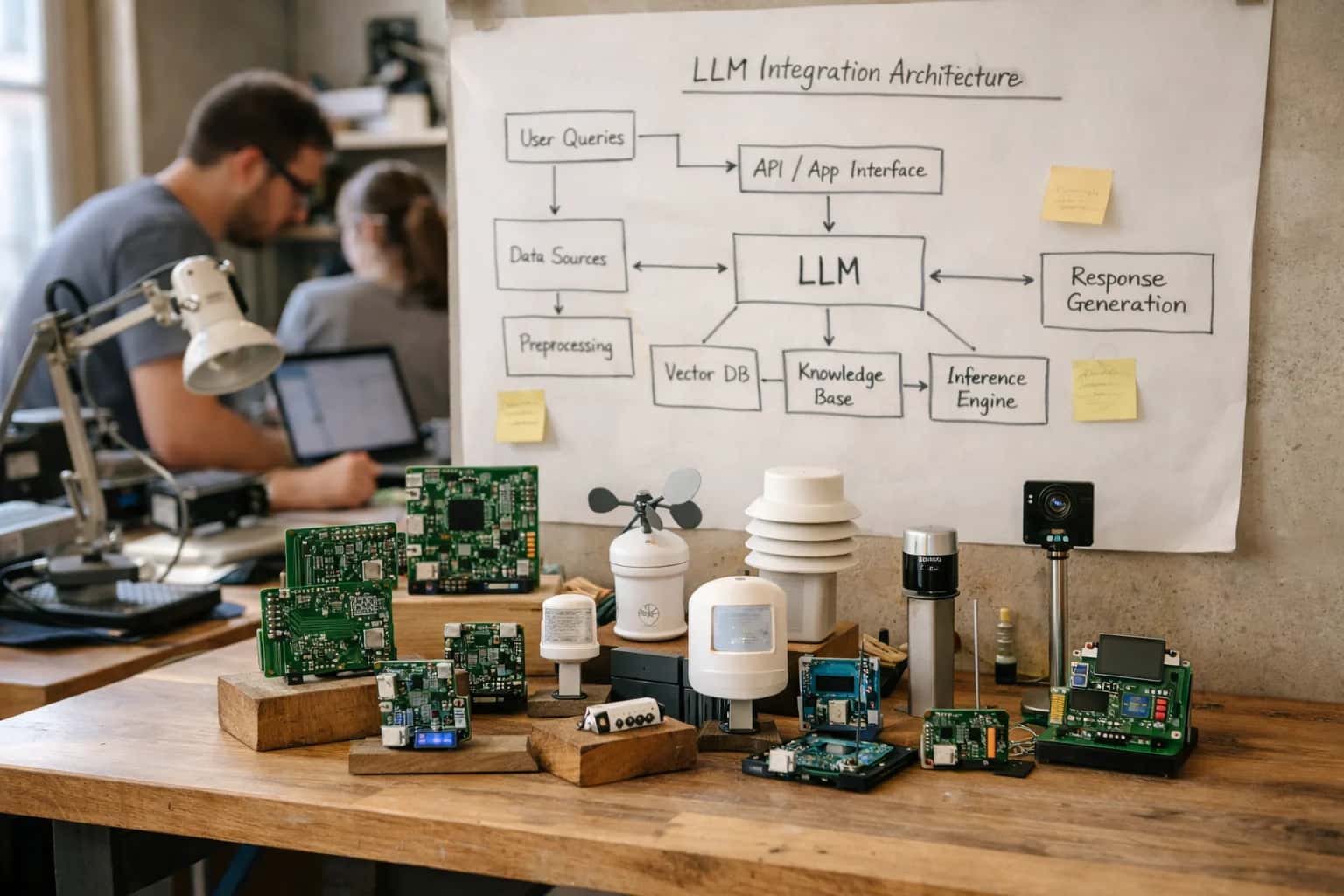
ARCHITECTURE FOR INTELLIGENT SCHEDULING
Where AI Fits in Brightwheel and Google Calendar Sync
A practical guide to embedding AI into the bidirectional sync between Brightwheel and Google Calendar to automate event management and reduce scheduling friction.
For a production implementation, we typically deploy a serverless function (e.g., AWS Lambda, Google Cloud Function) that listens to webhooks. This function uses a lightweight orchestration agent to: 1) Parse and classify the incoming event (e.g., 'field trip', 'staff meeting', 'parent conference'), 2) Apply routing rules (e.g., sync staff meetings only to teacher calendars, not parent calendars), 3) Enrich with context by pulling child or classroom details from Brightwheel's REST API to populate Google Calendar descriptions, and 4) Handle conflicts by checking for overlapping events and suggesting alternative times via a quick LLM call. This turns a simple sync into a context-aware scheduling assistant, reducing the manual back-and-forth for directors and teachers.
Rollout should be phased, starting with a pilot group of staff calendars. Governance is critical: all AI-mediated changes should be logged to an audit trail with a reason field (e.g., 'auto-rescheduled per policy X'), and a human-in-the-loop approval step should be configurable for certain event types like room closures. This ensures the center maintains control while automating the bulk of routine scheduling work. For related architectural patterns, see our guides on Custom Workflow Automation and API and Webhooks.
INTELLIGENT SCHEDULING ORCHESTRATION
Brightwheel and Google Calendar Touchpoints for AI
Core Integration Points
AI-driven sync between Brightwheel and Google Calendar operates across three primary surfaces, each with distinct APIs and data models.
Brightwheel Event & Activity APIs: These provide CRUD access to center-wide events (field trips, closures, conferences) and classroom-specific activities. The Event object includes fields for title, description, date/time, location, and linked classrooms or child groups.
Google Calendar API: Manages calendars and events. The integration typically creates and manages a dedicated calendar (e.g., "Brightwheel - Center Events") or syncs to individual staff calendars. The API allows for rich event details, attendee management (using parent/teacher emails), and reminders.
Brightwheel Family & Staff Directory: Essential for mapping. Parent/guardian email addresses from family profiles and teacher/staff emails are used to set Google Calendar event attendees, enabling automatic invites and calendar blocking.
BRIGHTWHEEL + GOOGLE CALENDAR
High-Value Use Cases for AI-Powered Calendar Sync
Intelligent, bidirectional syncing automates event management between Brightwheel and Google Calendar, reducing manual entry and preventing scheduling conflicts for teachers, directors, and parents.
01
Automated Parent-Teacher Conference Scheduling
AI analyzes teacher availability (from Brightwheel schedules), parent preferences, and room capacity to propose optimal time slots. It syncs confirmed appointments to both Google Calendar and the parent's Brightwheel feed, sends automated reminders, and handles rescheduling requests.
Hours -> Minutes
Admin time saved
02
Closure & Event Sync for Multi-Location Centers
When a director schedules a center-wide closure or event in Brightwheel, AI automatically pushes it to a shared Google Calendar for staff and creates filtered parent-facing events. It ensures consistency across locations and prevents double-booking of shared spaces.
Batch -> Real-time
Notification speed
03
Intelligent Field Trip & Special Activity Coordination
AI assists in planning by checking for calendar conflicts with other classes, required staff-to-child ratios, and bus availability. Upon approval, it creates detailed events in Google Calendar with attachments (permission slips, itineraries) and syncs RSVP status back to Brightwheel child records.
1 sprint
Planning cycle reduction
04
Staff Meeting & Professional Development Scheduling
AI aggregates staff availability from Brightwheel timesheets and personal Google Calendars (with permission) to find optimal meeting times. It books rooms, creates calendar invites, and logs attendance back to Brightwheel's staff management module for compliance tracking.
Same day
Schedule finalization
05
Personalized Family Calendar Feeds
AI curates a personalized Google Calendar feed for each family, syncing only relevant events (their child's class parties, payment due dates, conference times). It filters out irrelevant center-wide events, reducing notification fatigue and improving engagement.
90%+
Relevant event rate
06
Dynamic Room & Resource Booking
Integrates with Brightwheel's room management to treat rooms (gym, nap room) as bookable resources in Google Calendar. AI enforces policies, prevents overbooking, and automatically releases unused slots. Changes in Google Calendar reflect real-time availability in Brightwheel.
Zero
Double-booking conflicts
BRIGHTWHEEL AND GOOGLE CALENDAR SYNC
Example AI Automation Workflows
These workflows demonstrate how AI can transform a simple calendar sync into an intelligent scheduling assistant, reducing manual coordination for teachers, directors, and parents.
Trigger: A teacher or director initiates the conference scheduling period via a Brightwheel form or dashboard action.
Context/Data Pulled:
- Parent availability preferences from a Brightwheel survey.
- Teacher work schedules and existing appointments from their Google Calendar.
- Center-wide blackout dates (staff meetings, closures) from a Brightwheel events feed.
Model/Agent Action:
- An AI agent analyzes all constraints and preferences.
- It generates optimal time slots, avoiding conflicts and prioritizing parent preferences (e.g., "prefers afternoons").
- It drafts personalized invitation emails with the proposed time, child's name, and meeting link.
System Update/Next Step:
- The agent creates the event in the teacher's Google Calendar.
- It uses the Brightwheel API to send the invitation via the parent messaging system, with a one-click "Accept" or "Request New Time" button.
- Upon parent acceptance, the event is automatically added to the family's linked Google Calendar.
Human Review Point: The teacher reviews the final schedule before invitations are sent, with the ability to manually override any slot.
BUILDING A BIDIRECTIONAL, INTELLIGENT SYNC
Implementation Architecture: Data Flow and APIs
A production-ready integration for Brightwheel and Google Calendar uses event-driven webhooks, a central orchestration layer, and AI scheduling logic to automate and enhance calendar management.
The core integration connects to two primary surfaces: Brightwheel's Events API (for parent-teacher conferences, closures, and center events) and Google Calendar's API (for individual or shared resource calendars). The data flow is event-driven: a new event created in Brightwheel triggers a webhook to our orchestration service. This service enriches the event payload with context—such as pulling the associated child's name, classroom, and teacher from Brightwheel's Child and Staff objects—before transforming it into a Google Calendar event with the correct attendees, location, and reminders. The reverse flow works similarly: when a parent or teacher modifies an event in Google Calendar, a webhook notifies the orchestration layer to update the corresponding record in Brightwheel, maintaining a single source of truth.
The AI scheduling assistant operates within this orchestration layer. It analyzes patterns using historical data from Brightwheel's Attendance and Event records to suggest optimal times for events like conferences, minimizing schedule conflicts and maximizing participation. For example, it can propose time slots by evaluating teacher availability (from Brightwheel's staff schedules), typical parent pick-up times, and room utilization. This logic is executed via a dedicated scheduling agent that calls a language model with a structured prompt containing the relevant constraints, returning a ranked list of suggestions. These suggestions are then presented within Brightwheel's UI via a custom action or injected into the event creation workflow.
Rollout and governance are critical. We implement the integration in phases, starting with a single calendar type (e.g., center closures) and a pilot group of classrooms. All modifications are logged in an audit trail, linking Brightwheel event IDs to Google Calendar IDs. Role-based access control (RBAC) is respected by mapping Brightwheel staff roles (Teacher, Director) to appropriate Google Calendar permissions. The system includes configurable validation rules—like ensuring closure events have mandatory director approval—and a dead-letter queue for failed sync attempts, allowing for manual review and reprocessing without data loss.
BUILDING THE SYNC LAYER
Code and Payload Examples
Ingesting Calendar Events from Brightwheel
Brightwheel emits webhook events for key calendar changes, such as new parent-teacher conferences or center closures. Your AI sync service must listen for these events, extract relevant details, and prepare them for Google Calendar.
Below is a Python FastAPI example for handling a calendar.event.created webhook. The handler validates the signature, parses the event, and enriches it with AI—for instance, to suggest optimal times based on teacher availability before queueing it for sync.
pythonfrom fastapi import FastAPI, Request, HTTPException import hashlib import hmac import json from pydantic import BaseModel from typing import Optional app = FastAPI() WEBHOOK_SECRET = os.getenv('BRIGHTWHEEL_WEBHOOK_SECRET') class CalendarEvent(BaseModel): event_id: str event_type: str # e.g., 'parent_teacher_conference', 'closure' title: str description: Optional[str] start_time_utc: str end_time_utc: str location: Optional[str] attendees: list[str] # List of family/teacher IDs metadata: dict @app.post('/webhooks/brightwheel/calendar') async def handle_calendar_webhook(request: Request): payload = await request.body() signature = request.headers.get('X-Brightwheel-Signature') # Verify webhook signature expected_sig = hmac.new(WEBHOOK_SECRET.encode(), payload, hashlib.sha256).hexdigest() if not hmac.compare_digest(signature, expected_sig): raise HTTPException(status_code=401, detail='Invalid signature') event_data = json.loads(payload) event = CalendarEvent(**event_data['event']) # AI Enrichment: Suggest optimal time if conflicting # This calls an internal service to check teacher's Google Calendar via sync state ai_suggested_time = await ai_scheduling_service.suggest_time(event) if ai_suggested_time: event.start_time_utc = ai_suggested_time['start'] event.end_time_utc = ai_suggested_time['end'] # Queue for Google Calendar sync await sync_queue.enqueue('to_google_calendar', event.dict()) return {'status': 'queued'}
BIDIRECTIONAL CALENDAR SYNC & AI SCHEDULING
Realistic Time Savings and Operational Impact
This table illustrates the operational impact of integrating AI-powered scheduling and bidirectional sync between Brightwheel and Google Calendar, moving from manual coordination to intelligent automation.
| Workflow | Before AI | After AI | Implementation Notes |
|---|---|---|---|
Parent-Teacher Conference Scheduling | Manual email/phone tag over 2-3 days | AI proposes times, sends invites, syncs confirmations in <1 hour | Uses family & staff availability from both systems; human final approval |
Event Creation for Center Closures | Manual entry in both systems, risk of mismatch | Single entry in Brightwheel auto-syncs to Google Calendar | AI enforces consistency and adds buffer/reminder rules |
RSVP Tracking for Field Trips | Spreadsheet or paper sign-up, manual follow-ups | AI monitors Brightwheel RSVPs, syncs 'Yes' to calendar, auto-reminds 'No' | Reduces missed permission slips and headcount errors |
Staff Meeting Coordination | Manual poll for availability, cross-checking schedules | AI suggests optimal times based on room coverage and staff calendars | Integrates with Brightwheel staff schedules and personal Google Calendars |
Daily Schedule Adjustments | Teachers manually update posted schedules if changes occur | AI detects schedule changes in Brightwheel, pushes updates to relevant family calendars | Ensures parents see real-time adjustments for naps, meals, or specials |
Conflict Detection & Resolution | Manual discovery when double-booking occurs | AI pre-flights new events, flags conflicts (e.g., staff PTO), suggests alternatives | Proactive alerting prevents overbooking and coverage gaps |
Monthly Calendar Review & Audit | Director manually compares Brightwheel and Google Calendar for discrepancies | AI generates a weekly reconciliation report highlighting mismatches for review | Shifts effort from manual checking to exception-based oversight |
IMPLEMENTING AI IN A REGULATED ENVIRONMENT
Governance, Security, and Phased Rollout
A practical approach to deploying AI for calendar sync in childcare, focusing on data security, user trust, and controlled adoption.
Integrating AI into the sensitive workflow between Brightwheel and Google Calendar requires a security-first architecture. All data flows—parent names, child schedules, event details—must be encrypted in transit and at rest. The AI agent should operate with principle of least privilege, accessing only the specific Brightwheel API endpoints (e.g., /events, /children) and Google Calendar scopes needed for bidirectional sync. Implement strict audit logging for all AI-generated actions, such as event creation, modification, or deletion, tying each action to a system user ID for traceability. This ensures compliance with data protection regulations like FERPA and state childcare privacy laws.
A phased rollout is critical for user adoption and risk management. Start with a pilot group of administrative staff and a single classroom, using AI to sync non-critical events like center-wide closures or professional development days. This allows validation of the AI's logic for handling recurring events, timezone conversions, and attendee management without impacting parent-facing schedules. In phase two, extend to parent-teacher conferences, where the AI assists with scheduling by analyzing teacher availability from Brightwheel and parent preferences from linked forms, proposing optimal time slots. The final phase enables fully automated, bidirectional sync for daily activities and reminders, with a human-in-the-loop approval step configurable per event type within Brightwheel's workflow rules.
Governance is maintained through continuous monitoring and clear ownership. Designate a center administrator as the AI workflow owner within Brightwheel, responsible for reviewing the AI's performance dashboards and exception reports. Common exceptions include double-booked time slots or events with missing required fields; the system should route these to a human queue for resolution. Regular prompt audits and model output evaluations ensure the AI's scheduling suggestions and communication tone remain aligned with center policy. By rolling out in controlled stages and embedding governance into the platform's existing roles, centers can achieve operational efficiency—turning manual calendar coordination from a daily administrative task into a background process—while maintaining the trust and clarity that families and staff require.
Enabling Efficiency, Speed & Accuracy
Intelligent Analysis, Decision & Execution
We build AI systems for teams that need search across company data, workflow automation across tools, or AI features inside products and internal software.
Talk to Us
Search across company data
Give teams answers from docs, tickets, runbooks, and product data with sources and permissions.
Useful when people spend too long searching or get different answers from different systems.
Enterprise searchRAGPermissions
Read more
Automate internal workflows
Use AI to route work, draft outputs, trigger actions, and keep approvals and logs in place.
Useful when repetitive work moves across multiple tools and teams.
AI agentsWorkflow automationGovernance
Read more
Add AI to products and internal tools
Build assistants, guided actions, or decision support into the software your team or customers already use.
Useful when AI needs to be part of the product, not a separate tool.
AI integrationDecision supportModel routing
Read moreBRIGHTWHEEL AND GOOGLE CALENDAR SYNC AI
FAQ: Technical and Commercial Questions
Common technical and commercial questions about implementing intelligent, bidirectional calendar syncing between Brightwheel and Google Calendar using AI.
The AI agent uses a multi-step process to ensure accurate and context-aware syncing:
- Trigger & Ingestion: The system monitors Brightwheel's
eventsAPI and Google Calendar's webhooks for new or modified items. - Context Enrichment: For each event, the AI pulls related data:
- From Brightwheel: Event type (parent-teacher conference, closure, field trip), linked classrooms, invited families, description.
- From Google Calendar: Existing attendee lists, location, recurrence patterns.
- Intelligent Mapping & Deduplication: The LLM analyzes the event to:
- Classify its type and priority.
- Extract key entities (date, time, duration, location).
- Check for conflicts or duplicates across both calendars.
- Apply formatting rules (e.g., "Brightwheel: P/T Conf - Room 3" in Google; auto-adds video link for virtual meetings to the Google event description).
- System Update: The formatted event payload is pushed via the target platform's API (
POST /calendars/eventsfor Brightwheel or Google Calendar API). - Human Review Point: Events marked as "tentative" or with significant scheduling conflicts are flagged in a dashboard for director approval before syncing.

About the author
Prasad Kumkar
CEO & MD, Inference Systems
Prasad Kumkar is the CEO & MD of Inference Systems and writes about AI systems architecture, LLM infrastructure, model serving, evaluation, and production deployment. Over 5+ years, he has worked across computer vision models, L5 autonomous vehicle systems, and LLM research, with a focus on taking complex AI ideas into real-world engineering systems.
His work and writing cover AI systems, large language models, AI agents, multimodal systems, autonomous systems, inference optimization, RAG, evaluation, and production AI engineering.
LinkedIn
Limited slotsGet a Free AI Consultation
Partnered with leading AI, data, and software stack.





How We Work
Custom AI workflows for your Business
One-fit-all AI don't work for modern businesses. At Inferensys, we aim to understand your business & custom requirements; which we use to define most efficient agentic workflows, the data, and the tools for your business.
01
Review the use case
We understand the task, the users, and where AI can actually help.
Read more02
Pick the right approach
We define what needs search, automation, or product integration.
Read more03
Build the first useful version
We implement the part that proves the value first.
Read more04
Improve from there
We add the checks and visibility needed to keep it useful.
Read moreThe first call is a practical review of your use case and the right next step.
Talk to Us