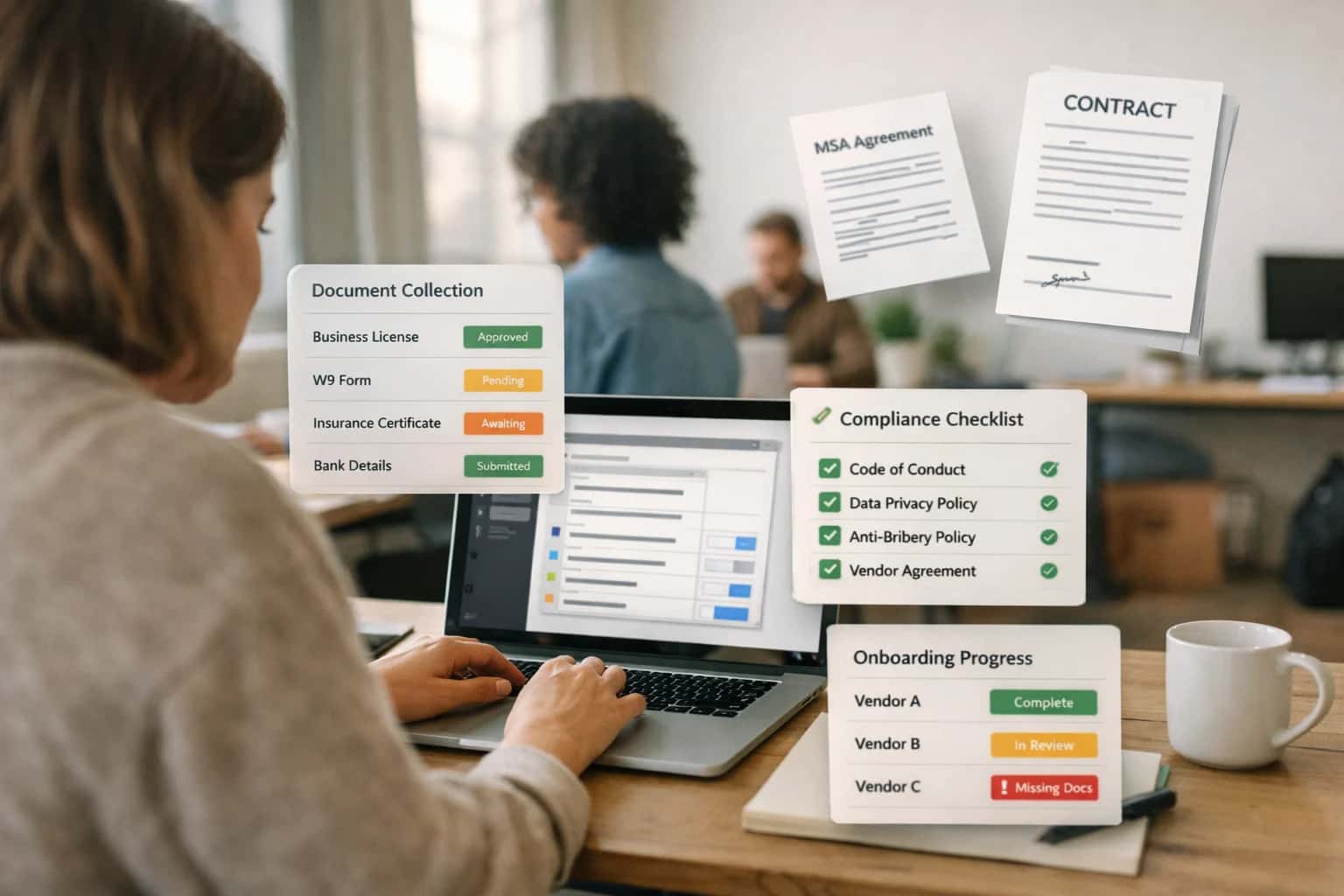
For employers offering childcare benefits, the operational friction often lies between the corporate HR system (like Workday or SAP SuccessFactors) and the childcare management platform (like Brightwheel or Procare). AI agents act as the connective tissue, automating the flow of data for eligibility verification, usage reporting, and subsidy reconciliation. Key integration points include syncing employee and dependent records via HRIS APIs, validating benefit enrollment status against plan rules, and pushing verified child profiles into the childcare platform's family management module to provision access.

Integration
AI Integration for Corporate Childcare Platforms
A technical blueprint for embedding AI into employer-sponsored childcare programs to automate eligibility, usage reporting, HR sync, and parent/employee support.
INTEGRATING WITH CORPORATE HR AND BENEFITS SYSTEMS
Where AI Fits in Corporate Childcare Operations
AI integration bridges employer-sponsored childcare platforms with corporate HRIS and benefits systems to automate eligibility, reporting, and compliance.
A core AI workflow automates the monthly or quarterly reporting back to the employer. Instead of manual spreadsheets, an AI agent can extract attendance, billing, and utilization data from the childcare platform's reporting APIs, structure it by cost center or employee ID, and generate formatted reports for HR and Finance. This includes flagging anomalies—like a child attending beyond approved hours—for human review before final submission. The integration ensures billing accuracy and provides the employer with auditable, real-time insights into benefit utilization and ROI.
Governance is critical. A production implementation requires secure, tokenized API connections, role-based access controls (RBAC) to limit data exposure, and a full audit trail of all automated transactions. AI logic must be designed to handle exceptions gracefully, such as mid-month employee termination or changes to dependent status, routing these cases to a benefits administrator via Slack or ServiceNow. Rollout typically starts with a pilot group, validating the data sync and report accuracy before scaling to the full employee population. For a deeper look at syncing financial data, see our guide on AI Integration for Childcare Software with QuickBooks.
AI FOR CORPORATE CHILDCARE
Key Integration Surfaces: Childcare Platform vs. HR System
Synchronizing Employee Data for Subsidy Programs
This surface connects the corporate HRIS (e.g., Workday, ADP) to the childcare management platform (e.g., Brightwheel, Procare) to automate eligibility verification and enrollment. AI agents orchestrate the flow of employee data—such as employment status, dependent details, and income verification—to pre-populate enrollment forms and determine subsidy tier eligibility against corporate policies.
Key workflows include:
- Automated Dependent Verification: Cross-referencing HRIS beneficiary records with childcare platform family profiles.
- Policy-Aware Intake: Using natural language processing (NLP) to extract data from uploaded pay stubs or tax documents for income-based programs.
- Status Change Triggers: Monitoring HRIS events (like promotions or terminations) to automatically update a child's subsidy status or trigger re-verification workflows in the childcare system.
This integration reduces manual data entry errors and accelerates the onboarding of employee families into sponsored childcare slots.
CORPORATE CHILDCARE PLATFORMS
High-Value AI Use Cases for Corporate Programs
For employers offering sponsored childcare benefits, AI integration bridges corporate HR systems with childcare management platforms, automating eligibility, reporting, and compliance to reduce administrative overhead and improve employee experience.
01
Automated Eligibility Verification & Onboarding
AI agents connect corporate HRIS (Workday, SAP SuccessFactors) to childcare platforms (Brightwheel, Procare) to validate employee eligibility in real-time, pre-fill enrollment forms, and trigger welcome communications. This reduces manual verification from HR and center staff from days to minutes.
Days -> Minutes
Onboarding time
02
Usage Reporting & Subsidy Reconciliation
AI automates the extraction of daily attendance and billing data from childcare platforms, matching it against corporate subsidy policies and budget codes. It generates consolidated usage reports for finance and flags discrepancies for review, streamlining monthly reconciliation.
Batch -> Real-time
Spend visibility
03
Dynamic Waitlist & Capacity Management
AI models analyze employee location, preferred center, and child age to intelligently prioritize corporate waitlists across partner centers. It predicts opening availability and automates slot offers to eligible employees, maximizing utilization of sponsored seats.
1 sprint
Implementation lead time
04
Compliance & Audit Trail Automation
AI monitors childcare platform data flows to ensure adherence to corporate policies and program rules (e.g., income thresholds, service limits). It automatically generates audit-ready logs of eligibility decisions, communications, and financial transactions for internal and external reviews.
05
Employee Support Agent for Childcare Benefits
An AI-powered chatbot integrated with the corporate intranet and childcare platform APIs provides 24/7 answers to employee questions about benefit balances, center contacts, payment status, and policy details, deflecting routine inquiries from HR service desks.
Hours -> Minutes
Query resolution
06
Program ROI & Predictive Analytics
AI correlates childcare benefit usage data from platforms with HR metrics like retention, absenteeism, and productivity. It generates predictive insights on program impact and recommends adjustments to subsidy levels or partner networks to optimize corporate investment.
CORPORATE CHILDCARE OPERATIONS
Example AI Agent Workflows
For employers managing sponsored childcare benefits, AI agents automate complex workflows that span corporate HR systems, childcare provider platforms, and financial reconciliation tools. These are production-ready patterns for eligibility, usage, and compliance.
Trigger: New employee is added to the Workday or BambooHR system with a flagged benefit eligibility status.
Workflow:
- An AI agent monitors the HRIS webhook for
employee.createdorbenefit_eligibility.updatedevents. - The agent extracts the employee's details (name, dependents, employment type, location) and cross-references them against corporate childcare policy rules (e.g., "Full-time employees in ZIP codes X, Y, Z are eligible for up to $1,200/month").
- The agent generates a personalized eligibility packet and initiates a secure, guided onboarding flow via the corporate benefits portal.
- It creates a corresponding family/guardian record in the childcare management platform (e.g., Brightwheel, Procare) via API, pre-populating known data.
- The agent sends a welcome email/SMS to the employee with next steps and a unique access code, logging all actions for audit.
Human Review Point: Flag for manual review if the employee's data does not clearly match policy criteria (e.g., part-time status with special approval).
CORPORATE HRIS INTEGRATION
Implementation Architecture & Data Flow
A production-ready architecture for embedding AI into corporate-sponsored childcare programs, connecting employer HR systems with childcare management platforms.
The core integration connects two primary data domains: the corporate HRIS (e.g., Workday, SAP SuccessFactors) for employee eligibility and benefits data, and the childcare management platform (e.g., Brightwheel, Procare) for center operations. A central orchestration layer, built on a queue-based system like AWS SQS or Azure Service Bus, manages the bidirectional flow of key objects:
- Employee/Child Records: Synchronizes verified dependent information, subsidy tiers, and employer contribution caps from HRIS to the childcare platform's family profiles.
- Usage & Attendance Events: Streams daily check-in/check-out logs and confirmed bookings from the childcare platform back to the corporate system for real-time utilization reporting and payroll deduction triggers.
- Invoicing & Reconciliation Data: Automates the generation of employer-specific invoices, applying complex subsidy rules and splitting costs between corporate and employee contributions before pushing finalized billing records to both the childcare platform's billing engine and the corporate AP system.
High-value AI agents operate within this data flow. An Eligibility Verification Agent intercepts new enrollment applications, cross-references employee status and remaining benefit allowances against the HRIS via secure APIs, and flags discrepancies for human review before approval. A Utilization Forecasting Agent analyzes historical attendance patterns, employee work calendars (from Microsoft Graph or Google Calendar APIs), and seasonal trends to predict weekly demand, enabling centers to optimize staff-to-child ratios and corporate HR to model benefit program costs. A Compliance & Reporting Agent automatically compiles monthly usage summaries, tax documentation (e.g., for Dependent Care FSAs), and program ROI analytics by joining data from both systems, reducing manual consolidation from days to hours.
Rollout follows a phased, location-based approach. Phase 1 establishes the core data pipeline for a pilot group, with webhooks from the childcare platform triggering real-time syncs. Governance is critical: all PII is encrypted in transit and at rest, access is controlled via role-based permissions (RBAC), and a full audit trail logs every AI-generated decision or data modification. The system is designed for resilience—if the HRIS API is unavailable, events are queued and retried, ensuring operational continuity for the childcare center. This architecture allows corporate teams to manage a scalable, auditable benefit program while giving childcare providers automated, accurate administrative support.
CORPORATE CHILDCARE INTEGRATION PATTERNS
Code & Payload Examples
Automated Eligibility & Subsidy Verification
This workflow uses AI to parse and validate employee documentation (pay stubs, offer letters) against corporate childcare program rules and state subsidy requirements. The agent extracts key data points, checks for completeness, and flags discrepancies for HR review before updating the child's record in the management platform.
Example JSON Payload (AI Agent → Childcare Platform):
json{ "child_id": "CHLD-78910", "family_id": "FAM-2024-567", "eligibility_status": "approved", "program_tier": "corporate_full_subsidy", "effective_date": "2024-06-01", "expiration_date": "2024-12-31", "verified_documents": [ "paystub_202405.pdf", "program_application_form.pdf" ], "validation_notes": "Income verified within range. Employment tenure >6 months. State subsidy pre-qualification check passed.", "requires_manual_review": false }
The payload is sent via a PATCH request to the childcare platform's child profile API to update subsidy fields and trigger automated enrollment steps.
CORPORATE CHILDCARE OPERATIONS
Realistic Time Savings & Operational Impact
How AI integration reduces administrative overhead and improves accuracy for employer-sponsored childcare programs.
| Workflow | Before AI | After AI | Implementation Notes |
|---|---|---|---|
Eligibility Verification | Manual HR file review (30-45 min per employee) | Automated cross-check with HRIS (2-5 min) | AI validates against corporate policy, flags exceptions for human review |
Usage Reporting & Reconciliation | Monthly spreadsheet consolidation (4-6 hours) | Automated daily sync & anomaly detection (30 min review) | AI matches child attendance to corporate invoices, highlights discrepancies |
Subsidy & Reimbursement Claims | Manual data extraction for state/federal forms (2-3 hours weekly) | AI-assisted form pre-fill & document bundling (20-30 min) | Integrates with Procare or Kangarootime attendance logs and billing APIs |
Parent/Employee Onboarding | Email chains and manual data entry (1-2 hours per family) | AI-powered digital form pre-fill & FAQ chatbot (15-20 min) | Leverages existing HR data via secure API; chatbot handles common policy questions |
Billing Exception Handling | Reactive review of past-due accounts (3-4 hours monthly) | Proactive, personalized payment reminder sequences (1 hour monthly) | AI sequences triggered by platform webhooks; human-in-the-loop for escalations |
Compliance Audit Preparation | Quarterly manual compilation of records (8-12 hours) | Continuous monitoring & automated report generation (2-3 hours quarterly) | AI scans for licensing ratio violations, credential expirations, and required documentation gaps |
Multi-Center Capacity Forecasting | Manual analysis of waitlists and enrollment trends (6-8 hours monthly) | Predictive model-driven forecasts with scenario planning (1-2 hours monthly) | AI aggregates data from Brightwheel, Famly, or Procare APIs across locations |
ARCHITECTING FOR CORPORATE HR COMPLIANCE
Governance, Security & Phased Rollout
Integrating AI into corporate-sponsored childcare requires a security-first architecture that respects employee privacy and aligns with HR system governance.
A production integration connects to platforms like Brightwheel, Procare, or Kangarootime via their REST APIs and webhooks, but must treat the corporate HRIS (e.g., Workday, BambooHR) as the single source of truth for eligibility. The AI layer acts as a middleware orchestrator: it verifies an employee's benefit status and dependent details against the HRIS via a secure API call before processing any childcare platform transaction—such as generating a subsidized invoice or logging attendance for reimbursement. All AI-generated outputs, like usage summaries for finance or eligibility exception flags, are written back to a dedicated audit log object within the childcare platform and can be configured to trigger approval workflows in tools like ServiceNow or Jira for manager or HRBP review.
Rollout follows a phased, role-based access control (RBAC) model. Phase 1 might deploy a read-only AI agent for HR administrators to query aggregated, anonymized usage trends across all corporate-sponsored centers. Phase 2 enables AI-driven, automated eligibility verification and invoice generation for a pilot group of employees, with all communications and payment adjustments requiring a human-in-the-loop confirmation step in the childcare platform's interface. Phase 3 expands to full automation for trusted workflows, like daily attendance sync for reimbursement, but maintains a real-time kill switch and comprehensive audit trail linked to each employee's master record in the HRIS.
Security is enforced through policy-aware tool calling. AI agents are granted scoped API tokens with permissions limited to specific modules (e.g., read on child profiles, write on billing adjustments) and are programmed to redact sensitive PII from prompts and logs. All data in transit between the corporate HRIS, childcare platform, and AI model is encrypted, and vector embeddings for semantic search (e.g., querying policy documents) are stored in a isolated, corporate-managed instance of a platform like Pinecone or Weaviate. This ensures that employee data never trains public models and remains within the governed IT perimeter, satisfying typical corporate data residency and compliance requirements for benefits administration.
Enabling Efficiency, Speed & Accuracy
Intelligent Analysis, Decision & Execution
We build AI systems for teams that need search across company data, workflow automation across tools, or AI features inside products and internal software.
Talk to Us
Search across company data
Give teams answers from docs, tickets, runbooks, and product data with sources and permissions.
Useful when people spend too long searching or get different answers from different systems.
Enterprise searchRAGPermissions
Read more
Automate internal workflows
Use AI to route work, draft outputs, trigger actions, and keep approvals and logs in place.
Useful when repetitive work moves across multiple tools and teams.
AI agentsWorkflow automationGovernance
Read more
Add AI to products and internal tools
Build assistants, guided actions, or decision support into the software your team or customers already use.
Useful when AI needs to be part of the product, not a separate tool.
AI integrationDecision supportModel routing
Read moreIMPLEMENTATION AND SECURITY
Frequently Asked Questions
Common questions from HR, IT, and operations leaders about integrating AI into employer-sponsored childcare platforms like Brightwheel, Procare, and Kangarootime for corporate programs.
Security is paramount. Our integrations follow a zero-trust, principle-of-least-privilege model.
- API Credentials & RBAC: AI agents use dedicated service accounts with scoped API permissions, accessing only the specific objects (e.g., child records, attendance logs) needed for the workflow.
- Data Minimization: We architect workflows to process data in-place where possible. For example, an eligibility verification agent might call the platform's API to check a child's age and subsidy status, returning only a
true/falseresult instead of pulling full records. - Encrypted Transit & Audit Trails: All API calls use TLS 1.3. Every AI-generated action (e.g., approving a spot, logging usage) creates an immutable audit log entry in the childcare platform, tagged with the service account ID.
- Vendor Governance: We ensure the underlying LLM provider (e.g., Azure OpenAI, Anthropic) offers a BAA and data processing agreement, with prompts and responses encrypted at rest. No PII is used for model training.
Implementation typically involves setting up a secure middleware layer that handles authentication, logging, and data masking before any LLM call.

About the author
Prasad Kumkar
CEO & MD, Inference Systems
Prasad Kumkar is the CEO & MD of Inference Systems and writes about AI systems architecture, LLM infrastructure, model serving, evaluation, and production deployment. Over 5+ years, he has worked across computer vision models, L5 autonomous vehicle systems, and LLM research, with a focus on taking complex AI ideas into real-world engineering systems.
His work and writing cover AI systems, large language models, AI agents, multimodal systems, autonomous systems, inference optimization, RAG, evaluation, and production AI engineering.
LinkedIn
Limited slotsGet a Free AI Consultation
Partnered with leading AI, data, and software stack.





How We Work
Custom AI workflows for your Business
One-fit-all AI don't work for modern businesses. At Inferensys, we aim to understand your business & custom requirements; which we use to define most efficient agentic workflows, the data, and the tools for your business.
01
Review the use case
We understand the task, the users, and where AI can actually help.
Read more02
Pick the right approach
We define what needs search, automation, or product integration.
Read more03
Build the first useful version
We implement the part that proves the value first.
Read more04
Improve from there
We add the checks and visibility needed to keep it useful.
Read moreThe first call is a practical review of your use case and the right next step.
Talk to Us