For nonprofit preschools, the tech stack is a hybrid of childcare management platforms like Brightwheel or Procare and nonprofit-specific systems for donor management (e.g., Bloomerang, Salesforce NPSP) and grant accounting. AI integration focuses on three critical junctions: 1) Child and Family Data, where enrollment and attendance records in your childcare platform feed grant reporting; 2) Financial Operations, where tuition, subsidy, and donor-funded billing must reconcile with nonprofit accounting standards; and 3) Compliance Workflows, where state licensing and grant-specific documentation require audit-ready trails. The goal is to use AI as a connective layer that automates the data translation between these systems, turning manual, error-prone consolidation into a governed, automated process.

Integration
AI Integration for Nonprofit Preschool Software
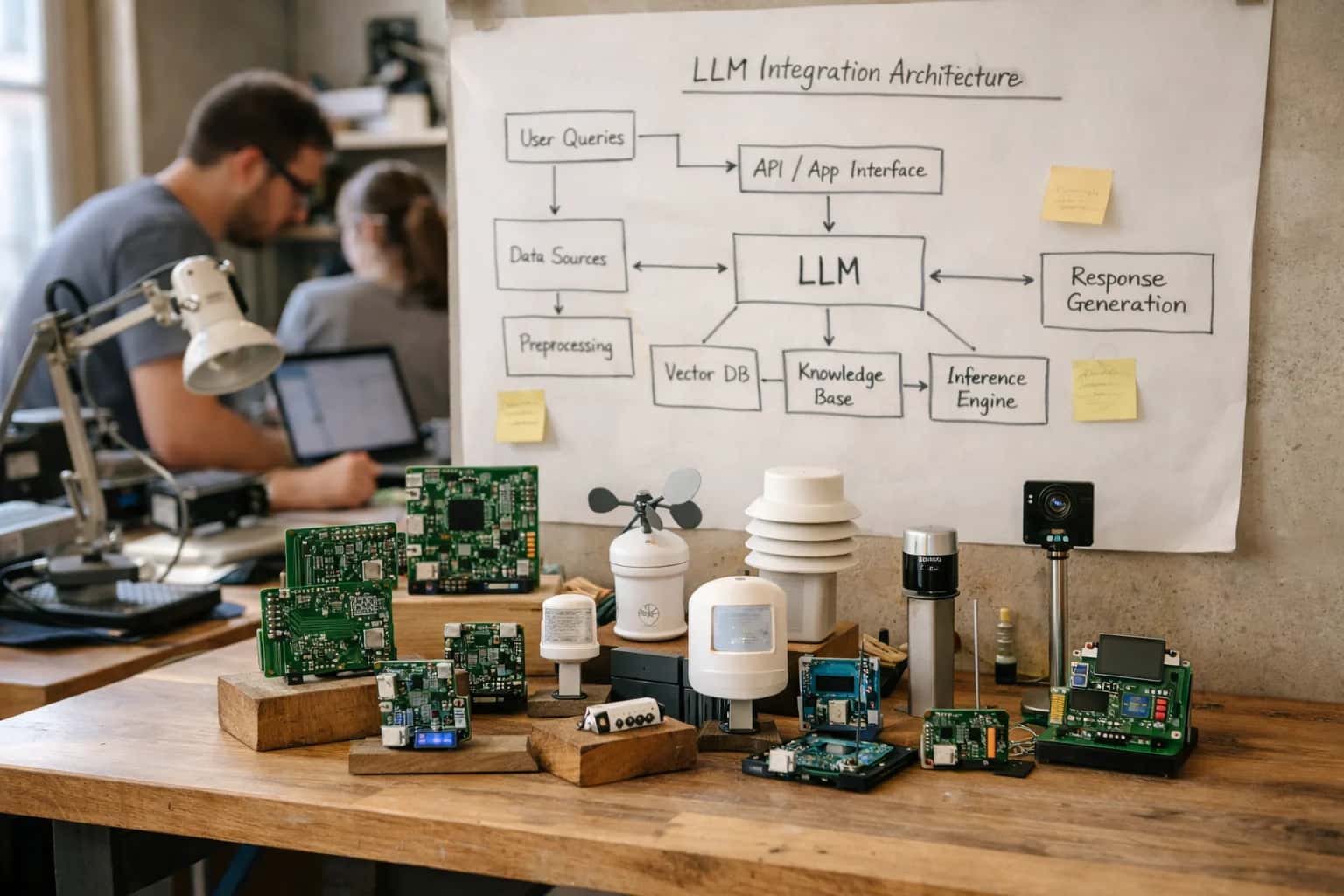
Where AI Fits in the Nonprofit Preschool Tech Stack
A practical guide to integrating AI into nonprofit-specific workflows without disrupting core childcare operations.
Implementation typically involves deploying lightweight AI agents that listen for webhook events from your childcare software—like a new enrollment, a completed attendance day, or a processed subsidy payment. These agents use the event context to trigger three primary workflows: Automated Grant Reporting (e.g., extracting daily attendance to prove service hours for a foundation grant), Donor-Funded Slot Management (e.g., dynamically allocating and tracking scholarship seats against donor restrictions), and Nonprofit GL Sync (e.g., classifying tuition revenue and in-kind contributions before posting to Sage Intacct or QuickBooks Nonprofit). The architecture is built on secure API calls, with human-in-the-loop approval steps for any financial posting or external report submission, ensuring directors maintain oversight.
Rollout should be phased, starting with a single, high-value grant reporting workflow. Governance is paramount: define clear data ownership (who approves AI-generated reports?), establish audit logs for all AI-triggered actions, and implement RBAC so only authorized staff can modify AI agent rules. A successful integration reduces the administrative burden of nonprofit compliance, allowing staff to reallocate hours from manual data wrangling to mission-driven care and community engagement. For a deeper look at connecting childcare data to donor systems, see our guide on AI Integration for Donor Management and Nonprofit CRM Platforms.
Key Integration Surfaces in Your Preschool Software
Automating Grant Lifecycles with AI
Nonprofit preschools rely on grants for subsidized slots, facility upgrades, and program funding. AI can integrate with your software's child and family records to automate the most labor-intensive parts of grant management.
Key Integration Points:
- Child/Family Profile APIs: Extract demographic data (income tier, family size, special needs status) for eligibility verification and grant application pre-filling.
- Attendance & Billing Modules: Calculate and report on funded "slot utilization" in real-time, a common grant requirement.
- Document Management: Use AI-powered OCR to process scanned grant agreements, W-9s, and compliance certificates, attaching them to the correct funding source record.
Example Workflow: An AI agent monitors newly enrolled children, checks their profiles against active grant criteria (e.g., "Early Head Start slots"), automatically reserves a funded slot, and initiates the required documentation workflow for the family, all within your preschool platform.
High-Value AI Use Cases for Nonprofit Preschools
Nonprofit preschools manage unique workflows around grant compliance, donor-funded operations, and specialized reporting. These AI integration patterns connect to platforms like Brightwheel, Procare, and Kangarootime to automate administrative overhead and focus resources on care.
Automated Grant Reporting & Outcome Tracking
AI extracts child attendance, developmental milestone, and family demographic data from your childcare platform to auto-populate grant reports. It maps daily activities to grant objectives (e.g., 'literacy hours served'), flags compliance gaps, and drafts narrative summaries for funders like United Way or state agencies.
Donor-Funded Slot Management & Eligibility
Integrates AI with enrollment and billing modules to manage scholarship or donor-funded slots. AI cross-references family applications, income documentation (via OCR), and funding source rules to recommend slot assignments, track utilization against donor intent, and trigger re-verification workflows.
Nonprofit Financial Reconciliation & GL Coding
AI reviews tuition payments, donation deposits, and expense transactions from your childcare software. It automatically applies nonprofit fund accounting logic, suggests proper general ledger codes (e.g., Restricted vs. Unrestricted funds), and flags anomalies for review before syncing to QuickBooks Nonprofit or Sage Intacct.
Compliance Document Intelligence for 501(c)(3)
Uses AI-powered OCR and classification on uploaded documents within child records. It automatically identifies and tags required files for nonprofit audits—like board meeting minutes, conflict-of-interest policies, or IRS Form 990 supporting docs—and alerts administrators of missing or expired items.
Donor Communication & Impact Story Generation
AI analyzes anonymized child activity logs and teacher observations from your platform to generate donor-facing impact stories. It synthesizes data points (e.g., '45 children achieved kindergarten readiness scores') into compelling narratives for annual reports, email campaigns, or grant renewal submissions.
Volunteer & Board Member Coordination
Connects AI to your center's calendar and family engagement modules. It matches volunteer skills and availability to needs (reading time, facility help), automates onboarding reminders for background checks, and schedules board report briefings by pulling key metrics from your childcare platform's dashboards.
Example AI Automation Workflows
For nonprofit preschools, AI integration focuses on automating grant-funded workflows, ensuring compliance with nonprofit accounting standards, and maximizing operational efficiency within funding constraints. These workflows connect to your preschool management software to reduce administrative overhead.
Trigger: A new family application is submitted via your preschool software's enrollment module.
Context Pulled: The AI agent retrieves the application data and cross-references it with active grant programs (e.g., Head Start, CCDF, state preschool) stored in a connected grants database. It pulls eligibility criteria such as income thresholds, family size, and residency requirements.
Agent Action: The LLM evaluates the application against each grant's rules. It can generate a preliminary eligibility score, flag missing documentation (e.g., proof of income), and draft a personalized request for the needed documents.
System Update: The preschool software's family record is updated with the eligibility assessment and a task is created for the enrollment coordinator. If fully eligible, the child can be auto-assigned to a grant-funded slot, updating room capacity in real-time.
Human Review Point: Final approval of grant slot assignment and document verification remains with the enrollment coordinator. The AI provides a summarized recommendation with cited criteria.
Implementation Architecture: Data Flow and Guardrails
A secure, governed architecture for integrating AI into nonprofit preschool software, focusing on grant reporting, donor-funded operations, and compliance.
For a nonprofit preschool, the AI integration architecture must connect to three critical data surfaces within platforms like Brightwheel, Procare, or Kangarootime: child and family records (for donor-funded slot eligibility), attendance and billing modules (for cost allocation and subsidy tracking), and document storage (for grant applications and compliance reports). The core data flow begins by extracting structured child demographics, attendance hours, and fee data via the platform's REST APIs or webhook events. This operational data is then enriched with external grant guidelines and donor restrictions stored in a separate policy database. An AI orchestration layer—using tools like CrewAI or n8n—processes this combined dataset to generate draft grant narratives, populate state reporting templates (like CCDBG claims), and flag attendance exceptions that could impact nonprofit accounting compliance.
Key guardrails are implemented at each stage. Before processing, a data anonymization service scrubs PII from child records, retaining only necessary non-identifying attributes like age group and attendance hours for reporting. The AI's outputs, such as a draft grant report, are never published directly. Instead, they are routed to a human-in-the-loop approval queue within the preschool's existing task management system (e.g., a dedicated channel in Microsoft Teams or a queue in Asana). Here, a director or grant manager reviews, edits, and approves the content. All AI-generated text and calculations are logged with a full audit trail in a vector database like Pinecone, linking the output to the source data and prompt used, which is essential for audit-ready documentation of how donor funds were allocated and reported.
Rollout follows a phased, risk-aware approach. Phase 1 typically automates the generation of routine monthly attendance summaries for state reimbursement, a high-volume, low-risk task. Phase 2 introduces donor impact reporting, where AI drafts personalized updates for funders by synthesizing child progress notes and attendance data. The final phase tackles complex grant application drafting, which requires tight integration with the preschool's financial data from systems like QuickBooks Nonprofit. Governance is maintained through a monthly review of the AI's performance logs by the board's finance committee, ensuring the system's outputs align with nonprofit accounting standards (FASB) and the specific restrictions of each funding source.
Code and Payload Examples
Automating Funder-Specific Reporting
Nonprofit preschools manage grants with strict reporting on enrollment demographics, service hours, and outcome metrics. An AI agent can query the preschool software's database, synthesize data into narrative summaries, and populate required templates.
Typical Workflow:
- Agent receives a trigger (e.g.,
grant_report_due). - It queries the
ChildandAttendancetables for the grant period, filtering by funding source. - Using an LLM, it drafts a narrative highlighting key metrics (e.g., "served 45 low-income children, achieving 92% average daily attendance").
- The agent merges this narrative with structured data into a PDF or Word document, ready for director review.
python# Example: Query for grant-specific attendance data import requests # Payload to preschool software API query_payload = { "report_type": "attendance_summary", "filters": { "date_range": {"start": "2024-07-01", "end": "2024-09-30"}, "funding_source": "state_early_learning_grant_2024", "demographic_fields": ["subsidy_status", "age_group"] } } response = requests.post( "https://api.preschool-platform.com/v1/reports", json=query_payload, headers={"Authorization": "Bearer YOUR_API_KEY"} ) # AI agent processes `response.json()` to draft narrative
Realistic Time Savings and Operational Impact
How AI integration can streamline grant-funded workflows, compliance, and family services for nonprofit preschools using platforms like Brightwheel, Procare, and Kangarootime.
| Workflow / Task | Manual Process (Before AI) | AI-Assisted Process (After AI) | Implementation Notes |
|---|---|---|---|
Grant Reporting & Documentation | Days of manual data aggregation and narrative writing | Hours of assisted compilation and draft generation | AI pulls from attendance, billing, and assessment APIs; human reviews final submission |
Donor-Funded Slot Eligibility & Assignment | Manual review of applications against complex criteria | Pre-screening and scoring of applications for review | Integrates with enrollment modules; flags edge cases for director approval |
Nonprofit Accounting & GL Reconciliation | Weekly manual journal entry matching for restricted funds | Daily automated matching with exception flagging | Syncs with Procare/QuickBooks; AI learns grant cost center mappings |
Compliance Packet Assembly for Licensing | Staff gathers physical/digital documents for each audit | Automated checklist and document retrieval from child records | Uses OCR on scanned forms; generates pre-audit readiness reports |
Family Communication for Sliding-Scale Tuition | Manual, personalized explanations of aid calculations | Template personalization and scheduled delivery via parent app | Leverages billing API data; maintains human touch for sensitive cases |
Outcome Reporting for Foundation Grants | Quarterly manual compilation of child progress metrics | Assisted aggregation of observational data into narrative summaries | Connects to Famly/Kangarootime learning journals; aligns with grant KPIs |
Volunteer & Donor Engagement Coordination | Spreadsheet management of contacts and touchpoints | Automated segmentation and outreach sequence suggestions | Integrates with donor CRM (e.g., Bloomerang); suggests next-best actions |
Governance, Security, and Phased Rollout
For nonprofit preschools, AI integration must be built on a foundation of data stewardship, grant compliance, and controlled adoption.
Integrating AI with platforms like Procare or Brightwheel for a nonprofit requires mapping AI workflows to specific, auditable data objects: Child, Family, Attendance, Billing Ledger, and Subsidy Claim. Governance starts at the API layer, enforcing role-based access so AI agents only interact with data necessary for their function—for example, a grant reporting agent accesses attendance and demographic fields but not full financial records. All AI-generated outputs, such as draft grant narratives or donor-funded slot analyses, should be logged as system activities with clear lineage back to the source records, creating an audit trail for funder reviews and 990 reporting.
A phased rollout is critical. Start with a pilot on a single, high-value workflow like automating state subsidy claim compilation. This involves an AI agent that queries the childcare platform's reporting APIs for daily attendance, cross-references it with eligibility rosters, and drafts the claim document for human review. This low-risk, high-ROI use case validates the integration pattern without touching sensitive donor or family communication data. Subsequent phases can introduce AI for grant opportunity matching (analyzing center data against grantor criteria) and restricted fund tracking, ensuring AI suggestions for slot allocation align with donor intent and nonprofit accounting standards.
Security extends to the AI models themselves. For nonprofit preschools handling child and family PII, we recommend a retrieval-augmented generation (RAG) architecture where the LLM is grounded in your internal policy documents and anonymized operational data, preventing data leakage. All AI interactions should be routed through a secure gateway that enforces data anonymization for training purposes and strips PII from prompts. A final governance layer is a human-in-the-loop approval for any AI-generated communication or financial action, ensuring directors maintain oversight. This controlled approach allows nonprofits to harness AI for operational efficiency while upholding the trust and compliance required by their board, donors, and licensing bodies.
Enabling Efficiency, Speed & Accuracy
Intelligent Analysis, Decision & Execution
We build AI systems for teams that need search across company data, workflow automation across tools, or AI features inside products and internal software.
Talk to Us
Search across company data
Give teams answers from docs, tickets, runbooks, and product data with sources and permissions.
Useful when people spend too long searching or get different answers from different systems.

Automate internal workflows
Use AI to route work, draft outputs, trigger actions, and keep approvals and logs in place.
Useful when repetitive work moves across multiple tools and teams.

Add AI to products and internal tools
Build assistants, guided actions, or decision support into the software your team or customers already use.
Useful when AI needs to be part of the product, not a separate tool.
FAQ: AI Integration for Nonprofit Preschool Software
Nonprofit preschools face unique operational challenges, from managing grant-funded slots to adhering to nonprofit accounting standards. This FAQ addresses common technical and strategic questions about integrating AI into platforms like Brightwheel, Procare, and Kangarootime to support these specific needs.
AI can automate the tracking, reporting, and compliance for subsidized slots, a core nonprofit function.
Typical Workflow:
- Trigger: A child is enrolled or their attendance is recorded in your management platform (e.g., Procare).
- Context Pulled: The AI agent checks the child's profile for funding source (e.g., Head Start, state subsidy, donor grant), eligibility period, and required attendance thresholds.
- Agent Action: It cross-references daily attendance against grant rules. If a child is absent near a compliance threshold, it can flag the case for a staff follow-up to protect funding.
- System Update: The agent logs compliance events and generates structured data for monthly or quarterly grant reports.
- Human Review: Summary reports and any exception cases are routed to the program director for review before submission.
This ensures funding is maximized and reporting is accurate, reducing the risk of audit findings.

About the author
Prasad Kumkar
CEO & MD, Inference Systems
Prasad Kumkar is the CEO & MD of Inference Systems and writes about AI systems architecture, LLM infrastructure, model serving, evaluation, and production deployment. Over 5+ years, he has worked across computer vision models, L5 autonomous vehicle systems, and LLM research, with a focus on taking complex AI ideas into real-world engineering systems.
His work and writing cover AI systems, large language models, AI agents, multimodal systems, autonomous systems, inference optimization, RAG, evaluation, and production AI engineering.
Partnered with leading AI, data, and software stack.





How We Work
Custom AI workflows for your Business
One-fit-all AI don't work for modern businesses. At Inferensys, we aim to understand your business & custom requirements; which we use to define most efficient agentic workflows, the data, and the tools for your business.
01
Review the use case
We understand the task, the users, and where AI can actually help.
Read more02
Pick the right approach
We define what needs search, automation, or product integration.
Read more03
Build the first useful version
We implement the part that proves the value first.
Read more04
Improve from there
We add the checks and visibility needed to keep it useful.
Read moreThe first call is a practical review of your use case and the right next step.
Talk to Us