Accreditation management in iMIS revolves around a few critical data objects and workflows where AI can dramatically reduce manual effort: Site Visit Reports, Standard Compliance Evidence, Reviewer Notes & Scorecards, and the final Accreditation Decision Documentation. An effective integration connects AI agents directly to the iMIS database and document management system, using the Accreditation, Member/Organization, and Document modules as primary surfaces. For example, an AI agent can be triggered via a webhook when a new site visit report PDF is uploaded to a member's record. The agent extracts key findings, maps them to specific accreditation standards, and populates a structured compliance tracker—transforming a multi-hour manual review into a summarized, actionable dashboard for the accreditation manager.

Integration
AI Integration with iMIS for Accreditation Management
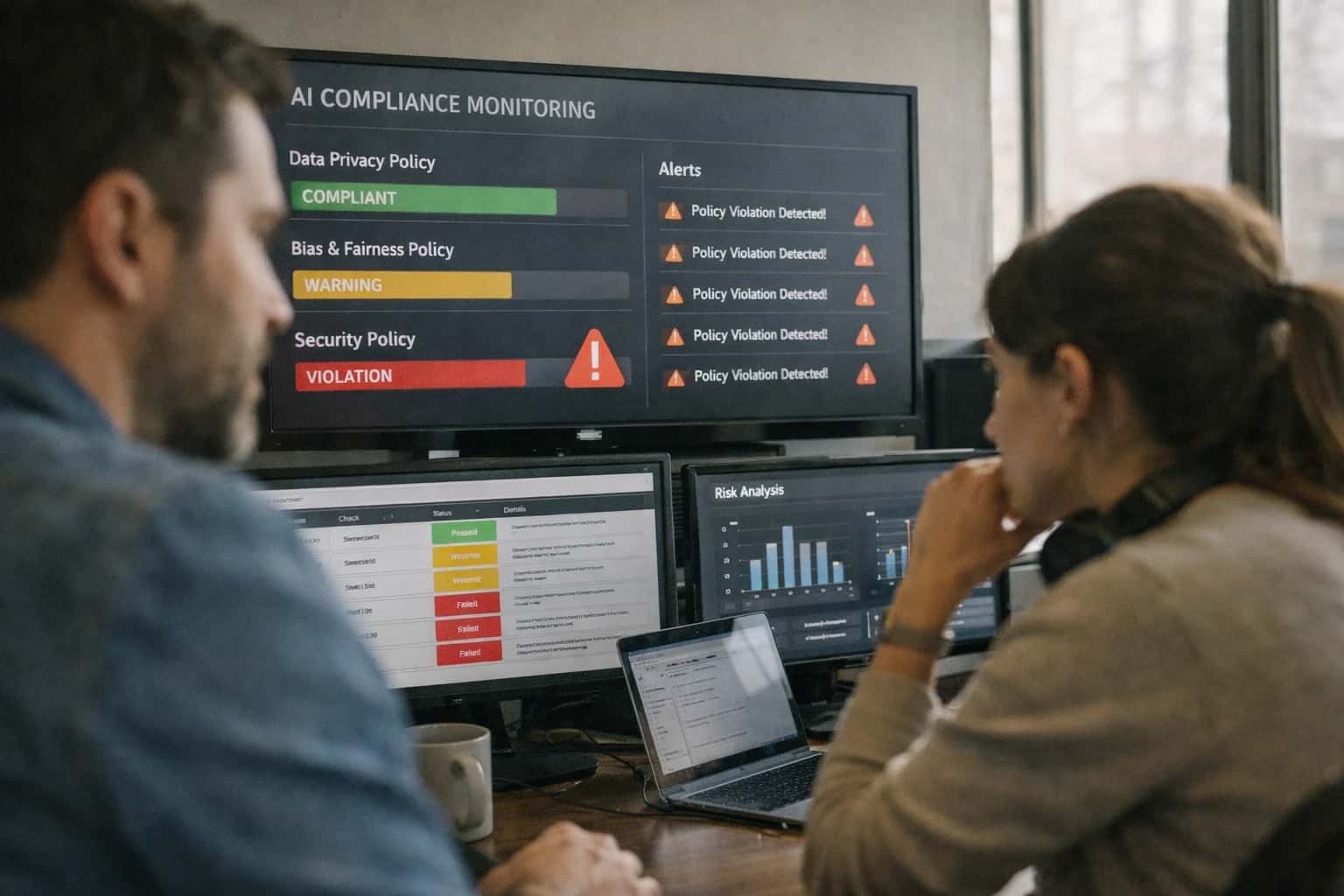
Where AI Fits in iMIS Accreditation Workflows
A practical blueprint for integrating AI into iMIS to automate site visit analysis, compliance monitoring, and decision documentation.
The high-value implementation pattern is a multi-agent workflow. A Triage Agent first classifies incoming evidence (reports, logs, policy documents). A Compliance Agent then uses Retrieval-Augmented Generation (RAG) against the accrediting body's standards library to assess adherence, flagging gaps or partial evidence. Finally, a Documentation Agent drafts the accreditation decision letter or summary report by synthesizing reviewer notes from the iMIS Activity log and the AI's own compliance analysis. This workflow is governed by a human-in-the-loop approval step within iMIS before any final decision or communication is issued, ensuring control and auditability. The impact is operational: reducing the accreditation cycle from weeks to days, ensuring consistent application of standards, and freeing reviewers for higher-value deliberation.
Rollout requires a phased approach, starting with a single accreditation program or standard set. The AI system needs read/write access to specific iMIS tables via its API and should log all its actions—evidence reviewed, standards assessed, draft language generated—back to the member's record for a complete audit trail. Key risks to manage include hallucination in document analysis and over-reliance on automated scoring. A successful implementation uses AI as a copilot for reviewers, not a replacement, providing them with pre-digested analysis and draft narratives to approve or edit. For accrediting bodies using iMIS, this integration turns a document-intensive, qualitative process into a data-driven, accelerated workflow with full transparency. Explore our related guide on AI Integration for Compliance Monitoring for governance best practices.
iMIS Modules and Data Surfaces for AI Integration
Core Accreditation Objects and Workflows
The iMIS Accreditation & Certification module manages the entire credential lifecycle. Key data surfaces for AI integration include:
- Applicant and Site Records: Contain organization details, contact information, and application history.
- Standards and Criteria Objects: Store the specific accreditation requirements and scoring rubrics.
- Site Visit and Audit Records: Hold reviewer notes, evidence attachments, and observation logs from on-site evaluations.
- Decision and Outcome Records: Final accreditation status, expiration dates, and conditional requirements.
AI can be injected here to automate the initial review of submitted evidence against standards, summarize lengthy site visit reports into executive briefs, and draft accreditation decision letters by pulling from reviewer comments and templated language. This reduces the manual compilation time for accreditation managers from days to hours.
High-Value AI Use Cases for Accreditation Teams
For accrediting bodies managing complex review cycles, AI integrated with iMIS can automate evidence collection, accelerate decision documentation, and ensure consistent compliance monitoring. These workflows connect directly to iMIS accreditation modules, site visit records, and reviewer workspaces.
Automated Site Visit Report Synthesis
AI agents ingest reviewer notes, evidence photos, and interview transcripts from iMIS site visit records. They synthesize a draft accreditation report, highlighting compliance findings, risks, and commendations against specific standards. This turns a multi-day manual compilation into a reviewed draft in hours.
Continuous Standard Compliance Monitoring
Instead of periodic audits, an AI layer continuously scans iMIS member-submitted documents, CE credits, and self-assessment updates. It flags potential non-compliance against accreditation standards in real-time, creating proactive alerts for program managers within the iMIS dashboard.
AI-Powered Reviewer Matching & Briefing
For each accreditation cycle, AI analyzes the applicant's focus areas and matches them with the most qualified reviewers from the iMIS volunteer database. It then generates a personalized reviewer briefing packet, pulling relevant past decisions and similar cases from iMIS history.
Decision Documentation & Notification Generation
Once a committee decision is logged in iMIS, AI automatically generates the formal accreditation decision letter, pulling in specific rationale from reviewer comments and evidence references. It also drafts personalized next-step guidance (e.g., for probation or re-accreditation) for each institution.
Evidence Gap Analysis & Collection Requests
AI reviews initial applications in iMIS, comparing submitted materials against required accreditation evidence checklists. It identifies gaps and automatically generates tailored evidence request emails to applicants, reducing back-and-forth and accelerating the review readiness timeline.
Accreditation Audit Trail & Narrative Reporting
For regulatory or board reporting, AI compiles a complete audit trail from disparate iMIS objects (visits, decisions, communications). It generates narrative summaries of accreditation cycle outcomes, trend analyses, and risk dashboards, directly feeding into iMIS reporting modules.
Example AI Automation Workflows
These workflows demonstrate how AI agents can automate high-effort, high-value tasks within the iMIS accreditation lifecycle, from evidence collection to decision documentation.
Trigger: A site visit coordinator uploads reviewer notes, photos, and interview transcripts to a designated iMIS document library folder for an accreditation cycle.
AI Action:
- An agent is triggered via an iMIS workflow or external webhook.
- The agent retrieves all new documents for the specific program and site.
- Using a multi-modal LLM, it synthesizes the disparate materials into a structured draft report.
Output & System Update:
- The draft report follows a pre-defined template (Executive Summary, Strengths, Areas for Improvement, Evidence Citations).
- The agent posts the draft as a new
Accreditation Documentrecord in iMIS, linked to the program and site, and notifies the lead reviewer via an iMIS alert. - The human reviewer can then edit the draft within iMIS, with all source materials preserved for audit.
Impact: Reduces report drafting time from days to hours, ensuring consistency and freeing reviewers for higher-value analysis.
Implementation Architecture: Data Flow and System Boundaries
A production-ready architecture for injecting AI into iMIS to automate evidence review, compliance tracking, and decision documentation.
The integration connects at three key surfaces within iMIS: the Accreditation module for site visit records and reviewer notes, the Document Management system for evidence files (PDFs, images, spreadsheets), and the Communication framework for generating decision letters and audit trails. An AI orchestration layer sits adjacent to iMIS, listening for webhooks on status changes (e.g., Site_Visit_Report_Submitted) and using iMIS REST APIs to fetch related applicant records, reviewer comments, and uploaded evidence. This separation keeps core iMIS logic intact while enabling AI-powered analysis and drafting.
A typical workflow begins when a site visit report is finalized in iMIS. The AI agent is triggered, retrieving the report text and all associated evidence documents. Using a Retrieval-Augmented Generation (RAG) pipeline, it grounds its analysis in the specific accreditation standards stored in a vector database. The agent then performs three key tasks: 1) Cross-referencing reviewer notes against standards to identify gaps or conflicts, 2) Summarizing evidence compliance for each standard into a concise dashboard for the accreditation committee, and 3) Drafting the formal accreditation decision document (approval, conditional, denial) with specific citations. This draft, along with a confidence score and flagged items for human review, is posted back to a dedicated iMIS object for committee approval.
Governance is enforced through a human-in-the-loop pattern. All AI-generated summaries and decision drafts are written to a secure AI_Review_Log object in iMIS, maintaining a full audit trail. The final accreditation decision must be approved and signed off by an authorized committee member within iMIS, preserving legal and procedural integrity. This architecture allows accrediting bodies to reduce the 2-3 week manual review cycle to a matter of days, while keeping iMIS as the single source of truth and control point. For related patterns on automating compliance workflows, see our guide on AI Integration with iMIS for Compliance Monitoring.
Code and Payload Examples
Automating Evidence Collection
Accreditation workflows in iMIS rely heavily on site visit reports, reviewer notes, and supporting documents stored in the Document Management module or linked to Organization and Individual records. An AI agent can be triggered via an iMIS workflow rule or a scheduled job to process newly uploaded PDFs and Word documents.
The agent extracts key findings, compliance status per standard, and action items using a document understanding model. It then structures this data to create or update related Accreditation_Evidence custom objects or Activity records, tagging them with the relevant standard ID and visit date. This automation ensures evidence is codified and searchable for the accreditation committee's final review, turning weeks of manual data entry into a same-day process.
python# Pseudo-code for processing a site visit report PDF def process_site_visit_report(imis_document_id, standard_framework_id): # 1. Retrieve document from iMIS via REST API doc_content = imis_api.get_document_content(imis_document_id) # 2. Extract text and send to LLM for structured extraction prompt = f"""Extract from this site visit report: - List each accreditation standard referenced (use IDs: {standard_framework_id}) - For each, note: Finding (Pass/Fail/Partial), Evidence Summary, Reviewer Comment. Return as JSON.""" extraction_result = llm_client.chat_completion(prompt, doc_content) structured_data = json.loads(extraction_result) # 3. Create/update iMIS records for each finding for finding in structured_data['findings']: payload = { "StandardID": finding['standard_id'], "OrganizationID": imis_api.get_linked_org_id(imis_document_id), "Finding": finding['status'], "EvidenceSummary": finding['summary'], "SourceDocumentID": imis_document_id, "Status": "Awaiting Committee Review" } imis_api.post('/api/AccreditationEvidence', payload)
Realistic Time Savings and Operational Impact
How AI integration with iMIS transforms manual accreditation processes, from site visit documentation to final decision packets.
| Accreditation Workflow Step | Before AI | After AI | Implementation Notes |
|---|---|---|---|
Site Visit Report Drafting | Reviewer writes 4-8 hour narrative | AI generates structured draft from notes in 15 min | Human reviewer edits for nuance and final approval |
Evidence Compliance Check | Manual cross-reference of standards vs. submitted documents | AI scans and flags gaps against standards library | Accreditation manager reviews exceptions, not every file |
Accreditation Decision Packet Assembly | Staff compiles 20-30 page packet over 2-3 days | AI auto-populates packet from iMIS data and reports in 2 hours | Final legal and executive review remains mandatory |
Reviewer Assignment & Workload Balancing | Manual matching based on availability and rough expertise | AI suggests optimal matches using past reviews and specialty tags | Program director approves or overrides suggestions |
Continuing Education (CE) Credit Verification | Staff manually checks certificates against requirements | AI parses uploaded certificates and maps credits to iMIS records | Triggers alerts only for discrepancies or missing credits |
Stakeholder Communication (Status Updates) | Generic email blasts or individual manual replies | AI generates personalized status emails from iMIS case stage | Communications lead reviews batch before sending |
Accreditation Cycle Analytics & Reporting | Quarterly manual report compilation for board | AI generates monthly dashboard with trend analysis and narrative | Enables proactive program adjustments and resource planning |
Governance, Security, and Phased Rollout
Implementing AI for accreditation management requires a secure, auditable, and phased approach that respects the sensitivity of site visit reports and compliance data.
Governance starts with role-based access control (RBAC), ensuring AI agents and workflows only interact with the iMIS modules and data objects relevant to their function. For example, an AI agent summarizing a site visit report should have read-only access to the SiteVisit and ReviewerNotes objects, while an agent generating decision documentation may need write access to the AccreditationDecision and ComplianceLog tables. All AI-generated content should be tagged with metadata (e.g., source_model, generation_timestamp, prompt_hash) and logged to an immutable audit trail within iMIS or a linked system.
A phased rollout is critical for user adoption and risk management. We recommend starting with a low-risk, high-volume use case such as AI-assisted site visit report summarization. This involves an AI agent that ingests reviewer notes from iMIS, extracts key findings and evidence, and drafts a structured summary for human evaluator review and approval. This initial phase validates the integration's data flows, security posture, and user acceptance before progressing to more complex workflows like compliance monitoring against standards or automated decision-document drafting.
For security, all AI calls should be routed through a secure API gateway that enforces data anonymization where necessary, strips personally identifiable information (PII) from prompts unless required, and applies strict rate limiting. Vector embeddings for RAG-based retrieval should be stored in a dedicated, encrypted vector database, not within the core iMIS transactional database. A human-in-the-loop approval step is mandatory for any AI-generated content that becomes part of the official accreditation record, ensuring final accountability rests with the accreditation committee.
Enabling Efficiency, Speed & Accuracy
Intelligent Analysis, Decision & Execution
We build AI systems for teams that need search across company data, workflow automation across tools, or AI features inside products and internal software.
Talk to Us
Search across company data
Give teams answers from docs, tickets, runbooks, and product data with sources and permissions.
Useful when people spend too long searching or get different answers from different systems.

Automate internal workflows
Use AI to route work, draft outputs, trigger actions, and keep approvals and logs in place.
Useful when repetitive work moves across multiple tools and teams.

Add AI to products and internal tools
Build assistants, guided actions, or decision support into the software your team or customers already use.
Useful when AI needs to be part of the product, not a separate tool.
Frequently Asked Questions
Practical questions and workflow walkthroughs for integrating AI into iMIS accreditation management, focusing on site visit reports, compliance tracking, and decision documentation.
This workflow extracts key findings from reviewer narratives and maps them to accreditation standards.
- Trigger: A new site visit report document is uploaded to the iMIS document management system (DMS) or a corresponding
SiteVisitrecord status is updated to 'Review Ready'. - Context Pulled: The AI agent retrieves the report document (PDF, DOCX) via iMIS DMS API and fetches the relevant accreditation
StandardandCriterionobjects linked to the visit. - Agent Action: Using a Retrieval-Augmented Generation (RAG) model grounded in your accreditation manual, the agent:
- Performs semantic search to identify sections of the report discussing specific standards.
- Extracts evidence statements, commendations, and recommendations.
- Classifies each finding against the official criterion code (e.g.,
STD-4.1.2).
- System Update: The agent creates or updates
ComplianceFindingchild records under the mainSiteVisitrecord in iMIS. Each finding record stores:Criterion_CodeFinding_Type(Commendation, Recommendation, Required Action)Evidence_Summary(AI-generated concise text)Source_Pagereference
- Human Review: The compiled findings are presented in a dashboard for the lead evaluator. They can approve, edit, or reject each AI-suggested finding before the official compliance scorecard is finalized.

About the author
Prasad Kumkar
CEO & MD, Inference Systems
Prasad Kumkar is the CEO & MD of Inference Systems and writes about AI systems architecture, LLM infrastructure, model serving, evaluation, and production deployment. Over 5+ years, he has worked across computer vision models, L5 autonomous vehicle systems, and LLM research, with a focus on taking complex AI ideas into real-world engineering systems.
His work and writing cover AI systems, large language models, AI agents, multimodal systems, autonomous systems, inference optimization, RAG, evaluation, and production AI engineering.
Partnered with leading AI, data, and software stack.





How We Work
Custom AI workflows for your Business
One-fit-all AI don't work for modern businesses. At Inferensys, we aim to understand your business & custom requirements; which we use to define most efficient agentic workflows, the data, and the tools for your business.
01
Review the use case
We understand the task, the users, and where AI can actually help.
Read more02
Pick the right approach
We define what needs search, automation, or product integration.
Read more03
Build the first useful version
We implement the part that proves the value first.
Read more04
Improve from there
We add the checks and visibility needed to keep it useful.
Read moreThe first call is a practical review of your use case and the right next step.
Talk to Us