Accreditation management in Fonteva revolves around core objects like Applicant Records, Accreditation Standards, Evidence Submissions, and Reviewer Assignments. AI integration targets the manual bottlenecks between these objects: the initial triage of uploaded evidence documents (PDFs, spreadsheets, images) and the summarization of reviewer notes for final decision panels. An AI agent can be triggered via a Fonteva Process Builder flow or Salesforce Apex trigger upon a new evidence submission, extracting key data to auto-populate standard-specific scorecards and flag submissions missing required components for staff review.

Integration
AI Integration with Fonteva for Accreditation Management
Automate evidence collection, compliance checking, and reviewer workflows for accreditation teams using AI agents integrated with Fonteva's Salesforce-native platform.
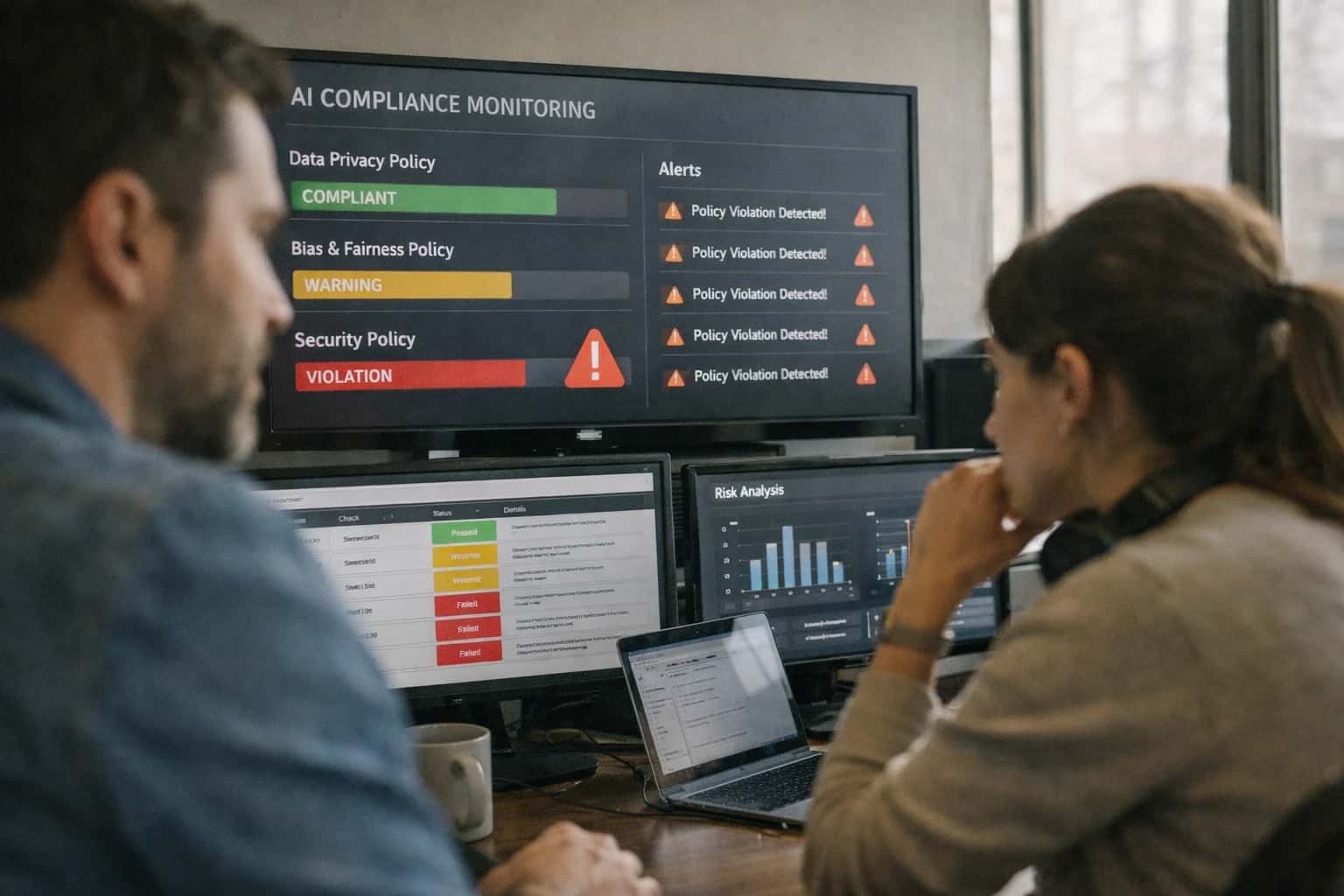
ARCHITECTURE FOR ACCREDITATION TEAMS
Where AI Fits into Fonteva Accreditation Workflows
A practical blueprint for integrating AI into Fonteva's Salesforce-native accreditation modules to automate evidence review, accelerate evaluator decisions, and ensure compliance.
The high-value implementation pattern is a RAG (Retrieval-Augmented Generation) pipeline connected to your accreditation knowledge base. When an evaluator opens a complex case file, an AI copilot sidebar can answer specific questions by querying past decision precedents, policy manuals, and similar applicant histories stored in a vector database. This reduces review time from hours to minutes. For rollout, start with a single, high-volume accreditation program, using a human-in-the-loop design where AI-generated summaries and compliance checks are presented as draft recommendations within the Fonteva record page, requiring a final sign-off from the lead evaluator.
Governance is critical. All AI interactions should be logged as Salesforce Platform Events to maintain a complete audit trail of which evidence was analyzed, which model generated the summary, and the final human decision. This ensures transparency for accreditation boards and compliance with rigorous standards. Integration points extend beyond Fonteva's core; consider using MuleSoft or a middleware layer to securely pull applicant data from external systems (like learning management or licensing boards) to give the AI agent a 360-degree view, further reducing manual data consolidation for your team.
ACCELERATING ACCREDITATION WORKFLOWS
Key Fonteva Modules and Surfaces for AI Integration
Core Data Model for AI
Fonteva's accreditation workflows are built on custom objects within its Salesforce-native architecture. Key surfaces for AI integration include:
- Credential Records: Store applicant data, submission history, and approval status. AI can analyze attached evidence (PDFs, forms) to auto-populate fields and flag incomplete submissions.
- Requirement Tracking Objects: Link credentials to specific standards, CE hours, or experiential components. AI agents can monitor progress, nudge applicants about pending items, and verify completion from integrated learning systems like
/integrations/association-management-platforms/ai-integration-with-fonteva-for-continuing-education. - Reviewer Assignment & Work Queues: AI can match applications to evaluators based on expertise, workload, and conflict-of-interest rules, optimizing reviewer throughput.
Integrating at this object level allows AI to operate on the system of record, ensuring all automation is logged and auditable within Fonteva's security model.
FONTEVA INTEGRATION PATTERNS
High-Value AI Use Cases for Accreditation Teams
Accreditation management involves complex evidence review, compliance tracking, and evaluator coordination. These AI integration patterns for Fonteva automate manual workflows, reduce administrative burden, and help teams scale rigorous review processes.
01
Automated Evidence Collection & Pre-Screening
An AI agent monitors the Fonteva portal for new member submissions (e.g., CVs, case logs, certificates). It extracts and validates key data points against accreditation standards, flagging incomplete or non-compliant files for staff review before routing to evaluators. Workflow: Submission → AI parsing → Compliance check → Queue for review.
Hours -> Minutes
Initial screening time
02
Intelligent Reviewer Matching & Workload Balancing
AI analyzes evaluator expertise, past review history, and availability within Fonteva to automatically assign applications. It ensures equitable distribution, matches specialized cases to the right reviewers, and prevents bottlenecks. Integration: Uses Fonteva's user objects, custom fields, and assignment rules.
Batch -> Real-time
Assignment logic
03
Site Visit Report Synthesis & Discrepancy Flagging
For on-site reviews, AI processes uploaded visit reports, interview notes, and photographic evidence. It cross-references findings with the applicant's Fonteva portfolio, highlighting inconsistencies or missing documentation for the accreditation committee. Value: Creates audit-ready summary dossiers.
04
Dynamic Compliance Dashboard & Proactive Alerts
An AI layer sits atop Fonteva data to power a real-time compliance dashboard. It tracks accredited members against renewal requirements (e.g., continuing education credits), predicts lapses, and triggers automated nudges via Fonteva workflows. Architecture: RAG on policy docs + Fonteva API calls.
Same day
Risk visibility
05
Accreditation Decision Documentation Assistant
After committee deliberation, AI drafts the official accreditation decision letter by pulling structured data from Fonteva (applicant info, standards met/missed) and incorporating key points from reviewer notes. Staff finalize and send via Fonteva communications. Impact: Reduces post-meeting administrative lag.
1 sprint
Implementation scope
06
Continuous Standard Monitoring & Update Workflows
When accreditation standards change, AI helps manage the transition. It assesses the current member base in Fonteva against new criteria, identifies gaps, and can trigger personalized communication workflows outlining new requirements and timelines.
FONTEVA INTEGRATION PATTERNS
Example AI-Powered Accreditation Workflows
These workflows illustrate how AI agents and automation can be injected into Fonteva's data model and automation layer to reduce manual effort, accelerate review cycles, and improve compliance tracking for accreditation teams.
Trigger: A member submits a new accreditation application or renewal packet via the Fonteva portal.
Workflow:
- An AI agent is triggered via a platform event or webhook from Fonteva's
Accreditation_Application__corDocument__cobject. - The agent retrieves the uploaded documents (PDFs, Word files) from Fonteva's file storage or integrated cloud storage (like Salesforce Files).
- Using a multi-modal LLM, the agent performs an initial review:
- Extracts key data points (dates, names, institution details) to auto-populate Fonteva application fields.
- Checks for document completeness against a checklist of required evidence, flagging missing items.
- Performs a preliminary compliance scan, comparing extracted information against stored accreditation standards (e.g., "Standard 4.2 requires evidence of 50 hours of supervised practice").
- The agent updates the Fonteva record:
- Sets a
Completeness_Score__candInitial_Review_Status__c. - Creates
Review_Note__crecords highlighting missing items or potential compliance gaps. - Assigns the application to a
Queuefor human reviewers or routes it for fast-track approval if all checks pass.
- Sets a
Human Review Point: All flagged applications for missing evidence or borderline compliance scores are routed to an evaluator's queue with the AI-generated notes pre-attached.
PRODUCTION INTEGRATION PATTERNS
Implementation Architecture: Data Flow and System Boundaries
A secure, governed architecture for connecting AI agents to Fonteva's Salesforce-native data model to automate accreditation evidence review and decision support.
The integration connects to Fonteva's core Member, Application, and Credential objects via the Salesforce REST API. An AI orchestration layer, hosted in a secure VPC, acts as the middleware. It subscribes to platform events (e.g., Accreditation_Application_Submitted__e) to trigger workflows. Upon trigger, the agent retrieves the member's application record and attached evidence documents (PDFs, images) stored in Salesforce Files. This data is processed through a retrieval-augmented generation (RAG) pipeline: documents are chunked, embedded, and queried against a vector store containing the accreditation body's standards and bylaws to verify compliance and extract key information.
The AI agent performs a multi-step review: 1) Evidence Validation – checks submitted documents for required signatures, dates, and completeness against a checklist. 2) Gap Analysis – compares extracted data against competency matrices, flagging areas where evidence is weak or missing. 3) Summary Generation – produces a concise review dossier for the human evaluator, highlighting pass/fail status, critical gaps, and recommended next steps (e.g., "Request additional CE transcripts"). All agent actions, queries, and generated summaries are logged back to a custom AI_Review_Audit__c object in Fonteva, creating a full audit trail.
Rollout follows a phased governance model. Initial pilots run in a shadow mode, where AI recommendations are visible only to administrators for validation against manual reviews. Approval workflows in Salesforce Flows can be configured to route AI-flagged "high-confidence passes" for auto-approval while sending "requires review" cases to evaluator queues. This architecture ensures the AI augments—not replaces—human judgment, keeping the evaluator in the loop for all final decisions while reducing manual evidence sifting from hours to minutes. For related patterns on automating other compliance workflows, see our guide on AI Integration for iMIS for Certification Tracking.
FONTEVA ACCREDITATION WORKFLOWS
Code and Payload Examples
Automating Document Intake and Review
An AI agent monitors the Fonteva Accreditation_Application__c object for new submissions. When a member uploads supporting documents (e.g., CVs, case logs, certificates), the agent extracts text, classifies the evidence type, and checks for completeness against predefined criteria. Incomplete submissions trigger an automated, personalized request for missing items via the Fonteva Community portal.
python# Pseudocode: AI Agent for Evidence Collection from inference_systems.agent import WorkflowAgent import fonteva_sdk agent = WorkflowAgent( task="review_accreditation_evidence", llm_model="gpt-4o", tools=["document_parser", "criteria_checker"] ) def process_new_submission(application_id): # Fetch application and attachments from Fonteva app = fonteva_sdk.get_record('Accreditation_Application__c', application_id) docs = fonteva_sdk.get_related_files(application_id) # Agent analyzes documents analysis = agent.run({ "criteria": app['accreditation_standard'], "documents": docs }) # Update Fonteva record and trigger communication if analysis['status'] == 'incomplete': fonteva_sdk.create_task( assignee_id=app['evaluator_id'], subject='Evidence Review Required', details=analysis['missing_items_summary'] ) fonteva_sdk.send_community_message( member_id=app['applicant_id'], message=analysis['personalized_nudge'] )
AI FOR ACCREDITATION TEAMS
Realistic Time Savings and Operational Impact
How AI integration transforms manual evidence review and compliance tracking workflows for accreditation managers using Fonteva.
| Metric | Before AI | After AI | Notes |
|---|---|---|---|
Initial evidence package review | 2-4 hours per applicant | 30-45 minutes per applicant | AI pre-screens submissions against standards, flags gaps for human review |
Standard compliance cross-check | Manual checklist comparison | Automated mapping with confidence scores | Reduces oversight risk; human validates AI-highlighted exceptions |
Reviewer assignment and briefing | Manual matching based on availability | AI recommends matches by expertise & workload | Ensures balanced caseloads and relevant expertise per application |
Site visit report summarization | Analyst reads full report (1-2 hours) | AI extracts key findings, risks, and evidence (10 min) | Reviewer focuses on analysis, not data entry; summary logged to Fonteva record |
Accreditation decision documentation | Drafted from reviewer notes post-meeting | AI generates draft from structured notes and scores | Committee chair edits AI draft, cutting documentation time by 60% |
Continuous compliance monitoring | Quarterly manual audit of random samples | AI continuously scans new member-submitted documents | Proactive alerts for potential non-compliance between renewal cycles |
Applicant status communication | Manual email updates from templates | AI-driven, personalized status updates triggered by workflow stage | Frees staff for complex inquiries; all comms logged to Fonteva timeline |
IMPLEMENTATION ARCHITECTURE
Governance, Security, and Phased Rollout
A secure, governed approach to integrating AI into Fonteva's accreditation workflows, designed for compliance-sensitive environments.
Production AI integrations for accreditation must operate within strict data governance boundaries. In Fonteva, this means scoping AI access to specific objects like Accreditation_Application__c, Site_Visit_Report__c, Standard_Compliance__c, and related Document records. A secure pattern uses a middleware layer (e.g., an MCP server or secure API gateway) to broker calls between Fonteva's Salesforce APIs and the AI service. This layer enforces role-based access control (RBAC), ensuring AI agents only process data for which the requesting evaluator or staff member has permission, and logs all AI interactions to a dedicated AI_Audit_Log__c object for traceability.
A phased rollout mitigates risk and builds confidence. Phase 1 (Pilot): Deploy a single AI agent for evidence collection and summarization. This agent reviews member-submitted documents (PDFs, images) attached to an application, extracts relevant evidence for each accreditation standard, and generates a concise summary for the evaluator. It operates in a human-in-the-loop mode where all outputs are flagged as 'AI-suggested' and require evaluator review before being logged. Phase 2 (Expansion): Introduce a compliance flagging agent that cross-references extracted evidence against a knowledge base of standard requirements, highlighting potential gaps or areas requiring clarification. This agent can auto-populate a review checklist in a Fonteva custom object, reducing manual cross-checking from hours to minutes.
Governance is maintained through prompt management systems and regular model evaluations. Accreditation criteria and review rubrics are codified into version-controlled prompts, ensuring consistency and allowing for audits of AI reasoning. All AI-generated content is watermarked, and a human review queue is maintained in Fonteva for any low-confidence scores or edge cases. This architecture ensures the AI augments—rather than replaces—accreditation committee judgment, providing scalable support while keeping human experts firmly in control of final decisions. For related architectural patterns, see our guides on /integrations/association-management-platforms/ai-integration-with-imis-for-accreditation-management and /integrations/enterprise-content-management-platforms/document-intelligence-for-compliance.
Enabling Efficiency, Speed & Accuracy
Intelligent Analysis, Decision & Execution
We build AI systems for teams that need search across company data, workflow automation across tools, or AI features inside products and internal software.
Talk to Us
Search across company data
Give teams answers from docs, tickets, runbooks, and product data with sources and permissions.
Useful when people spend too long searching or get different answers from different systems.
Enterprise searchRAGPermissions
Read more
Automate internal workflows
Use AI to route work, draft outputs, trigger actions, and keep approvals and logs in place.
Useful when repetitive work moves across multiple tools and teams.
AI agentsWorkflow automationGovernance
Read more
Add AI to products and internal tools
Build assistants, guided actions, or decision support into the software your team or customers already use.
Useful when AI needs to be part of the product, not a separate tool.
AI integrationDecision supportModel routing
Read moreAI INTEGRATION WITH FONTEVA FOR ACCREDITATION MANAGEMENT
Frequently Asked Questions for Technical Buyers
Practical answers for architects and engineering leads planning to inject AI into Fonteva-powered accreditation workflows, covering implementation patterns, data handling, and rollout sequencing.
Integration typically follows a secure, event-driven pattern using Salesforce platform capabilities since Fonteva is built natively on Salesforce.
Primary Architecture:
- Trigger: Accreditation submissions create or update records on custom Fonteva objects (e.g.,
Accreditation_Application__c,Evidence_Submission__c). - Event Capture: Use Salesforce Platform Events or Change Data Capture to publish real-time events for new or updated submissions. This keeps the AI layer decoupled from the core database.
- Secure Ingestion: An integration service (e.g., a secure AWS Lambda or Azure Function) subscribed to these events fetches the relevant record data and any attached evidence documents (PDFs, DOCs) via the Salesforce REST API using a named principal with least-privilege permissions (e.g., a dedicated Integration User profile).
- Context Assembly: The service assembles the context, which includes:
- Member profile data from the
Contactobject. - Application answers from the custom object fields.
- Evidence document text (extracted via OCR or PDF parsing).
- Member profile data from the
This pattern ensures auditability, respects Salesforce governor limits, and avoids direct database connections. All data in transit should be encrypted, and the AI service should not persist raw Fonteva data beyond the processing window required for analysis.

About the author
Prasad Kumkar
CEO & MD, Inference Systems
Prasad Kumkar is the CEO & MD of Inference Systems and writes about AI systems architecture, LLM infrastructure, model serving, evaluation, and production deployment. Over 5+ years, he has worked across computer vision models, L5 autonomous vehicle systems, and LLM research, with a focus on taking complex AI ideas into real-world engineering systems.
His work and writing cover AI systems, large language models, AI agents, multimodal systems, autonomous systems, inference optimization, RAG, evaluation, and production AI engineering.
LinkedIn
Limited slotsGet a Free AI Consultation
Partnered with leading AI, data, and software stack.





How We Work
Custom AI workflows for your Business
One-fit-all AI don't work for modern businesses. At Inferensys, we aim to understand your business & custom requirements; which we use to define most efficient agentic workflows, the data, and the tools for your business.
01
Review the use case
We understand the task, the users, and where AI can actually help.
Read more02
Pick the right approach
We define what needs search, automation, or product integration.
Read more03
Build the first useful version
We implement the part that proves the value first.
Read more04
Improve from there
We add the checks and visibility needed to keep it useful.
Read moreThe first call is a practical review of your use case and the right next step.
Talk to Us