AI integration for Fonteva speaker management focuses on three functional surfaces: the Speaker object and related records, the Event Management module, and the Community portal. The core workflow begins when a Call for Proposals (CFP) is published. An AI agent can be triggered via Fonteva automation to scan the member database—leveraging fields like Biography, Past Event Feedback, Certifications, and Committee Membership—to identify and score potential speakers based on topic relevance and past performance. This agent can also enrich external speaker profiles by pulling data from LinkedIn or professional sites, auto-populating draft Speaker records in Fonteva for staff review.

Integration
AI Integration with Fonteva for Speaker Management
Automate speaker recruitment, matching, and coordination within Fonteva using AI to analyze member expertise, past presentations, and event requirements.
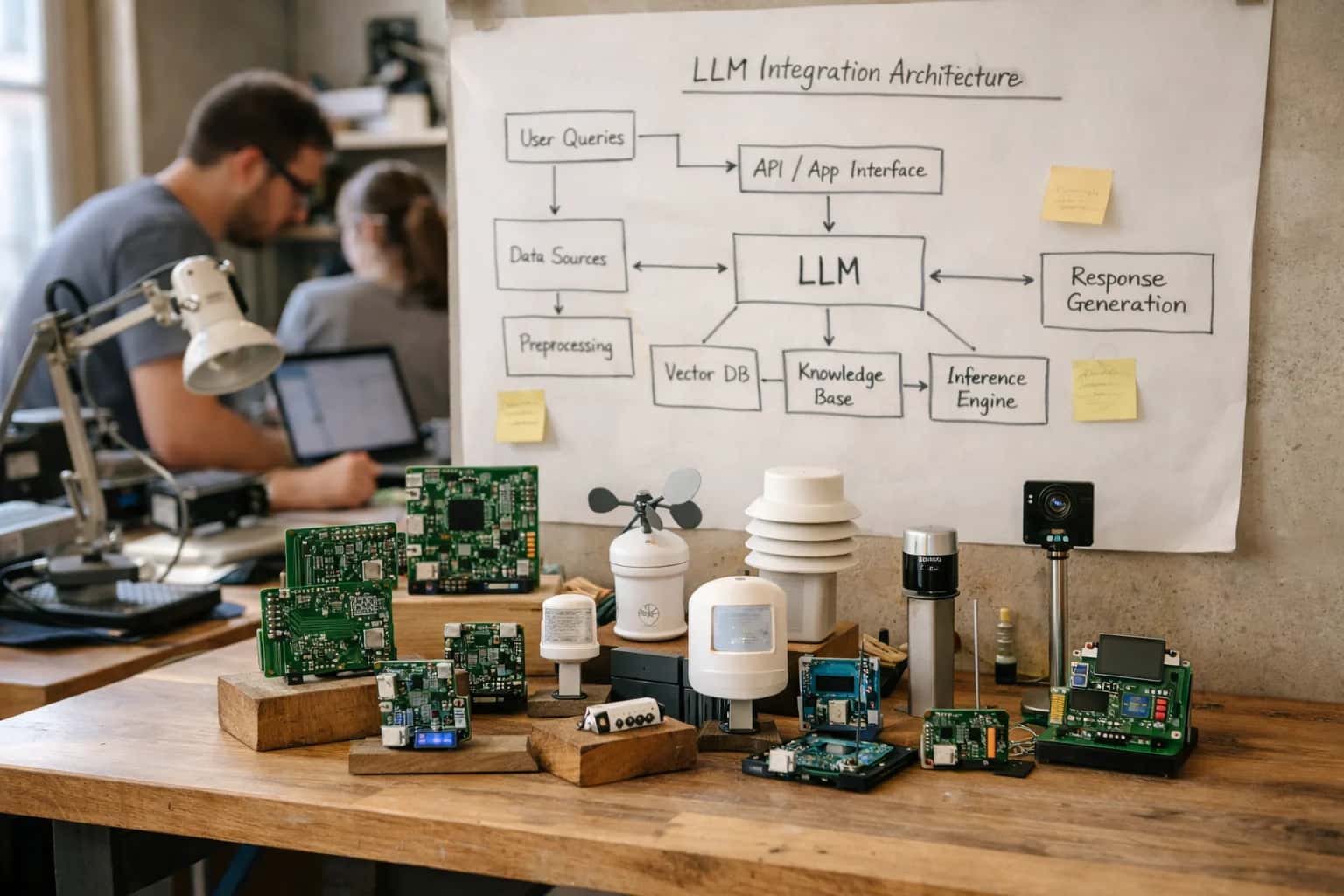
ARCHITECTURE AND ROLLOUT
Where AI Fits in Fonteva Speaker Management
A practical blueprint for integrating AI agents into Fonteva's speaker recruitment, coordination, and management workflows to reduce manual effort and improve speaker quality.
During the coordination phase, AI agents manage the approval and logistics workflow. They can draft personalized invitation emails using speaker and event data, track contract and honorarium status via the Fonteva Financials integration, and auto-generate speaker bios and session descriptions by synthesizing provided materials. For internal staff, an AI copilot embedded in the speaker management console can summarize all communications for a given speaker, highlight pending action items, and even predict potential scheduling conflicts by analyzing the speaker's other committed Event Registrations within Fonteva.
Post-event, AI closes the feedback loop. It can analyze post-event survey responses linked to the speaker's session, extracting sentiment and thematic feedback to produce a concise performance summary stored on the speaker's record. This creates a searchable knowledge base for future event planning. Rollout should start with a single, high-volume event type, using a human-in-the-loop design where AI suggestions require staff approval. Governance must include clear audit trails in Fonteva's activity history and rules to prevent over-solicitation of top members. For a deeper dive into automating event workflows, see our guide on [/integrations/association-management-platforms/ai-integration-for-fonteva-event-coordination](AI Integration for Fonteva Event Coordination).
SPEAKER MANAGEMENT
Key Fonteva Modules and Data Surfaces for AI Integration
Centralizing Speaker Expertise
The Fonteva Speaker Portal is the primary surface for managing speaker profiles, submissions, and communications. AI integration here focuses on automating profile enrichment and submission quality.
Key Data Objects & AI Actions:
- Speaker Profile Object: Use AI to auto-generate speaker bios from LinkedIn profiles, past presentation abstracts, or uploaded CVs. Maintain a dynamic 'expertise tag' cloud updated from recent talks.
- Submission Management: Implement AI-powered initial screening of abstract submissions for relevance to conference tracks, plagiarism checks, and basic formatting compliance before human review.
- Automated Communications: Trigger personalized, AI-drafted invitation and confirmation emails based on speaker status, session type, and historical engagement data from past events.
This layer reduces manual data entry by up to 70% for speaker coordinators and ensures a richer, more searchable talent database.
FONTEVA INTEGRATION
High-Value AI Use Cases for Speaker Management
Transform your speaker recruitment, coordination, and engagement workflows by integrating AI directly with Fonteva's speaker objects, event modules, and member database. These use cases automate manual tasks, personalize outreach, and leverage member expertise to build stronger conference programs.
01
Intelligent Speaker Sourcing from Member Database
An AI agent analyzes Fonteva member profiles, past event feedback, and community contributions to recommend potential speakers based on topic expertise, presentation history, and engagement scores. It surfaces qualified candidates directly within the speaker management module, turning a manual search into a targeted shortlist.
Hours -> Minutes
Candidate discovery
02
Automated Speaker Invitation & Contract Workflow
Trigger personalized invitation sequences upon adding a speaker to a Fonteva event. AI drafts initial emails using speaker bio and session details, manages follow-ups, and routes accepted speakers into contract and honorarium workflows. Status is logged back to the speaker record for full auditability.
Batch -> Real-time
Outreach coordination
03
Speaker Bio & Session Description Generation
Eliminate copy-paste from LinkedIn and old PDFs. Provide a speaker's name and LinkedIn URL; AI fetches and synthesizes their professional background, past talks, and publications to generate a polished bio and draft session descriptions. Outputs are formatted for direct import into Fonteva speaker records and event agendas.
1 sprint
Content creation timeline
04
Personalized Attendee-Speaker Matching
For large conferences, integrate AI with the Fonteva event app to recommend sessions to attendees based on their member profile and stated interests. Conversely, suggest attendees for speakers to meet (e.g., 'find 5 product managers interested in your topic'), enhancing networking value and speaker satisfaction.
Same day
Networking setup
05
Post-Event Feedback Synthesis & Reporting
After the event, an AI agent aggregates unstructured feedback from Fonteva post-event surveys, community chatter, and session ratings. It generates a concise summary report per speaker, highlighting strengths and improvement areas, and logs key sentiment insights back to the speaker record for future selection.
Batch -> Real-time
Insight delivery
06
Speaker Compliance & Logistics Coordination
Manage speaker requirements (AV needs, travel forms, slide submissions) via an AI copilot. The agent monitors incomplete tasks in Fonteva, sends automated reminders, and answers common logistical questions from speakers via a dedicated portal or email, reducing pre-event support tickets for staff.
Hours -> Minutes
Manual follow-up
IMPLEMENTATION PATTERNS
Example AI-Powered Speaker Management Workflows
These workflows demonstrate how to inject AI agents into Fonteva's speaker management lifecycle, from sourcing and recruitment to contract management and post-event follow-up. Each pattern connects to specific Fonteva objects, automations, and user roles.
Trigger: A new event is created in Fonteva Events with session topics defined.
AI Agent Action:
- Queries the Fonteva member database (via Salesforce SOQL) for members whose profiles, past session feedback, and self-reported expertise match the session topics.
- Scores each potential speaker based on:
- Past presentation ratings (from Fonteva post-event surveys).
- Relevance of their job title and bio keywords.
- Geographic proximity to event location (for in-person).
- Recent speaking activity to avoid over-solicitation.
- Drafts a personalized invitation email for the top 3-5 candidates, pulling in specific session details and referencing their past contributions.
System Update: The drafted emails, with candidate scores and rationale, are posted to a dedicated Chatter feed in the Fonteva Event record for the program manager to review, edit, and approve for sending via Fonteva's email tools or Marketing Cloud.
FROM MEMBER DATA TO SPEAKER RECOMMENDATIONS
Implementation Architecture: Data Flow and System Design
A production-ready architecture for injecting AI-driven speaker discovery directly into Fonteva's Salesforce-native workflows.
The integration connects at three key layers within the Fonteva platform: the Member/Contact object for expertise data, the Event Management module for session requirements, and the Community/Engagement data for past feedback. An orchestration agent, typically deployed as a Heroku app or Salesforce Apex class, listens for triggers—such as a new Conference Session record creation or a manual request from an event manager. It queries the Fonteva database via the Salesforce API, extracting member profiles, past session evaluations, and community post tags to build a candidate pool.
The core AI workflow involves a retrieval-augmented generation (RAG) pattern. Member data (biography, job title, committee participation) and unstructured text (past presentation abstracts, forum posts) are chunked and embedded, then stored in a vector database like Pinecone. When a session need arises—e.g., 'Need a speaker on non-profit fundraising for mid-sized associations'—the agent performs a semantic search against this index. It then uses an LLM (like GPT-4) to score and rank matches, generating a shortlist with justification bullets (e.g., 'Presented at 2023 Annual, audience rating: 4.8/5, active in Fundraising Committee'). The output is formatted as a Salesforce record, creating a Suggested Speaker junction object linked to the session and member.
Governance and rollout are critical. The system operates in a human-in-the-loop mode initially. Recommendations are surfaced in a custom Fonteva Lightning component or via automated reports to the event team, requiring a manual approval step before any outreach is triggered. All AI actions are logged to a custom AI_Audit_Log__c object for transparency. A phased rollout starts with a pilot event type, using historical data to tune the embedding model and prompt for relevance before expanding to the full conference portfolio. This architecture ensures the AI augments—rather than replaces—the curator's expertise, turning a days-long research task into a minutes-long review process.
AI FOR SPEAKER MANAGEMENT
Code and Integration Patterns
Matching Members to Speaking Opportunities
AI can automate the most time-consuming part of speaker management: finding the right person. This pattern involves querying the Fonteva member database and external sources to build a ranked suggestion list.
Typical Workflow:
- An event manager defines a session topic (e.g., "Generative AI in Healthcare").
- An AI agent queries Fonteva for members with relevant job titles, committee memberships, or self-tagged expertise.
- The agent enriches this list by searching past event feedback (from Fonteva Events), community posts (from Fonteva Communities), and public profiles for mentions of the topic.
- It generates a scored list of potential speakers with justification (e.g., "Presented on AI at 2023 Annual Conf, scored 4.8/5 on content relevance").
Integration Point: This typically runs as a scheduled job or is triggered from a custom Lightning component in the Fonteva/Salesforce UI, writing suggestions back to a custom AI_Speaker_Suggestion__c object.
SPEAKER MANAGEMENT WORKFLOWS
Realistic Time Savings and Operational Impact
How AI integration transforms manual, time-intensive speaker management tasks in Fonteva into assisted, data-driven workflows.
| Metric | Before AI | After AI | Notes |
|---|---|---|---|
Speaker Sourcing & Vetting | Manual search in member directory, 2-4 hours per event | AI-powered suggestions from member database in 15 minutes | Suggests members based on topic expertise, past feedback, and availability |
Invitation & Follow-up | Manual email drafting and tracking, 1-2 hours per speaker | Personalized draft generation and automated sequence, 10 minutes review | AI drafts emails using speaker bio and event context; human finalizes |
Bio & Abstract Collection | Chasing speakers via email, manual formatting, 30-45 minutes each | AI extracts and formats from LinkedIn/prior submissions, 5-minute review | Reduces back-and-forth; ensures consistent formatting for program |
Session Alignment & Scheduling | Manual review of speaker topics vs. track themes, 3-5 hours | AI-assisted topic clustering and track recommendations, 1 hour | Identifies gaps and overlaps; human makes final scheduling decisions |
Contract & Honorarium Workflow | Manual document creation and routing for signatures | AI auto-populates contract clauses from templates, triggers e-sign | Clauses pulled from approved library; legal review still required |
Post-Event Feedback Synthesis | Manual compilation of survey comments, 4-6 hours per event | AI summarizes sentiment and key themes in 30 minutes | Highlights actionable praise and criticism for speaker debriefs |
Speaker Database Enrichment | Static records, manual updates after each event | Dynamic profiles auto-updated with new topics and feedback scores | Creates a searchable knowledge base for future event planning |
ARCHITECTING A CONTROLLED DEPLOYMENT
Governance, Security, and Phased Rollout
A secure, phased implementation ensures AI enhances speaker management without disrupting critical Fonteva workflows or member data.
A production-ready integration connects to Fonteva's Speaker and Session objects via the Salesforce API, using a dedicated service account with field-level security (FLS) and object-level permissions scoped to read-only access for member profiles, past event feedback, and speaker records. AI agents operate within a secure middleware layer, never storing raw member data. All suggestions—like matching a member's expertise from their profile to a conference topic—are logged as activity records in Fonteva with a clear audit trail, tagging the AI as the source for transparency and allowing staff to approve or reject recommendations before any communication is sent.
Rollout follows a phased, low-risk path. Phase 1 focuses on internal efficiency: an AI copilot for the events team that suggests potential speakers from the member database for upcoming conferences, pulling from profile fields like Biography, Areas of Expertise, and past Session Feedback scores. This runs in a sandbox environment, with outputs reviewed by a coordinator before any outreach. Phase 2 introduces a semi-automated workflow where the AI drafts personalized invitation emails based on the speaker's background and the conference theme, which are queued for staff review and sending via Fonteva's communication tools. Phase 3, after validation, enables a member-facing surface: allowing potential speakers to use a conversational interface in the member portal to express interest and get matched to relevant call-for-proposals based on their profile.
Governance is baked into the workflow. Every AI-generated suggestion includes a confidence score and the data points used (e.g., 'Suggested based on member's listed expertise in "regulatory affairs" and positive feedback from 2023 Annual Meeting'). A human-in-the-loop approval step is mandatory for all external communications. The system is designed for continuous feedback: staff can flag poor suggestions, which are used to retune the underlying models. This controlled approach minimizes risk while delivering tangible time savings, turning a manual research process of hours into a curated shortlist in minutes, all within the trusted Fonteva and Salesforce security model.
Enabling Efficiency, Speed & Accuracy
Intelligent Analysis, Decision & Execution
We build AI systems for teams that need search across company data, workflow automation across tools, or AI features inside products and internal software.
Talk to Us
Search across company data
Give teams answers from docs, tickets, runbooks, and product data with sources and permissions.
Useful when people spend too long searching or get different answers from different systems.
Enterprise searchRAGPermissions
Read more
Automate internal workflows
Use AI to route work, draft outputs, trigger actions, and keep approvals and logs in place.
Useful when repetitive work moves across multiple tools and teams.
AI agentsWorkflow automationGovernance
Read more
Add AI to products and internal tools
Build assistants, guided actions, or decision support into the software your team or customers already use.
Useful when AI needs to be part of the product, not a separate tool.
AI integrationDecision supportModel routing
Read moreAI SPEAKER MANAGEMENT
Frequently Asked Questions
Practical questions for teams planning to integrate AI into Fonteva for speaker recruitment, coordination, and management workflows.
The AI agent connects to Fonteva's Salesforce-native objects (primarily Contact, Account, and custom objects like Speaker__c or Presentation__c) via API. It uses a Retrieval-Augmented Generation (RAG) approach:
- Trigger: A program manager creates a new
Event__crecord and specifies a topic track (e.g., 'Sustainability in Manufacturing'). - Context Pulled: The agent queries the member database for
Contactswhere:Membership_Status__c= 'Active'- Relevant custom fields are populated (
Areas_of_Expertise__c,Past_Presentation_Topics__c) - It retrieves unstructured data from past
Presentation_Feedback__crecords.
- Agent Action: An LLM analyzes the event topic against each member's profile and feedback. It generates a relevance score and a short justification (e.g., 'Member X presented on lean manufacturing at the 2023 conference with an average feedback score of 4.7/5 on content relevance').
- System Update: A list of ranked speaker suggestions is written to a custom
Speaker_Suggestion__cobject, linked to theEvent__crecord for the program manager to review. - Human Review Point: The manager approves or rejects suggestions. Approved contacts are automatically added as
Speaker_Prospect__crecords, triggering the next workflow.

About the author
Prasad Kumkar
CEO & MD, Inference Systems
Prasad Kumkar is the CEO & MD of Inference Systems and writes about AI systems architecture, LLM infrastructure, model serving, evaluation, and production deployment. Over 5+ years, he has worked across computer vision models, L5 autonomous vehicle systems, and LLM research, with a focus on taking complex AI ideas into real-world engineering systems.
His work and writing cover AI systems, large language models, AI agents, multimodal systems, autonomous systems, inference optimization, RAG, evaluation, and production AI engineering.
LinkedIn
Limited slotsGet a Free AI Consultation
Partnered with leading AI, data, and software stack.





How We Work
Custom AI workflows for your Business
One-fit-all AI don't work for modern businesses. At Inferensys, we aim to understand your business & custom requirements; which we use to define most efficient agentic workflows, the data, and the tools for your business.
01
Review the use case
We understand the task, the users, and where AI can actually help.
Read more02
Pick the right approach
We define what needs search, automation, or product integration.
Read more03
Build the first useful version
We implement the part that proves the value first.
Read more04
Improve from there
We add the checks and visibility needed to keep it useful.
Read moreThe first call is a practical review of your use case and the right next step.
Talk to Us