A red-teaming protocol is a structured, adversarial testing framework designed to proactively discover an AI model's failure modes. Unlike standard testing, it simulates real-world misuse by thinking like an attacker. The goal is to expose vulnerabilities across key attack surfaces such as prompt injection, data poisoning, and harmful content generation. This process is foundational for building resilient AI systems, especially in high-stakes domains like finance and healthcare covered in our Ethics and Bias Mitigation pillar.

Guide
How to Design a Red-Teaming Protocol for AI Model Safety
This guide provides a systematic, actionable framework for adversarial testing of AI models to uncover harmful behaviors, biases, and security vulnerabilities before deployment.
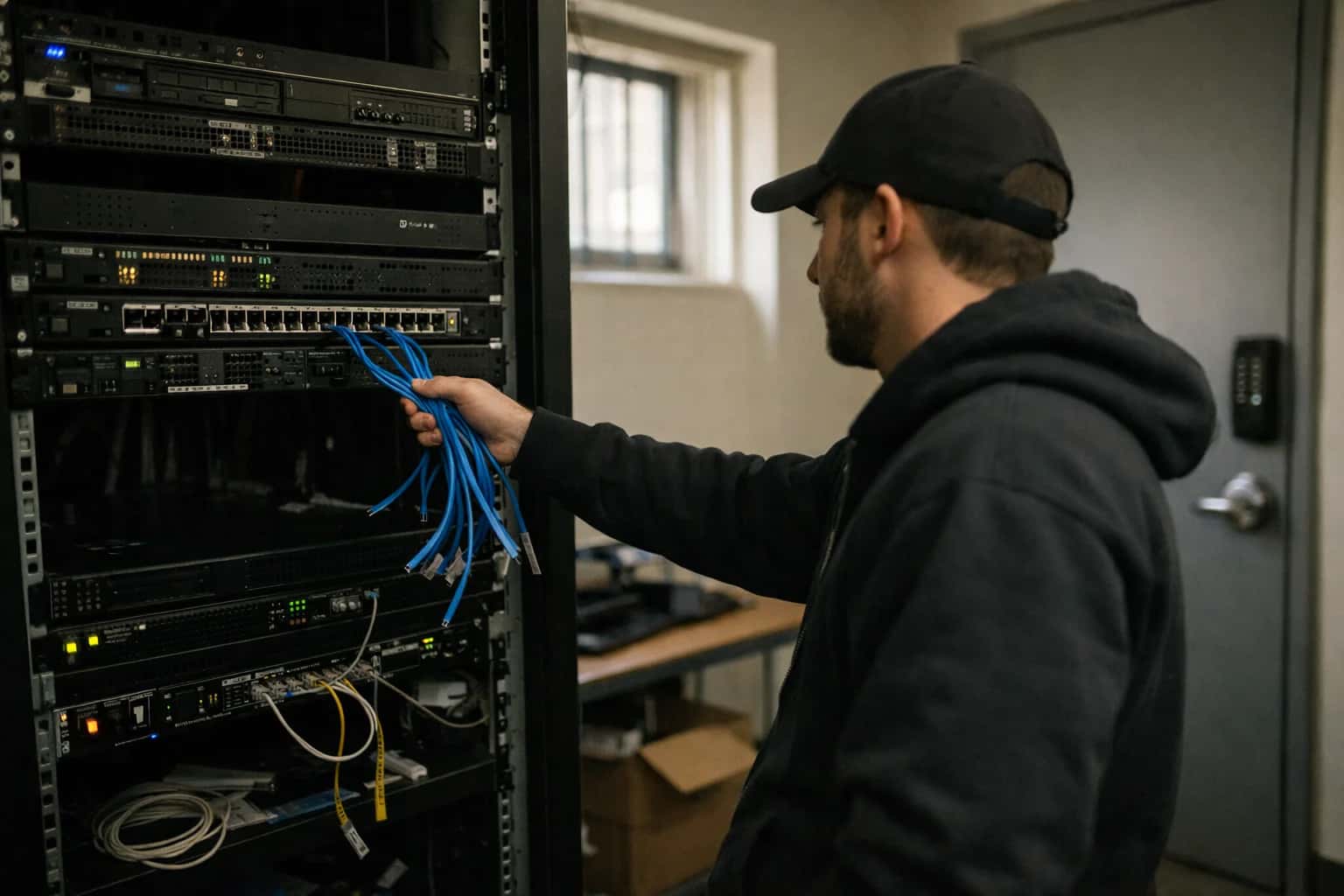
Red-teaming is a systematic adversarial testing process to uncover harmful behaviors, biases, and security vulnerabilities in AI models before deployment.
Designing an effective protocol requires three core steps: assembling a diverse red team with adversarial expertise, defining specific test scenarios for edge cases and known biases, and establishing a feedback loop to harden the model. This guide provides the actionable blueprint to implement this protocol, ensuring your models are robust against manipulation and aligned with safety goals, complementing other critical practices like continuous bias monitoring and explainable AI strategies.
RED-TEAMING FOCUS
Common AI Attack Vectors and Targets
A matrix of adversarial techniques to systematically test during a red-teaming exercise, mapping each attack to its primary target and objective.
| Attack Vector | Primary Target | Objective | Testing Priority |
|---|---|---|---|
Prompt Injection | LLM / Agent Logic | Hijack system prompt to produce harmful content or exfiltrate data | Critical |
Data Poisoning | Training Pipeline | Corrupt training data to embed backdoors or bias | High |
Model Inversion | Trained Model | Reconstruct sensitive training data from model outputs | Medium |
Membership Inference | Trained Model | Determine if a specific data point was in the training set | Medium |
Adversarial Examples | Model Inference | Cause misclassification with subtly perturbed inputs | High |
Model Stealing | Deployed API | Extract model architecture or weights via query outputs | Medium |
Supply Chain Attack | MLOps Pipeline | Compromise a third-party library or pre-trained model | Critical |
Jailbreaking | Safety-Aligned LLM | Bypass built-in safety filters and content policies | High |
RED-TEAMING PROTOCOL
Step 3: Develop and Execute Test Cases
This step transforms your defined attack surfaces into concrete, adversarial scenarios to probe for model vulnerabilities.
Begin by translating each attack surface—such as prompt injection, data poisoning, or harmful content generation—into specific, executable test cases. For a prompt injection test, this means crafting adversarial inputs designed to jailbreak the model's safety guardrails. Use structured templates to ensure coverage across categories: intent violations, safety bypasses, and context confusion. Each test case must have a clear pass/fail criterion based on the model's output, not just its internal confidence scores.
Execution requires a mix of automated scripts and manual, creative probing. Automate repetitive tests using frameworks like garak or custom Python scripts that feed adversarial prompts and log responses. However, critical edge scenarios demand manual red-teaming where human intuition explores novel attack vectors. Document every failure meticulously, capturing the exact input, model version, and the unsafe output. This evidence forms the basis for the feedback loop to harden models before deployment, directly feeding into your Responsible AI MLOps Pipeline.
PRACTICAL IMPLEMENTATION
Essential Red-Teaming Tools and Frameworks
A systematic red-teaming protocol requires specialized tools to simulate adversarial attacks, automate testing, and manage findings. This card grid details the core frameworks and platforms you need to operationalize your safety testing.
03
Bias & Fairness Stress Testing
Integrate bias testing into your red-team pipeline using fairness toolkits. Fairlearn and AIF360 provide metrics and algorithms to test for disparate impact across demographic subgroups. Red teams should create test cases that probe for:
- Stereotype reinforcement in generated text.
- Unfair denials in approval systems (e.g., loans).
- Performance disparities in computer vision across skin tones. Automating these tests ensures bias detection is continuous, linking to our guide on continuous bias monitoring.
EXPLORE
05
Vulnerability Scanners & Orchestration
Deploy automated scanners to continuously probe your AI API endpoints. Tools like Microsoft's Counterfit and Robust Intelligence's AI Firewall can be scripted to run automated adversarial campaigns, testing for data poisoning, model stealing, and inference-time attacks. These tools help orchestrate the red-teaming protocol, manage findings in a central dashboard, and integrate test results into your MLOps pipeline for automated remediation, a core concept in responsible AI MLOps.
EXPLORE
06
Findings & Risk Tracking Systems
Log every discovered vulnerability in a structured system for triage and resolution. Use JIRA with custom workflows or dedicated GRC (Governance, Risk, Compliance) platforms. Each finding should be tagged with:
- Attack vector (e.g., prompt injection, adversarial patch).
- Severity score (e.g., CVSS for AI).
- Mitigation status. This creates an auditable trail of safety work, crucial for demonstrating due diligence to regulators and linking to broader model risk management strategies.
FROM RED-TEAMING TO REMEDIATION
Step 4: Analyze Findings and Prioritize Risks
This step transforms raw adversarial test results into a prioritized action plan for hardening your AI model.
Systematically categorize each discovered vulnerability by its attack vector (e.g., prompt injection, data poisoning), exploit difficulty, and potential impact. Use a risk matrix to score findings based on likelihood and severity. This analysis moves beyond a simple bug list to a risk register that quantifies the threat to your system's safety, security, and fairness. This structured approach is essential for effective model risk management.
Prioritize remediation based on risk scores. High-severity, easy-to-exploit findings demand immediate fixes before deployment. For each risk, document the root cause and propose mitigation strategies, such as adding input sanitization, implementing fairness constraints, or refining the model's guardrails. This prioritized backlog becomes the technical foundation for your model's safety improvements, ensuring resources are allocated to the most critical threats first.
Enabling Efficiency, Speed & Accuracy
Intelligent Analysis, Decision & Execution
We build AI systems for teams that need search across company data, workflow automation across tools, or AI features inside products and internal software.
Talk to Us
Search across company data
Give teams answers from docs, tickets, runbooks, and product data with sources and permissions.
Useful when people spend too long searching or get different answers from different systems.
Enterprise searchRAGPermissions
Read more
Automate internal workflows
Use AI to route work, draft outputs, trigger actions, and keep approvals and logs in place.
Useful when repetitive work moves across multiple tools and teams.
AI agentsWorkflow automationGovernance
Read more
Add AI to products and internal tools
Build assistants, guided actions, or decision support into the software your team or customers already use.
Useful when AI needs to be part of the product, not a separate tool.
AI integrationDecision supportModel routing
Read moreTROUBLESHOOTING GUIDE
Common Mistakes in AI Red-Teaming
Red-teaming is a critical adversarial testing practice for AI safety, but flawed protocols create false confidence. This guide identifies the most frequent technical and strategic errors teams make and provides actionable fixes to build a robust protocol.
AI red-teaming is a systematic, adversarial evaluation designed to uncover harmful behaviors, biases, and vulnerabilities in AI models before deployment. Unlike traditional security testing that focuses on infrastructure exploits, AI red-teaming targets the model's reasoning, alignment, and output.
Key differences:
- Target: Tests the model's 'mind' (e.g., generating harmful content, leaking training data) vs. its hosting environment.
- Methods: Uses techniques like prompt injection, jailbreaking, and adversarial examples to probe decision boundaries.
- Goal: Discovers failures in safety guardrails, fairness, and truthfulness to inform model hardening. A proper protocol is a core component of a Responsible AI MLOps pipeline.

About the author
Prasad Kumkar
CEO & MD, Inference Systems
Prasad Kumkar is the CEO & MD of Inference Systems and writes about AI systems architecture, LLM infrastructure, model serving, evaluation, and production deployment. Over 5+ years, he has worked across computer vision models, L5 autonomous vehicle systems, and LLM research, with a focus on taking complex AI ideas into real-world engineering systems.
His work and writing cover AI systems, large language models, AI agents, multimodal systems, autonomous systems, inference optimization, RAG, evaluation, and production AI engineering.
LinkedIn
Limited slotsGet a Free AI Consultation
Partnered with leading AI, data, and software stack.





How We Work
Custom AI workflows for your Business
One-fit-all AI don't work for modern businesses. At Inferensys, we aim to understand your business & custom requirements; which we use to define most efficient agentic workflows, the data, and the tools for your business.
01
Review the use case
We understand the task, the users, and where AI can actually help.
Read more02
Pick the right approach
We define what needs search, automation, or product integration.
Read more03
Build the first useful version
We implement the part that proves the value first.
Read more04
Improve from there
We add the checks and visibility needed to keep it useful.
Read moreThe first call is a practical review of your use case and the right next step.
Talk to Us