
Use Cases
HealthTech Diagnostics and Bio-Informatics AI
HealthTech Diagnostics and Bio-Informatics AI
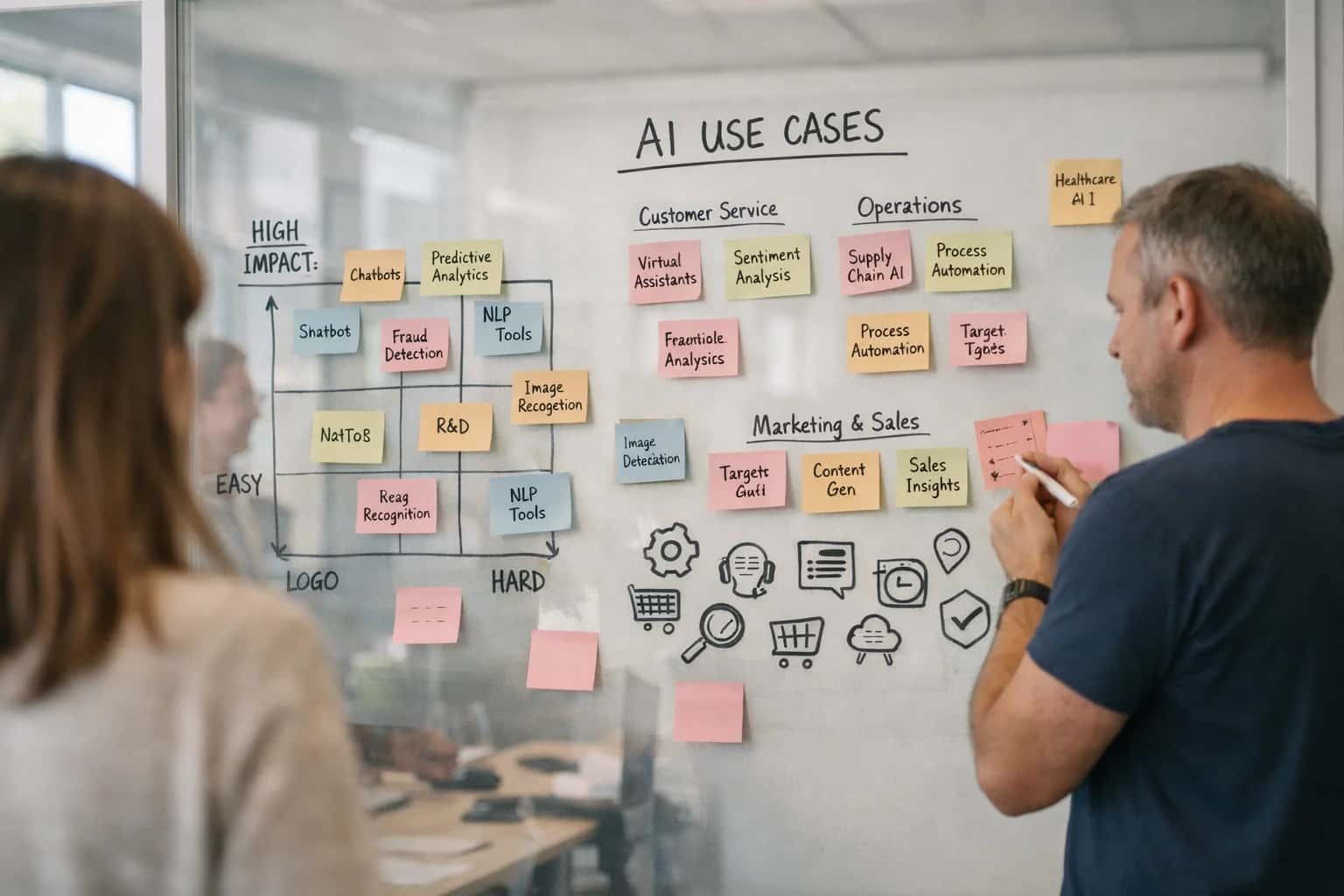
Health technology in 2026 is focused on 'Sovereign AI' for localized diagnostics and the use of neuro-symbolic systems to detect brain disorders. This pillar focuses on AI-powered medical imaging, predictive maintenance for hospital equipment, and personalized treatment plans. It encompasses bio-informatics for drug design—simulating complex molecular interactions to predict efficacy and side effects. Use cases range from 'virtual advisory support' for frontline workers to analysis of patient sentiment to improve social license to operate.
AI-Powered Medical Imaging Analysis
Deploy AI to automatically detect anomalies in X-rays, MRIs, and CT scans, reducing radiologist workload and accelerating diagnostic turnaround times by up to 40%.
Automated Radiology Report Generation
Generate preliminary, structured radiology reports from imaging data, enabling radiologists to focus on complex cases and improve report consistency.
Early Cancer Detection from Scans
Implement AI models to identify subtle, early-stage cancer indicators in medical images, enabling earlier intervention and improving patient survival rates.
Automated Pathology Slide Analysis
Use computer vision to analyze digitized pathology slides for cancer grading and biomarker identification, increasing lab throughput and diagnostic accuracy.
Real-Time Sepsis Early Warning
Deploy predictive AI models that analyze patient vitals and lab results to flag sepsis risk hours before clinical deterioration, enabling proactive intervention.
AI-Driven Surgical Planning Assistance
Utilize 3D modeling and simulation AI to create personalized surgical plans, optimizing incision paths and reducing operative risk and time.
AI-Optimized Radiation Therapy Planning
Apply AI to delineate tumors and healthy tissue with precision, creating optimized radiation dose plans that maximize efficacy and minimize side effects.
Personalized Treatment Plan Generation
Synthesize patient genomics, biomarkers, and clinical history with AI to recommend evidence-based, individualized treatment regimens.
Genomic Data Analysis for Personalized Medicine
Process and interpret complex genomic datasets to identify actionable mutations and guide targeted therapy selection for oncology and rare diseases.
AI-Powered Clinical Trial Matching
Automate the screening of patient records against complex trial eligibility criteria, accelerating enrollment and increasing trial diversity.
Bio-Informatics AI for Drug Design
Accelerate early-stage drug discovery by using AI to simulate molecular interactions and predict novel compound efficacy, cutting R&D timelines.
Drug Efficacy and Side Effect Prediction
Leverage AI models to forecast a drug candidate's therapeutic potential and adverse reaction profile before costly clinical trials.
AI-Powered Drug Repurposing Discovery
Analyze vast biomedical datasets to identify new therapeutic uses for existing approved drugs, creating fast-track opportunities for new indications.
Edge AI for Real-Time Patient Monitoring
Run lightweight AI models on bedside monitors and wearables to analyze vital signs locally, enabling instant alerts without cloud latency.
Automated Clinical Note Summarization
Use NLP to extract key findings and generate summaries from clinician notes, reducing administrative burden and improving care coordination.
Neuro-Symbolic Systems for Clinical Decisions
Combine deep learning with rule-based logic to provide auditable, explainable AI recommendations for complex, multi-factorial clinical cases.
Partnered with leading AI, data, and software stack.





How We Work
Custom AI workflows for your Business
One-fit-all AI don't work for modern businesses. At Inferensys, we aim to understand your business & custom requirements; which we use to define most efficient agentic workflows, the data, and the tools for your business.
01
Review the use case
We understand the task, the users, and where AI can actually help.
Read more02
Pick the right approach
We define what needs search, automation, or product integration.
Read more03
Build the first useful version
We implement the part that proves the value first.
Read more04
Improve from there
We add the checks and visibility needed to keep it useful.
Read moreThe first call is a practical review of your use case and the right next step.
Talk to Us