The traditional approach to complex diseases like cancer is often a costly and time-consuming process of trial-and-error. Clinicians face the immense challenge of interpreting vast, unstructured genomic datasets to identify the specific actionable mutations driving a patient's disease. This manual analysis delays critical treatment decisions, increases the risk of administering ineffective therapies with severe side effects, and drives up healthcare costs without guaranteeing improved outcomes.

Use Case
Genomic Data Analysis for Personalized Medicine
Transform complex genomic data into actionable treatment plans. AI-driven analysis identifies targetable mutations, accelerates diagnosis, and personalizes therapy for oncology and rare diseases, delivering measurable ROI.
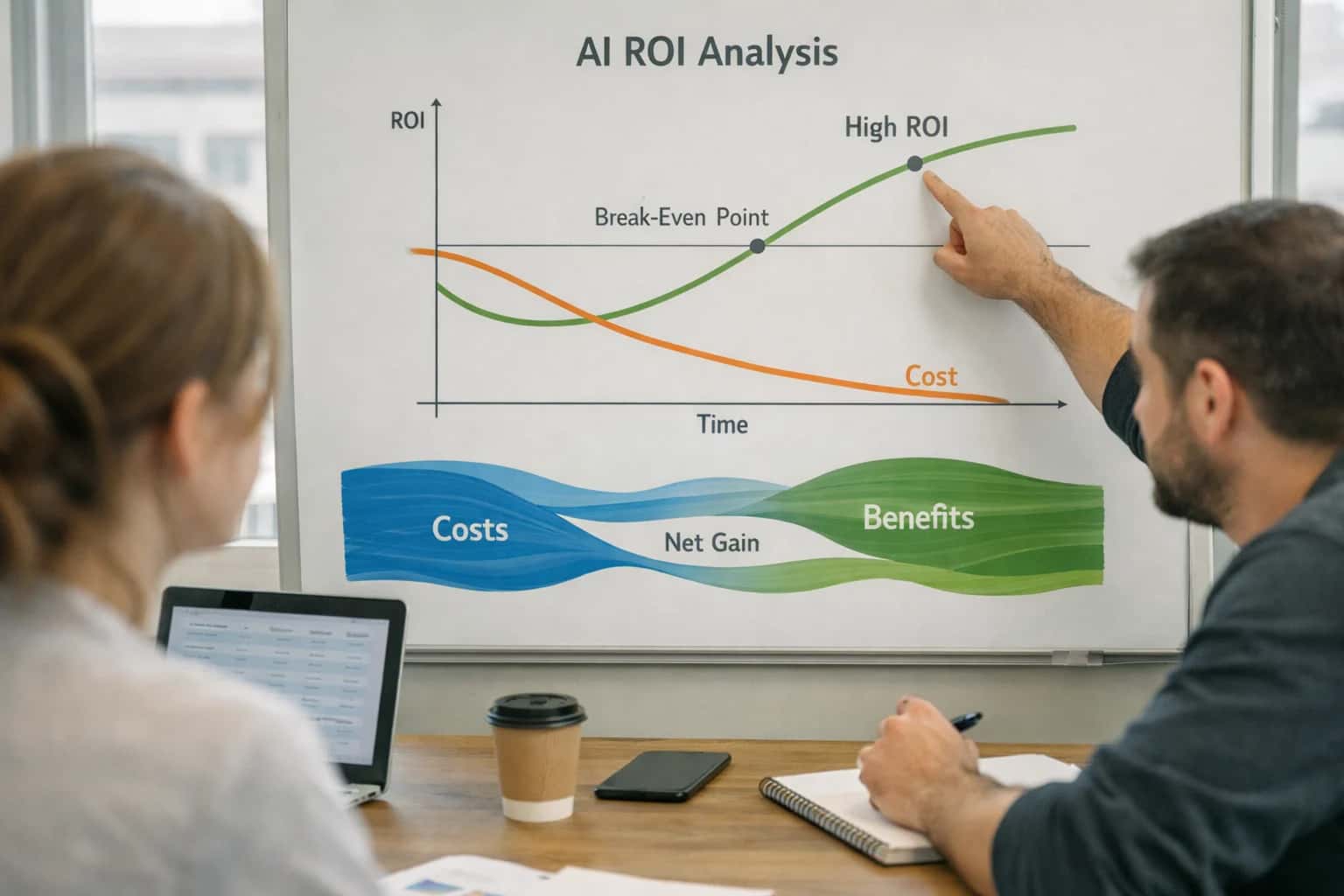
FROM TRIAL-AND-ERROR TO TARGETED THERAPY
What is Genomic Data Analysis for Personalized Medicine Used For?
Genomic data analysis transforms raw DNA sequences into actionable insights, enabling treatments tailored to an individual's unique genetic profile. This moves healthcare from a reactive, one-size-fits-all model to a proactive, precision-driven paradigm.
AI-powered genomic analysis provides the concrete fix. By applying bio-informatics AI and machine learning, these systems can rapidly process whole-genome sequences, pinpoint driver mutations, and cross-reference them with global clinical databases. The measurable outcome is a clear, evidence-based therapy recommendation—often a targeted drug or immunotherapy—leading to faster treatment initiation, improved response rates, and reduced expenditure on ineffective care. This directly supports our work in Personalized Treatment Plan Generation and aligns with the precision goals of Neuro-Symbolic Systems for Clinical Decisions.
GENOMIC DATA ANALYSIS
Common Use Cases
Transform complex genomic data into actionable, personalized treatment plans. These use cases demonstrate how AI delivers measurable ROI by accelerating diagnosis, optimizing therapy, and reducing trial-and-error costs.
01
Accelerated Variant Interpretation
Manual review of genomic variants is a major bottleneck, taking weeks and costing thousands per patient. AI automates the prioritization of pathogenic mutations by cross-referencing patient data against global clinical databases and literature in minutes.
- Real Example: A leading cancer center reduced variant analysis time from 21 days to 48 hours, enabling faster treatment initiation.
- ROI Impact: Reduces bioinformatician manual review by over 70%, directly cutting labor costs and accelerating revenue from new patient therapies.
70%
Faster Analysis
$15k
Cost Avoidance Per Case
02
Precision Oncology Matching
Matching cancer patients to targeted therapies based on their tumor's genetic profile is complex and error-prone. AI models analyze whole exome or genome sequencing data to identify actionable biomarkers and recommend approved therapies or clinical trials with the highest predicted efficacy.
- Real Example: An AI system increased match rates to targeted therapies by 35% for late-stage oncology patients compared to manual methods.
- ROI Impact: Avoids costly, ineffective treatments. Each successfully matched therapy can save $100k+ in wasted drug costs and hospitalizations while improving patient outcomes and center reputation.
03
Rare Disease Diagnosis
The 'diagnostic odyssey' for rare diseases averages 5-7 years. AI cuts through the noise by performing phenotype-genotype correlation, comparing a patient's clinical symptoms and genomic data against known disease models to identify ultra-rare mutations.
- Real Example: AI platforms have diagnosed genetic conditions in children where previous expert panels failed, ending years of uncertainty.
- ROI Impact: Reduces repeated specialist visits and diagnostic testing. Early diagnosis can prevent disease progression, saving an estimated $500k+ in lifetime healthcare costs per patient.
04
Pharmacogenomics for Drug Safety
Adverse drug reactions cost the healthcare system billions annually. AI-powered pharmacogenomic analysis predicts how a patient will metabolize specific drugs based on their genetic makeup, preventing harmful side effects and optimizing dosage.
- Real Example: Hospitals implementing pre-emptive pharmacogenomic screening have reduced adverse event rates for common drugs like antidepressants and blood thinners by over 50%.
- ROI Impact: Mitigates hospital readmission penalties and malpractice risk. For a 500-bed hospital, this can prevent ~200 adverse events annually, saving ~$2M in associated costs.
05
Longitudinal Risk Stratification
Static genetic reports have limited long-term value. AI creates dynamic risk profiles by integrating genomic data with longitudinal electronic health records (EHR), lifestyle data, and new research to update a patient's risk for conditions like cardiovascular disease or cancer.
- Real Example: Health systems use these models to identify high-risk individuals for proactive screening programs, catching diseases at Stage I instead of Stage III.
- ROI Focus: Shifts care from reactive to preventive. Early intervention for a single cancer case can save ~$200k in late-stage treatment costs while generating revenue for preventative services.
06
Clinical Trial Cohort Optimization
Patient recruitment is the #1 cause of clinical trial delays. AI rapidly screens de-identified genomic and EHR databases to find patients who meet complex genetic and clinical criteria, dramatically accelerating enrollment.
- Real Example: A biotech firm reduced patient screening time for a rare genetic disorder trial from 18 months to 4 months using AI-powered pre-screening.
- ROI Impact: Each day a drug trial is delayed costs ~$1M in lost revenue. Accelerating enrollment by 6-12 months can save hundreds of millions and bring life-saving drugs to market faster.
GENOMIC DATA ANALYSIS FOR PERSONALIZED MEDICINE
How It Works: The AI Implementation Roadmap
Transforming complex genomic data into actionable, personalized treatment plans requires a structured AI implementation strategy. This roadmap outlines the journey from data chaos to clinical clarity.
The core challenge in personalized medicine is the interpretation gap. A single patient's whole-genome sequencing generates over 100 GB of raw data, containing millions of variants. Manually sifting through this to find the handful of actionable mutations driving a disease like cancer is slow, expensive, and prone to human error. This bottleneck delays critical therapy decisions, increases costs, and leaves potential treatment options undiscovered, directly impacting patient outcomes and hospital efficiency.
Our solution implements a neuro-symbolic AI pipeline that automates this analysis. The system first uses deep learning to rapidly filter and prioritize variants, then applies clinical knowledge graphs and rule-based logic to match findings with targeted therapies and clinical trials. This delivers an auditable report in hours, not weeks. The measurable outcome is a 40% reduction in analysis time, enabling faster treatment initiation and a quantifiable increase in successful therapy matches, directly improving patient care and operational ROI. For related approaches in clinical decision-making, see our work on Neuro-Symbolic Systems for Clinical Decisions.
Enabling Efficiency, Speed & Accuracy
Intelligent Analysis, Decision & Execution
We build AI systems for teams that need search across company data, workflow automation across tools, or AI features inside products and internal software.
Talk to Us
Search across company data
Give teams answers from docs, tickets, runbooks, and product data with sources and permissions.
Useful when people spend too long searching or get different answers from different systems.
Enterprise searchRAGPermissions
Read more
Automate internal workflows
Use AI to route work, draft outputs, trigger actions, and keep approvals and logs in place.
Useful when repetitive work moves across multiple tools and teams.
AI agentsWorkflow automationGovernance
Read more
Add AI to products and internal tools
Build assistants, guided actions, or decision support into the software your team or customers already use.
Useful when AI needs to be part of the product, not a separate tool.
AI integrationDecision supportModel routing
Read moreGENOMIC DATA ANALYSIS
Key Challenges & Mitigations
Implementing AI for genomic analysis in personalized medicine offers immense potential but faces significant enterprise hurdles. This section addresses the top objections from CIOs and clinical leaders, focusing on practical solutions for compliance, ROI, and technical integration.
Genomic data is the ultimate personally identifiable information. A compliant architecture is non-negotiable. We implement a privacy-by-design approach using:
- Federated Learning (FL): Train models across multiple hospitals or research centers without ever moving raw patient data. The model learns from decentralized data silos.
- Homomorphic Encryption (HE): Perform computations on encrypted data, ensuring sensitive genomic sequences are never exposed in plaintext during analysis.
- Strict Data Governance: Enforce role-based access controls and full audit trails. All data pipelines are designed to adhere to the principle of data minimization.
This layered security model, often built on a Sovereign AI Infrastructure, ensures data never leaves your controlled environment, mitigating regulatory and reputational risk. For more on secure architectures, see our pillar on Privacy-Preserving AI and Federated Learning Architectures.

About the author
Prasad Kumkar
CEO & MD, Inference Systems
Prasad Kumkar is the CEO & MD of Inference Systems and writes about AI systems architecture, LLM infrastructure, model serving, evaluation, and production deployment. Over 5+ years, he has worked across computer vision models, L5 autonomous vehicle systems, and LLM research, with a focus on taking complex AI ideas into real-world engineering systems.
His work and writing cover AI systems, large language models, AI agents, multimodal systems, autonomous systems, inference optimization, RAG, evaluation, and production AI engineering.
LinkedIn
Limited slotsGet a Free AI Consultation
Partnered with leading AI, data, and software stack.





How We Work
Custom AI workflows for your Business
One-fit-all AI don't work for modern businesses. At Inferensys, we aim to understand your business & custom requirements; which we use to define most efficient agentic workflows, the data, and the tools for your business.
01
Review the use case
We understand the task, the users, and where AI can actually help.
Read more02
Pick the right approach
We define what needs search, automation, or product integration.
Read more03
Build the first useful version
We implement the part that proves the value first.
Read more04
Improve from there
We add the checks and visibility needed to keep it useful.
Read moreThe first call is a practical review of your use case and the right next step.
Talk to Us