Real-time signal classification at the edge involves deploying optimized RFML models directly onto constrained hardware like NVIDIA Jetson or Raspberry Pi. This eliminates cloud latency, enabling immediate response to detected signals—critical for security and monitoring. The core challenge is adapting computationally intensive models for edge inference, which requires techniques like pruning to remove unnecessary neurons and quantization to reduce numerical precision, dramatically shrinking model size and power consumption without sacrificing significant accuracy.

Guide
How to Implement Real-Time Signal Classification at the Edge
This guide provides a step-by-step tutorial for deploying optimized RF machine learning models on edge hardware like NVIDIA Jetson and Raspberry Pi. You will learn to build a low-latency system for applications like drone detection and IoT monitoring.
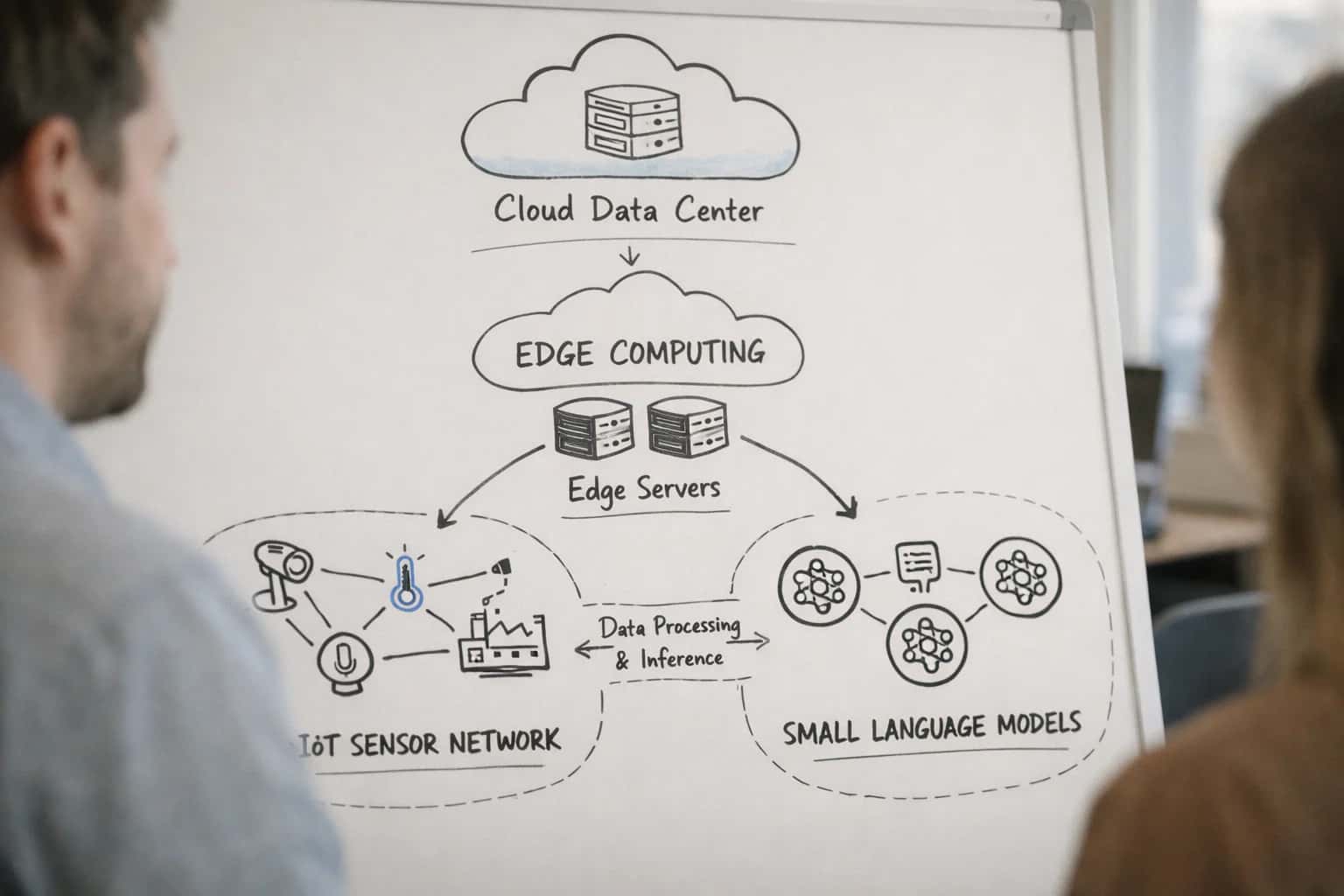
Deploy lightweight AI models on edge hardware to classify RF signals with minimal latency, enabling applications like drone detection and IoT monitoring where cloud processing is too slow.
Implementation requires an efficient streaming data architecture that processes incoming IQ samples directly from an SDR. You must extract features like spectrograms or cyclostationary signatures on-device before feeding them to the lightweight model. This guide will walk you through building this pipeline, from model optimization with frameworks like TensorFlow Lite or ONNX Runtime to deploying a system that performs continuous, low-latency inference for applications detailed in our guide on AI for spectrum awareness.
PLATFORM SELECTION
Edge Hardware Comparison for RFML
Key specifications and capabilities for deploying real-time RF signal classification models at the network edge.
| Feature / Metric | NVIDIA Jetson Orin NX | Raspberry Pi 5 (with Coral TPU) | Xilinx Kria KV260 |
|---|---|---|---|
Typical Power Draw | 10-25W | 5-12W | 6-15W |
Peak INT8 TOPS | 70 | 4 (via TPU) | 13 |
Onboard AI Accelerator | |||
Max Memory Bandwidth | 102 GB/s | 4.8 GB/s | 19.2 GB/s |
M.2 NVMe Support | |||
SDR Interface (e.g., USB 3.0) | |||
Real-Time OS Support | |||
Typical Latency for 1ms IQ Frame | < 5 ms | 10-50 ms | < 3 ms |
Hardware-Accelerated FFT | |||
Approximate Unit Cost | $500-$700 | $100-$200 | $300-$400 |
PRODUCTION DEPLOYMENT
Step 5: Integrate with Downstream Alerting Systems
A classified signal is only useful if it triggers an action. This step connects your edge inference engine to the operational systems that respond to threats or anomalies.
Real-time classification is useless without a low-latency alerting pipeline. Your edge system must package inference results—such as device ID, confidence score, and timestamp—into a structured alert payload. This payload is then published to a message broker like Apache Kafka or MQTT for immediate consumption. Design your alert schema to include all necessary context for downstream systems, such as geolocation from a connected GPS module or the raw signal snippet for forensic review. This ensures the alert contains actionable intelligence, not just a classification label.
Integrate with the specific Security Information and Event Management (SIEM) or command-and-control platform used in your operational domain. For wireless security, this might mean sending alerts to a dashboard that triggers physical interdiction. For electronic warfare, it could automatically queue a countermeasure. Implement robust error handling and retry logic for network interruptions, as the edge environment is unreliable. Finally, establish feedback loops where operator actions on alerts are logged and used to retrain your models, closing the loop on your RFML pipeline for signal identification.
Enabling Efficiency, Speed & Accuracy
Intelligent Analysis, Decision & Execution
We build AI systems for teams that need search across company data, workflow automation across tools, or AI features inside products and internal software.
Talk to Us
Search across company data
Give teams answers from docs, tickets, runbooks, and product data with sources and permissions.
Useful when people spend too long searching or get different answers from different systems.
Enterprise searchRAGPermissions
Read more
Automate internal workflows
Use AI to route work, draft outputs, trigger actions, and keep approvals and logs in place.
Useful when repetitive work moves across multiple tools and teams.
AI agentsWorkflow automationGovernance
Read more
Add AI to products and internal tools
Build assistants, guided actions, or decision support into the software your team or customers already use.
Useful when AI needs to be part of the product, not a separate tool.
AI integrationDecision supportModel routing
Read moreTROUBLESHOOTING
Common Mistakes
Avoid these frequent pitfalls when deploying real-time RF signal classifiers to edge devices. Each item addresses a specific developer FAQ with actionable solutions.
Latency spikes typically stem from mismatched hardware capabilities and unoptimized data flow. The most common cause is blocking I/O operations in your data ingestion pipeline, where the model waits for the next batch of IQ samples.
Fix: Implement a non-blocking, ring buffer architecture. Use a producer-consumer pattern where a dedicated thread captures samples from the SDR (e.g., using pyrtlsdr or SoapySDR) into a shared buffer, while the inference thread pulls from it. Ensure your feature extraction (e.g., calculating a spectrogram) is also vectorized and offloaded to the GPU or NPU if available.
python# Pseudo-code for a non-blocking buffer import threading import queue iq_buffer = queue.Queue(maxsize=10) # Buffer 10 batches def capture_thread(sdr): while True: samples = sdr.read_samples(1024) iq_buffer.put(samples) # Non-blocking if queue not full def inference_thread(model): while True: samples = iq_buffer.get() features = extract_features(samples) # Vectorized ops prediction = model.predict(features)

About the author
Prasad Kumkar
CEO & MD, Inference Systems
Prasad Kumkar is the CEO & MD of Inference Systems and writes about AI systems architecture, LLM infrastructure, model serving, evaluation, and production deployment. Over 5+ years, he has worked across computer vision models, L5 autonomous vehicle systems, and LLM research, with a focus on taking complex AI ideas into real-world engineering systems.
His work and writing cover AI systems, large language models, AI agents, multimodal systems, autonomous systems, inference optimization, RAG, evaluation, and production AI engineering.
LinkedIn
Limited slotsGet a Free AI Consultation
Partnered with leading AI, data, and software stack.





How We Work
Custom AI workflows for your Business
One-fit-all AI don't work for modern businesses. At Inferensys, we aim to understand your business & custom requirements; which we use to define most efficient agentic workflows, the data, and the tools for your business.
01
Review the use case
We understand the task, the users, and where AI can actually help.
Read more02
Pick the right approach
We define what needs search, automation, or product integration.
Read more03
Build the first useful version
We implement the part that proves the value first.
Read more04
Improve from there
We add the checks and visibility needed to keep it useful.
Read moreThe first call is a practical review of your use case and the right next step.
Talk to Us