An AI-powered stability study monitoring system automates the collection, analysis, and reporting of data from stability chambers and Laboratory Information Management Systems (LIMS). It uses statistical forecasting models to predict shelf-life and detect Out-of-Trend (OOT) results early, ensuring adherence to ICH guidelines. The core value is accelerating time-to-market while maintaining rigorous compliance, a key principle of our Regulatory Intelligence and Pharma Compliance Automation pillar.

Guide
Launching an AI-Powered Stability Study Monitoring System
A developer guide to building an automated system for managing drug product stability studies per ICH guidelines. Integrate with stability chambers and LIMS, implement statistical forecasting, and auto-generate compliance reports.
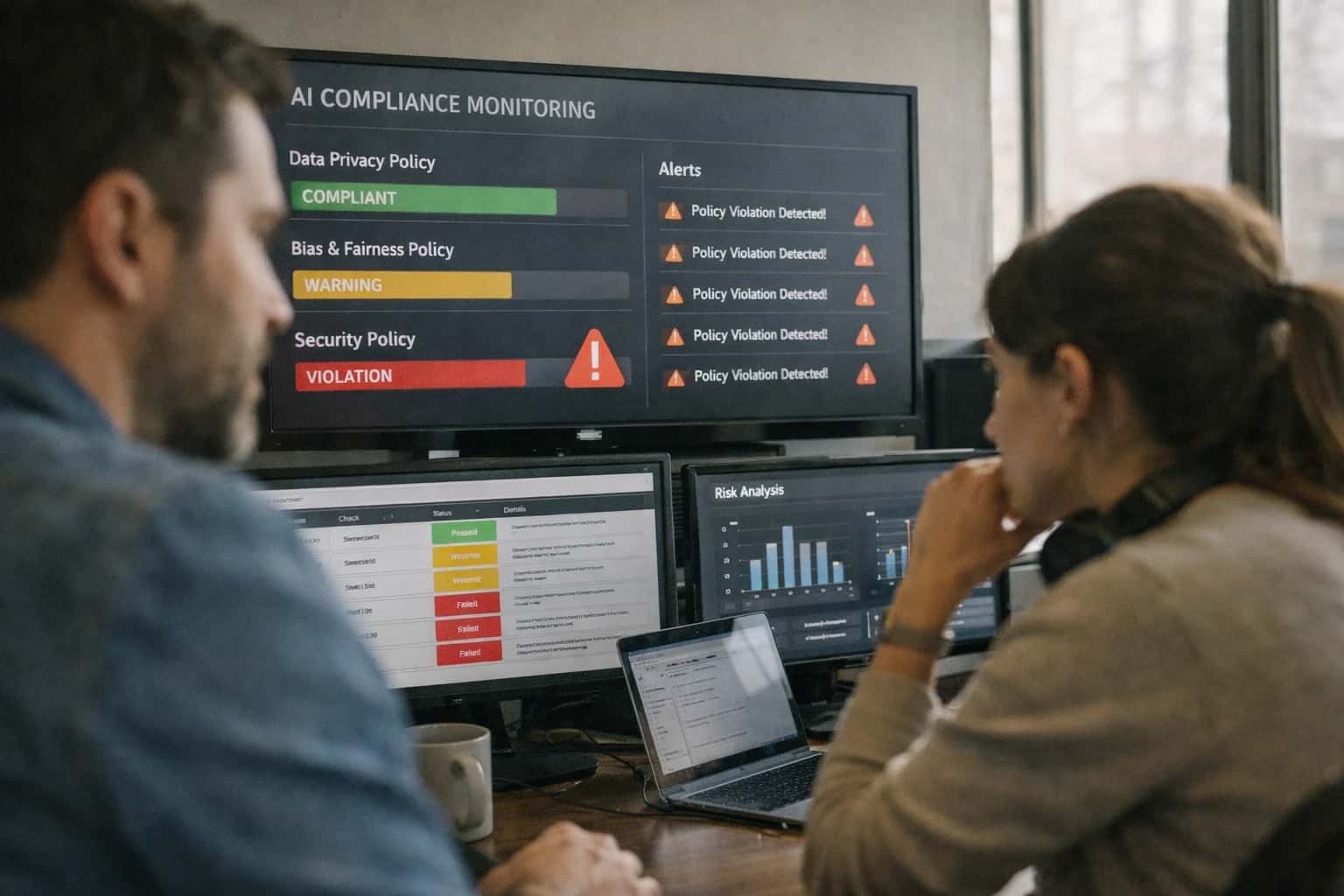
This guide details the technical implementation of an automated system for managing drug product stability studies, a critical component of pharmaceutical quality and regulatory compliance.
Implementation requires integrating with IoT sensors for real-time environmental data, applying time-series algorithms for trend analysis, and building agents to auto-generate stability protocols and reports. This system is a specialized application of autonomous workflow design, creating a closed-loop process that reduces manual overhead and human error. For a broader architectural context, see our guide on How to Architect an AI-Powered GMP Compliance Platform.
MODEL SELECTION
Stability Forecasting Model Comparison
A comparison of statistical and machine learning models for predicting drug product shelf-life and detecting out-of-trend (OOT) results in stability studies.
| Model / Feature | Linear Regression | Time-Series ARIMA | Machine Learning (XGBoost) | Recommendation |
|---|---|---|---|---|
Primary Use Case | Basic shelf-life extrapolation | Forecasting with seasonality/trend | Multi-variate OOT detection & complex degradation | Use for initial estimates |
Data Requirements | Minimum 3 timepoints | Longitudinal data with clear autocorrelation | Rich feature set (e.g., batch, excipient data) | Start simple, then advance |
ICH Q1E Compliance | All models can be validated | |||
Handles Non-Linear Degradation | Critical for biologics | |||
Out-of-Trend (OOT) Detection Sensitivity | Low | Medium | High | Use ML for early warning |
Implementation Complexity | Low | Medium | High | Consider team skills |
Interpretability for Regulators | High | Medium | Low (requires explainability tools) | Prioritize in submissions |
Integration with System Alerts | Core to monitoring |
Enabling Efficiency, Speed & Accuracy
Intelligent Analysis, Decision & Execution
We build AI systems for teams that need search across company data, workflow automation across tools, or AI features inside products and internal software.
Talk to Us
Search across company data
Give teams answers from docs, tickets, runbooks, and product data with sources and permissions.
Useful when people spend too long searching or get different answers from different systems.
Enterprise searchRAGPermissions
Read more
Automate internal workflows
Use AI to route work, draft outputs, trigger actions, and keep approvals and logs in place.
Useful when repetitive work moves across multiple tools and teams.
AI agentsWorkflow automationGovernance
Read more
Add AI to products and internal tools
Build assistants, guided actions, or decision support into the software your team or customers already use.
Useful when AI needs to be part of the product, not a separate tool.
AI integrationDecision supportModel routing
Read moreSTABILITY STUDY MONITORING
Common Mistakes
Launching an AI-powered stability study system is complex, blending data engineering, statistical modeling, and regulatory compliance. These are the most frequent technical and procedural pitfalls developers encounter, and how to fix them.
Stability data is inherently sparse—you might have only 0, 3, 6, 12, and 24-month timepoints. Traditional time-series models trained on dense data (e.g., stock prices) fail here.
The fix is to use models designed for sparse longitudinal data. Implement a hierarchical Bayesian model or a mixed-effects model that pools information across batches and strengths to make robust predictions. For shelf-life estimation per ICH Q1E, ensure your model can correctly handle poolability tests before combining data.
python# Example using a linear mixed-effects model for potency degradation import statsmodels.api as sm import statsmodels.formula.api as smf # 'Batch' as a random effect, 'Time' as a fixed effect model = smf.mixedlm("Potency ~ Time", data=stability_df, groups=stability_df["Batch"]) result = model.fit() print(result.summary())
Always validate predictions against ICH guidelines and include confidence intervals for regulatory acceptance.

About the author
Prasad Kumkar
CEO & MD, Inference Systems
Prasad Kumkar is the CEO & MD of Inference Systems and writes about AI systems architecture, LLM infrastructure, model serving, evaluation, and production deployment. Over 5+ years, he has worked across computer vision models, L5 autonomous vehicle systems, and LLM research, with a focus on taking complex AI ideas into real-world engineering systems.
His work and writing cover AI systems, large language models, AI agents, multimodal systems, autonomous systems, inference optimization, RAG, evaluation, and production AI engineering.
LinkedIn
Limited slotsGet a Free AI Consultation
Partnered with leading AI, data, and software stack.





How We Work
Custom AI workflows for your Business
One-fit-all AI don't work for modern businesses. At Inferensys, we aim to understand your business & custom requirements; which we use to define most efficient agentic workflows, the data, and the tools for your business.
01
Review the use case
We understand the task, the users, and where AI can actually help.
Read more02
Pick the right approach
We define what needs search, automation, or product integration.
Read more03
Build the first useful version
We implement the part that proves the value first.
Read more04
Improve from there
We add the checks and visibility needed to keep it useful.
Read moreThe first call is a practical review of your use case and the right next step.
Talk to Us