Proactive CAPA management uses causal inference and pattern recognition to analyze interconnected data streams—deviations, complaints, audit findings—and identify systemic root causes. This shifts the paradigm from documenting past failures to predicting and preventing future ones. The technical foundation involves building a centralized data lake that ingests structured and unstructured data from your Quality Management System (QMS), Manufacturing Execution System (MES), and other sources, enabling holistic analysis.

Guide
How to Implement AI for Proactive CAPA Management
A technical guide to transforming corrective and preventive action (CAPA) from a reactive process to a predictive system using data integration, causal inference, and autonomous agents.
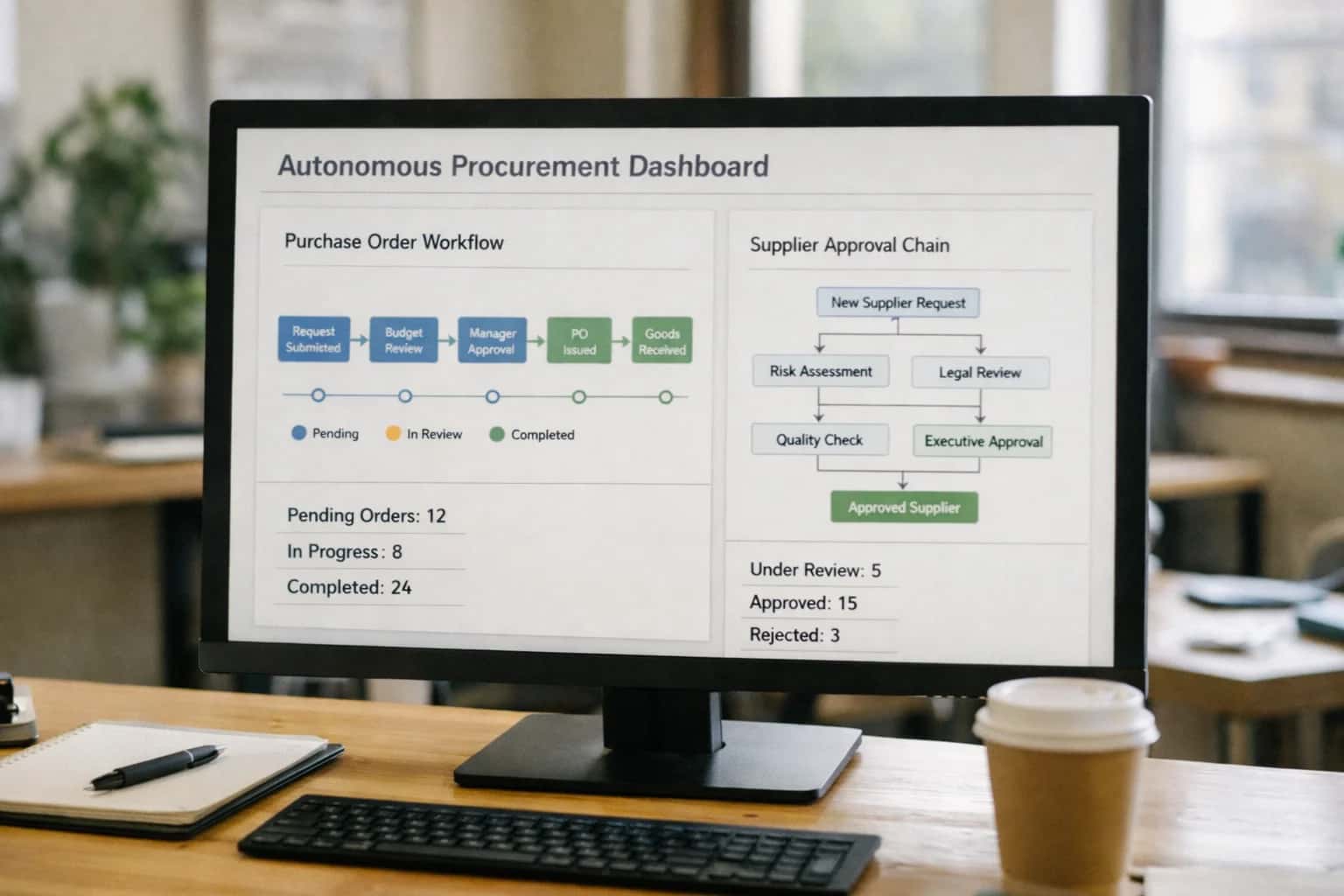
Transform your Corrective and Preventive Action (CAPA) system from a reactive documentation process into a predictive intelligence engine that prevents issues before they recur.
Implementation requires a multi-agent workflow where specialized AI models perform distinct tasks: an anomaly detection agent flags potential issues, a root cause analysis agent investigates using techniques like fishbone diagrams and 5 Whys, and a recommendation agent suggests validated preventive actions. This system integrates with your existing GMP compliance platform to ensure actions are tracked to effective closure, creating a closed-loop of continuous improvement.
IMPLEMENTATION FRAMEWORK
Key Concepts: From Reactive to Proactive CAPA
Transforming Corrective and Preventive Action (CAPA) requires connecting disparate data sources and applying AI to predict issues before they occur. These concepts form the technical foundation.
01
Causal Inference for Root Cause Analysis
Move beyond correlation to identify true systemic causes. Causal inference models analyze deviations, complaints, and audit findings to map cause-and-effect relationships.
- Use Bayesian networks or structural causal models to model process interdependencies.
- Example: An increase in particulate matter in a cleanroom (Event B) is traced not just to a faulty filter (Event A), but to a systemic failure in the preventive maintenance scheduling system.
- This allows the AI to recommend fixes to the underlying process, not just the symptom.
02
Pattern Recognition Across Disconnected Data
Proactive CAPA requires unifying siloed data streams. Implement anomaly detection and clustering algorithms on integrated data from MES, LIMS, and your QMS.
- Apply time-series analysis to spot trends in deviation rates before they breach thresholds.
- Use unsupervised learning (e.g., DBSCAN) to group seemingly unrelated complaints or audit findings that share a latent root cause.
- This creates a single source of truth for quality signals, enabling the system to flag emerging risks.
03
Agentic Workflow for Autonomous CAPA Initiation
Automate the entire CAPA lifecycle with a multi-agent system. Design specialized agents that collaborate without human bottlenecks.
- Detector Agent: Monitors integrated data streams and flags potential issues using predefined rules and ML models.
- Investigator Agent: Automatically gathers related evidence (e.g., batch records, sensor logs) and performs preliminary root cause analysis.
- Action Agent: Generates and routes corrective/preventive action plans to responsible parties, tracking closure.
- This mirrors principles from our guide on Multi-Agent System (MAS) Orchestration.
04
Predictive Risk Scoring & Prioritization
Not all signals require a CAPA. Implement a predictive risk engine that scores and prioritizes issues based on potential impact.
- Train a model using historical data on: Regulatory severity, patient safety impact, recurrence likelihood, and cost of non-conformance.
- The engine assigns a risk score to each detected issue, allowing quality teams to focus on high-value, high-risk items first.
- This enables a shift from a reactive, first-in-first-out queue to a risk-based, proactive triage system.
05
Closed-Loop Verification & Learning
A proactive system must learn from its actions. Implement closed-loop feedback to verify effectiveness and refine models.
- After a CAPA is closed, the system monitors for recurrence of the issue.
- Effectiveness checks are automated, with results fed back into the causal and risk models.
- This creates a continuous learning cycle, improving the AI's accuracy in predicting and preventing future failures. This is a core tenet of MLOps for agentic systems.
06
Integration with the Broader QMS
CAPA cannot be an island. The AI system must be deeply integrated into the Quality Management System (QMS) ecosystem.
- Ensure bidirectional APIs with systems for Deviation Management, Change Control, Audit Management, and Training Records.
- When a CAPA is generated, it should automatically trigger related workflows (e.g., a document change request or a training assignment).
- This holistic integration is detailed in our guide on How to Architect an AI-Powered GMP Compliance Platform.
FOUNDATION
Step 1: Design the Data Integration Layer
The first and most critical step in building a proactive CAPA system is creating a unified data fabric that connects disparate quality signals. This layer is the foundation for all subsequent AI analysis.
A proactive CAPA system requires a data integration layer that ingests and harmonizes structured and unstructured data from across the quality ecosystem. This includes deviations from your Manufacturing Execution System (MES), complaints from your CRM, audit findings from your QMS, and data from environmental monitoring and batch records. The goal is to create a single source of truth where relationships between events can be discovered. You must implement robust data pipelines and a unified schema to map these diverse sources into a common format for analysis.
Key technical tasks include: - Establishing API connectors or ETL processes to pull real-time and historical data. - Designing a data warehouse or data lake optimized for time-series and relational queries. - Implementing entity resolution to link records (e.g., a specific batch, equipment ID, or operator) across different systems. This integrated data layer enables the causal inference and pattern recognition needed to move from reactive problem-solving to predicting systemic root causes, a core principle of our guide on How to Architect an AI-Powered GMP Compliance Platform.
AI FRAMEWORK ARCHITECTURE
Tool Comparison: Frameworks for Proactive CAPA
This table compares the core technical approaches for building AI systems that transition CAPA from reactive to proactive, focusing on their suitability for identifying systemic root causes.
| Core Architectural Feature | Causal Inference Engine | Multi-Agent Orchestration | Neuro-Symbolic Hybrid |
|---|---|---|---|
Primary Mechanism for Root Cause Analysis | Statistical causal graphs & Bayesian networks | Specialized agents (detector, investigator, verifier) | Symbolic rule-checking layered on neural pattern recognition |
Real-Time Data Integration Complexity | High (requires structured time-series data) | Medium (agents can handle semi-structured streams) | Low (excels with predefined ontologies and logs) |
Explainability for Regulatory Audits | Moderate (probabilistic graphs can be complex) | High (discrete agent actions create clear audit trails) | High (generates logical, step-by-step reasoning traces) |
Ability to Recommend Preventive Actions | |||
Integration with Existing QMS (e.g., Veeva, SAP) | Custom API development required | Built for agent-to-system communication | Requires semantic mapping of QMS rules |
Implementation Timeline for POC | 6-9 months | 3-6 months | 9-12 months |
Best Suited For | Processes with rich historical deviation data | Dynamic environments with multiple data source types | High-stakes scenarios requiring strict, verifiable logic (e.g., batch release) |
Key Technical Prerequisite | Causal discovery algorithms (e.g., DoWhy, CausalNex) | Agent communication protocol (e.g., FIPA-ACL) | Knowledge graph of GMP rules & failure modes |
Enabling Efficiency, Speed & Accuracy
Intelligent Analysis, Decision & Execution
We build AI systems for teams that need search across company data, workflow automation across tools, or AI features inside products and internal software.
Talk to Us
Search across company data
Give teams answers from docs, tickets, runbooks, and product data with sources and permissions.
Useful when people spend too long searching or get different answers from different systems.
Enterprise searchRAGPermissions
Read more
Automate internal workflows
Use AI to route work, draft outputs, trigger actions, and keep approvals and logs in place.
Useful when repetitive work moves across multiple tools and teams.
AI agentsWorkflow automationGovernance
Read more
Add AI to products and internal tools
Build assistants, guided actions, or decision support into the software your team or customers already use.
Useful when AI needs to be part of the product, not a separate tool.
AI integrationDecision supportModel routing
Read moreTROUBLESHOOTING
Common Mistakes
Implementing AI for proactive CAPA management is a complex technical challenge. These are the most frequent pitfalls developers encounter, from data integration to model validation, and how to fix them.
False positives occur when the AI incorrectly identifies correlation as causation. This is the most common failure in proactive CAPA systems.
Fix this by implementing causal inference frameworks like DoWhy or causal graphs, rather than relying solely on correlation-based pattern matching. Your data pipeline must include temporal sequencing to establish that a potential cause (e.g., a raw material deviation) actually precedes the effect (e.g., a batch failure).
Common Mistake: Using simple anomaly detection on aggregated data without temporal context.
Solution:
- Structure your event data with precise timestamps.
- Use Granger causality tests on time-series data.
- Implement a validation step where the AI must provide a causal pathway with supporting evidence before escalating a finding.

About the author
Prasad Kumkar
CEO & MD, Inference Systems
Prasad Kumkar is the CEO & MD of Inference Systems and writes about AI systems architecture, LLM infrastructure, model serving, evaluation, and production deployment. Over 5+ years, he has worked across computer vision models, L5 autonomous vehicle systems, and LLM research, with a focus on taking complex AI ideas into real-world engineering systems.
His work and writing cover AI systems, large language models, AI agents, multimodal systems, autonomous systems, inference optimization, RAG, evaluation, and production AI engineering.
LinkedIn
Limited slotsGet a Free AI Consultation
Partnered with leading AI, data, and software stack.





How We Work
Custom AI workflows for your Business
One-fit-all AI don't work for modern businesses. At Inferensys, we aim to understand your business & custom requirements; which we use to define most efficient agentic workflows, the data, and the tools for your business.
01
Review the use case
We understand the task, the users, and where AI can actually help.
Read more02
Pick the right approach
We define what needs search, automation, or product integration.
Read more03
Build the first useful version
We implement the part that proves the value first.
Read more04
Improve from there
We add the checks and visibility needed to keep it useful.
Read moreThe first call is a practical review of your use case and the right next step.
Talk to Us