Dynamic compute scaling is the automated adjustment of computational resources—like GPU instances or container replicas—based on real-time workload demand. Over-provisioning for peak load is a primary source of energy waste and cost in AI systems. By implementing scaling policies, you ensure your cluster uses only the power necessary to meet Service Level Objectives (SLOs), directly slashing carbon footprint and operational expense. This is a core practice within Green AI, shifting focus from raw accuracy to Energy-to-Solution metrics.

Guide
How to Implement Dynamic Compute Scaling for AI Workloads
A technical guide to implementing dynamic scaling policies for AI clusters. Learn to use Kubernetes HPA with custom metrics, schedule jobs for off-peak energy, and deploy predictive scaling with Keda to reduce costs and carbon footprint.
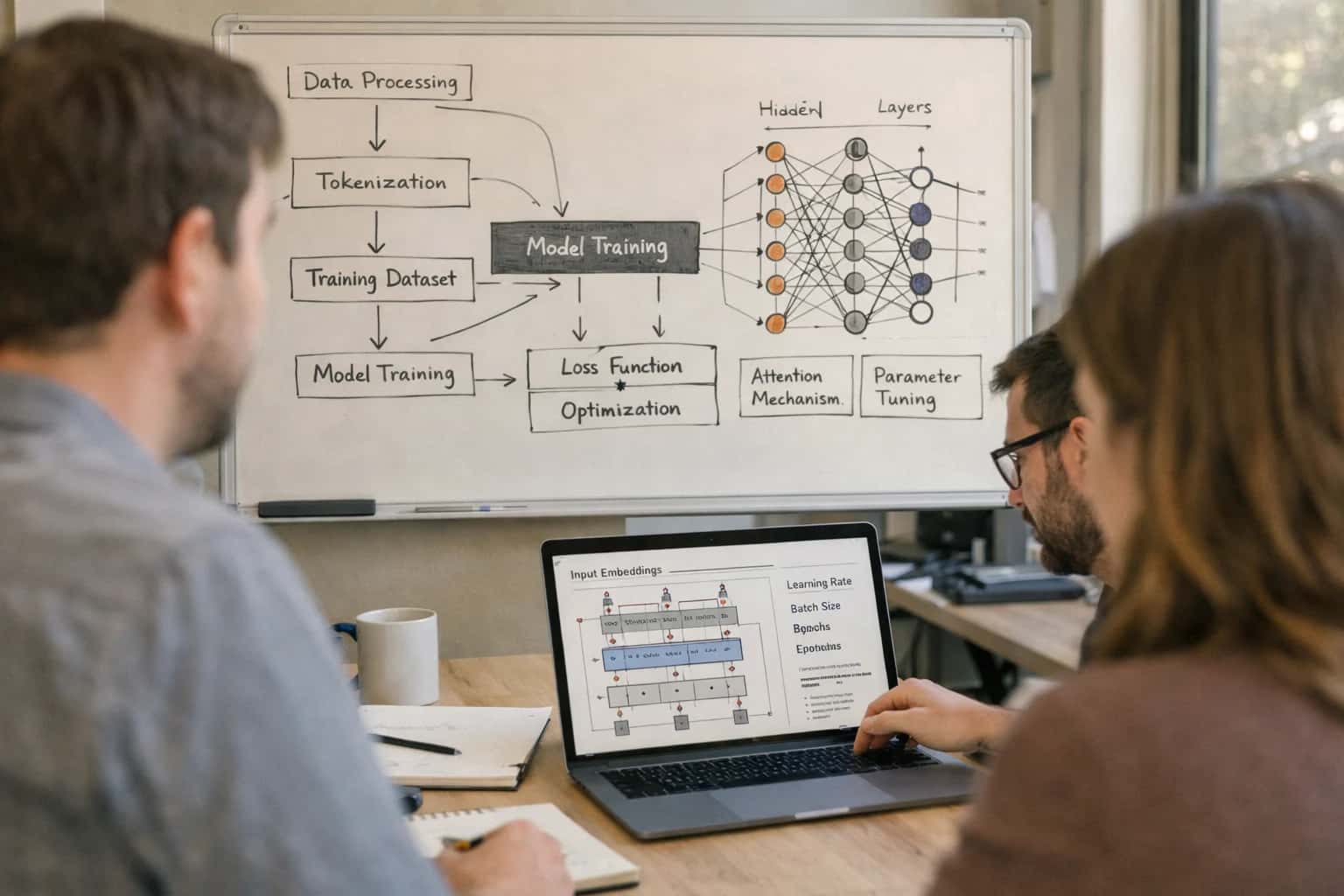
Learn to eliminate energy waste by automatically rightsizing compute resources for AI training and inference in real-time.
Implementation requires orchestrators like Kubernetes and scaling controllers. You will configure the Horizontal Pod Autoscaler (HPA) to use custom metrics from your inference API, such as request latency or queue depth. For predictive scaling based on schedules or forecasts, integrate Kubernetes Event-driven Autoscaling (Keda). Schedule large batch training jobs for off-peak hours when grid carbon intensity is lower, using tools like Airflow or Kueue. Start by instrumenting your workloads to expose the right metrics for scaling decisions.
DYNAMIC SCALING PRIMER
Key Concepts
Master the core components and strategies for implementing dynamic compute scaling to eliminate energy waste in AI training and inference workloads.
03
Custom Metrics & Observability
Effective dynamic scaling requires exposing the right business and performance metrics from your AI application. This involves instrumenting your code to emit metrics like:
- Model Inference Latency (P95, P99)
- GPU Memory Utilization
- Batch Job Queue Depth
- Requests Per Second (RPS)
You then aggregate these metrics into a system like Prometheus, which the HPA or KEDA can query. This creates a closed feedback loop where scaling decisions are based on actual workload demand, not just generic resource usage, leading to precise rightsizing and energy savings.
05
Scheduling for Renewable Energy
Dynamic scaling isn't just about demand—it's about supply. Schedule long-running, flexible batch jobs (like model training or large-scale data processing) to run during off-peak hours or periods of high renewable energy generation (e.g., midday solar).
- Implementation: Use the Kubernetes CronJob resource with a start time aligned to your region's carbon intensity data. Tools like Electricity Maps API can provide this data programmatically.
- Carbon-Aware Scheduler: Implement or use a custom scheduler that considers the real-time carbon footprint of the grid when making pod placement decisions, a practice known as carbon-aware computing.
- Impact: This directly reduces the Scope 2 emissions of your AI operations by aligning compute with cleaner energy sources.
06
Predictive Scaling Policies
Move from reactive to proactive scaling by predicting future load. Analyze historical traffic patterns (daily, weekly cycles) and external signals (product launches, marketing campaigns) to forecast demand.
- Tooling: Use time-series forecasting models (e.g., Prophet, ARIMA) or integrate with observability platforms that offer predictive features.
- Integration with KEDA: Feed predictions into KEDA's scaling logic to provision resources before the load arrives, improving performance and avoiding cold-start latency.
- Energy Efficiency Gain: Predictive scaling smooths out drastic resource spikes, allowing for more stable, efficient cluster utilization and preventing the energy waste of rapid, panic-driven scale-up/scale-down cycles.
FOUNDATION
Step 1: Instrument Your AI Workload for Metrics
Effective dynamic scaling begins with comprehensive observability. You cannot optimize what you cannot measure. This step focuses on embedding telemetry into your training and inference pipelines to capture the real-time resource metrics that will drive your scaling policies.
Dynamic compute scaling requires a data-driven feedback loop. You must first instrument your AI workloads to expose key performance indicators (KPIs) like GPU/CPU utilization, memory pressure, inference latency, and batch job queue depth. Use libraries like Prometheus client libraries or cloud-native monitoring agents to emit these as custom metrics. For energy-aware scaling, integrate tools like CodeCarbon to track power draw and estimated carbon emissions, linking computational activity directly to environmental impact as discussed in our guide on Measuring AI Carbon Footprint.
Structure your instrumentation to answer specific scaling questions: Is the current pod CPU-bound? Is the batch queue backing up? Export these metrics to a time-series database like Prometheus. This creates the foundational dataset for your Horizontal Pod Autoscaler (HPA) or Keda scalers to consume. Without this granular, real-time data, any scaling policy is guesswork, leading to the over-provisioning and energy waste that Green AI aims to eliminate. Proper instrumentation turns reactive scaling into a predictable, efficient system.
ENERGY & COST IMPACT
Scaling Strategy Comparison
A comparison of compute scaling approaches for AI workloads, evaluating their efficiency, responsiveness, and suitability for different task types within the context of Green AI and computational efficiency.
| Scaling Dimension | Reactive (Threshold-Based) | Predictive (ML-Driven) | Scheduled (Time-Based) |
|---|---|---|---|
Primary Trigger | CPU/Memory usage > 80% | Forecasted demand from time-series model | Pre-defined schedule (e.g., business hours) |
Scaling Latency | 30-90 seconds | < 10 seconds (pre-emptive) | 0 seconds (pre-provisioned) |
Energy Efficiency | Low (over-provisioning common) | High (right-sizes proactively) | Medium (aligns with renewable energy) |
Best For Workload Type | Volatile, short-lived inference | Predictable batch training or cyclic demand | Scheduled batch jobs, ETL pipelines |
Carbon Footprint Impact | High (idle resource waste) | Low (optimal utilization) | Very Low (can target green energy hours) |
Implementation Complexity | Low (Kubernetes HPA) | High (requires Keda, metrics pipeline) | Medium (CronJobs, Kubernetes CronHPA) |
Cost Overspill Risk | High (slow to scale down) | Low | Medium (fixed schedule) |
Tools & Integrations | Kubernetes HPA, Cloud Metrics | Keda, Prometheus, Forecast models | Kubernetes CronJobs, Time-based HPA |
GREEN AI TACTIC
Step 4: Schedule Batch Jobs for Off-Peak Renewable Energy
Aligning compute-intensive AI workloads with periods of high renewable energy availability is a powerful lever for reducing carbon emissions. This step implements automated scheduling to shift batch processing to off-peak green energy hours.
Scheduling for renewable energy alignment means shifting non-time-sensitive batch jobs—like model training, data preprocessing, or large-scale inference—to times when the local grid's energy mix has a higher percentage of wind, solar, or hydro power. This directly reduces the Scope 2 carbon emissions of your AI operations. You achieve this by integrating grid carbon intensity data feeds (e.g., from Electricity Maps or WattTime APIs) with your job scheduler to make dynamic, location-aware scheduling decisions.
Implement this by creating a Kubernetes CronJob or using a workflow orchestrator like Apache Airflow with a custom sensor that checks the real-time carbon intensity of your cloud region. The job only triggers when intensity falls below a defined threshold. For predictive scaling, combine this with tools like Keda to pre-warm resources in anticipation of a low-carbon window. This turns energy awareness from a manual process into an automated, scalable system, a core practice of Green AI.
Enabling Efficiency, Speed & Accuracy
Intelligent Analysis, Decision & Execution
We build AI systems for teams that need search across company data, workflow automation across tools, or AI features inside products and internal software.
Talk to Us
Search across company data
Give teams answers from docs, tickets, runbooks, and product data with sources and permissions.
Useful when people spend too long searching or get different answers from different systems.
Enterprise searchRAGPermissions
Read more
Automate internal workflows
Use AI to route work, draft outputs, trigger actions, and keep approvals and logs in place.
Useful when repetitive work moves across multiple tools and teams.
AI agentsWorkflow automationGovernance
Read more
Add AI to products and internal tools
Build assistants, guided actions, or decision support into the software your team or customers already use.
Useful when AI needs to be part of the product, not a separate tool.
AI integrationDecision supportModel routing
Read moreDYNAMIC SCALING
Common Mistakes
Implementing dynamic compute scaling is essential for Green AI, but developers often stumble on configuration, metrics, and integration. This section addresses the most frequent pitfalls that lead to wasted energy, over-provisioning, or unstable systems.
Dynamic compute scaling is the automated adjustment of computational resources (like pods, nodes, or containers) in real-time based on workload demand. Unlike static provisioning, it rightsizes resources to match actual usage.
For Green AI, this is the primary lever to reduce energy waste from idle or over-provisioned hardware. By scaling down during low activity and scaling up predictively for peaks, you directly lower your system's carbon footprint and operational costs. It transforms your AI cluster from a fixed, energy-hungry appliance into an efficient, responsive system aligned with Energy-to-Solution principles.

About the author
Prasad Kumkar
CEO & MD, Inference Systems
Prasad Kumkar is the CEO & MD of Inference Systems and writes about AI systems architecture, LLM infrastructure, model serving, evaluation, and production deployment. Over 5+ years, he has worked across computer vision models, L5 autonomous vehicle systems, and LLM research, with a focus on taking complex AI ideas into real-world engineering systems.
His work and writing cover AI systems, large language models, AI agents, multimodal systems, autonomous systems, inference optimization, RAG, evaluation, and production AI engineering.
LinkedIn
Limited slotsGet a Free AI Consultation
Partnered with leading AI, data, and software stack.





How We Work
Custom AI workflows for your Business
One-fit-all AI don't work for modern businesses. At Inferensys, we aim to understand your business & custom requirements; which we use to define most efficient agentic workflows, the data, and the tools for your business.
01
Review the use case
We understand the task, the users, and where AI can actually help.
Read more02
Pick the right approach
We define what needs search, automation, or product integration.
Read more03
Build the first useful version
We implement the part that proves the value first.
Read more04
Improve from there
We add the checks and visibility needed to keep it useful.
Read moreThe first call is a practical review of your use case and the right next step.
Talk to Us