Designing AI for critical infrastructure sovereignty requires a zero-trust architecture where no network request is inherently trusted. This means implementing strict geo-fencing and data residency controls to ensure all compute, storage, and model training occurs within designated national borders. Systems must be designed for air-gapped operation, capable of functioning during internet disconnection, and integrate failover mechanisms to national compute reserves. This architectural approach is a prerequisite for compliance with sector-specific sovereignty regulations detailed in our guide on How to Architect AI Workloads for Sovereign Cloud Deployment.

Guide
How to Design AI Applications for Critical Infrastructure Sovereignty
A technical guide for building AI systems in energy, finance, and telecom that operate under national sovereignty laws, featuring zero-trust networking, air-gapped modes, and local command and control.
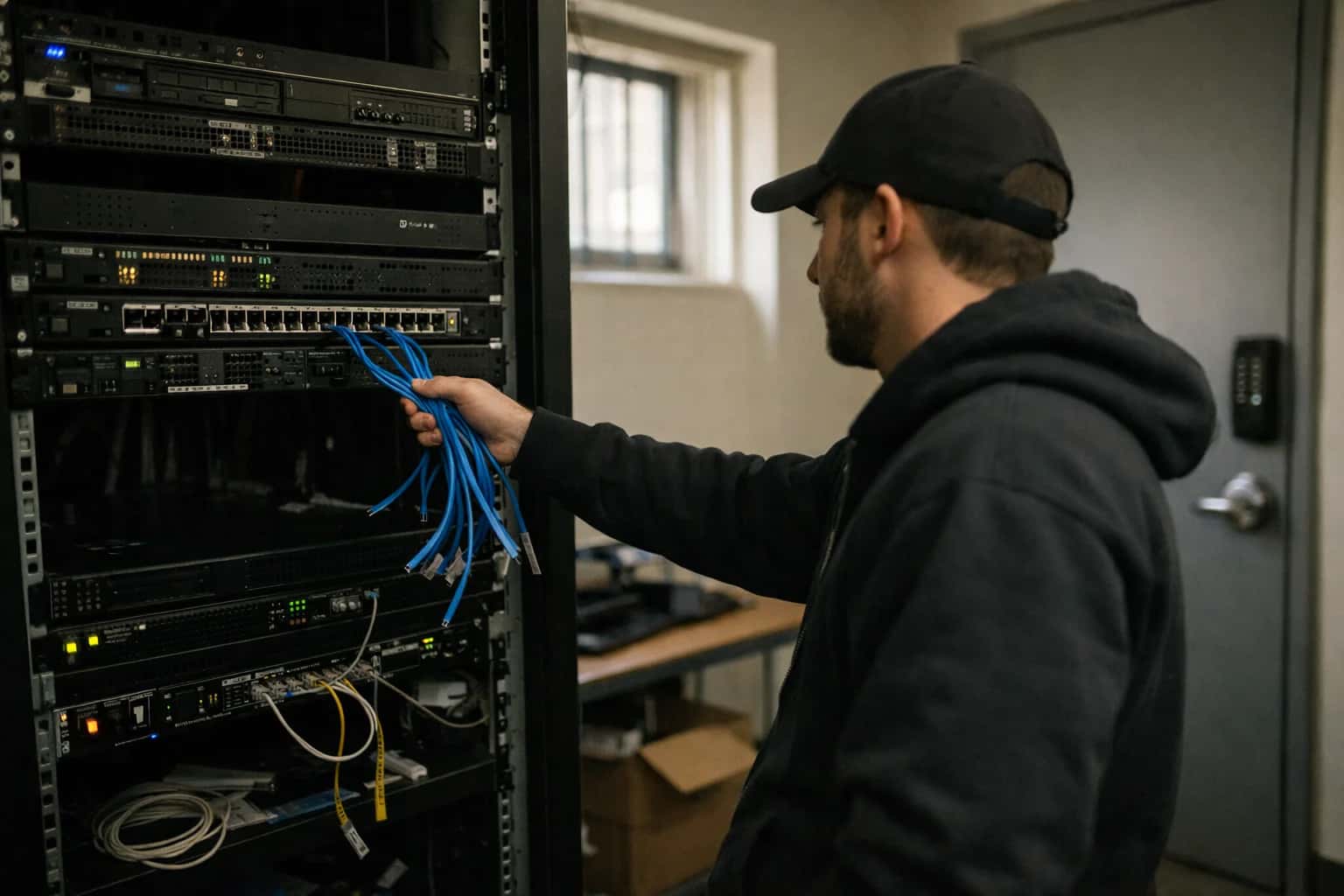
This guide outlines the foundational principles for building AI systems that ensure national control and resilience in sectors like energy, finance, and telecommunications.
The implementation involves redundant local command and control nodes that can autonomously manage AI inference and decision-making. Use service meshes like Istio to enforce traffic policies and intelligent routing based on jurisdiction. Embed confidential computing using hardware-based Trusted Execution Environments (TEEs) to protect data in use. For lifecycle management, establish a sovereign MLOps pipeline with a private model registry, ensuring all artifacts remain local. This creates a resilient system that aligns with national AI strategies and mitigates geopolitical risk, a core concept explored in AI Sovereignty and National AI Strategy Alignment.
ARCHITECTURAL FOUNDATIONS
Key Concepts for Sovereign AI Design
Designing AI for critical infrastructure requires a fundamental shift from convenience to control. These concepts form the bedrock of systems that must operate reliably under national jurisdiction, during disruptions, and against sophisticated threats.
01
Zero-Trust Networking for AI
Assume the network is always hostile. Every component in your AI pipeline—data lakes, training clusters, model servers—must authenticate and authorize every request. This is non-negotiable for critical systems.
- Implement micro-segmentation to isolate training, inference, and data management planes.
- Use mutual TLS (mTLS) for all service-to-service communication, even within a trusted data center.
- Enforce strict identity-based policies; a model serving pod should have no default access to the raw training data store.
02
Air-Gapped & Disconnected Operation
Sovereign AI for infrastructure must function during internet blackouts or cyberattacks. Design for air-gapped modes from the start.
- Package all dependencies (models, libraries, container images) into a self-contained deployment artifact.
- Implement local command and control interfaces that do not rely on external APIs or cloud management planes.
- Use edge inference patterns to keep decision-making at the source, reducing dependency on central services that may be cut off.
03
Failover to National Compute Reserves
Critical AI cannot depend on commercial cloud availability. Architect for seamless failover to government or nationally-controlled compute reserves.
- Design stateless inference services that can be instantaneously re-hydrated from a sovereign model registry.
- Use Kubernetes federation or service mesh configurations that can redirect traffic to a secondary, sovereign cluster.
- Regularly test failover procedures; a cold standby is useless if the data pipeline cannot reconnect.
04
Sovereign AI Stack Selection
Your technology choices dictate your sovereignty. Prioritize stacks where the entire supply chain—hardware, software, support—is under friendly jurisdiction.
- Evaluate sovereign cloud providers (e.g., OVHcloud, Scaleway) not just for compliance, but for GPU performance and MLOps tooling.
- Prefer local or allied-nation AI models (e.g., Mistral AI, Aleph Alpha) over globally-hosted foundational models.
- Use confidential computing (AMD SEV, Intel SGX) to protect data in use, even from the cloud provider's admins.
05
Data Residency by Design
Data sovereignty is the first law. Technically enforce that data never leaves a legal jurisdiction.
- Implement storage classes with location constraints at the infrastructure level (e.g., S3 bucket policies, Azure Blob geo-redundancy settings).
- Use encryption with local key management (HSMs) where keys are generated and stored within borders.
- Map all data flows in your architecture; a training job pulling validation data from a foreign region violates residency.
06
Redundancy & Local Command Control
Sovereignty requires operational autonomy. Build systems that are resilient and controllable within national borders.
- Deploy active-active inference endpoints across multiple sovereign data centers to handle regional outages.
- Ensure all monitoring, logging, and alerting systems are hosted within the same sovereign perimeter as the AI workloads.
- Design human-in-the-loop (HITL) override mechanisms that give national operators final authority, even over autonomous agents.
FOUNDATION
Step 1: Define Sovereignty Boundaries and Threat Model
Before writing a single line of code, you must explicitly map the legal, operational, and territorial boundaries your AI system must respect, and identify the specific threats it must defend against.
Sovereignty boundaries are the non-negotiable constraints for your AI application. You must define three types: Legal Sovereignty (data residency laws like GDPR, sectoral regulations), Operational Sovereignty (control over the compute stack and updates), and Territorial Sovereignty (physical location of infrastructure). For critical infrastructure, this often means designing for air-gapped modes where the system can function during internet disconnection, relying on national compute reserves. Start by mapping all data inputs, model artifacts, and outputs against these boundaries.
Next, develop a concrete threat model. Identify adversaries (e.g., foreign state actors, supply chain compromises) and their capabilities. Model attack vectors like data exfiltration, model poisoning, or denial-of-service during geopolitical crises. This analysis dictates your technical controls: zero-trust networking between components, hardware-based trusted execution environments (TEEs) for confidential computing, and failover to isolated, national infrastructure. This step is the blueprint for all subsequent architecture decisions in your sovereign AI development environment.
ARCHITECTURAL PATTERNS
Sovereignty Control Implementation Comparison
Comparison of technical approaches for implementing sovereignty controls in AI systems for critical infrastructure.
| Control Feature | Air-Gapped On-Premises | Sovereign Cloud | Hybrid with National Failover |
|---|---|---|---|
Data Residency Enforcement | |||
Operational During Internet Disconnection | |||
Zero-Trust Intra-System Networking | Mandatory | Configurable | Configurable |
Failover to National Compute Reserves | |||
Hardware Supply Chain Verification | Organization-owned | Provider-dependent | Mixed |
Latency to Local Command & Control | < 5 ms | 10-50 ms | < 5 ms (primary) |
Integration Complexity with Legacy ICS | High | Medium | Very High |
Compliance with Sector-Specific Regulations (e.g., NIS2) | Easier to demonstrate | Provider-dependent | Complex to audit |
Enabling Efficiency, Speed & Accuracy
Intelligent Analysis, Decision & Execution
We build AI systems for teams that need search across company data, workflow automation across tools, or AI features inside products and internal software.
Talk to Us
Search across company data
Give teams answers from docs, tickets, runbooks, and product data with sources and permissions.
Useful when people spend too long searching or get different answers from different systems.
Enterprise searchRAGPermissions
Read more
Automate internal workflows
Use AI to route work, draft outputs, trigger actions, and keep approvals and logs in place.
Useful when repetitive work moves across multiple tools and teams.
AI agentsWorkflow automationGovernance
Read more
Add AI to products and internal tools
Build assistants, guided actions, or decision support into the software your team or customers already use.
Useful when AI needs to be part of the product, not a separate tool.
AI integrationDecision supportModel routing
Read moreCRITICAL INFRASTRUCTURE GUIDE
Common Mistakes in Sovereign AI Design
Designing AI for critical infrastructure like energy grids and financial systems requires a sovereignty-first mindset. This guide details the most frequent architectural and operational pitfalls that compromise national security and legal compliance.
The 'air-gap fallacy' is the mistaken belief that physically disconnecting a system from the internet guarantees security and sovereignty. In reality, air-gapped systems are vulnerable to supply chain attacks, insider threats, and become operationally brittle, unable to receive critical security patches or intelligence updates.
True sovereignty requires designing for air-gapped modes while maintaining secure, controlled update channels. Implement a staged deployment pipeline where updates are vetted in an isolated staging environment before being physically transferred (e.g., via encrypted drives) to the production system. This maintains security without sacrificing the ability to evolve. For related patterns, see our guide on How to Architect AI Workloads for Sovereign Cloud Deployment.

About the author
Prasad Kumkar
CEO & MD, Inference Systems
Prasad Kumkar is the CEO & MD of Inference Systems and writes about AI systems architecture, LLM infrastructure, model serving, evaluation, and production deployment. Over 5+ years, he has worked across computer vision models, L5 autonomous vehicle systems, and LLM research, with a focus on taking complex AI ideas into real-world engineering systems.
His work and writing cover AI systems, large language models, AI agents, multimodal systems, autonomous systems, inference optimization, RAG, evaluation, and production AI engineering.
LinkedIn
Limited slotsGet a Free AI Consultation
Partnered with leading AI, data, and software stack.





How We Work
Custom AI workflows for your Business
One-fit-all AI don't work for modern businesses. At Inferensys, we aim to understand your business & custom requirements; which we use to define most efficient agentic workflows, the data, and the tools for your business.
01
Review the use case
We understand the task, the users, and where AI can actually help.
Read more02
Pick the right approach
We define what needs search, automation, or product integration.
Read more03
Build the first useful version
We implement the part that proves the value first.
Read more04
Improve from there
We add the checks and visibility needed to keep it useful.
Read moreThe first call is a practical review of your use case and the right next step.
Talk to Us