An AI supply chain is the interconnected network of hardware, software, data, and talent required to build and operate AI systems. Geopolitical risk arises from over-dependence on single countries or vendors for critical components like NVIDIA GPUs, cloud APIs, or foundational model access. To mitigate this, you must first create a comprehensive bill of materials (BOM) for your AI stack, mapping every dependency and its origin. This audit reveals single points of failure that could disrupt operations due to export controls, sanctions, or infrastructure sabotage.

Guide
How to Manage AI Supply Chain Risks with Localized Sourcing
This guide provides a technical strategy to reduce dependency on global AI supply chains by identifying and qualifying local or allied-nation alternatives for hardware, software, and talent.
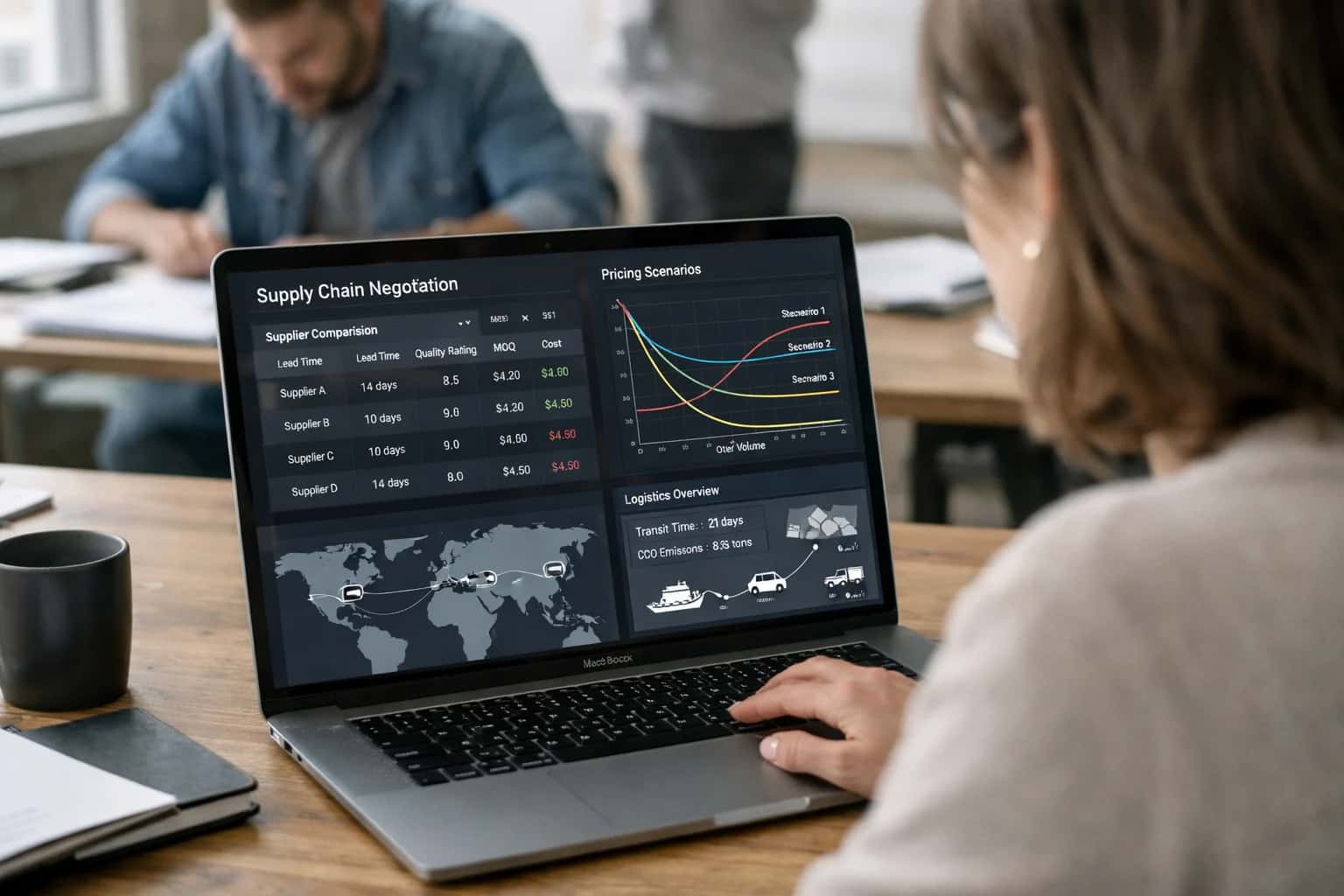
This guide provides a strategy for reducing dependency on global AI supply chains by identifying and qualifying local or allied-nation alternatives for hardware, software, and talent.
Localized sourcing involves qualifying alternatives within your sovereign jurisdiction or allied nations. Start by building relationships with regional chip designers, sovereign cloud providers like OVHcloud or Scaleway, and open-source model communities. This guide will walk you through assessing these alternatives for performance and compliance, then integrating them to achieve operational sovereignty. The goal is a resilient AI ecosystem that maintains function during global disruptions, protecting your strategic autonomy and intellectual property.
SOURCING OPTIONS
Local and Allied-Nation Alternatives Matrix
A comparison of hardware, software, and service providers based on geopolitical alignment and operational sovereignty criteria.
| Critical Component | Global Vendor (Baseline) | Local/Allied-Nation Alternative A | Local/Allied-Nation Alternative B |
|---|---|---|---|
Training GPU Supply | Single-source from US/EU (e.g., NVIDIA) | Diversified via allied-nation foundries (e.g., TSMC, Samsung) | Domestic/regional chip design (e.g., Graphcore, Cerebras in allied nations) |
Cloud Inference Platform | Hyperscaler (AWS, Azure, GCP) | Sovereign cloud provider (e.g., OVHcloud, Scaleway) | National research cloud or HPC center |
Foundation Model Access | Proprietary API (OpenAI, Anthropic) | Open-source model hub with local deployment (e.g., Mistral AI, Aleph Alpha) | Domestically trained foundational model |
Data Sovereignty Guarantee | |||
Export Control Exposure | High risk of unilateral restrictions | Managed via multilateral alliance agreements | Minimal; uses non-controlled domestic tech |
Latency to Local Data |
| <20ms (in-region) | <10ms (on-premises) |
Talent & Support Ecosystem | Global, but subject to visa/access restrictions | Regional, with dedicated local language support | National, with government-backed training programs |
IMPLEMENTATION
Step 3: Qualify and Test Alternatives
After identifying potential local suppliers, you must rigorously evaluate their technical and operational viability to build a resilient AI supply chain.
Qualification is a multi-faceted audit. For each alternative—be it a local chip designer, sovereign cloud provider, or open-source model—assess technical specifications, security posture, and compliance with relevant standards like ISO/IEC 27001. Crucially, verify their operational sovereignty: who owns the data centers, where is the support staff located, and what are the legal jurisdictions governing their services? This due diligence prevents substituting one single point of failure for another. For software, establish a private model registry within national borders to protect IP.
Testing moves from theory to practice. Run benchmark workloads on the alternative hardware or cloud to measure performance and cost against your incumbent. For AI models, conduct A/B testing on a subset of live inference traffic to validate accuracy and latency. Use this phase to build relationships; engage the vendor's engineering team to co-develop solutions and understand their roadmap. Document all findings to create a validated bill of materials (BOM) for your localized stack, a key artifact for achieving operational sovereignty and mitigating geopolitical disruption.
AI SUPPLY CHAIN RESILIENCE
Essential Tools and Resources
Build a resilient AI supply chain by identifying and qualifying local alternatives for hardware, software, and talent. These tools and frameworks help you map dependencies and establish sovereign sourcing.
Enabling Efficiency, Speed & Accuracy
Intelligent Analysis, Decision & Execution
We build AI systems for teams that need search across company data, workflow automation across tools, or AI features inside products and internal software.
Talk to Us
Search across company data
Give teams answers from docs, tickets, runbooks, and product data with sources and permissions.
Useful when people spend too long searching or get different answers from different systems.
Enterprise searchRAGPermissions
Read more
Automate internal workflows
Use AI to route work, draft outputs, trigger actions, and keep approvals and logs in place.
Useful when repetitive work moves across multiple tools and teams.
AI agentsWorkflow automationGovernance
Read more
Add AI to products and internal tools
Build assistants, guided actions, or decision support into the software your team or customers already use.
Useful when AI needs to be part of the product, not a separate tool.
AI integrationDecision supportModel routing
Read moreAI SUPPLY CHAIN
Common Mistakes
Avoid these critical errors when shifting your AI stack from global dependencies to localized or allied-nation alternatives. Each mistake can undermine operational sovereignty and expose your organization to geopolitical disruption.
An AI supply chain is the complete set of hardware, software, data, and talent required to build and run AI systems. Supply chain risk is the vulnerability to disruption from geopolitical tensions, export controls, or vendor lock-in with adversarial nations. It matters because dependence on a single global provider for critical components like GPUs, foundational models, or cloud regions can halt operations overnight. Managing this risk through localized sourcing is about achieving operational sovereignty—the ability to maintain AI capabilities regardless of international conflicts.

About the author
Prasad Kumkar
CEO & MD, Inference Systems
Prasad Kumkar is the CEO & MD of Inference Systems and writes about AI systems architecture, LLM infrastructure, model serving, evaluation, and production deployment. Over 5+ years, he has worked across computer vision models, L5 autonomous vehicle systems, and LLM research, with a focus on taking complex AI ideas into real-world engineering systems.
His work and writing cover AI systems, large language models, AI agents, multimodal systems, autonomous systems, inference optimization, RAG, evaluation, and production AI engineering.
LinkedIn
Limited slotsGet a Free AI Consultation
Partnered with leading AI, data, and software stack.





How We Work
Custom AI workflows for your Business
One-fit-all AI don't work for modern businesses. At Inferensys, we aim to understand your business & custom requirements; which we use to define most efficient agentic workflows, the data, and the tools for your business.
01
Review the use case
We understand the task, the users, and where AI can actually help.
Read more02
Pick the right approach
We define what needs search, automation, or product integration.
Read more03
Build the first useful version
We implement the part that proves the value first.
Read more04
Improve from there
We add the checks and visibility needed to keep it useful.
Read moreThe first call is a practical review of your use case and the right next step.
Talk to Us