Sovereignty-by-Design is a proactive engineering philosophy that embeds legal, operational, and territorial control into an AI system's architecture from the start. It shifts compliance from a costly afterthought to a foundational feature. This involves conducting design reviews that map every data flow against legal jurisdictions, selecting sovereign-first tools like local model registries, and writing infrastructure-as-code (e.g., Terraform, Crossplane) that enforces location policies for compute and storage by default.

Guide
How to Implement Sovereignty-by-Design for AI Systems
This guide provides a proactive framework for embedding sovereignty principles into the AI development lifecycle from the start, preventing costly re-architecture and ensuring compliance is a feature, not an afterthought.
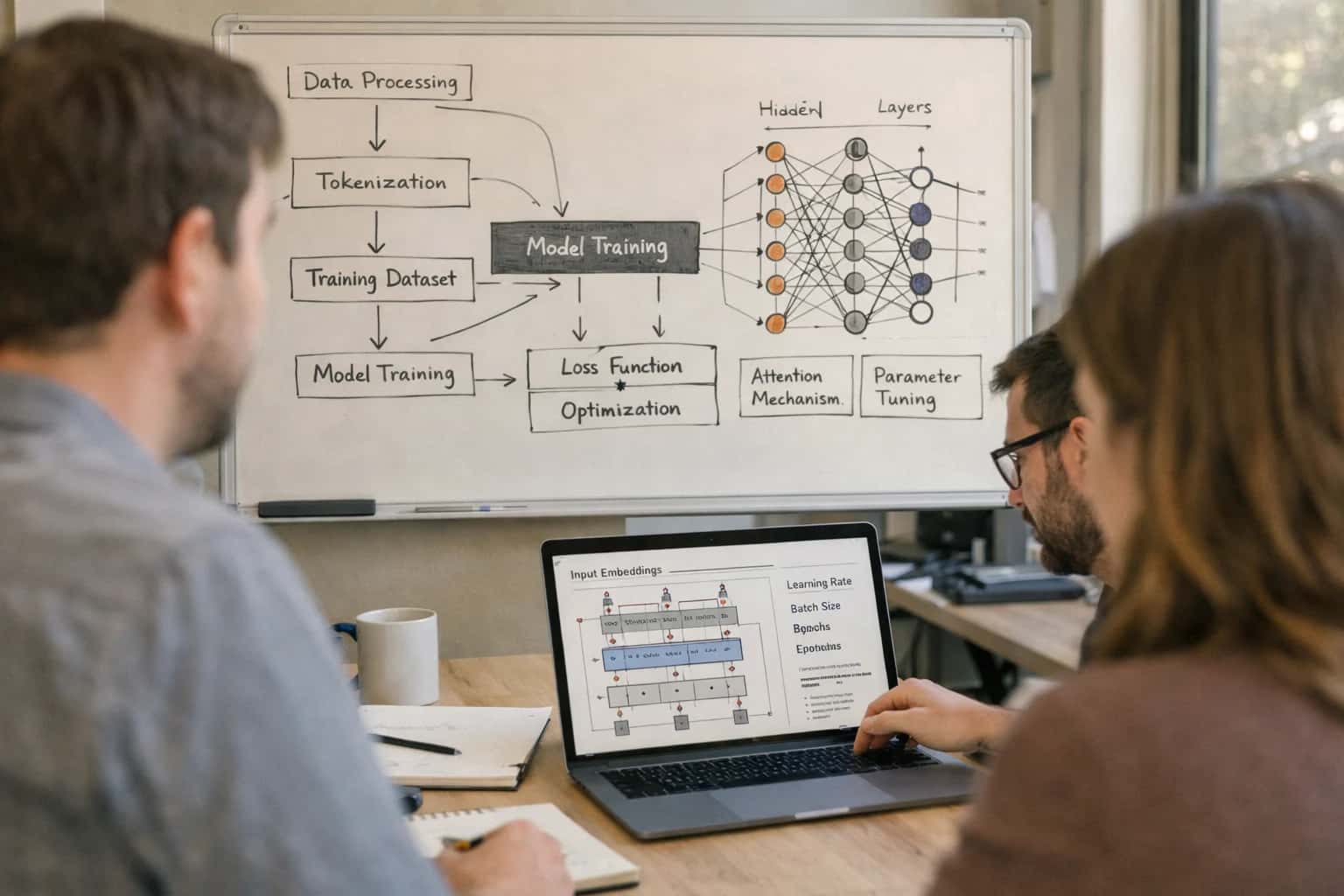
A proactive framework for embedding legal and operational sovereignty into AI systems from the initial design phase, preventing costly re-architecture.
Implementation begins by defining sovereignty requirements as code. Use policy-as-code tools like Open Policy Agent to validate that all resources deploy within approved regions. Architect your AI pipeline—data ingestion, training, and inference—as modular services that can be instantiated within a sovereign cloud like OVHcloud or Scaleway. This approach, detailed in our guide on How to Architect AI Workloads for Sovereign Cloud Deployment, ensures compliance is automated and verifiable, creating systems that are resilient to geopolitical shifts.
TECHNICAL APPROACHES
Sovereignty Controls: Implementation Comparison
A comparison of three primary technical strategies for enforcing sovereignty-by-design in AI systems, from least to most proactive.
| Control Mechanism | Policy-as-Code (Reactive) | Sovereign-First Tooling (Proactive) | Infrastructure-as-Code with Hard Constraints (Preventive) |
|---|---|---|---|
Design Philosophy | Apply governance checks after resource creation | Select tools pre-vetted for sovereignty compliance | Embed sovereignty rules into the provisioning fabric |
Primary Enforcement Point | CI/CD pipeline or post-deployment audit | Dependency selection and library curation | Resource definition (Terraform, Crossplane, Pulumi) |
Compliance Proof | Audit logs and manual validation reports | Toolchain manifests and software bills of materials (SBOM) | Declarative code with built-in location and provider constraints |
Key Technology Examples | Open Policy Agent (OPA), Cloud Custodian | Local Hugging Face Hub, Sovereign AI stacks (e.g., Mistral AI, Aleph Alpha) | Terraform modules with |
Prevents Costly Re-architecture | |||
Implementation Complexity | Low to Medium | Medium | High (initial setup) |
Operational Overhead | High (continuous monitoring & remediation) | Medium (ongoing tool vetting) | Low (enforced by system) |
Best For | Legacy systems adding sovereignty controls | Greenfield projects starting development | Mission-critical systems requiring guaranteed compliance |
AUTOMATED ENFORCEMENT
Step 4: Integrate Compliance into CI/CD Pipeline
This step transforms sovereignty from a manual checklist into an automated, enforceable property of your AI system. By embedding compliance checks directly into your CI/CD pipeline, you prevent non-compliant code from ever reaching production.
Implement Infrastructure-as-Code (IaC) templates that encode sovereignty rules. For example, use Terraform or Crossplane modules that automatically provision resources only in approved sovereign cloud regions and attach mandatory encryption policies. Define these modules as the single source of truth for your sovereign AI cloud architecture. This ensures every deployment enforces data residency controls and geo-fencing by design, eliminating configuration drift.
Add automated validation gates to your pipeline. These should include: - Static analysis of IaC templates for policy violations. - Dynamic scans of container images for non-compliant libraries. - Integration tests that verify data flows do not cross restricted borders. Treat any failure as a build-breaking event. This creates a self-healing IT system for compliance, where the pipeline itself becomes your primary governance mechanism, as detailed in our guide on MLOps for agentic systems.
IMPLEMENTATION FRAMEWORK
Key Sovereign AI Concepts
To build AI systems that are secure, compliant, and resilient by default, you must embed sovereignty principles into every layer of the development lifecycle.
01
Sovereignty-by-Design Review
A proactive design review that maps every data flow, model artifact, and compute operation against legal jurisdictions and sovereignty requirements. This prevents costly re-architecture by making compliance a first-class architectural constraint.
- Map Data Lineage: Trace where training data originates, where it's processed, and where inferences are served.
- Define Legal Boundaries: Identify which components must remain within specific national borders or trusted digital spaces.
- Document Assumptions: Create a living document that links technical decisions to legal articles (e.g., GDPR Article 44, local data residency laws).
02
Sovereign-First Tool Selection
Choosing development tools, libraries, and platforms that are architected for sovereignty, avoiding dependencies on services that mandate cross-border data flows.
- Local Model Hubs: Use private instances of Hugging Face Hub or MLflow registries deployed within your sovereign cloud.
- Sovereign AI Stacks: Integrate with regional leaders like Mistral AI (EU) or Aleph Alpha (DE) instead of exclusively global APIs.
- Infrastructure-as-Code (IaC): Use Terraform or Crossplane providers for sovereign clouds (e.g., OVHcloud, Scaleway) to codify deployment boundaries.
03
Infrastructure-as-Code for Policy Enforcement
Writing declarative code (Terraform, Crossplane, Pulumi) that bakes data residency and geo-fencing rules directly into your cloud infrastructure, making policy violations impossible at deployment time.
- Example - Terraform Geo-Constraint: Define a Google Cloud Storage bucket with a
locationconstraint ofeurope-west3to enforce EU residency. - Network Policy as Code: Use Kubernetes Network Policies or service mesh configurations (Istio) to block egress traffic to non-approved regions.
- Automated Compliance Checks: Integrate policy-as-code tools like Open Policy Agent (OPA) into your CI/CD pipeline to validate sovereignty rules before merge.
04
Data Residency Controls & Encryption
Technical controls that guarantee AI model weights, training data, and inference payloads never leave a designated legal jurisdiction without explicit, auditable encryption.
- Encryption-at-Rest with Local Keys: Use cloud KMS (Key Management Service) instances provisioned in-region; never let root keys leave the jurisdiction.
- Confidential Computing: Leverage hardware-based Trusted Execution Environments (TEEs) like Intel SGX or AMD SEV to process sensitive data in encrypted memory, even protecting it from the cloud provider.
- Storage Class Policies: Configure object storage (e.g., AWS S3, Azure Blob) with explicit region-locking and block public access by default.
05
Sovereign MLOps & Model Lifecycle
Adapting MLOps practices to manage the entire model lifecycle—training, registry, deployment, monitoring—within a sovereign perimeter, with special attention to audit trails.
- Air-Gapped Training Pipelines: Design Kubeflow or Airflow DAGs that run entirely within a sovereign VPC, with no external package pulls during execution.
- Private Model Registry: Deploy a hardened, internal registry (e.g., MLflow, Neptune) that scans for vulnerabilities and enforces access based on sovereign IAM roles.
- Sovereign-Specific Monitoring: Track metrics for 'data egress attempts' and 'cross-border API calls' alongside standard performance KPIs.
06
Legal-Tech Mapping & Artifact Generation
Creating automated systems that generate the compliance artifacts (data flow diagrams, Data Protection Impact Assessments) required by regulators, directly from your infrastructure code and runtime logs.
- Automated Data Flow Diagrams: Use tools to introspect your service mesh (Istio, Linkerd) and generate real-time data flow maps for audit submissions.
- Compliance-as-Code: Embed legal requirement IDs (e.g.,
GDPR_ART_30) as comments or tags in your IaC, enabling automated reporting. - Immutable Audit Logs: Route all access logs, model inference logs, and data mutation events to a sovereign, append-only logging system that provides proof of compliance.
Enabling Efficiency, Speed & Accuracy
Intelligent Analysis, Decision & Execution
We build AI systems for teams that need search across company data, workflow automation across tools, or AI features inside products and internal software.
Talk to Us
Search across company data
Give teams answers from docs, tickets, runbooks, and product data with sources and permissions.
Useful when people spend too long searching or get different answers from different systems.
Enterprise searchRAGPermissions
Read more
Automate internal workflows
Use AI to route work, draft outputs, trigger actions, and keep approvals and logs in place.
Useful when repetitive work moves across multiple tools and teams.
AI agentsWorkflow automationGovernance
Read more
Add AI to products and internal tools
Build assistants, guided actions, or decision support into the software your team or customers already use.
Useful when AI needs to be part of the product, not a separate tool.
AI integrationDecision supportModel routing
Read moreSOVEREIGNTY-BY-DESIGN
Common Mistakes
Implementing sovereignty-by-design is a proactive engineering discipline. These are the most frequent technical pitfalls that lead to compliance failures, costly rework, and loss of strategic control over AI systems.
The most critical mistake is bolting on sovereignty controls after the system is built. Sovereignty-by-design requires embedding territorial, operational, and legal control into the core architecture from day one.
Why it fails: A post-hoc review will reveal data flows that cross restricted borders, dependencies on non-sovereign SaaS tools, and infrastructure code that cannot enforce location policies. Retrofitting these is exponentially more expensive.
How to fix: Conduct a design sovereignty review during the initial system design phase. Map all data, model, and metadata flows against legal jurisdictions. Select sovereign-first tools and write Infrastructure-as-Code (IaC) with Terraform or Crossplane that hardcodes region constraints and uses only approved cloud services.

About the author
Prasad Kumkar
CEO & MD, Inference Systems
Prasad Kumkar is the CEO & MD of Inference Systems and writes about AI systems architecture, LLM infrastructure, model serving, evaluation, and production deployment. Over 5+ years, he has worked across computer vision models, L5 autonomous vehicle systems, and LLM research, with a focus on taking complex AI ideas into real-world engineering systems.
His work and writing cover AI systems, large language models, AI agents, multimodal systems, autonomous systems, inference optimization, RAG, evaluation, and production AI engineering.
LinkedIn
Limited slotsGet a Free AI Consultation
Partnered with leading AI, data, and software stack.





How We Work
Custom AI workflows for your Business
One-fit-all AI don't work for modern businesses. At Inferensys, we aim to understand your business & custom requirements; which we use to define most efficient agentic workflows, the data, and the tools for your business.
01
Review the use case
We understand the task, the users, and where AI can actually help.
Read more02
Pick the right approach
We define what needs search, automation, or product integration.
Read more03
Build the first useful version
We implement the part that proves the value first.
Read more04
Improve from there
We add the checks and visibility needed to keep it useful.
Read moreThe first call is a practical review of your use case and the right next step.
Talk to Us