A Disconnected Container Runtime is a container orchestration environment, typically a Kubernetes distribution, that has been deliberately severed from all external networks. It relies entirely on a local, air-gapped container registry to serve all application images, eliminating any dependency on public registries like Docker Hub. This architecture ensures that no container image pull, update, or dependency resolution ever traverses a network boundary.

Glossary
Disconnected Container Runtime
A container orchestration engine configured to operate without pulling images from the internet, relying solely on a local, air-gapped container registry for all application deployments.
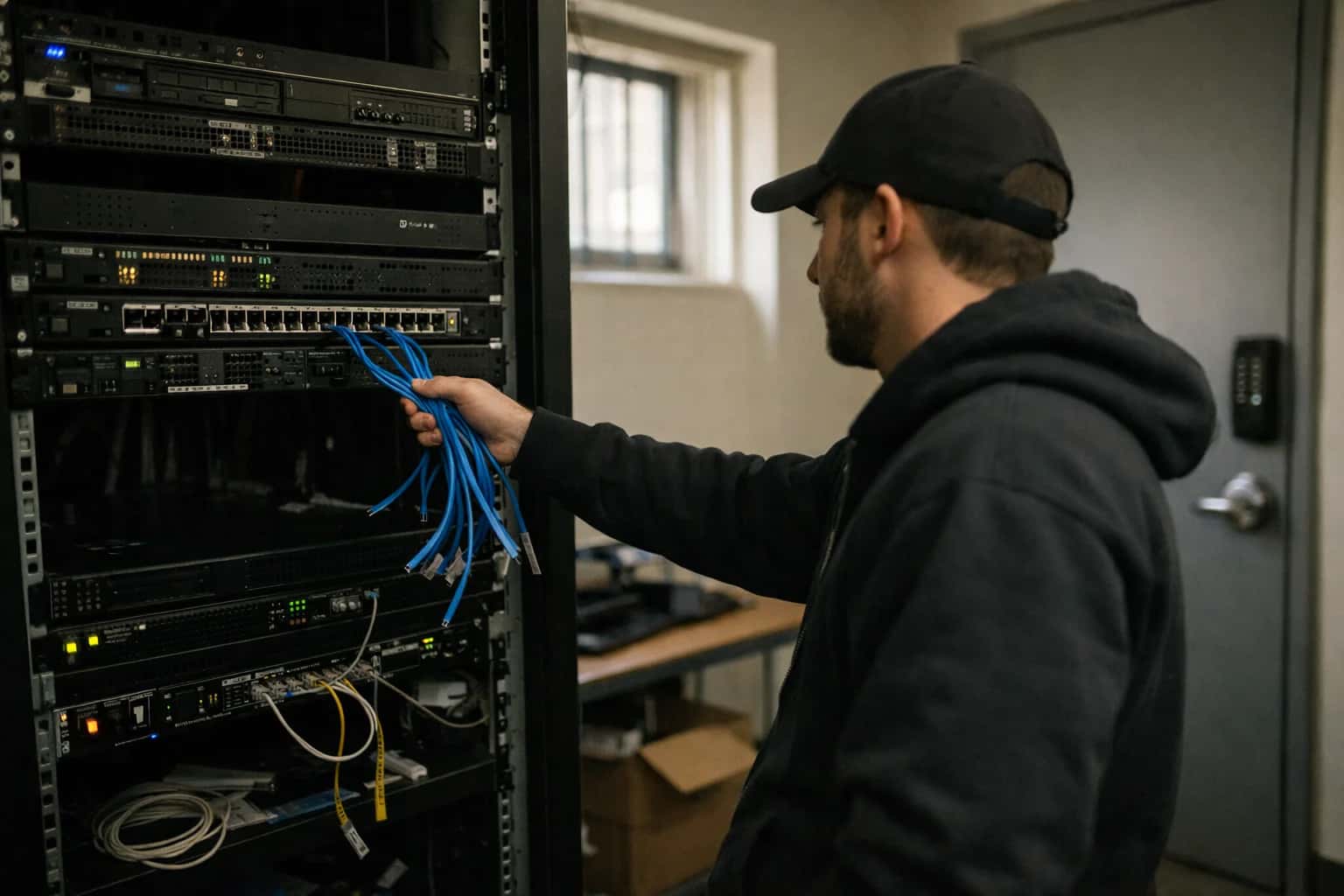
AIR-GAPPED ORCHESTRATION
What is Disconnected Container Runtime?
A container orchestration engine configured to operate without pulling images from the internet, relying solely on a local, air-gapped container registry for all application deployments.
In this configuration, the runtime's default image pull policy is strictly enforced to source artifacts only from the internal registry. All necessary base images, application binaries, and sidecar proxies are pre-staged via a sneakernet protocol or one-way data diode. This guarantees deterministic, verifiable deployments and prevents supply chain attacks that exploit upstream image poisoning, making it a foundational component of a Zero Trust Architecture for critical infrastructure.
AIR-GAPPED OPERATIONAL ANATOMY
Core Characteristics of Disconnected Runtimes
A disconnected container runtime is not merely a standard orchestrator without internet access. It is a fundamentally re-architected platform where every dependency, security check, and lifecycle operation must be satisfied from a strictly internal, pre-seeded supply chain.
01
Local Registry Dependency
The runtime is configured to deny all external image pulls by default. All container images must be sourced from a private, air-gapped registry hosted within the secure perimeter. This requires a complete mirror of all base images, application dependencies, and sidecar proxies. The runtime's imagePullPolicy is strictly enforced, and any attempt to resolve an external endpoint results in an immediate failure, ensuring no data leaks through DNS or pull requests.
02
Immutable Base Images
To maintain integrity, runtimes in disconnected environments rely on immutable, hardened golden images. These images are built, scanned, and signed in a secure build pipeline before being manually transferred via sneakernet or a data diode into the air-gapped registry. Once deployed, containers are never patched in place; a new signed image is pushed and the old container is destroyed, adhering to strict immutable infrastructure principles.
03
Offline Admission Control
Without connectivity to cloud-based policy engines, the runtime must enforce security policies locally. Admission controllers and Policy as Code (PaC) engines operate entirely offline, using internally stored Rego policies or custom webhooks. These controllers validate every resource creation request against cryptographic signatures, vulnerability scan results from an offline vulnerability scanner, and internal compliance rules before a pod is scheduled.
04
Static Network Identity
Service discovery is handled through local DNS and static service mesh configurations. Since there is no access to public certificate authorities, all inter-service communication is secured via mutual TLS (mTLS) using certificates issued by an offline certificate authority (CA). The CA root is physically secured and only activated in a controlled environment to sign subordinate certificates, eliminating trust-on-first-use vulnerabilities.
05
Manual Artifact Injection
The deployment pipeline relies on physical media validation. Updates, including new container images, model weights, and vulnerability definition files, are written to removable media in a low-side environment. This media is then rigorously scanned for malware before being mounted in the high-side environment. The runtime watches these local paths for new artifacts, triggering automated canary deployments only after the artifact's digital signature is verified against a hardware-backed keystore.
06
Measured Boot Chain
The runtime's host operating system and container engine integrity are verified at startup through a measured boot process. Each component in the boot chain cryptographically measures the next before loading it, storing the hashes in a Trusted Platform Module (TPM). The runtime will only initialize if the remote attestation quote matches the expected golden measurement, preventing execution on a compromised kernel or container engine.
DISCONNECTED CONTAINER RUNTIME
Frequently Asked Questions
Clear, technically precise answers to the most common questions about operating container orchestration engines in fully air-gapped environments without internet access.
A disconnected container runtime is a container orchestration engine configured to operate without pulling images from the internet, relying solely on a local, air-gapped container registry for all application deployments. In this architecture, the runtime—such as containerd, CRI-O, or a Kubernetes kubelet—is explicitly pointed to an internal registry mirror that hosts all required images. The runtime never initiates outbound connections to external registries like Docker Hub or Quay.io. Instead, all images are pre-staged by manually importing them via sneakernet protocols or one-way data diodes. This ensures that no runtime dependency, base image, or sidecar container can introduce a supply chain compromise through a network vector. The runtime's trust store is also locally managed, with internal certificate authorities signing all image references, making it impossible for a tampered image to be pulled without detection.
Enabling Efficiency, Speed & Accuracy
Intelligent Analysis, Decision & Execution
We build AI systems for teams that need search across company data, workflow automation across tools, or AI features inside products and internal software.
Talk to Us
Search across company data
Give teams answers from docs, tickets, runbooks, and product data with sources and permissions.
Useful when people spend too long searching or get different answers from different systems.
Enterprise searchRAGPermissions
Read more
Automate internal workflows
Use AI to route work, draft outputs, trigger actions, and keep approvals and logs in place.
Useful when repetitive work moves across multiple tools and teams.
AI agentsWorkflow automationGovernance
Read more
Add AI to products and internal tools
Build assistants, guided actions, or decision support into the software your team or customers already use.
Useful when AI needs to be part of the product, not a separate tool.
AI integrationDecision supportModel routing
Read more
About the author
Prasad Kumkar
CEO & MD, Inference Systems
Prasad Kumkar is the CEO & MD of Inference Systems and writes about AI systems architecture, LLM infrastructure, model serving, evaluation, and production deployment. Over 5+ years, he has worked across computer vision models, L5 autonomous vehicle systems, and LLM research, with a focus on taking complex AI ideas into real-world engineering systems.
His work and writing cover AI systems, large language models, AI agents, multimodal systems, autonomous systems, inference optimization, RAG, evaluation, and production AI engineering.
LinkedIn
Limited slotsGet a Free AI Consultation
Partnered with leading AI, data, and software stack.





How We Work
Custom AI workflows for your Business
One-fit-all AI don't work for modern businesses. At Inferensys, we aim to understand your business & custom requirements; which we use to define most efficient agentic workflows, the data, and the tools for your business.
01
Review the use case
We understand the task, the users, and where AI can actually help.
Read more02
Pick the right approach
We define what needs search, automation, or product integration.
Read more03
Build the first useful version
We implement the part that proves the value first.
Read more04
Improve from there
We add the checks and visibility needed to keep it useful.
Read moreThe first call is a practical review of your use case and the right next step.
Talk to Us