Policy as Code (PaC) is the practice of defining security, compliance, and operational rules in machine-readable definition files, allowing automated enforcement by an admission controller before any resource is provisioned. It replaces manual checklists with version-controlled, testable code that gates deployments in air-gapped clusters.

Glossary
Policy as Code (PaC)
The practice of defining security and compliance rules in machine-readable definition files, allowing automated enforcement by an admission controller before any resource is provisioned in an air-gapped cluster.
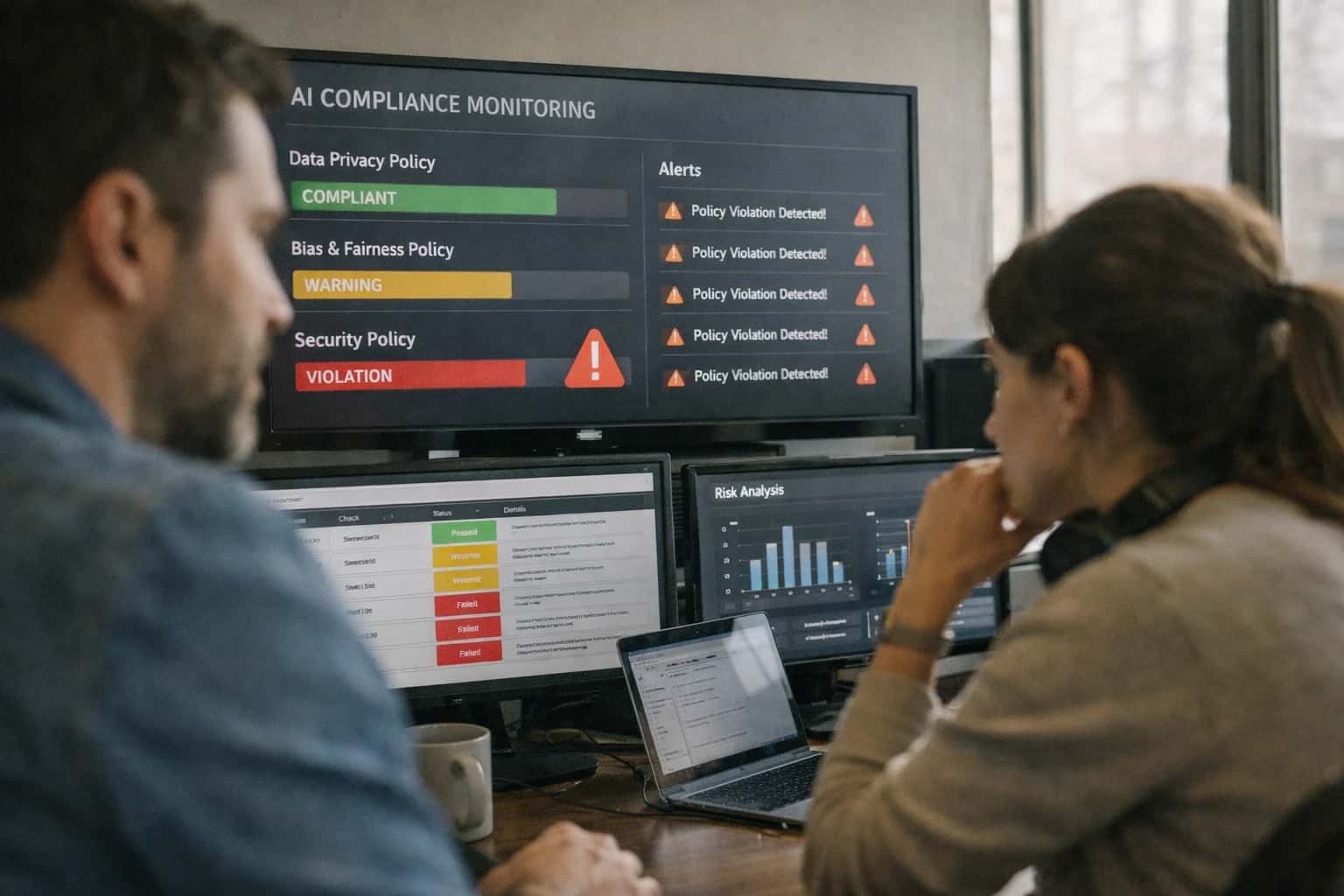
AUTOMATED COMPLIANCE ENFORCEMENT
What is Policy as Code (PaC)?
Defining security and operational rules as machine-readable code to enable automated, deterministic enforcement within software delivery pipelines.
In disconnected environments, PaC ensures that every container image, storage volume, and network policy complies with organizational standards without human review. Tools like Open Policy Agent (OPA) evaluate declarative policies against API requests, rejecting non-compliant configurations instantly and maintaining a tamper-proof audit trail.
AUTOMATED COMPLIANCE ENFORCEMENT
Key Characteristics of Policy as Code
Policy as Code (PaC) shifts security and compliance from manual checklists to automated, machine-readable logic. In air-gapped environments, this ensures every resource provisioned adheres to strict organizational rules without relying on human gatekeepers or external validation services.
POLICY AS CODE
Frequently Asked Questions
Clear, technical answers to the most common questions about defining and enforcing security rules programmatically in air-gapped environments.
Policy as Code (PaC) is the practice of defining security, compliance, and operational rules in machine-readable definition files, allowing automated enforcement by an admission controller before any resource is provisioned. Instead of relying on manual checklists or tribal knowledge, PaC codifies governance into version-controlled files (typically written in Rego for Open Policy Agent or YAML for Kyverno). When a user or pipeline attempts to create or modify a resource in an air-gapped Kubernetes cluster, the admission controller intercepts the API request, evaluates it against the defined policies, and either permits, denies, or mutates the request. This ensures that every deployed container, persistent volume, or network policy complies with organizational standards—such as requiring specific security contexts, blocking privileged pods, or enforcing image sources from a local offline container registry—without human intervention.
Enabling Efficiency, Speed & Accuracy
Intelligent Analysis, Decision & Execution
We build AI systems for teams that need search across company data, workflow automation across tools, or AI features inside products and internal software.
Talk to Us
Search across company data
Give teams answers from docs, tickets, runbooks, and product data with sources and permissions.
Useful when people spend too long searching or get different answers from different systems.
Enterprise searchRAGPermissions
Read more
Automate internal workflows
Use AI to route work, draft outputs, trigger actions, and keep approvals and logs in place.
Useful when repetitive work moves across multiple tools and teams.
AI agentsWorkflow automationGovernance
Read more
Add AI to products and internal tools
Build assistants, guided actions, or decision support into the software your team or customers already use.
Useful when AI needs to be part of the product, not a separate tool.
AI integrationDecision supportModel routing
Read more
About the author
Prasad Kumkar
CEO & MD, Inference Systems
Prasad Kumkar is the CEO & MD of Inference Systems and writes about AI systems architecture, LLM infrastructure, model serving, evaluation, and production deployment. Over 5+ years, he has worked across computer vision models, L5 autonomous vehicle systems, and LLM research, with a focus on taking complex AI ideas into real-world engineering systems.
His work and writing cover AI systems, large language models, AI agents, multimodal systems, autonomous systems, inference optimization, RAG, evaluation, and production AI engineering.
LinkedIn
Limited slotsGet a Free AI Consultation
Partnered with leading AI, data, and software stack.





How We Work
Custom AI workflows for your Business
One-fit-all AI don't work for modern businesses. At Inferensys, we aim to understand your business & custom requirements; which we use to define most efficient agentic workflows, the data, and the tools for your business.
01
Review the use case
We understand the task, the users, and where AI can actually help.
Read more02
Pick the right approach
We define what needs search, automation, or product integration.
Read more03
Build the first useful version
We implement the part that proves the value first.
Read more04
Improve from there
We add the checks and visibility needed to keep it useful.
Read moreThe first call is a practical review of your use case and the right next step.
Talk to Us