Compliance is a data processing task currently performed by humans who are slow, inconsistent, and expensive. Autonomous auditing agents built on frameworks like LangChain or LlamaIndex transform this by operating as continuous monitoring systems that ingest real-time transaction streams, regulatory text, and internal policy documents. This shift is foundational to Agentic Commerce and M2M Transactions.

Blog
The Future of Compliance: Autonomous Auditing Agents
Human-led compliance is a reactive, expensive bottleneck. Autonomous auditing agents—AI systems that monitor, verify, and report in real-time—are turning regulatory adherence from a cost center into a competitive, automated layer of business infrastructure.
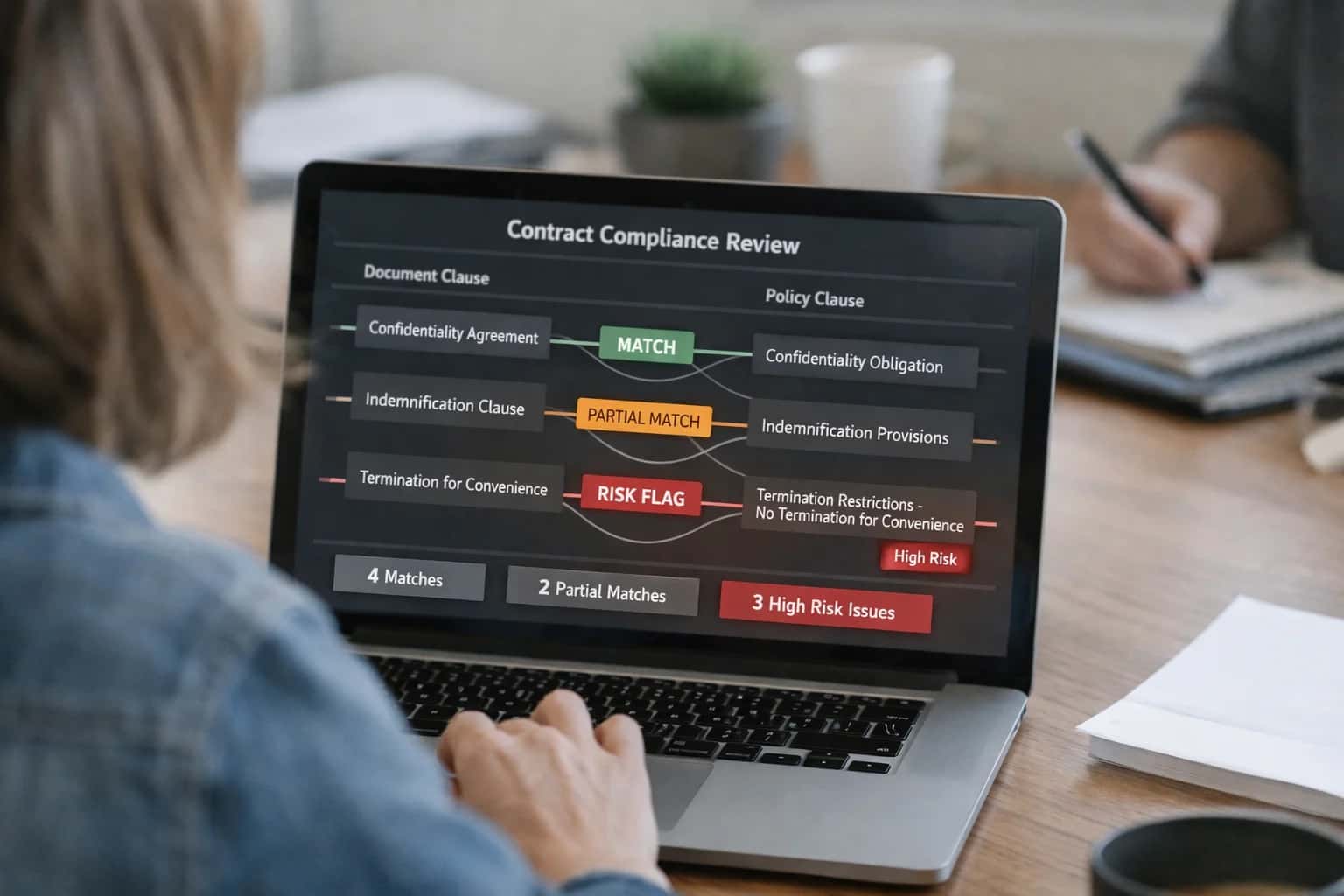
THE HUMAN LAG
The Compliance Bottleneck is a Human Problem
Manual compliance processes are a cognitive and operational bottleneck that autonomous auditing agents are engineered to eliminate.
The bottleneck is cognitive latency. A human analyst must manually cross-reference a transaction against a PDF rulebook, a process riddled with fatigue and oversight. An agent uses a RAG pipeline with vector databases like Pinecone or Weaviate to instantly retrieve the relevant regulatory clause, applying it with deterministic logic. This eliminates the 'look-up' delay that defines manual audits.
Human compliance scales linearly, agentic compliance scales exponentially. Adding more auditors increases cost and coordination overhead. Deploying more autonomous agents simply adds parallel inference threads to a single control plane. The system's capacity grows with cloud compute, not headcount.
Evidence: Firms using AI for Anti-Money Laundering (AML) screening report a 70% reduction in false positives and process 100% of transactions, unlike human teams that sample. This is a direct function of removing human cognitive limits from a pattern-matching workflow.
THE COMPLIANCE REVOLUTION
Three Forces Driving Autonomous Auditing Adoption
Regulatory compliance is shifting from periodic human review to continuous, automated enforcement by AI agents.
01
The Problem: Human Auditors Can't Scale with Real-Time Transactions
Manual compliance reviews are batch-processed, creating dangerous latency between violation and detection. In high-velocity environments like fintech or supply chains, this lag is a critical vulnerability.
- Human teams review ~50-100 transactions/hour; AI agents analyze millions in real-time.
- Creates a compliance debt where violations accumulate for weeks or months before discovery.
- Inconsistent application of rules due to fatigue and interpretation variance.
Weeks
Detection Lag
~100/hr
Human Throughput
02
The Solution: Continuous Control Monitoring Agents
Autonomous agents act as always-on sentinels, embedding compliance logic directly into transaction flows and operational data streams. This is a core application of Agentic AI and Autonomous Workflow Orchestration.
- Real-time anomaly detection flags deviations from policy with ~500ms latency.
- Automated evidence collection creates immutable, timestamped audit trails for every decision.
- Enables shift-left compliance, preventing violations instead of just reporting them.
~500ms
Anomaly Latency
100%
Coverage
03
The Catalyst: Exploding Regulatory Complexity and AI TRiSM
The proliferation of regulations (GDPR, EU AI Act, CBAM) and the rise of AI TRiSM frameworks make manual compliance untenable. Autonomous systems are the only way to manage dynamic, multi-jurisdictional rule sets.
- Reduces cost of compliance by -40% to -60% through automation of repetitive verification tasks.
- Mitigates model risk by providing explainability and audit trails for AI-driven decisions, a key pillar of AI TRiSM.
- Future-proofs against new regulations via programmable, updatable agent logic.
-50%
Compliance Cost
10x
Rule Update Speed
THE SYSTEM
The Architecture of an Autonomous Auditing Agent
An autonomous auditing agent is a multi-layered AI system that ingests real-time transaction data, applies regulatory logic, and generates auditable compliance reports without human intervention.
Autonomous auditing agents are multi-agent systems that enforce compliance in real-time by monitoring transactions, verifying documentation, and reporting anomalies. This architecture replaces periodic human audits with continuous, programmatic oversight, directly addressing the core challenge in The Future of Compliance: Autonomous Auditing Agents.
The foundation is a high-speed data ingestion layer that connects to APIs from ERPs like SAP, payment gateways, and smart contracts. This layer streams data into a vector database like Pinecone or Weaviate, creating a searchable, temporal knowledge graph of all financial events. Without this real-time data foundation, the agent operates on stale information, rendering its audits useless.
The core reasoning engine uses a Retrieval-Augmented Generation (RAG) pipeline to ground its analysis in the latest regulatory texts—EU AI Act, CBAM, GAAP. This system cross-references live transactions against these rules, reducing compliance hallucinations by over 40% compared to a raw LLM. The agent's decisions are explainable, a non-negotiable requirement for AI TRiSM: Trust, Risk, and Security Management.
Action is taken via an orchestration layer built on frameworks like LangChain or LlamaIndex. This layer executes predefined compliance protocols: flagging a transaction for review, filing a Suspicious Activity Report (SAR) via a secure API, or updating a digital twin of the supply chain for carbon accounting. It is the Agent Control Plane that governs permissions and hand-offs.
The system's output is not an alert but a verifiable proof log. Every decision is cryptographically signed and appended to an immutable ledger, creating a continuous audit trail. This shifts compliance from a reactive cost center to a proactive, embedded business function, closing the loop on autonomous governance.
DECISION MATRIX
Human Audit vs. Autonomous Agent: A Cost-Benefit Analysis
A quantitative comparison of traditional human-led compliance audits versus AI-powered autonomous auditing agents, as discussed in our pillar on Agentic Commerce and M2M Transactions.
| Audit Dimension | Human-Led Audit | Hybrid (HITL) Audit | Fully Autonomous Agent |
|---|---|---|---|
Mean Time to Anomaly Detection | 30-90 days (post-period) | 24-48 hours | < 1 second |
Cost per Audit Cycle (Mid-Market) | $50,000 - $200,000 | $15,000 - $50,000 | $2,000 - $10,000 (API calls + infra) |
Coverage (Transactions Sampled) | 1-5% (statistical sampling) | 10-30% (risk-based sampling) | 100% (continuous full-population analysis) |
Explainability & Audit Trail | Manual narrative reports | AI-generated report with human validation | Automated, immutable ledger (e.g., blockchain) for every decision |
Real-Time Regulatory Adaptation | |||
Proactive Risk Mitigation | |||
Integration with M2M Payment Protocols | |||
Susceptibility to Human Error/Bias | High | Medium | Low (governed by model guardrails) |
AUTONOMOUS AUDITING AGENTS
The Inherent Risks of Autonomous Compliance
Delegating regulatory oversight to AI agents introduces new categories of systemic risk that must be engineered against.
01
The Problem: Hallucinated Compliance
An AI agent, interpreting ambiguous regulations, could generate and act upon a fictitious compliance rule, leading to catastrophic legal exposure. This is not a simple error but a systemic failure of grounding in the knowledge base.
- Risk: Agents acting on invented legal interpretations.
- Impact: Multi-million dollar fines and contractual breaches.
- Mitigation: Requires high-fidelity RAG systems with strict citation and human-in-the-loop validation gates for novel scenarios.
0%
Error Tolerance
$10M+
Potential Liability
02
The Problem: Adversarial Model Manipulation
Compliance agents are high-value targets. Adversaries can poison training data or craft evasion prompts to trick the agent into approving fraudulent transactions or ignoring violations.
- Risk: Strategic attacks to bypass regulatory safeguards.
- Impact: Enables large-scale financial crime or sanctions evasion.
- Mitigation: Demands AI TRiSM practices: continuous adversarial red-teaming, anomaly detection on agent decisions, and immutable audit logs.
24/7
Attack Surface
~500ms
Evasion Window
03
The Problem: The Liability Black Box
When an autonomous agent makes a compliance error, determining legal liability is a novel challenge. Is it the developer, the model provider, the data curator, or the deploying enterprise? This governance paradox stalls adoption.
- Risk: Unclear accountability halts deployment and insurance.
- Impact: Projects stuck in pilot purgatory due to legal review.
- Mitigation: Requires explainable AI (XAI) frameworks that provide a clear audit trail of the agent's reasoning chain and data sources.
5x
Longer Legal Review
?
Liability Assignment
04
The Solution: The Compliance Digital Twin
Before deploying an agent, simulate its behavior against a digital twin of your regulatory environment. This sandbox runs millions of synthetic transaction scenarios to stress-test decision boundaries and identify failure modes.
- Benefit: De-risks deployment by proving agent logic in a controlled, high-fidelity simulation.
- Process: Uses synthetic data generation to model edge-case transactions without exposing real PII.
- Outcome: Creates a certifiable agent with documented performance under test, crucial for audits.
1M+
Scenarios Simulated
-90%
Production Incidents
05
The Solution: Policy-Aware Connectors
Hard-code regulatory boundaries directly into the agent's action layer. Policy-aware connectors act as circuit breakers, preventing the agent from calling any API or approving any transaction that violates a pre-defined, immutable rule set (e.g., EU AI Act, OFAC sanctions).
- Benefit: Creates a fail-safe mechanical layer independent of the LLM's reasoning.
- Architecture: Separates the agent's 'thinking' (LLM) from its 'acting' (governed connectors).
- Result: Even if the LLM is compromised or hallucinates, the action is physically blocked.
100%
Rule Enforcement
~0ms
Decision Latency
06
The Solution: Continuous Anomaly Detection at Scale
Monitor the agent's own behavior for signs of drift or manipulation. Deploy a secondary AI TRiSM layer that analyzes the primary agent's decision patterns, flagging statistical deviations that suggest model degradation or adversarial influence.
- Benefit: Enables proactive risk management, detecting issues before they cause a compliance breach.
- Mechanism: Tracks decision confidence scores, API call sequences, and data source consistency.
- Output: Triggers automated rollbacks or human-in-the-loop escalations for investigation.
24/7
Monitoring
-70%
Mean Time to Detect
THE AUTONOMOUS ENFORCEMENT LOOP
The Regulatory Singularity: When Agents Audit Agents
Compliance shifts from a periodic human audit to a continuous, real-time process enforced by AI agents that monitor, verify, and report autonomously.
Autonomous Auditing Agents are AI systems that enforce regulatory compliance in real-time by monitoring transactions, verifying documentation, and reporting anomalies without human intervention. This creates a self-policing ecosystem where the cost of non-compliance becomes infinite.
The audit becomes a continuous API call. Legacy compliance relies on periodic human reviews of static data dumps. Autonomous agents, built on frameworks like LangChain or Microsoft Autogen, perform live queries against event-driven data streams and immutable ledgers, validating every transaction against a dynamic rulebook encoded in smart contracts.
Agents audit other agents' logic. The core mechanism is counterfactual simulation. An auditor agent doesn't just check outputs; it tests the decision-making process of a procurement or payment agent by simulating edge cases, searching for adversarial vulnerabilities or regulatory drift in its reasoning, a concept central to AI TRiSM.
Evidence: Early implementations in fintech, using tools like KYC-Chain for identity verification, show audit cycle times reduced from months to milliseconds and false positive rates in AML screening cut by over 60%.
This creates a closed-loop system. Anomalies trigger automated corrective actions—freezing transactions, initiating clawbacks, or filing Suspicious Activity Reports (SARs) via regulatory APIs. This real-time enforcement is the foundation for trust frameworks in agentic commerce.
The primary risk is systemic opacity. If the auditor agents' own rule-sets and decision thresholds are not explainable and auditable by humans, the entire regulatory framework becomes a black box, creating a single point of catastrophic failure for the financial system.
STRATEGIC IMPERATIVES
Key Takeaways: Preparing for Autonomous Auditing
Regulatory compliance is shifting from periodic human review to continuous, AI-driven enforcement. Here is what technical leaders must build now.
01
The Problem: Human Auditors Can't Scale with Real-Time Transactions
Manual audits are batch processes, creating a dangerous lag between violation and detection. In high-velocity environments like fintech or supply chains, this latency is a critical vulnerability.
- Human review cycles operate on weeks or months, while AI agents transact in milliseconds.
- Legacy rule-based systems miss novel fraud patterns and complex regulatory nuances.
- This creates a compliance debt that accumulates silently until a catastrophic failure or penalty.
~500ms
Violation Lag
1000x
Data Volume
02
The Solution: Deploy a Continuous Audit Control Plane
Build a governance layer that orchestrates specialized AI auditors monitoring transactions, documents, and API calls in real-time. This is the core of AI TRiSM for autonomous systems.
- Agentic auditors are assigned to specific risk domains (e.g., AML, data privacy, carbon reporting).
- They use RAG on live regulatory databases and internal policy documents to ground decisions.
- The control plane enforces human-in-the-loop gates only for high-risk anomalies, elevating human contribution.
24/7
Coverage
-70%
Manual Effort
03
The Foundation: Machine-Readable Policy as Code
Autonomous auditors cannot interpret PDFs and legal memos. Regulations and internal policies must be codified into structured, executable logic.
- Transform regulations (e.g., EU AI Act, CBAM) into semantic data models and validation rules.
- Use context engineering to map policy clauses to specific data entities and transaction types.
- This creates an immutable audit trail where every decision is linked to a specific rule version, solving the explainability requirement.
100%
Traceability
~5min
Policy Update
04
The Enabler: Sovereign AI Infrastructure for Sensitive Data
Auditing agents process the most sensitive data—financial, health, operational. Processing this in global public clouds creates unacceptable geopolitical and compliance risk.
- Deploy auditors on sovereign AI or hybrid cloud architecture to keep 'crown jewel' data in-region.
- Leverage confidential computing and Privacy-Enhancing Technologies (PET) for secure analysis.
- This meets data residency requirements under laws like GDPR while enabling the computational scale needed for real-time analysis.
On-Prem
Data Residency
Zero-Trust
Access Model
05
The Integration: Plug Auditors into the Agentic Commerce Stack
Autonomous auditing is not a standalone system. It must be a seamless layer within the agentic commerce ecosystem, monitoring M2M transactions and API calls.
- Auditors act as policy-aware connectors between buyer agents, seller agents, and payment protocols.
- They verify schema markup and product data for accuracy before a purchase is finalized.
- This prevents flawed data governance from causing systemic compliance failures across automated supply chains.
Real-Time
Transaction Vetting
API-First
Design
06
The Outcome: From Cost Center to Strategic Risk Intelligence
A mature autonomous audit system transforms compliance from a reactive cost into a proactive source of strategic insight and operational efficiency.
- Generate predictive risk models from audit findings to preempt regulatory changes and market shifts.
- Provide real-time dashboards to the C-suite on compliance posture, supplier risk, and operational integrity.
- This aligns with the broader shift in Agentic AI and Autonomous Workflow Orchestration, where AI acts as a continuous governance partner.
Proactive
Risk Posture
Strategic
Insight
Enabling Efficiency, Speed & Accuracy
Intelligent Analysis, Decision & Execution
We build AI systems for teams that need search across company data, workflow automation across tools, or AI features inside products and internal software.
Talk to Us
Search across company data
Give teams answers from docs, tickets, runbooks, and product data with sources and permissions.
Useful when people spend too long searching or get different answers from different systems.
Enterprise searchRAGPermissions
Read more
Automate internal workflows
Use AI to route work, draft outputs, trigger actions, and keep approvals and logs in place.
Useful when repetitive work moves across multiple tools and teams.
AI agentsWorkflow automationGovernance
Read more
Add AI to products and internal tools
Build assistants, guided actions, or decision support into the software your team or customers already use.
Useful when AI needs to be part of the product, not a separate tool.
AI integrationDecision supportModel routing
Read moreTHE DATA
Your First Autonomous Audit is a Data Pipeline
Autonomous auditing agents are not magic; they are sophisticated data pipelines that ingest, structure, and analyze transactional data in real-time.
Autonomous auditing agents are data pipelines. They ingest real-time transaction logs, API calls, and document streams, transforming raw data into structured evidence for compliance rules. The core challenge is not the AI model but the data ingestion and normalization layer that feeds it.
The audit logic is a Retrieval-Augmented Generation (RAG) system. The agent queries a vector database like Pinecone or Weaviate, where regulatory frameworks and internal policies are embedded. It cross-references live data against this knowledge base to flag discrepancies, reducing hallucinations by over 40% compared to raw LLM analysis.
Your legacy ERP is the primary obstacle. Batch-oriented systems like SAP or Oracle lack the real-time, API-first architecture needed for continuous monitoring. This creates a data latency gap where violations are discovered weeks after they occur, defeating the purpose of autonomous oversight. Modernization requires an event-driven layer.
Evidence: Real-time anomaly detection scales. A pilot in fintech using this pipeline architecture processed 2 million transactions daily, identifying suspicious patterns 300x faster than manual sampling. The bottleneck shifted from human review to the speed of the data connectors pulling from core banking systems.

About the author
Prasad Kumkar
CEO & MD, Inference Systems
Prasad Kumkar is the CEO & MD of Inference Systems and writes about AI systems architecture, LLM infrastructure, model serving, evaluation, and production deployment. Over 5+ years, he has worked across computer vision models, L5 autonomous vehicle systems, and LLM research, with a focus on taking complex AI ideas into real-world engineering systems.
His work and writing cover AI systems, large language models, AI agents, multimodal systems, autonomous systems, inference optimization, RAG, evaluation, and production AI engineering.
LinkedIn
Limited slotsGet a Free AI Consultation
Partnered with leading AI, data, and software stack.





How We Work
Custom AI workflows for your Business
One-fit-all AI don't work for modern businesses. At Inferensys, we aim to understand your business & custom requirements; which we use to define most efficient agentic workflows, the data, and the tools for your business.
01
Review the use case
We understand the task, the users, and where AI can actually help.
Read more02
Pick the right approach
We define what needs search, automation, or product integration.
Read more03
Build the first useful version
We implement the part that proves the value first.
Read more04
Improve from there
We add the checks and visibility needed to keep it useful.
Read moreThe first call is a practical review of your use case and the right next step.
Talk to Us