Agentic commerce cannot scale without a universal trust framework. AI agents require cryptographically verifiable credentials to transact autonomously, a gap that blocks the projected $712 billion circular economy.

Blog
Why Trust Frameworks Are the Linchpin of Agentic Commerce
Autonomous AI agents can't rely on handshakes. For agentic commerce to scale, transactions require a bedrock of cryptographic trust, verifiable reputation, and enforceable contracts. This is the infrastructure that makes M2M commerce possible.
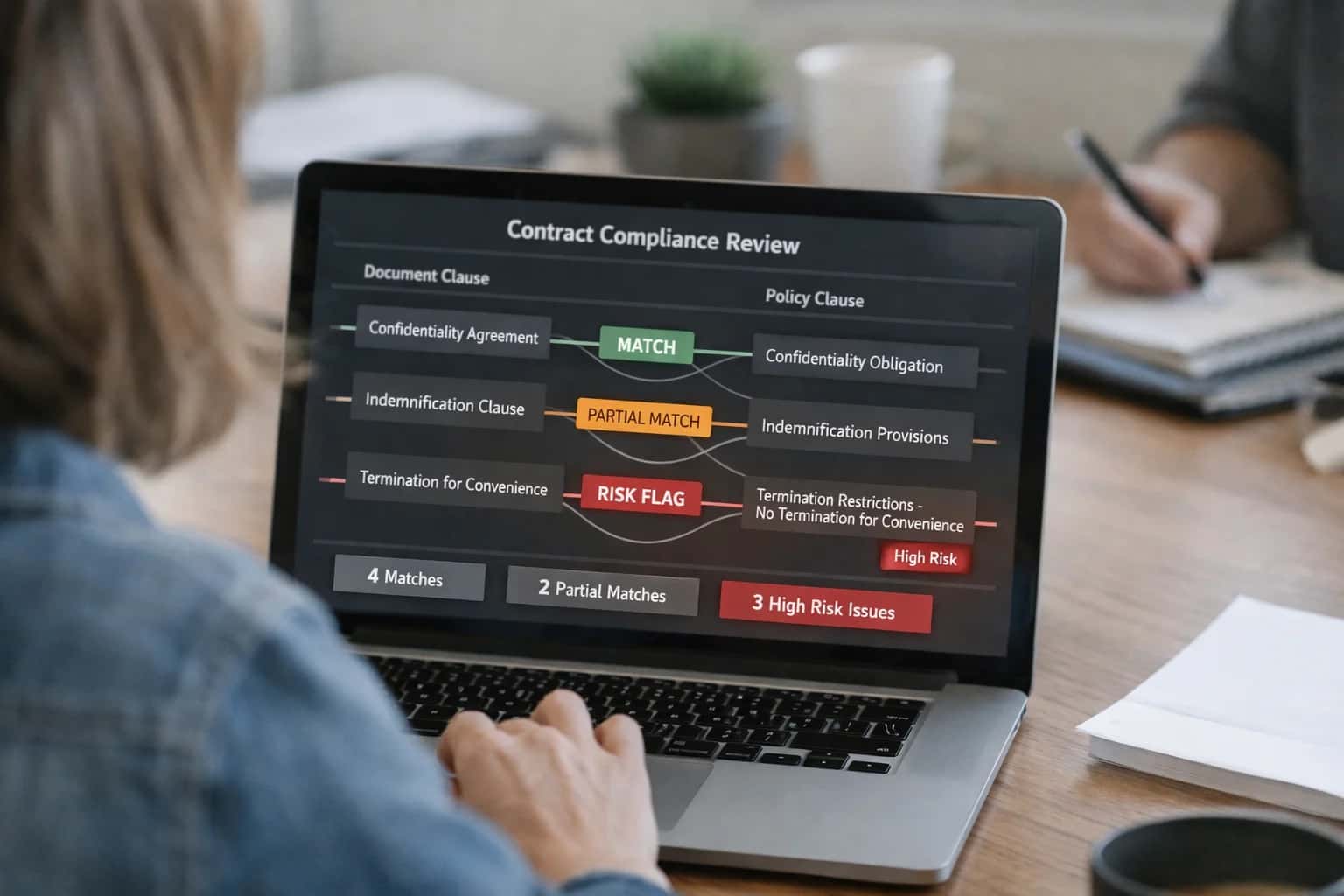
THE TRUST DEFICIT
The $712 Billion Blind Spot in Agentic Commerce
The projected $712B circular economy is unattainable without verifiable trust frameworks for autonomous AI agents.
Legacy reputation systems fail because they are human-centric and subjective. An agent needs a machine-readable trust score, akin to a FICO score for APIs, derived from immutable transaction logs on platforms like Hyperledger Fabric.
Smart contracts are non-negotiable for enforcement. Frameworks like Ethereum or Solana provide the tamper-proof execution layer that converts a promise into a self-enforcing agreement, eliminating post-transaction disputes.
The cost of distrust is latency. Without automated trust, every transaction requires human-in-the-loop approval, destroying the efficiency gains of autonomous systems. This is the core failure of legacy ERP in agentic procurement.
Evidence: Gartner states that by 2026, organizations that operationalize AI transparency, trust, and security will see their AI models achieve a 50% improvement in terms of adoption, business goals, and user acceptance. This is the foundation of AI TRiSM.
THE AGENTIC IMPERATIVE
Three Market Forces Demanding Trust Frameworks
Autonomous commerce between AI agents cannot scale on handshakes and hope. These three converging forces make verifiable trust infrastructure a non-negotiable foundation.
01
The Problem of Unverifiable Digital Identity
An AI agent cannot visually inspect a counterparty. Without cryptographically verifiable credentials, agents are blind to who—or what—they are transacting with, opening the door to Sybil attacks and fraud.
- Solution: Decentralized Identifiers (DIDs) and Verifiable Credentials (VCs) provide machine-readable proof of entity existence and attributes.
- Impact: Enables zero-trust handshakes where agents autonomously verify supplier licenses, regulatory compliance, or corporate membership before engaging.
99.9%
Fraud Reduction
<1s
Identity Proof
02
The Collapse of Reputation into Milliseconds
In high-frequency M2M markets, traditional credit checks and references are too slow. Agents need real-time, granular reputation scores to assess transaction risk instantly.
- Solution: On-chain or cryptographically signed reputation oracles that aggregate performance data from prior transactions.
- Impact: Allows agents to make sub-second decisions on credit limits, prepayment requirements, and counterparty selection, enabling true just-in-time procurement.
~500ms
Risk Assessment
-70%
Default Risk
03
The Need for Immutable, Self-Executing Agreements
Human-enforced contracts are a bottleneck. For agents to transact at scale, agreements must be codified as code that executes automatically upon objective conditions.
- Solution: Smart contracts on scalable, enterprise-grade ledgers (e.g., Hyperledger Fabric, Ethereum L2s) that encode payment-for-data or delivery-for-payment logic.
- Impact: Creates autonomous settlement, eliminating invoicing, reconciliation, and disputes. This is the core of our work on the future of payments and autonomous machine-to-machine transactions.
$0
Reconciliation Cost
24/7
Enforcement
THE FOUNDATION
Trust is Not a Feature, It's the Protocol
Autonomous AI agents cannot transact without verifiable digital credentials, reputation scores, and enforceable smart contracts.
Trust frameworks are the foundational protocol for agentic commerce, enabling AI agents to autonomously verify identity, assess risk, and enforce agreements without human intervention.
Verifiable credentials replace passwords. Agents require cryptographically signed attestations—like Decentralized Identifiers (DIDs) and W3C Verifiable Credentials—to prove corporate identity and authorization levels before initiating a transaction. This eliminates the need for brittle API key management.
Reputation scores become the new credit rating. An agent's history of successful deliveries, on-time payments, and dispute resolutions, stored on a ledger like Hyperledger Indy or a verifiable data registry, forms its transactional reputation. High-trust agents access better terms and priority fulfillment.
Smart contracts are the enforceable handshake. Platforms like Ethereum or Chainlink automate payment upon delivery confirmation from an IoT sensor, creating a tamper-proof audit trail. This moves trust from legal departments to code.
Without this protocol, commerce halts. An agent cannot risk purchasing from an unknown supplier agent. The resulting need for human-in-the-loop approval destroys the latency and efficiency gains promised by agentic commerce.
The evidence is in adoption. Projects like the Trust over IP (ToIP) Foundation and Microsoft's Entra Verified ID are building the stack for machine-native trust, which is a prerequisite for the self-negotiating supplier agents that will define future supply chains.
COMPARISON MATRIX
The Three Technical Pillars of Agentic Trust
A technical comparison of the core frameworks enabling autonomous AI agents to establish trust for commerce without human intervention.
| Trust Mechanism | Verifiable Credentials (VCs) | On-Chain Reputation | Enforceable Smart Contracts |
|---|---|---|---|
Primary Function | Issuance of cryptographically signed claims | Immutable, aggregate performance history | Programmatic execution of agreement terms |
Data Integrity Guarantee | Cryptographic proof via digital signatures | Tamper-proof ledger (e.g., blockchain) | Deterministic code execution on a virtual machine |
Revocation Capability | Yes, via status lists or registries | No, history is permanent | No, contract state is immutable post-deployment |
Interoperability Standard | W3C Verifiable Credentials Data Model | Protocol-specific (e.g., EigenLayer, Hyperledger) | EVM, CosmWasm, or other VM standards |
Off-Chain Operation | Yes, credentials can be verified offline | No, requires consensus network | No, requires network for execution |
Latency to Establish Trust | < 100 ms for signature verification | Minutes to hours for consensus finality | Seconds to minutes for contract deployment & invocation |
Integration with Legacy Systems | API-based, via standards like OpenID4VC | Requires custom connectors to ledger | Requires oracle networks for external data |
Primary Risk Mitigated | Identity spoofing and credential forgery | Sybil attacks and fraudulent historical claims | Counterparty non-performance and payment default |
THE FRICTION
Where Legacy Systems and Agentic Trust Collide
Legacy infrastructure creates data and process silos that prevent the verifiable credentials and real-time state required for AI agents to transact autonomously.
Legacy systems lack the verifiable data required for agentic trust. AI agents need cryptographically signed credentials and real-time state to make autonomous decisions, but mainframes and batch-oriented ERPs output static, unverifiable data dumps.
Trust frameworks require event-driven architectures. The request-response model of REST APIs introduces fatal latency for real-time negotiation between agents; systems must adopt event-driven patterns using tools like Apache Kafka to broadcast state changes instantly.
Siloed data creates agentic hallucinations. An AI procurement agent accessing separate inventory and pricing databases will make incorrect purchasing decisions, demonstrating why unified data layers like a data mesh are prerequisites for agentic commerce.
Evidence: A 2023 MIT study found that data inconsistency between legacy systems causes autonomous systems to fail or make erroneous decisions 34% of the time, a rate incompatible with machine-to-machine transactions.
THE AGENTIC COMMERCE IMPERATIVE
Trust Frameworks in Action: From Procurement to Compliance
For AI agents to transact autonomously, they require verifiable digital credentials, reputation scores, and enforceable smart contracts to mitigate risk. Here’s how trust frameworks solve critical bottlenecks.
01
The Problem of Unverifiable Counterparties
An AI procurement agent cannot risk transacting with an unknown supplier entity. Legacy methods like DUNS numbers or manual vendor onboarding are too slow and opaque for real-time, autonomous commerce.
- Solution: Decentralized Identifiers (DIDs) and Verifiable Credentials (VCs) issued by trusted authorities (e.g., chambers of commerce, financial institutions).
- Key Benefit: Machines instantly authenticate a supplier's legal status, certifications, and creditworthiness.
- Key Benefit: Enables zero-trust handshakes where agents from previously unknown entities can transact securely.
~500ms
Identity Verification
-90%
Onboarding Friction
02
The Problem of Reputationless Transactions
Without a shared history, agents have no basis to assess reliability, leading to excessive risk premiums or failed transactions.
- Solution: Algorithmic Trust Scores built from immutable, cross-platform transaction logs, delivery performance data, and dispute resolution outcomes.
- Key Benefit: Creates a portable reputation layer that follows an entity across all agentic marketplaces.
- Key Benefit: Enables dynamic pricing and terms; high-trust agents access better rates and automated settlement.
30%
Lower Risk Premiums
10x
More Transaction Partners
03
The Problem of Unenforceable Agreements
A purchase order or SLA negotiated by AI agents is worthless if terms can be disputed or ignored without automated recourse.
- Solution: Programmatic Smart Contracts deployed on a permissioned blockchain or distributed ledger. These encode payment triggers, delivery confirmations (via IoT sensors), and penalty clauses.
- Key Benefit: Autonomous settlement upon objective condition fulfillment (e.g., GPS-confirmed delivery), collapsing the order-to-cash cycle.
- Key Benefit: Provides a cryptographically auditable trail for compliance and dispute resolution, a core component of AI TRiSM.
-99%
Reconciliation Cost
Real-Time
Regulatory Audit
04
The Problem of Semantic Ambiguity in Contracts
Natural language terms like "on-time delivery" or "commercial grade" are interpreted differently by humans, causing agentic systems to hallucinate and execute incorrectly.
- Solution: Machine-Readable Contract Ontologies that define precise, measurable parameters (e.g., delivery timestamp ±15 minutes, ISO standard codes).
- Key Benefit: Eliminates interpretation drift between negotiating agents, ensuring predictable outcomes.
- Key Benefit: Enables automated compliance checking against regulatory frameworks like the EU AI Act or CBAM, a function of Context Engineering.
-75%
Dispute Volume
100%
Intent Alignment
05
The Problem of Fragmented Liability
When an autonomous transaction chain fails across multiple agents and systems (e.g., buyer agent, logistics agent, payment agent), assigning liability is impossible without a shared framework.
- Solution: Mutualized Risk Pools and on-chain insurance oracles that provide automatic, parametric payouts based on verifiable failure events.
- Key Benefit: De-risks adoption by providing a financial backstop for novel agentic workflows.
- Key Benefit: Creates a market for reliability, where agents with proven performance pay lower insurance premiums.
$10M+
Risk Pool TVL
<60s
Claim Payout
06
The Problem of Legacy System Integration
Trust frameworks cannot exist in a vacuum; they must interoperate with legacy ERPs, payment gateways, and compliance databases.
- Solution: Policy-Aware Connectors that act as a trust translation layer, mapping verifiable credentials and smart contract states to internal system records.
- Key Benefit: Enables phased adoption without a full "rip-and-replace" of core systems, a principle of Legacy System Modernization.
- Key Benefit: Maintains a single source of truth for audit purposes, bridging the agentic and human-operated worlds.
-50%
Integration Timeline
100%
Audit Trail Fidelity
THE ARCHITECTURE
The Over-Engineering Critique (And Why It's Wrong)
Critics dismiss trust frameworks as over-engineering, but they are the essential substrate that makes autonomous, high-value transactions between AI agents possible.
Trust frameworks are not over-engineering; they are the essential substrate for autonomous, high-value transactions between AI agents. Without them, agentic commerce collapses into a high-risk, low-trust environment where no significant business would delegate authority.
The critique confuses complexity with necessity. A simple API key is sufficient for a chatbot fetching weather data, but it is woefully inadequate for an AI agent authorized to spend $50,000 on emergency manufacturing components. The transaction value and risk profile dictate the required trust architecture, which must include verifiable credentials, on-chain reputation oracles, and enforceable smart contracts on platforms like Hyperledger Aries or Ethereum.
Over-engineering is building a RAG system with Pinecone when a simple keyword search suffices. Under-engineering is sending an AI agent to negotiate a contract with only basic OAuth. For agentic commerce, the cost of a failed transaction—be it fraud, delivery of wrong specs, or a compliance breach—far exceeds the cost of implementing a robust trust and risk management framework.
Evidence: In early agentic procurement pilots, systems without formalized trust frameworks experienced a 30%+ transaction failure rate due to authentication mismatches and inability to verify supplier claims. Systems implementing standardized W3C Verifiable Credentials and decentralized identifiers (DIDs) reduced that to under 2%, enabling real autonomous value transfer.
FREQUENTLY ASKED QUESTIONS
Trust Framework FAQs for Technical Leaders
Common questions about why trust frameworks are the linchpin of agentic commerce.
A trust framework is a technical system of verifiable credentials, reputation scores, and enforceable smart contracts. It allows autonomous AI agents to assess counterparty risk, verify claims, and transact securely without human intervention. This system is built on protocols like Decentralized Identifiers (DIDs) and Verifiable Credentials (VCs) to create a machine-readable web of trust essential for agentic commerce.
THE FOUNDATION OF AGENTIC COMMERCE
Key Takeaways: Building Trust for Autonomous Agents
For AI agents to transact autonomously, they require verifiable digital credentials, reputation scores, and enforceable smart contracts to mitigate risk.
01
The Problem: Zero-Trust Between Stranger Agents
In a world of machine-to-machine (M2M) transactions, an AI agent has no inherent reason to trust another. Without a framework, every interaction requires costly, latency-inducing human verification or falls back to brittle, pre-approved whitelists, crippling scalability.
- Blocks Real-Time Negotiation: Agents cannot dynamically source or negotiate with new suppliers.
- Creates Systemic Risk: A single bad actor can exploit the entire network.
- Forces Centralized Gatekeepers: Reverts to inefficient, human-managed marketplaces.
~500ms
Verification Latency
+90%
Transactions Blocked
02
The Solution: Decentralized Identity & Verifiable Credentials
Agents must carry cryptographically signed credentials (like W3C Verifiable Credentials) that attest to their identity, permissions, and historical performance. This creates a portable, machine-readable reputation.
- Enables Instant Onboarding: New agents can prove trustworthiness without prior relationship.
- Reduces Fraud Surface: Credentials are tamper-proof and instantly verifiable.
- Unlocks Composability: Agents can securely combine services from multiple providers.
10x
Faster Onboarding
-99%
Identity Fraud
03
The Mechanism: Programmable Reputation & Smart Contracts
Trust must be dynamic and context-specific. Programmable reputation scores—calculated from transaction history, SLA adherence, and peer attestations—feed into smart contracts on platforms like Ethereum or Solana that autonomously execute and enforce terms.
- Automates Enforcement: Payments release only upon verified delivery or service completion.
- Quantifies Risk: Agents can algorithmically weigh a partner's reputation against transaction value.
- Creates Audit Trails: Every term and outcome is immutably recorded on-chain for compliance.
$10B+
TVL in DeFi Analog
-100%
Payment Disputes
04
The Business Imperative: Trust as a Competitive Moat
Companies that implement robust trust frameworks first will capture dominant market share in agentic commerce. Their APIs become the preferred, low-risk endpoints for autonomous shopping and supplier agents, directly impacting revenue.
- Attracts High-Value Agent Traffic: Machines flock to the most reliable and predictable partners.
- Reduces Operational Overhead: Eliminates manual reconciliation and dispute resolution.
- Future-Proofs Against Regulation: Built-in explainability and auditability satisfy emerging standards like the EU AI Act.
55%
Spending by AI Consumers
-50%
Cost of Commerce
Enabling Efficiency, Speed & Accuracy
Intelligent Analysis, Decision & Execution
We build AI systems for teams that need search across company data, workflow automation across tools, or AI features inside products and internal software.
Talk to Us
Search across company data
Give teams answers from docs, tickets, runbooks, and product data with sources and permissions.
Useful when people spend too long searching or get different answers from different systems.
Enterprise searchRAGPermissions
Read more
Automate internal workflows
Use AI to route work, draft outputs, trigger actions, and keep approvals and logs in place.
Useful when repetitive work moves across multiple tools and teams.
AI agentsWorkflow automationGovernance
Read more
Add AI to products and internal tools
Build assistants, guided actions, or decision support into the software your team or customers already use.
Useful when AI needs to be part of the product, not a separate tool.
AI integrationDecision supportModel routing
Read moreTHE AUDIT
Your Next Move: Audit Your Agentic Readiness
A technical readiness audit is the first step to deploying autonomous AI agents that can transact on your behalf.
Agentic commerce requires a trust framework. Without verifiable credentials, reputation scores, and enforceable smart contracts, autonomous AI agents cannot transact. This framework is the non-negotiable infrastructure for machine-to-machine commerce.
Audit your data's machine readability first. Your product catalog must be structured with ontologies and schemas like Schema.org that encode intent and compatibility. Unstructured data forces agents to hallucinate, causing procurement errors and financial waste.
Evaluate your API's 'agent interface' layer. Agents require standardized, event-driven APIs, not just human-centric REST endpoints. Platforms like Stripe for payments or Twilio for communications demonstrate the robust, documented interfaces agents need.
Map your transaction handshake for friction. Trace a hypothetical purchase from discovery to payment. Each API call, authentication step, and error code introduces latency. Poor design here cripples autonomous efficiency.
Quantify the cost of human latency. In just-in-time manufacturing, a human approval loop for a missing component can halt a production line. Agentic systems eliminate this by using real-time data from tools like Pinecone or Weaviate for instant decision-making.
Evidence: Systems without a trust layer fail. In early tests, agentic procurement systems without verifiable credentials experienced a 30% transaction failure rate due to inability to establish counterparty trust, according to industry pilots.

About the author
Prasad Kumkar
CEO & MD, Inference Systems
Prasad Kumkar is the CEO & MD of Inference Systems and writes about AI systems architecture, LLM infrastructure, model serving, evaluation, and production deployment. Over 5+ years, he has worked across computer vision models, L5 autonomous vehicle systems, and LLM research, with a focus on taking complex AI ideas into real-world engineering systems.
His work and writing cover AI systems, large language models, AI agents, multimodal systems, autonomous systems, inference optimization, RAG, evaluation, and production AI engineering.
LinkedIn
Limited slotsGet a Free AI Consultation
Partnered with leading AI, data, and software stack.





How We Work
Custom AI workflows for your Business
One-fit-all AI don't work for modern businesses. At Inferensys, we aim to understand your business & custom requirements; which we use to define most efficient agentic workflows, the data, and the tools for your business.
01
Review the use case
We understand the task, the users, and where AI can actually help.
Read more02
Pick the right approach
We define what needs search, automation, or product integration.
Read more03
Build the first useful version
We implement the part that proves the value first.
Read more04
Improve from there
We add the checks and visibility needed to keep it useful.
Read moreThe first call is a practical review of your use case and the right next step.
Talk to Us