
Differences
Air-Gapped Deployment Patterns
Air-Gapped Deployment Patterns
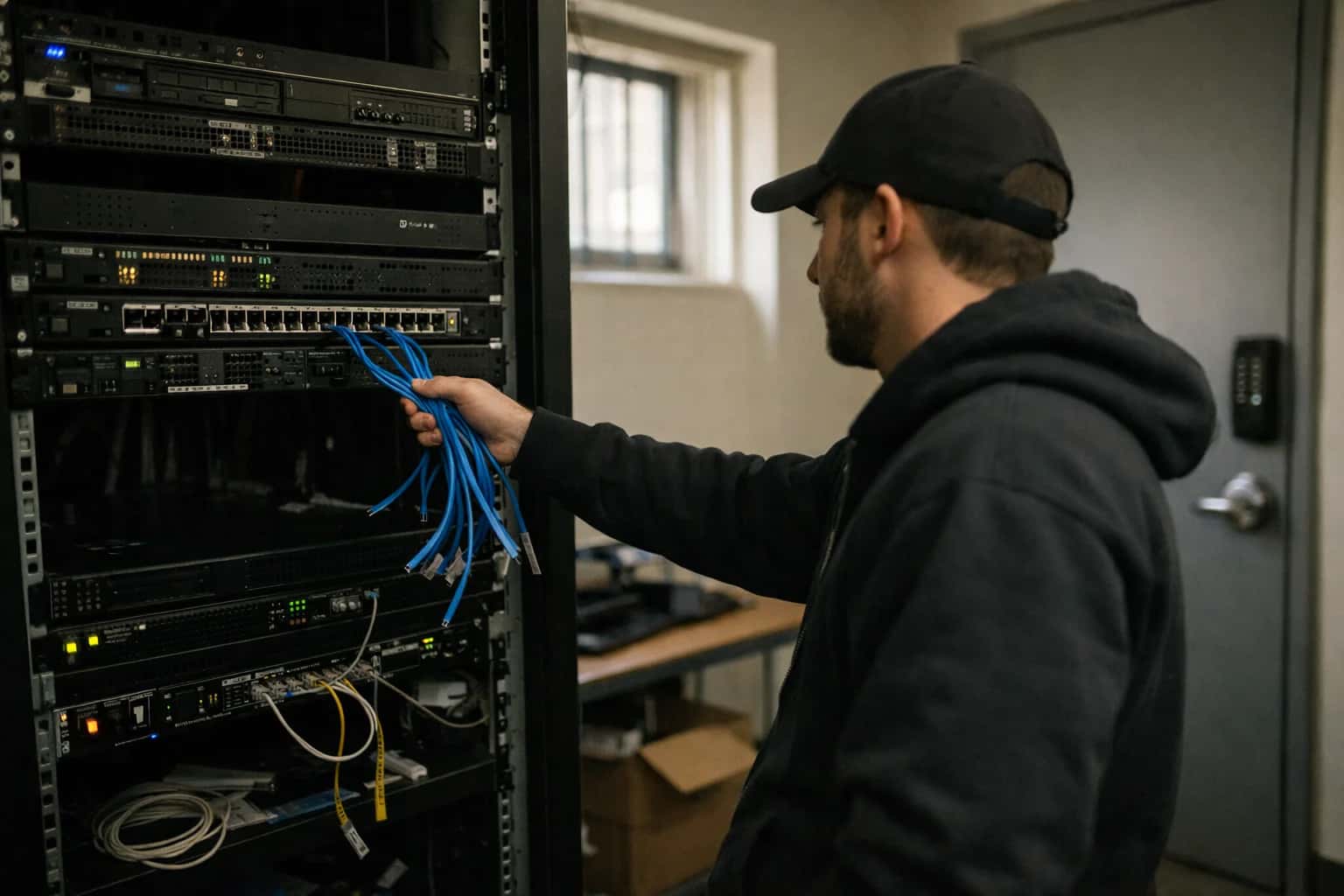
Comparisons related to architectural blueprints for running AI agents in completely disconnected environments with no internet access. Target: Defense and Government CTOs comparing fully offline model serving, artifact scanning, and update mechanisms.
Air-Gapped Fine-Tuning vs In-Context Learning
Compares the performance, data privacy, and resource overhead of fine-tuning models offline against using in-context learning with retrieval for domain adaptation in disconnected environments. Evaluates when the complexity of air-gapped fine-tuning is justified over simpler prompt-based adaptation.
Sneakernet Update vs Removable Media Scanning
Analyzes the security and operational trade-offs between physically transferring model updates via sneakernet and using automated removable media scanning for air-gapped deployments. Focuses on chain of custody, malware risk, and update cadence for defense and critical infrastructure.
Offline Model Artifact Scanning vs Runtime Integrity Verification
Compares pre-deployment static scanning of model files against continuous runtime integrity checks in air-gapped systems. Evaluates detection rates for model poisoning, performance overhead, and suitability for different threat models.
Cryptographic Model Signing vs Hash-Based Integrity Checks
Examines the difference between using cryptographic signatures for model provenance and simpler hash-based verification in disconnected environments. Focuses on supply chain security, non-repudiation, and the infrastructure required for key management in air-gapped networks.
Local Model Registry vs Manual Model Distribution
Compares the governance and efficiency of a local model registry against manual, script-based model distribution in air-gapped data centers. Evaluates version control, rollback capabilities, and the operational burden of managing model lifecycles without internet access.
Air-Gapped Kubernetes vs Bare-Metal Deployment
Analyzes the trade-offs between running a full air-gapped Kubernetes cluster and deploying AI models directly on bare-metal servers. Compares orchestration complexity, resource utilization, scaling capabilities, and maintenance overhead for private AI infrastructure.
Disconnected Docker Registry vs Sideloaded Container Images
Compares the use of a local, disconnected Docker registry against manually sideloading container images for AI agent deployment. Evaluates image versioning, dependency management, and security scanning workflows in completely offline environments.
Air-Gapped MLOps Pipeline vs Manual Model Lifecycle
Examines the difference between implementing a fully air-gapped MLOps pipeline and managing the model lifecycle through manual processes. Focuses on reproducibility, auditability, and the ability to retrain and redeploy models without cloud connectivity.
Air-Gapped Secret Management vs Hardware Security Module (HSM)
Compares software-based secret management solutions against dedicated Hardware Security Modules for protecting API keys, certificates, and encryption keys in air-gapped AI deployments. Evaluates security guarantees, operational complexity, and compliance with standards like FIPS 140-3.
Local Identity Provider vs Manual Service Account Management
Analyzes the trade-offs between deploying a local identity provider (IdP) and manually managing service accounts for agent-to-service authentication in disconnected environments. Focuses on scalability, audit logging, and the enforcement of least-privilege access for autonomous agents.
Offline Certificate Authority vs Self-Signed Certificates
Compares the security and management overhead of running an offline Certificate Authority against using self-signed certificates for internal TLS in air-gapped systems. Evaluates trust chains, rotation policies, and the risk of man-in-the-middle attacks within isolated networks.
Air-Gapped Backup and Restore vs Immutable Model Storage
Examines the difference between traditional backup and restore procedures and using immutable storage for model artifacts in air-gapped environments. Compares recovery time objectives, ransomware resilience, and storage efficiency for critical AI assets.
Air-Gapped Model Distillation vs Direct SLM Deployment
Compares the process of distilling a large model into a smaller one within an air-gap against directly deploying a pre-existing Small Language Model. Evaluates the accuracy-efficiency trade-off, computational cost of offline distillation, and suitability for resource-constrained disconnected hardware.
Local Synthetic Data Generation vs Imported Anonymized Data
Analyzes the privacy and utility trade-offs between generating synthetic data locally and importing pre-anonymized datasets into an air-gapped environment for model fine-tuning. Focuses on re-identification risk, statistical fidelity, and compliance with data residency requirements.
Air-Gapped Agent-to-Agent Protocol vs Local Message Queue
Compares using a specialized agent-to-agent (A2A) protocol against a standard local message queue (like RabbitMQ or NATS) for orchestrating multi-agent workflows in disconnected systems. Evaluates state management, error handling, and the complexity of building reliable agent handoffs.
Local Code Interpreter Sandbox vs Restricted Python Execution
Examines the security boundaries between a dedicated local code interpreter sandbox and simply using restricted Python execution modes for agent tool use in air-gapped environments. Compares escape prevention, resource limiting, and filesystem isolation for running untrusted agent-generated code.
Air-Gapped Browser Automation vs Headless Local Rendering
Compares using a full browser automation tool against a lightweight headless rendering engine for agents that need to interact with local web UIs in disconnected environments. Evaluates resource consumption, rendering accuracy, and the attack surface of each approach.
Disconnected Telemetry vs Local Usage Metering
Analyzes the difference between a full disconnected telemetry pipeline and simple local usage metering for monitoring AI agent performance and cost in air-gapped deployments. Focuses on the granularity of insights, storage requirements, and the ability to detect model drift or agent failures without cloud-based observability.
Partnered with leading AI, data, and software stack.





How We Work
Custom AI workflows for your Business
One-fit-all AI don't work for modern businesses. At Inferensys, we aim to understand your business & custom requirements; which we use to define most efficient agentic workflows, the data, and the tools for your business.
01
Review the use case
We understand the task, the users, and where AI can actually help.
Read more02
Pick the right approach
We define what needs search, automation, or product integration.
Read more03
Build the first useful version
We implement the part that proves the value first.
Read more04
Improve from there
We add the checks and visibility needed to keep it useful.
Read moreThe first call is a practical review of your use case and the right next step.
Talk to Us