A Local Model Registry excels at providing a single source of truth for model artifacts, enforcing version control, and enabling automated rollbacks. For example, a registry like a disconnected Harbor instance can track every model iteration with cryptographic signatures, ensuring that a defense contractor can instantly revert to a validated model version if a newly deployed one exhibits drift, reducing mean time to recovery (MTTR) from hours to minutes.

Difference
Local Model Registry vs Manual Model Distribution
A technical comparison of governance, efficiency, and operational burden between using a local model registry and manual script-based distribution for managing AI model lifecycles in air-gapped data centers.
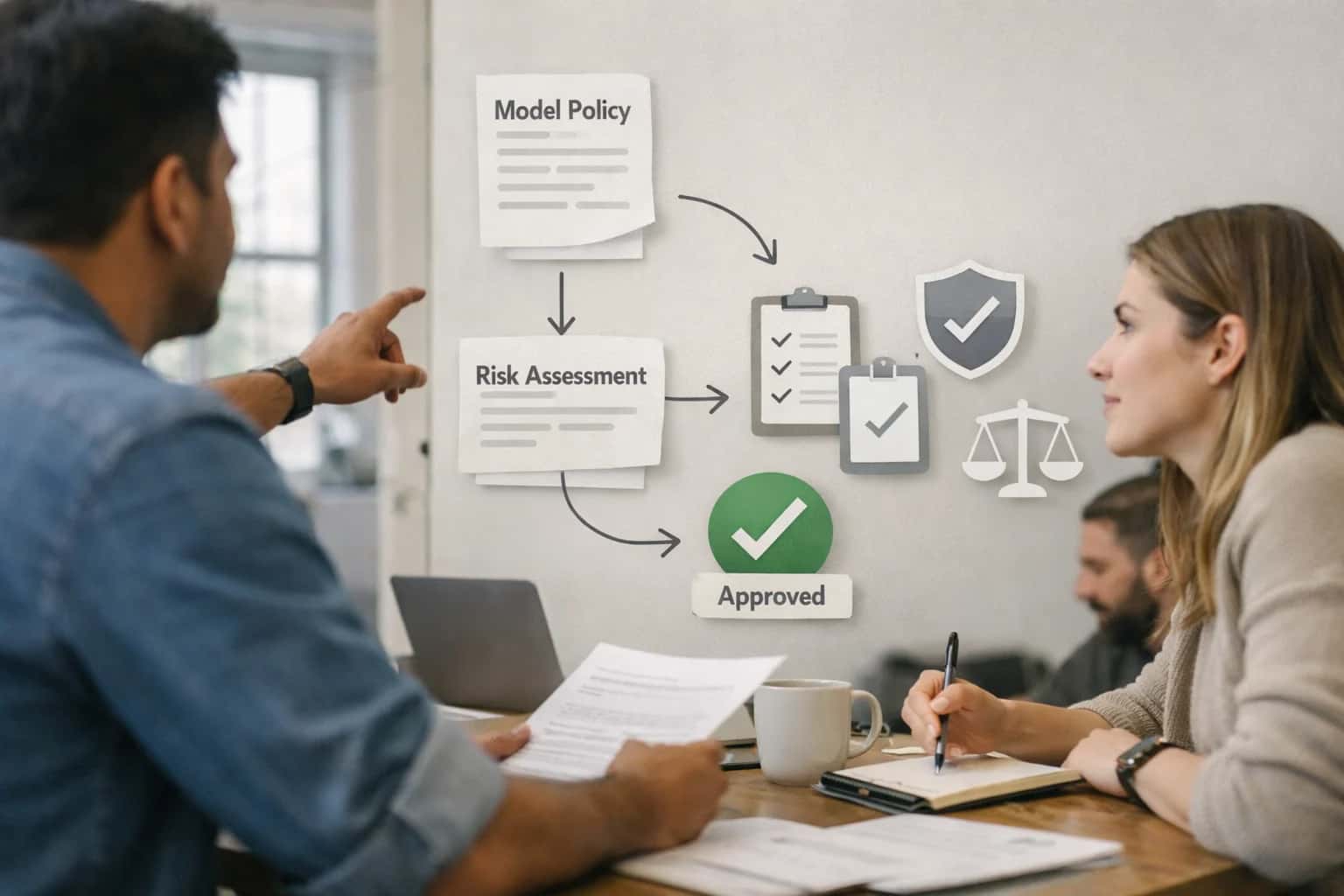
THE ANALYSIS
Introduction
A data-driven comparison of governance and operational efficiency between a centralized local model registry and script-based manual distribution in air-gapped environments.
Manual Model Distribution takes a different approach by relying on operator-executed scripts and physical media transfers. This results in a lower initial infrastructure footprint and avoids the complexity of maintaining a registry service in a hardened environment. However, it introduces a significant trade-off: the operational burden of human error. A single mislabeled USB drive or an incorrect scp command can lead to a silent model mismatch across inference servers, a risk that is eliminated by a registry's automated checksum verification.
The key trade-off: If your priority is strict governance, auditability, and minimizing human error in a multi-server deployment, choose a local model registry. If you prioritize operational simplicity for a single-node or very small-scale deployment where manual oversight is feasible, choose script-based manual distribution. The decision hinges on whether the cost of managing the registry infrastructure is less than the risk and labor cost of manual model lifecycle errors.
HEAD-TO-HEAD COMPARISON
Feature Comparison Matrix
Direct comparison of key metrics and features for managing model lifecycles in air-gapped environments.
| Metric | Local Model Registry | Manual Model Distribution |
|---|---|---|
Rollback Time | < 60 seconds | ~30-60 minutes |
Version Control | ||
Audit Trail (Who/When/What) | ||
Dependency Conflict Detection | ||
Operational Overhead (Models/Week) | ~1 hour | ~15 hours |
Artifact Integrity Verification | Cryptographic + Hash | Manual Hash Check |
Compliance Readiness (NIST 800-53) | High | Low |
Local Model Registry Pros
TL;DR Summary
Key strengths and trade-offs at a glance.
01
Centralized Governance & Version Control
Single source of truth: A registry like MLflow or a local Harbor instance provides immutable versioning, lineage tracking, and stage transitions (staging/production). This matters for audit compliance and preventing 'model sprawl' where teams run different, unapproved versions in air-gapped environments.
02
Automated Lifecycle Management
Operational efficiency: Enables automated rollbacks, canary deployments, and metadata tagging without manual scripting. This matters for reducing human error during high-stakes updates in disconnected data centers, ensuring a consistent rollback path if a new model fails integrity checks.
03
Secure Supply Chain Integration
Native artifact scanning: Integrates directly with offline vulnerability scanners and cryptographic signing tools to validate models before they are served. This matters for defense and critical infrastructure where a tampered model file must be blocked automatically, not manually checked.
HEAD-TO-HEAD COMPARISON
Operational Burden and Lifecycle Management
Direct comparison of governance, efficiency, and operational overhead for managing model lifecycles in air-gapped environments.
| Metric | Local Model Registry | Manual Model Distribution |
|---|---|---|
Mean Time to Rollback | < 2 minutes | ~45 minutes (script-dependent) |
Version Drift Risk | Low (single source of truth) | High (node inconsistency) |
Artifact Provenance | Cryptographically signed | Hash-based (manual verification) |
Audit Trail Completeness | Automated (every pull/push) | Manual (operator logs) |
Dependency Conflict Rate | < 1% | ~15% (environment mismatch) |
Operator Skill Requirement | Low (abstracted UI/API) | High (scripting & system admin) |
Compliance with NIST SP 800-53 |
CHOOSE YOUR PRIORITY
When to Choose What
Local Model Registry for Security & Governance
Strengths: A local model registry provides a single source of truth for model provenance, cryptographic signatures, and vulnerability scans. It enforces strict version control and rollback capabilities, ensuring that only approved, scanned artifacts are deployed in your air-gapped environment. This is critical for compliance with frameworks like NIST AI RMF and for maintaining a secure software supply chain.
Manual Model Distribution for Security & Governance
Verdict: Not ideal. Manual distribution via scripts or USB drives creates a fragmented audit trail. Tracking which server has which model version becomes an error-prone spreadsheet exercise. It increases the risk of deploying a model with known vulnerabilities or without proper provenance, making it difficult to prove chain of custody during a security audit.
Enabling Efficiency, Speed & Accuracy
Intelligent Analysis, Decision & Execution
We build AI systems for teams that need search across company data, workflow automation across tools, or AI features inside products and internal software.
Talk to Us
Search across company data
Give teams answers from docs, tickets, runbooks, and product data with sources and permissions.
Useful when people spend too long searching or get different answers from different systems.
Enterprise searchRAGPermissions
Read more
Automate internal workflows
Use AI to route work, draft outputs, trigger actions, and keep approvals and logs in place.
Useful when repetitive work moves across multiple tools and teams.
AI agentsWorkflow automationGovernance
Read more
Add AI to products and internal tools
Build assistants, guided actions, or decision support into the software your team or customers already use.
Useful when AI needs to be part of the product, not a separate tool.
AI integrationDecision supportModel routing
Read moreOPERATIONAL MATURITY
Migration Path: From Manual Scripts to a Local Registry
Moving from ad-hoc scripts to a structured local model registry is the single highest-leverage change an air-gapped AI team can make. It transforms model deployment from a fragile, person-dependent process into a governed, auditable, and repeatable system. This FAQ compares the operational realities of both approaches.
The primary risk is 'configuration drift' and unreproducible deployments. Manual scripts often rely on implicit environment variables, specific file paths, and tribal knowledge. When a model fails in production, the team cannot guarantee the exact artifact, dependencies, and preprocessing steps are identical to the tested version. This leads to 'works on my machine' failures in disconnected environments where debugging is significantly harder.
THE ANALYSIS
Verdict
A direct comparison of governance, operational overhead, and lifecycle control between a local model registry and manual script-based distribution in air-gapped environments.
A local model registry excels at providing a single source of truth for model governance because it enforces version control, rollback capabilities, and metadata tracking as core features. For example, a registry can reduce the time to roll back a poisoned or underperforming model from hours to minutes by maintaining an immutable history of artifacts and their cryptographic hashes, directly addressing the supply chain security requirements of air-gapped networks.
Manual model distribution takes a fundamentally different approach by prioritizing operational simplicity and avoiding the infrastructure overhead of a dedicated registry service. This strategy relies on scripted scp or rsync commands and documented runbooks, which results in a lower initial setup burden but introduces significant risk of configuration drift and human error. A single analyst mistakenly deploying a model to the wrong inference server path is a common failure mode that a registry's automated deployment pipelines are designed to prevent.
The key trade-off: If your priority is strict governance, auditability, and the ability to safely manage hundreds of model versions across a large server fleet without internet access, choose a local model registry. If you prioritize minimizing infrastructure complexity for a small, static set of models managed by a highly disciplined team, manual distribution is a viable, lightweight alternative. For most defense and critical infrastructure use cases, the operational risk reduction of a registry justifies its deployment cost.

About the author
Prasad Kumkar
CEO & MD, Inference Systems
Prasad Kumkar is the CEO & MD of Inference Systems and writes about AI systems architecture, LLM infrastructure, model serving, evaluation, and production deployment. Over 5+ years, he has worked across computer vision models, L5 autonomous vehicle systems, and LLM research, with a focus on taking complex AI ideas into real-world engineering systems.
His work and writing cover AI systems, large language models, AI agents, multimodal systems, autonomous systems, inference optimization, RAG, evaluation, and production AI engineering.
LinkedIn
Limited slotsGet a Free AI Consultation
Partnered with leading AI, data, and software stack.





How We Work
Custom AI workflows for your Business
One-fit-all AI don't work for modern businesses. At Inferensys, we aim to understand your business & custom requirements; which we use to define most efficient agentic workflows, the data, and the tools for your business.
01
Review the use case
We understand the task, the users, and where AI can actually help.
Read more02
Pick the right approach
We define what needs search, automation, or product integration.
Read more03
Build the first useful version
We implement the part that proves the value first.
Read more04
Improve from there
We add the checks and visibility needed to keep it useful.
Read moreThe first call is a practical review of your use case and the right next step.
Talk to Us