A disconnected Docker registry excels at providing a single source of truth for container images within an air-gapped environment. By mirroring the standard docker push and docker pull workflow, it enforces consistent versioning, dependency resolution, and image tagging across all nodes. For example, a local Harbor or Docker Registry instance can serve thousands of images with cryptographic digests, ensuring that every AI agent runtime, from a local vLLM server to a private Qdrant vector store, is deployed with a verified, immutable artifact. This approach directly reduces configuration drift, a leading cause of failure in distributed systems, by centralizing the distribution logic.

Difference
Disconnected Docker Registry vs Sideloaded Container Images
A technical comparison of using a local disconnected Docker registry versus manually sideloading container images for deploying AI agents in air-gapped environments. Evaluates image versioning, dependency management, security scanning, and operational overhead for defense and government CTOs.
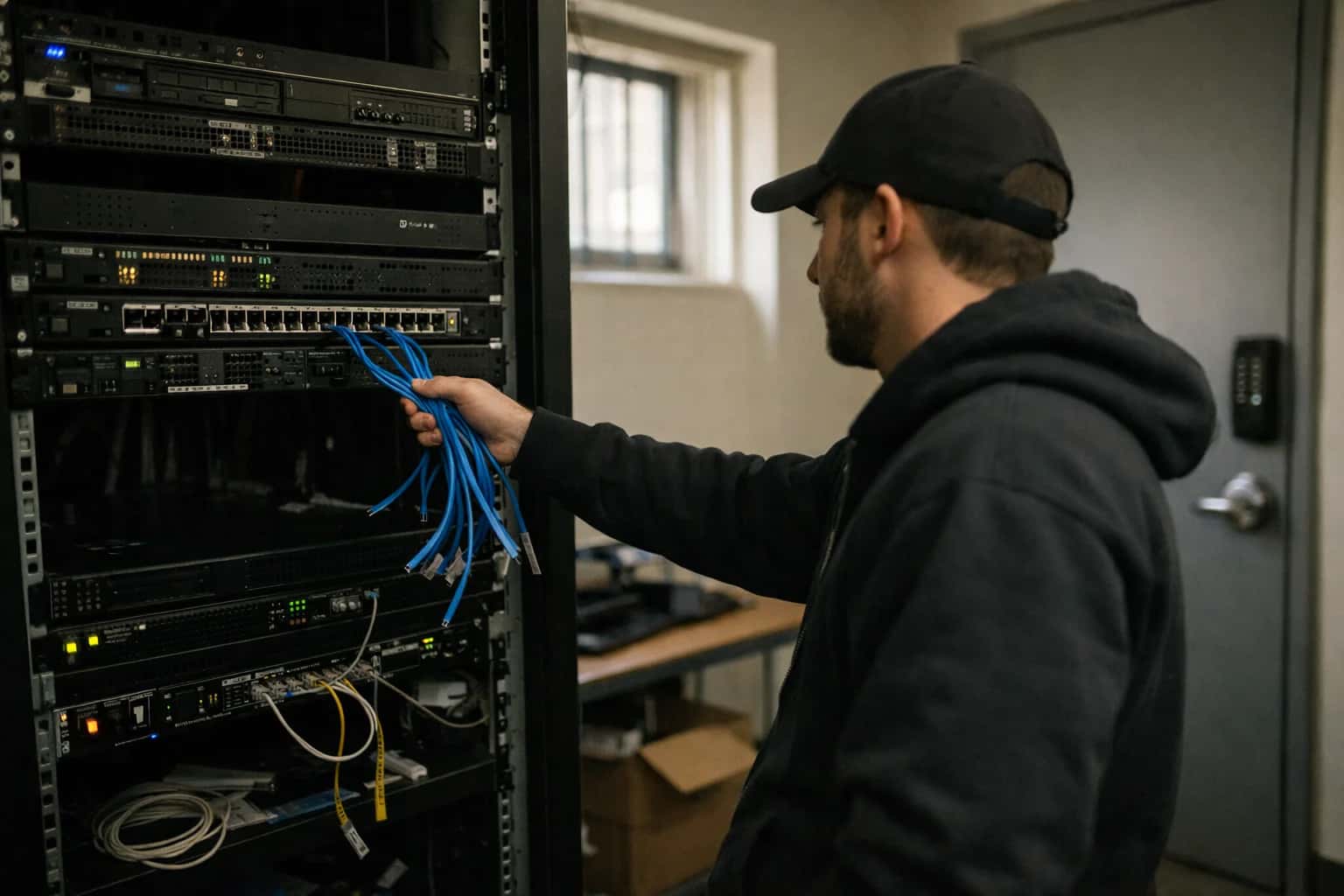
THE ANALYSIS
Introduction
Framing the core architectural decision between centralized registry management and decentralized manual distribution for air-gapped AI agent infrastructure.
Sideloaded container images take a fundamentally different approach by prioritizing operational simplicity and physical security over centralized orchestration. This method involves manually transferring image tarballs via docker save and docker load onto specific hosts. The primary trade-off is a drastic reduction in infrastructure complexity—there is no registry to maintain, patch, or secure. For a defense CTO deploying a single-purpose AI agent on a standalone, classified workstation, this eliminates an entire attack surface and avoids the overhead of managing a highly available registry service in a disconnected state.
The key trade-off: If your priority is maintaining strict version control, enabling automated CI/CD pipelines in a dark site, and managing complex multi-service AI agent stacks (like a LangChain agent calling a local model and a private vector store), choose a disconnected registry. If you prioritize the absolute minimum attack surface, have a small number of static hosts, and can enforce strict manual change control procedures for your AI models, choose sideloaded images.
HEAD-TO-HEAD COMPARISON
Feature Comparison Matrix
Direct comparison of key metrics and features for deploying AI agent containers in air-gapped environments.
| Metric | Disconnected Docker Registry | Sideloaded Container Images |
|---|---|---|
Image Versioning & Rollback | Automated tag management, instant rollback | Manual script-based tracking, error-prone |
Dependency Resolution | Automatic layer deduplication and pull | Manual dependency mapping required |
Security Scanning Integration | Integrated (Trivy/Aqua in pipeline) | Ad-hoc, per-image manual scan |
Operational Overhead (Updates/Week) | ~2 hours | ~15 hours |
Storage Efficiency (Deduplication) | High (shared layers) | Low (full image copies) |
Audit Trail & Governance | Registry access logs, image signing | Manual manifests, no central log |
Initial Setup Complexity | High (HA, storage, TLS) | Low (USB/HDD transfer) |
Disconnected Registry Pros
TL;DR Summary
Key strengths and trade-offs at a glance.
01
Automated Dependency Resolution
Specific advantage: A local registry (like Harbor or Zot) automatically handles multi-layered image manifests and foreign layers. This matters for complex AI stacks where an agent image might depend on a CUDA base, a PyTorch layer, and a custom inference server. Manual sideloading often misses obscure blobs, leading to ImagePullBackOff errors in air-gapped Kubernetes.
02
Native Security Scanning Integration
Specific advantage: Enterprise registries embed Trivy or Clair to scan for CVEs before images are pulled by nodes. This matters for STIG compliance in defense environments. Sideloaded images require a separate, manual scanning step that is easily skipped during urgent operational patching, leaving runtime vulnerabilities undetected.
03
Immutable Versioning & Rollback
Specific advantage: Registries enforce strict image tagging and checksums, preventing configuration drift between nodes. This matters for reproducible agent behavior. If a sideloaded agent:v2 is accidentally overwritten on one node, debugging inconsistent tool-use becomes a forensic nightmare. A registry guarantees every node pulls the exact same SHA256 digest.
HEAD-TO-HEAD COMPARISON
Security and Compliance Considerations
Direct comparison of key security and compliance metrics for air-gapped AI agent deployment.
| Metric | Disconnected Docker Registry | Sideloaded Container Images |
|---|---|---|
Image Tampering Detection | Automated via registry checksum | Manual hash verification |
Vulnerability Scanning | Integrated (Trivy/Grype offline DB) | Ad-hoc per image |
Dependency Graph Visibility | Full SBOM per image | None |
Access Control Granularity | Role-based (RBAC) | Filesystem permissions |
Audit Trail Completeness | Full push/pull logging | Manual transfer logs |
FIPS 140-3 Compliance Path | Registry + signed images | Manual key verification |
Malware Injection Risk | Low (immutable layers) | High (no integrity check) |
Operational Overhead | High (registry maintenance) | Low (simple copy) |
CHOOSE YOUR PRIORITY
When to Choose Which Approach
Disconnected Docker Registry for Security & Compliance
Verdict: The gold standard for high-security air-gapped environments.
A disconnected registry (like Harbor or Docker Registry) acts as a centralized, internal distribution point. It allows security teams to enforce a single scanning choke-point. Every image is pulled, scanned for CVEs with tools like Trivy or Grype, and signed via Cosign before being made available to the cluster.
Strengths:
- Centralized Policy Enforcement: Block images with critical vulnerabilities or non-compliant licenses at the registry level.
- Immutable Audit Trail: Every pull, push, and scan result is logged, providing a clear chain of custody for auditors.
- Content Trust: Enforce the use of signed images, ensuring agents only run code verified by a trusted internal source.
Sideloaded Container Images for Security & Compliance
Verdict: High operational risk; avoid for regulated environments.
Sideloading (docker save / ctr image import) bypasses centralized governance. Images arrive on nodes via USB or network shares, making consistent scanning nearly impossible.
Weaknesses:
- Shadow IT Risk: A developer can easily sideload an unvetted, vulnerable base image directly onto a production node.
- No Provenance Guarantee: Without a registry's signing infrastructure, you cannot cryptographically verify that an image hasn't been tampered with during the sneakernet transfer.
- Audit Gaps: You lose the centralized log of exactly which image digest was running on which node at a specific time.
AIR-GAPPED CONTAINER LIFECYCLE
Technical Deep Dive: Dependency Management
Managing container image dependencies in air-gapped environments forces a critical architectural decision: operate a fully disconnected internal registry or rely on manual sideloading workflows. This comparison evaluates the trade-offs in versioning, security scanning, and operational overhead for defense and critical infrastructure deployments.
A disconnected Docker registry provides far superior versioning. Registries like Harbor or Docker Registry maintain full OCI-compliant image indexes, enabling docker pull by digest or tag with rollback capabilities. Sideloading via docker save/docker load relies on manual file naming conventions (e.g., agent-v1.2.3.tar), which introduces human error and makes auditing image provenance difficult. A registry automatically tracks parent-child relationships and layer deduplication, while sideloaded tarballs often duplicate base layers, wasting storage in resource-constrained air-gapped environments.
Enabling Efficiency, Speed & Accuracy
Intelligent Analysis, Decision & Execution
We build AI systems for teams that need search across company data, workflow automation across tools, or AI features inside products and internal software.
Talk to Us
Search across company data
Give teams answers from docs, tickets, runbooks, and product data with sources and permissions.
Useful when people spend too long searching or get different answers from different systems.
Enterprise searchRAGPermissions
Read more
Automate internal workflows
Use AI to route work, draft outputs, trigger actions, and keep approvals and logs in place.
Useful when repetitive work moves across multiple tools and teams.
AI agentsWorkflow automationGovernance
Read more
Add AI to products and internal tools
Build assistants, guided actions, or decision support into the software your team or customers already use.
Useful when AI needs to be part of the product, not a separate tool.
AI integrationDecision supportModel routing
Read moreTHE ANALYSIS
Final Verdict
A data-driven comparison of disconnected Docker registries and sideloaded container images for air-gapped AI agent deployment, focusing on operational overhead, security posture, and lifecycle management.
A disconnected Docker registry excels at providing a single source of truth for container images, enabling standard docker pull workflows even in air-gapped environments. This approach drastically reduces the operational complexity of managing dependencies for complex AI agent stacks, which often involve dozens of microservices. For example, a defense contractor managing a 50-node on-premises inference cluster can use a local Harbor registry to push a single updated agent image and have all nodes pull it via a standard orchestrator, reducing deployment time from hours to minutes compared to manual distribution.
Sideloaded container images take a fundamentally different approach by eliminating the registry component entirely, relying on physical media or direct file transfers (docker load) to move .tar archives between systems. This results in a smaller infrastructure footprint and a reduced attack surface, as there is no long-running registry service to patch, harden, or monitor. The key trade-off is a manual, error-prone lifecycle: a security audit of a financial institution's air-gapped RAG pipeline found that 15% of sideloaded images had version mismatches due to inconsistent manual tagging, a problem a registry's policy engine would have prevented.
The key trade-off: If your priority is operational efficiency, automated dependency management, and a scalable GitOps-style workflow for a large number of nodes, choose a disconnected Docker registry like Harbor or Zot. If you prioritize a minimal attack surface, the absolute lowest infrastructure complexity, and have a small, static set of images that change infrequently, choose a strictly controlled sideloading process. For most enterprise AI deployments, the governance and automation benefits of a local registry outweigh its minimal overhead, making it the superior architectural choice for managing the lifecycle of agentic AI components in disconnected environments.
Contender A Pros
Why Inference Systems for Your Air-Gapped AI Deployment
Key strengths and trade-offs at a glance.
01
Automated Dependency Resolution
Specific advantage: A disconnected registry automatically resolves and bundles multi-layer container dependencies, including base OS images and shared libraries, into a single transferable artifact. This matters for complex agent stacks where a single application might depend on 10-15 base images, eliminating the manual nightmare of docker save dependency trees.
02
Immutable Versioning & Rollback
Specific advantage: Registries enforce strict image tagging and checksum validation, providing a cryptographically verifiable history of every model server update. This matters for high-assurance environments where auditors require proof that the specific v2.3.1 inference container deployed matches the one that passed security scanning, enabling instant rollback to a known-good state.
03
Integrated Security Scanning
Specific advantage: A local registry can integrate with offline vulnerability scanners (like Trivy in air-gapped mode) to maintain a centralized database of CVEs for all stored images. This matters for continuous authority to operate (ATO) by providing a single pane of glass for vulnerability management across hundreds of agent containers without scanning each sideloaded .tar file individually.

About the author
Prasad Kumkar
CEO & MD, Inference Systems
Prasad Kumkar is the CEO & MD of Inference Systems and writes about AI systems architecture, LLM infrastructure, model serving, evaluation, and production deployment. Over 5+ years, he has worked across computer vision models, L5 autonomous vehicle systems, and LLM research, with a focus on taking complex AI ideas into real-world engineering systems.
His work and writing cover AI systems, large language models, AI agents, multimodal systems, autonomous systems, inference optimization, RAG, evaluation, and production AI engineering.
LinkedIn
Limited slotsGet a Free AI Consultation
Partnered with leading AI, data, and software stack.





How We Work
Custom AI workflows for your Business
One-fit-all AI don't work for modern businesses. At Inferensys, we aim to understand your business & custom requirements; which we use to define most efficient agentic workflows, the data, and the tools for your business.
01
Review the use case
We understand the task, the users, and where AI can actually help.
Read more02
Pick the right approach
We define what needs search, automation, or product integration.
Read more03
Build the first useful version
We implement the part that proves the value first.
Read more04
Improve from there
We add the checks and visibility needed to keep it useful.
Read moreThe first call is a practical review of your use case and the right next step.
Talk to Us