Calculating the Return on Investment (ROI) for circular hardware practices requires shifting from a narrow purchase-price view to a Total Cost of Ownership (TCO) model. You must quantify cost avoidance from extended asset lifespans, revenue potential from reselling refurbished GPUs, and savings from reduced new procurement. This financial analysis is the foundation for securing executive buy-in and budget, proving that sustainability directly improves the bottom line for your AI infrastructure.

Guide
How to Calculate the ROI of Circular Hardware Practices for AI
A financial guide with models and metrics to build a business case for circular hardware initiatives. Learn to translate environmental benefits into a compelling ROI to secure executive buy-in.
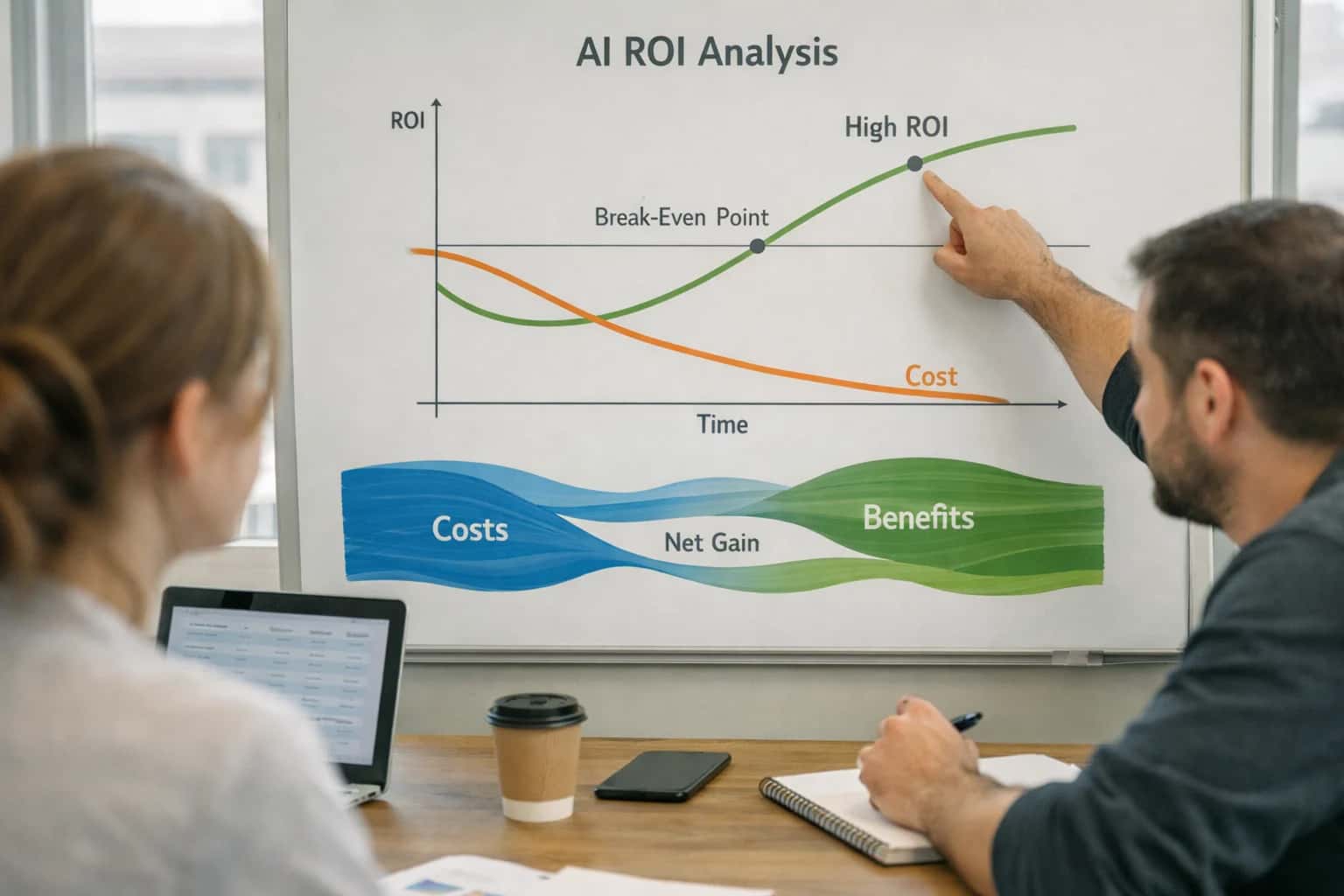
This guide provides the models and metrics to build a compelling business case for circular hardware initiatives, translating environmental benefits into financial ROI.
Build your ROI model by following these steps: First, establish a baseline using current linear procurement and disposal costs. Next, forecast circular benefits: model extended service life, component resale value, and reduced e-waste fees. Finally, incorporate risk mitigation values from supply chain diversification and regulatory compliance. Use this data to create a compelling financial narrative, as detailed in our guide on integrating circular principles into procurement.
FINANCIAL ANALYSIS
Circular ROI Components and Metrics
A breakdown of the key financial components to quantify when building the business case for circular hardware practices in AI infrastructure.
| Metric / Component | Linear Model (Baseline) | Circular Model (Proposed) | Impact & Notes |
|---|---|---|---|
Hardware Procurement Cost | $1.2M (new system) | $600k (50% refurbished) | Cost Avoidance: Direct savings from buying fewer new units. |
Annual Operational Cost (Energy & Cooling) | $180k | $150k | Operational Savings: More efficient, newer components reduce power draw. |
Residual Value at EOL | $50k (scrap value) | $300k (resale/part-out) | Revenue Generation: Capturing value from assets that would be scrapped. |
Mean Time Between Failures (MTBF) | 3 years | 4.5 years | Reliability Gain: Proactive maintenance and newer sub-components extend lifespan. |
Carbon Footprint (Scope 3, Manufacturing) | 450 tCO2e | 225 tCO2e | Risk Mitigation: Avoided emissions reduce regulatory and reputational risk. |
Supply Chain Diversification | Resilience: Access to secondary market and refurbished parts reduces single-source dependency. | ||
Decommissioning & Disposal Cost | $20k (landfill fees) | $5k (logistics for resale) | Cost Avoidance: Lower fees and potential revenue from component harvesting. |
Total Cost of Ownership (5-Year) | $2.05M | $1.43M | Net Financial Benefit: The aggregate ROI, including all cost, savings, and revenue streams. |
FINANCIAL MODELING
Step 2: Calculate Cost Avoidance from Extended Lifespans
This step quantifies the financial benefit of keeping hardware in service longer, a core tenet of circularity. You will calculate the cost avoided by delaying or eliminating new capital expenditures.
Cost avoidance is the primary financial driver of circular hardware practices. It represents the capital expenditure (CapEx) you do not incur by extending the useful life of existing assets. The calculation is straightforward: Avoided Cost = (New System Cost) - (Refurbishment/Upgrade Cost). For example, delaying the replacement of a $250,000 AI training server by two years through a $25,000 GPU refresh and predictive maintenance directly avoids $225,000 in new procurement. This model shifts the focus from purchase price to total cost of ownership (TCO).
To build your model, first establish a baseline refresh cycle (e.g., 3 years). Then, model extending this cycle by 6-24 months through modular upgrades and rigorous maintenance. The avoided cost is the net present value (NPV) of the deferred capital outlay. This tangible savings funds circular initiatives and provides a compelling ROI for stakeholders. For a complete financial picture, integrate this with revenue from resale of refurbished gear and procurement savings.
Enabling Efficiency, Speed & Accuracy
Intelligent Analysis, Decision & Execution
We build AI systems for teams that need search across company data, workflow automation across tools, or AI features inside products and internal software.
Talk to Us
Search across company data
Give teams answers from docs, tickets, runbooks, and product data with sources and permissions.
Useful when people spend too long searching or get different answers from different systems.
Enterprise searchRAGPermissions
Read more
Automate internal workflows
Use AI to route work, draft outputs, trigger actions, and keep approvals and logs in place.
Useful when repetitive work moves across multiple tools and teams.
AI agentsWorkflow automationGovernance
Read more
Add AI to products and internal tools
Build assistants, guided actions, or decision support into the software your team or customers already use.
Useful when AI needs to be part of the product, not a separate tool.
AI integrationDecision supportModel routing
Read moreROI CALCULATION
Common Mistakes
Calculating the ROI for circular hardware initiatives is critical for securing budget, but common financial and operational oversights can undermine your business case. This section addresses the key mistakes that lead to inaccurate projections and missed value.
A negative ROI typically stems from omitting major cost-avoidance categories and underestimating residual value. The most common omissions are:
- Extended Warranty & Support Costs: Not accounting for the high annual fees for new hardware support contracts that are avoided by keeping refurbished assets in service.
- Procurement & Logistics Savings: Overlooking the administrative and shipping costs saved by reusing existing inventory instead of purchasing new.
- Risk Mitigation Value: Failing to quantify the financial benefit of supply chain diversification. Relying on refurbished or secondary-market parts insulates you from price spikes and lead-time delays for new GPUs.
Actionable Fix: Build your model to include Total Cost of Ownership (TCO) for both a linear (buy-new, dispose) and circular (refurbish, reuse) scenario over a 5-7 year period. Use our guide on selecting AI hardware based on TCO for the full framework.

About the author
Prasad Kumkar
CEO & MD, Inference Systems
Prasad Kumkar is the CEO & MD of Inference Systems and writes about AI systems architecture, LLM infrastructure, model serving, evaluation, and production deployment. Over 5+ years, he has worked across computer vision models, L5 autonomous vehicle systems, and LLM research, with a focus on taking complex AI ideas into real-world engineering systems.
His work and writing cover AI systems, large language models, AI agents, multimodal systems, autonomous systems, inference optimization, RAG, evaluation, and production AI engineering.
LinkedIn
Limited slotsGet a Free AI Consultation
Partnered with leading AI, data, and software stack.





How We Work
Custom AI workflows for your Business
One-fit-all AI don't work for modern businesses. At Inferensys, we aim to understand your business & custom requirements; which we use to define most efficient agentic workflows, the data, and the tools for your business.
01
Review the use case
We understand the task, the users, and where AI can actually help.
Read more02
Pick the right approach
We define what needs search, automation, or product integration.
Read more03
Build the first useful version
We implement the part that proves the value first.
Read more04
Improve from there
We add the checks and visibility needed to keep it useful.
Read moreThe first call is a practical review of your use case and the right next step.
Talk to Us