Total Cost of Ownership (TCO) is the comprehensive financial metric for AI hardware, encompassing purchase price, energy consumption, cooling, maintenance, and eventual decommissioning. A circular hardware lifecycle prioritizes assets with high energy efficiency, modular design for upgrades, and strong residual value. This shifts the procurement focus from initial capital expenditure (CapEx) to long-term operational efficiency and asset recovery, naturally aligning financial and environmental goals. Understanding TCO is the first step toward implementing a circular hardware lifecycle for AI infrastructure.

Guide
How to Select AI Hardware Based on Total Cost of Ownership and Lifespan
A step-by-step guide to building a financial model for AI hardware procurement. Move beyond purchase price to calculate true TCO, compare deployment models, and optimize for cost-per-inference over the asset's full lifecycle.
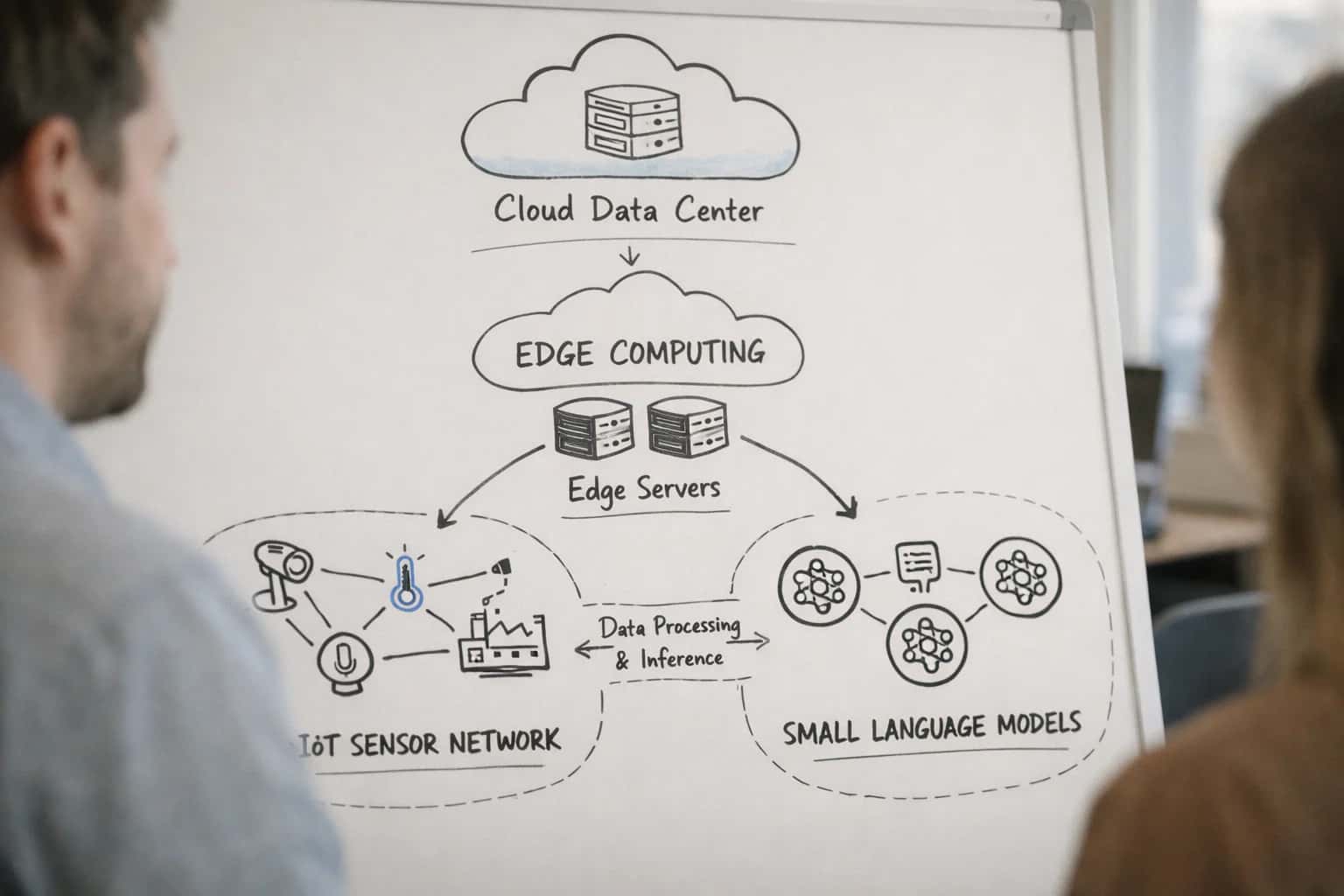
Procuring AI hardware based on purchase price alone leads to inflated long-term costs and environmental waste. This guide provides the financial model to calculate true Total Cost of Ownership (TCO), enabling decisions that optimize cost-per-inference over an asset's entire lifecycle.
To apply TCO analysis, build a model comparing owned, leased, and cloud options on cost-per-inference. Key inputs are: energy costs per kilowatt-hour, expected hardware lifespan under your workload, maintenance and support contracts, and projected residual value from resale or refurbishment. This model reveals that a more expensive, efficient server with a 5-year lifespan often has a lower TCO than a cheaper, power-hungry model replaced every 3 years. This financial discipline supports designing hardware for longevity and upgradability and is foundational for calculating the ROI of circular hardware practices.
COMPARISON FRAMEWORK
TCO Component Breakdown Table
A detailed breakdown of the major cost categories that constitute the Total Cost of Ownership for AI hardware, enabling a direct comparison between procurement models.
| TCO Component | Cloud Instance (3-Year) | Leased Hardware (3-Year) | Owned Infrastructure (5-Year) |
|---|---|---|---|
Upfront Acquisition Cost | $0 | $45,000 | $250,000 |
Monthly Operational Cost | $8,500 | $2,200 | $1,800 |
Energy & Cooling Cost | Included | $450/month | $450/month |
Maintenance & Support | Included | $300/month | $200/month |
Expected Lifespan | N/A | 3 years | 5-7 years |
Residual/Resale Value | $0 | $0 | $40,000 |
Performance Degradation Risk | Provider | Lessee | Owner |
Refresh Flexibility | High | Medium | Low |
TCO CALCULATION
Step 2: Model Energy and Cooling Costs
This step quantifies the ongoing operational expenses that dominate the Total Cost of Ownership for AI hardware, moving beyond the initial purchase price.
Energy consumption is the largest variable cost over a server's lifespan. Calculate it by multiplying the nameplate power rating (in kW) by your local electricity rate ($/kWh) and the expected annual utilization rate. For example, an NVIDIA H100 SXM (700W) running at 80% load with a $0.12/kWh rate costs ~$590 annually. This direct power draw must be your baseline for all operational expenditure (OpEx) modeling. Remember to use the actual load, not the theoretical maximum, for accuracy.
Cooling adds a significant multiplier to your energy bill. The Power Usage Effectiveness (PUE) of your data center represents this overhead. A PUE of 1.5 means for every 1 kW used for compute, 0.5 kW is used for cooling and overhead. Multiply your server's energy cost by the PUE to get the true facility cost. For the H100 example above, the true annual energy cost becomes ~$885. Factor this into your cost-per-inference model and explore efficient cooling solutions like liquid immersion, covered in our guide on sustainable cloud architecture.
TCO & LIFESPAN
Common Mistakes
Selecting AI hardware based on purchase price alone is a critical error. This section addresses the most frequent miscalculations developers and leads make when evaluating total cost of ownership and lifespan, providing the correct frameworks for financially and environmentally sound procurement.
Purchase price captures less than 40% of the true cost over a 5-year lifecycle. The Total Cost of Ownership (TCO) includes hidden operational expenses that dominate long-term spending:
- Energy Consumption: A high-performance GPU can consume 300-700W continuously. At $0.12/kWh, this adds $315-$735 per year in electricity costs alone.
- Cooling Overhead: For every watt used for computation, data centers spend 0.3-0.7 watts on cooling, directly multiplying your energy bill.
- Maintenance & Support: Annual support contracts typically cost 10-20% of the hardware's purchase price.
- Downtime Costs: Unplanned failures in training clusters can cost thousands per hour in lost productivity and delayed model deployment.
Evaluating hardware on cost-per-inference over its lifespan aligns procurement with both financial efficiency and circular economy goals.
Enabling Efficiency, Speed & Accuracy
Intelligent Analysis, Decision & Execution
We build AI systems for teams that need search across company data, workflow automation across tools, or AI features inside products and internal software.
Talk to Us
Search across company data
Give teams answers from docs, tickets, runbooks, and product data with sources and permissions.
Useful when people spend too long searching or get different answers from different systems.
Enterprise searchRAGPermissions
Read more
Automate internal workflows
Use AI to route work, draft outputs, trigger actions, and keep approvals and logs in place.
Useful when repetitive work moves across multiple tools and teams.
AI agentsWorkflow automationGovernance
Read more
Add AI to products and internal tools
Build assistants, guided actions, or decision support into the software your team or customers already use.
Useful when AI needs to be part of the product, not a separate tool.
AI integrationDecision supportModel routing
Read moreTCO AND LIFESPAN
Frequently Asked Questions
Selecting AI hardware based on purchase price alone is a costly mistake. These FAQs explain how to calculate Total Cost of Ownership (TCO), compare deployment models, and make procurement decisions that optimize for cost-per-inference over the full asset lifecycle.
Total Cost of Ownership (TCO) is the comprehensive financial model that captures all costs associated with an asset over its entire operational life. For AI hardware, this moves far beyond the invoice price to include:
- Capital Expenditure (CapEx): Purchase price, sales tax, import duties, and shipping.
- Operational Expenditure (OpEx): Power consumption, cooling, data center space/colocation fees, and network bandwidth.
- Maintenance & Support: Warranty extensions, spare parts, and labor for repairs.
- End-of-Life Costs: Decommissioning, data sanitization, resale value (or recycling costs), and e-waste fees.
Calculating TCO reveals the true cost-per-inference and aligns procurement with circular economy goals by incentivizing energy efficiency, longevity, and residual value. For a strategic framework, see our guide on implementing a circular hardware lifecycle.

About the author
Prasad Kumkar
CEO & MD, Inference Systems
Prasad Kumkar is the CEO & MD of Inference Systems and writes about AI systems architecture, LLM infrastructure, model serving, evaluation, and production deployment. Over 5+ years, he has worked across computer vision models, L5 autonomous vehicle systems, and LLM research, with a focus on taking complex AI ideas into real-world engineering systems.
His work and writing cover AI systems, large language models, AI agents, multimodal systems, autonomous systems, inference optimization, RAG, evaluation, and production AI engineering.
LinkedIn
Limited slotsGet a Free AI Consultation
Partnered with leading AI, data, and software stack.





How We Work
Custom AI workflows for your Business
One-fit-all AI don't work for modern businesses. At Inferensys, we aim to understand your business & custom requirements; which we use to define most efficient agentic workflows, the data, and the tools for your business.
01
Review the use case
We understand the task, the users, and where AI can actually help.
Read more02
Pick the right approach
We define what needs search, automation, or product integration.
Read more03
Build the first useful version
We implement the part that proves the value first.
Read more04
Improve from there
We add the checks and visibility needed to keep it useful.
Read moreThe first call is a practical review of your use case and the right next step.
Talk to Us