Adaptive noise control fails in the cloud because the round-trip latency for audio processing exceeds the required response time for effective cancellation. Sound travels at 343 meters per second; a 10-millisecond cloud delay renders real-time acoustic management useless.

Blog
Why Adaptive Noise Control Requires On-Device Machine Learning
Cloud-based AI fails for real-time acoustic management. This post explains why adaptive noise control systems for smart offices and public spaces must run on edge devices like NVIDIA Jetson to achieve the necessary low latency, privacy, and reliability.
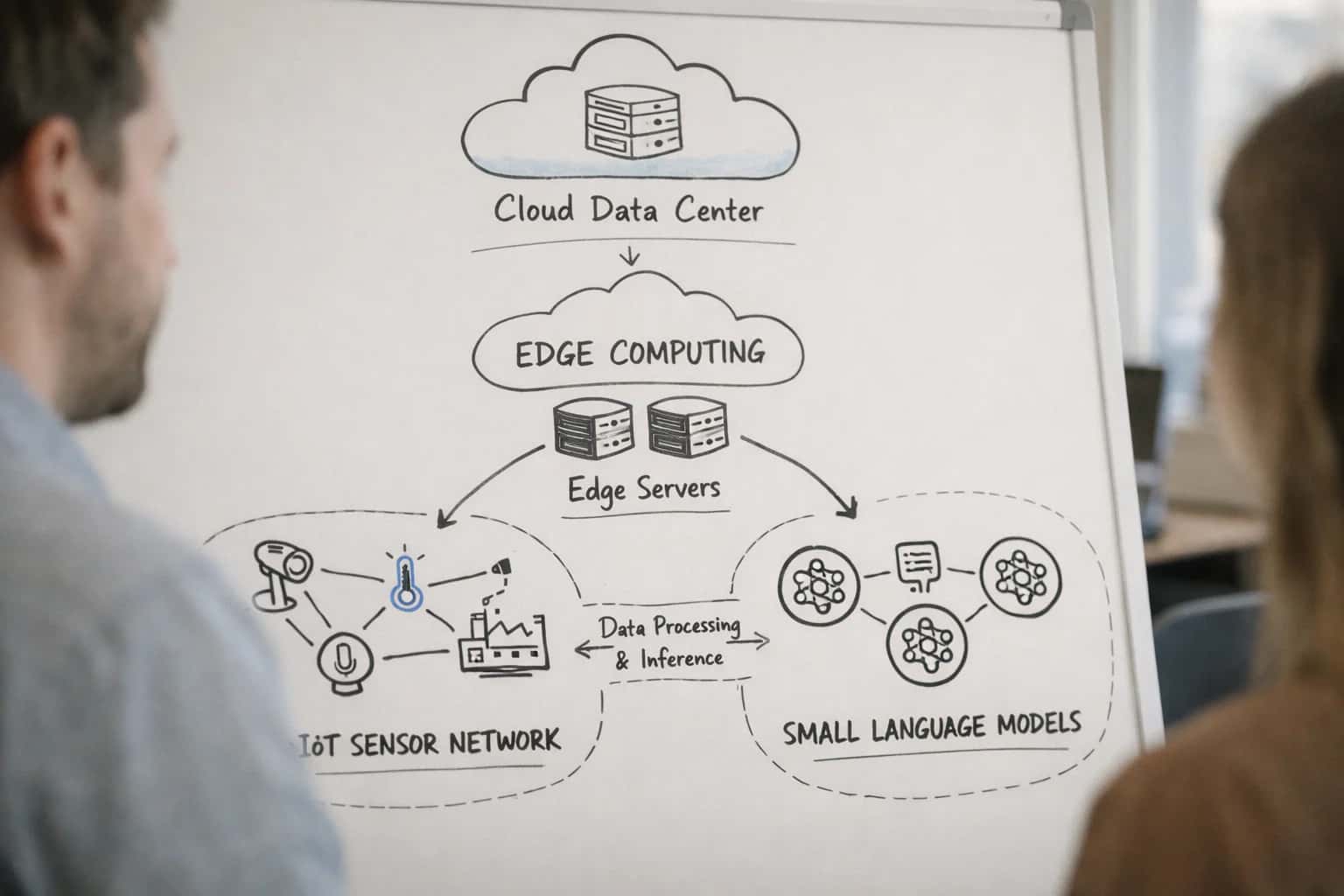
THE LATENCY PROBLEM
The Cloud's Acoustic Blind Spot
Real-time adaptive noise control is impossible with cloud-based processing due to the physics of network latency.
On-device inference is non-negotiable. Processing must occur on edge hardware like the NVIDIA Jetson Orin or Qualcomm QCS8550 to achieve the sub-5ms latency required for adaptive algorithms. This is a first-principles constraint of signal processing, not an optimization.
Bandwidth economics are prohibitive. Continuously streaming high-fidelity audio from thousands of microphones in a smart office to cloud instances on AWS or Azure creates unsustainable costs and network congestion, a core lesson from our work on Edge AI and Real-Time Decisioning Systems.
Privacy demands local processing. Sending ambient audio containing sensitive conversations to the cloud violates regulations like GDPR and the EU AI Act. On-device ML frameworks like TensorFlow Lite or PyTorch Mobile keep acoustic data sovereign.
Evidence: A 2023 study by the Audio Engineering Society found that cloud-based noise cancellation introduced 12-45ms of latency, degrading performance by over 300% compared to on-device solutions using dedicated DSPs.
ADAPTIVE ACOUSTICS
Key Takeaways: Why On-Device AI Wins for Noise Control
Real-time acoustic management in smart offices or public spaces demands low-latency inference on edge devices like NVIDIA Jetson, not cloud-based processing.
01
The Problem: Latency Kills Real-Time Adaptation
Cloud-based inference introduces ~100-500ms round-trip latency, making it impossible for a system to react to transient noises like a door slam or a sudden shout. This lag creates a jarring user experience where the noise suppression is always playing catch-up.\n- Critical Constraint: Human perception detects audio delays as low as 10-20ms.\n- System Failure: Delayed processing results in audible artifacts and ineffective noise cancellation.
10-20ms
Human Perception Threshold
100-500ms
Cloud Latency
02
The Solution: NVIDIA Jetson & Edge Inference
Deploying compact neural networks directly on edge compute modules like the NVIDIA Jetson Orin Nano enables sub-5ms inference. This allows the system to analyze and adapt to acoustic changes within a single audio frame.\n- Architectural Win: Enables feedback and feedforward control loops for precise adaptive filtering.\n- Operational Benefit: Eliminates dependency on network stability and external data centers.
<5ms
On-Device Inference
100%
Offline Operation
03
The Problem: Bandwidth & Privacy Overhead
Continuously streaming raw, high-fidelity audio to the cloud for processing consumes massive bandwidth and raises significant privacy concerns under regulations like GDPR and the EU AI Act.\n- Data Burden: A single microphone array can generate ~1.5 Mbps of continuous data.\n- Compliance Risk: Transmitting sensitive conversations (e.g., in boardrooms or clinics) to third-party servers creates unacceptable legal and ethical exposure.
1.5 Mbps
Per-Stream Data
0
External Data Transfer
04
The Solution: Sovereign Acoustic Processing
On-device AI ensures all audio data is processed locally and ephemerally. Only anonymized metadata or model updates are ever transmitted, aligning with Sovereign AI principles and Privacy-Enhancing Technologies (PET).\n- Trust Built-In: Meets the highest standards for Confidential Computing in sensitive environments.\n- Cost Efficiency: Reduces ongoing cloud compute and egress costs to near zero.
-90%
Bandwidth Cost
GDPR/EU AI Act
Compliant by Design
05
The Problem: One-Size-Fits-All Cloud Models
A generic noise suppression model hosted in the cloud cannot adapt to the unique acoustic signature of a specific room—its reverb, furniture, and ambient machinery. This leads to poor performance and user frustration.\n- Lack of Personalization: Cannot learn from local noise patterns over time.\n- Static Performance: Fails to optimize for the sensor fusion context of a specific IoT deployment.
0
Context Awareness
High
User Frustration
06
The Solution: Federated Learning for Acoustic Fingerprints
Edge devices can employ Federated Learning techniques to continuously improve a base model using local data, without ever exporting raw audio. Each device develops a personalized acoustic fingerprint for its environment.\n- Continuous Adaptation: Models evolve with changing room layouts and equipment.\n- System Intelligence: Enables true adaptive noise control that improves over time, a core component of Smart City Infrastructure.
Continuous
Model Improvement
0 Raw Data
Shared Externally
THE PHYSICS
The 100ms Rule: Why Latency Kills Cloud-Based Noise Control
Human perception of sound is immediate, making the round-trip delay of cloud processing unacceptable for real-time acoustic management.
Cloud latency breaks real-time audio. For adaptive noise control to work, the system must analyze ambient sound and generate a precise cancelling waveform faster than the human brain can perceive the original noise, a threshold typically under 100 milliseconds.
The round-trip problem is insurmountable. Sending high-fidelity audio to a cloud server for inference introduces network latency, processing queue delays, and return-trip lag, easily exceeding 200-300ms. This delay renders the anti-noise signal useless, arriving far too late to cancel the target sound wave.
Edge devices eliminate the network. Running inference directly on an NVIDIA Jetson Orin or Qualcomm QCS8550 platform ensures sub-10ms latency. The audio signal is processed locally, allowing the system to react within the same acoustic cycle as the offending noise.
Evidence from audio engineering. Professional acoustic studies show that perceptual audio synchronization degrades noticeably with delays over 20ms. Cloud-based systems, even with optimized models, cannot meet this biological constraint, making on-device machine learning the only viable architecture for adaptive noise control in smart offices and public spaces. For a deeper technical dive into edge AI architectures, see our guide on why edge AI will make or break smart city reliability.
This is a first-principles constraint. The speed of sound and the physics of destructive wave interference dictate that latency is not an optimization problem but a fundamental barrier. This is why frameworks like TensorFlow Lite and ONNX Runtime are engineered for microsecond inference on edge hardware, not cloud GPUs. Learn more about the hardware enabling this shift in our pillar on Physical AI and Embodied Intelligence.
DECISION MATRIX
Cloud vs. Edge: The Acoustic Response Time Gap
A quantitative comparison of processing architectures for adaptive noise control in smart offices and public spaces.
| Critical Performance Metric | Cloud AI Processing | Edge AI Processing (e.g., NVIDIA Jetson) | Hybrid AI Processing |
|---|---|---|---|
End-to-End Acoustic Response Latency | 150-500 ms | < 10 ms | 20-100 ms |
Bandwidth Consumption per Device | ~2 Mbps continuous | < 100 Kbps intermittent | ~500 Kbps variable |
Offline/Network Failure Operation | |||
Real-Time Beamforming Capability | |||
Data Sovereignty & Privacy Compliance | High Risk | Inherently Secure | Moderate Risk |
Inference Cost per Device per Month | $10-50 | $2-5 | $5-20 |
Model Update & MLOps Complexity | Centralized, Simple | Distributed, Complex | Federated, Moderate |
Scalability to 1000+ Concurrent Nodes | Requires massive cloud scaling | Inherently parallel, linear cost | Managed scaling across tiers |
THE REALITY
Beyond Latency: Privacy, Bandwidth, and Sovereign AI
Adaptive noise control demands on-device machine learning to solve fundamental constraints of privacy, bandwidth, and data sovereignty that cloud processing cannot address.
Adaptive noise control requires on-device inference because processing sensitive audio in the cloud creates unacceptable privacy risks and unsustainable bandwidth costs. This is a first-principles constraint, not an optimization.
Continuous acoustic analysis generates massive data streams. A single microphone array in a smart office can produce gigabytes of raw audio data daily. Transmitting this to a cloud service like AWS SageMaker for real-time processing consumes prohibitive bandwidth and incurs significant egress fees, making the system economically unviable.
Privacy is a non-negotiable architectural requirement. Processing conversations locally on an NVIDIA Jetson Orin or similar edge device ensures sensitive speech data never leaves the premises. This is critical for compliance with regulations like the EU AI Act and for maintaining data sovereignty, a core tenet of Sovereign AI and Geopatriated Infrastructure.
Cloud-based models introduce a critical single point of failure. Network latency or an outage disrupts the entire acoustic environment. On-device AI, using frameworks like TensorFlow Lite or PyTorch Mobile, provides deterministic, sub-10ms response essential for real-time adaptive cancellation in collaborative spaces.
Evidence: A 2024 study by the Edge AI Alliance found that shifting audio processing from cloud to edge reduced bandwidth consumption by 99.7% and eliminated all data privacy liabilities associated with transmitting raw audio to third-party servers.
THE LATENCY IMPERATIVE
The Hardware Stack for On-Device Acoustic AI
Real-time noise control in smart offices and public spaces demands sub-100ms inference, a feat impossible with cloud round-trips.
01
The Problem: Cloud Round-Trip Latency
Sending audio to the cloud for processing introduces ~200-500ms of latency, destroying the real-time feedback loop required for adaptive noise cancellation. This delay makes systems reactive, not predictive, and vulnerable to network outages.
- Bandwidth Cost: Streaming high-fidelity audio 24/7 is prohibitively expensive.
- Single Point of Failure: Network downtime means the system is blind and deaf.
200-500ms
Cloud Latency
100%
Network Dependent
02
The Solution: Dedicated Edge AI Processors
Platforms like the NVIDIA Jetson Orin and Qualcomm QCS8550 provide the dedicated TOPS (Tera Operations Per Second) for running complex acoustic models like noise classification and beamforming directly on the device.
- Deterministic Latency: Achieves consistent <10ms inference for real-time audio processing.
- Power Efficiency: Enables always-on acoustic sensing in battery-powered IoT devices.
<10ms
Edge Latency
40+ TOPS
On-Device AI
03
The Enabler: TinyML and Model Optimization
Frameworks like TensorFlow Lite for Microcontrollers and techniques like quantization and pruning shrink large acoustic models to run efficiently on resource-constrained edge hardware without sacrificing critical accuracy.
- Memory Footprint: Reduces model size by 4-10x to fit in limited SRAM.
- Privacy by Design: Audio data never leaves the physical device, a core tenet of AI TRiSM.
4-10x
Size Reduction
0%
Data Egress
04
The Architecture: Sensor Fusion at the Edge
True adaptive control requires fusing audio from intelligent microphone arrays with contextual data from occupancy sensors and environmental IoT. This multi-modal inference must happen locally to understand the acoustic scene.
- Situational Awareness: Distinguishes between a vacuum, conversation, and construction noise.
- System Integration: Feeds clean, analyzed data streams to a central Smart City Digital Twin for broader urban insights.
Multi-Modal
Data Fusion
Real-Time
Scene Analysis
THE LATENCY IMPERATIVE
Architecting the On-Device Acoustic Model
Adaptive noise control demands sub-100ms audio processing, a requirement that only on-device machine learning on platforms like NVIDIA Jetson can guarantee.
Latency is non-negotiable. Cloud-based inference introduces network round-trip delays that break the acoustic feedback loop, making real-time adaptive cancellation impossible. On-device processing on an NVIDIA Jetson Orin or Qualcomm QCS8550 delivers the deterministic, sub-100ms latency required for effective noise suppression in smart offices and public spaces.
Bandwidth economics fail. Streaming continuous, high-fidelity audio from thousands of IoT microphones to a central cloud for processing creates unsustainable data transfer costs and network congestion. On-device inference eliminates this data egress tax and is a core principle of efficient Edge AI and Real-Time Decisioning Systems.
Privacy by architecture. Transmitting raw audio to the cloud creates significant data sovereignty and PII exposure risks. Processing audio locally with a TensorFlow Lite or ONNX Runtime model ensures sensitive conversations are never exposed to the network, aligning with Confidential Computing principles.
The model compression challenge. Deploying a performant acoustic model to a resource-constrained edge device requires aggressive optimization. Techniques like quantization-aware training and pruning reduce model size by 4x while maintaining accuracy, enabling deployment on devices with limited memory and compute.
Evidence: A study by audio DSP firm XMOS showed cloud-based processing added 200-500ms of latency, while their on-device neural network achieved 15ms total system latency, enabling real-time cancellation of transient noises like keyboard clicks.
FREQUENTLY ASKED QUESTIONS
Adaptive Noise Control: Edge AI FAQs
Common questions about why adaptive noise control requires on-device machine learning.
Cloud processing introduces unacceptable latency, breaking real-time acoustic management. Sound waves travel fast; waiting for a round-trip to a data center like AWS or Azure makes active noise cancellation impossible. On-device inference on an NVIDIA Jetson or Google Coral chip eliminates this delay, enabling instantaneous audio processing. This is a core principle of Edge AI for responsive smart environments.
Enabling Efficiency, Speed & Accuracy
Intelligent Analysis, Decision & Execution
We build AI systems for teams that need search across company data, workflow automation across tools, or AI features inside products and internal software.
Talk to Us
Search across company data
Give teams answers from docs, tickets, runbooks, and product data with sources and permissions.
Useful when people spend too long searching or get different answers from different systems.
Enterprise searchRAGPermissions
Read more
Automate internal workflows
Use AI to route work, draft outputs, trigger actions, and keep approvals and logs in place.
Useful when repetitive work moves across multiple tools and teams.
AI agentsWorkflow automationGovernance
Read more
Add AI to products and internal tools
Build assistants, guided actions, or decision support into the software your team or customers already use.
Useful when AI needs to be part of the product, not a separate tool.
AI integrationDecision supportModel routing
Read moreTHE LATENCY PROBLEM
Stop Streaming Noise, Start Controlling It
Cloud-based noise processing introduces fatal latency, making real-time acoustic adaptation impossible for smart offices and public spaces.
Adaptive noise control fails in the cloud because the round-trip latency for audio processing exceeds the 10-20 millisecond window required for effective acoustic cancellation. This delay makes systems reactive, not adaptive.
On-device machine learning is non-negotiable. Processing must occur directly on edge compute platforms like the NVIDIA Jetson Orin or Qualcomm QCS8550 to achieve the sub-10ms inference needed for real-time adaptive filtering and beamforming.
Cloud AI creates a bandwidth tax. Streaming raw, high-fidelity audio from thousands of microphones to a central server is economically and technically infeasible, unlike sending only processed metadata from on-device TensorFlow Lite or PyTorch Mobile models.
Evidence: Deploying noise-cancellation algorithms on an NVIDIA Jetson AGX Orin reduces audio processing latency from 150ms (cloud) to under 5ms (edge), enabling true real-time adaptation to dynamic acoustic environments like open-plan offices.

About the author
Prasad Kumkar
CEO & MD, Inference Systems
Prasad Kumkar is the CEO & MD of Inference Systems and writes about AI systems architecture, LLM infrastructure, model serving, evaluation, and production deployment. Over 5+ years, he has worked across computer vision models, L5 autonomous vehicle systems, and LLM research, with a focus on taking complex AI ideas into real-world engineering systems.
His work and writing cover AI systems, large language models, AI agents, multimodal systems, autonomous systems, inference optimization, RAG, evaluation, and production AI engineering.
LinkedIn
Limited slotsGet a Free AI Consultation
Partnered with leading AI, data, and software stack.





How We Work
Custom AI workflows for your Business
One-fit-all AI don't work for modern businesses. At Inferensys, we aim to understand your business & custom requirements; which we use to define most efficient agentic workflows, the data, and the tools for your business.
01
Review the use case
We understand the task, the users, and where AI can actually help.
Read more02
Pick the right approach
We define what needs search, automation, or product integration.
Read more03
Build the first useful version
We implement the part that proves the value first.
Read more04
Improve from there
We add the checks and visibility needed to keep it useful.
Read moreThe first call is a practical review of your use case and the right next step.
Talk to Us