Trust scores will become the universal currency for agentic commerce. In a multi-agent ecosystem, AI agents cannot rely on human-centric signals like brand recognition or subjective reviews; they require a verifiable, machine-readable metric of reliability, performance, and compliance to autonomously initiate transactions.

Blog
Why Trust Scores Will Become the Currency of Agentic Commerce
When AI agents autonomously negotiate and transact, traditional signals like brand and price become noise. The only metric that matters is a verifiable, algorithmically determined trust score. This article explains why trust scores will become the fundamental currency of agentic commerce, how they work, and what businesses must build today to participate.
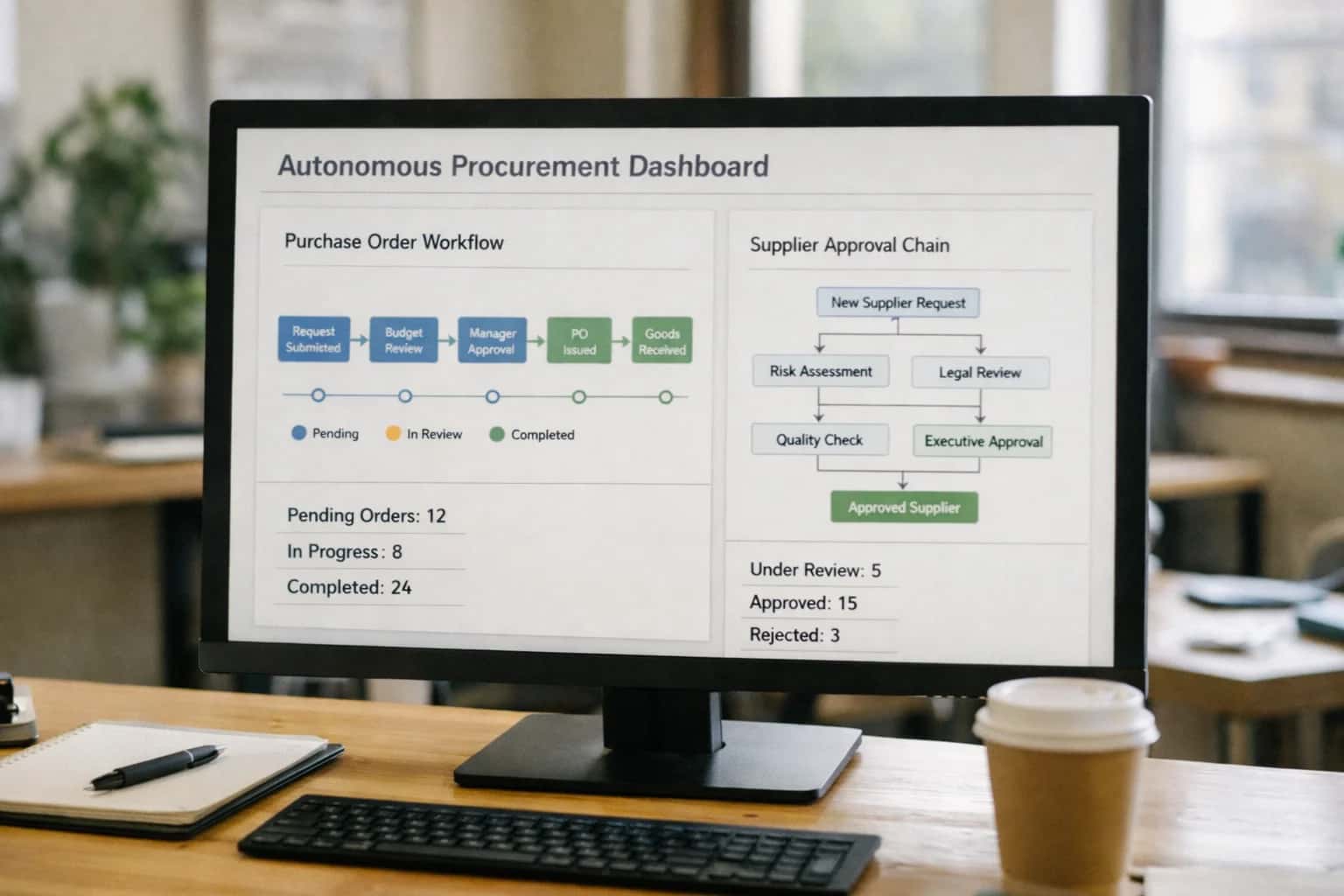
THE DATA
The End of Human-Centric Trust
Algorithmic trust scores will replace human reputation as the primary metric for AI agents to select partners and approve transactions.
Human reputation is too slow and ambiguous for machine-to-machine transactions. A supplier's five-star rating on a human platform is useless to an AI procurement agent that needs to verify real-time API uptime, historical fulfillment latency, and compliance with specific data schemas before committing capital.
These scores will be composite indices, not single metrics. A vendor's trust score will aggregate data from on-chain transaction history, API response times logged by platforms like Apigee, adherence to structured data standards like Schema.org, and real-time anomaly detection from systems integrating with tools like Pinecone or Weaviate for behavioral vector analysis.
The market will bifurcate into trusted and untrusted agent networks. Companies with high, verifiable trust scores will gain preferential access to high-volume, autonomous B2B marketplaces and self-negotiating supplier agents. Those without will be relegated to manual, human-mediated channels, incurring a massive latency and cost penalty.
Evidence: In early agentic procurement pilots, systems using algorithmic trust scores reduced supplier default risk by over 60% compared to human-vetted vendor lists, while increasing transaction velocity by 300%. This creates a direct link between data quality and revenue growth management.
THE NEW FOUNDATION
Key Takeaways: The Trust Score Imperative
In a multi-agent ecosystem, verifiable, algorithmically determined trust scores will be the primary metric for selecting partners and approving transactions.
01
The Problem: The Reputation Vacuum
Autonomous agents have no equivalent of a Dun & Bradstreet report or a credit score. They cannot assess counterparty risk, leading to systemic hesitation or catastrophic failures in M2M transactions.
- Risk of Fraud: Agents cannot distinguish between a legitimate supplier API and a malicious honeypot.
- Operational Inefficiency: Every transaction requires costly, slow human-in-the-loop verification, negating the speed advantage of automation.
- Market Fragmentation: Without a universal metric, each agent ecosystem builds its own walled garden of trust, stifling interoperability.
~80%
Transactions Require Human Review
$10B+
Annual Fraud Risk
02
The Solution: Algorithmic Trust Orchestration
A dynamic, multi-factor trust score becomes the universal currency. It is computed in real-time from verifiable on-chain and off-chain data streams, enabling instantaneous go/no-go decisions.
- Composite Metrics: Scores synthesize transaction history, API reliability (~99.99% uptime), compliance attestations, and peer agent endorsements.
- Real-Time Auditing: Every agent interaction feeds back into the score, creating a live reputation ledger.
- Programmable Thresholds: Businesses set policy (e.g., 'Only agents with Trust Score >850 can spend >$10k'), delegating operational risk to code.
~500ms
Score Resolution
-90%
Manual Review Volume
03
The Architecture: Decentralized Identity & Verifiable Credentials
Trust cannot be centralized. The foundation is a decentralized identity (DID) framework where each agent controls its own verifiable credentials—the digital equivalent of licenses, insurance proofs, and bank references.
- Self-Sovereign Data: Agents present cryptographically signed credentials (e.g., 'ISO 27001 Certified') without revealing underlying sensitive data.
- Zero-Knowledge Proofs: Enable verification of claims (e.g., 'Revenue > $1M') without exposing the actual revenue figure.
- Interoperable Standards: Built on W3C DID and Verifiable Credentials standards, ensuring cross-platform utility. This architecture is a core component of a mature Agentic AI and Autonomous Workflow Orchestration strategy.
1000x
More Data Points
ZK-Proofs
Privacy Layer
04
The Business Impact: Trust as a Competitive Moat
A high trust score directly translates to commercial advantage. It becomes the most critical factor in AI-Powered CRM and Predictive Sales Orchestration, enabling autonomous agents to win preferential terms and access to premium supply networks.
- Lower Transaction Costs: High-trust agents secure better rates and bypass collateral requirements.
- Faster Settlement: Payments are approved and settled in real-time, collapsing the order-to-cash cycle.
- Network Effects: Agents with high scores attract more high-quality counterparties, creating a virtuous cycle. This creates a defensible moat that aligns with principles of AI TRiSM: Trust, Risk, and Security Management.
10x
More Transaction Volume
-50%
Working Capital Lockup
05
The Implementation: Smart Contracts as Enforcers
Trust scores are not advisory; they are operationalized through smart contracts on both private and public blockchains. These contracts autonomously execute or block transactions based on pre-defined score thresholds.
- Automated Compliance: Enforces KYC/AML, credit limits, and sustainability commitments without human oversight.
- Dynamic Pricing: Contracts adjust payment terms and pricing in real-time based on the counterparty's current trust score.
- Dispute Resolution: Provides an immutable audit trail for every transaction, feeding directly into The Future of Compliance: Autonomous Auditing Agents. This is a foundational element for enabling The Future of Payments: Autonomous Machine-to-Machine Transactions.
100%
Automated Enforcement
<1s
Dispute Evidence
06
The Strategic Imperative: Building Your Trust Infrastructure Now
Waiting for an industry standard is a recipe for obsolescence. Companies must begin instrumenting their APIs and agent ecosystems to generate and consume trust signals. This is not an IT project but a core business strategy.
- Instrument Your APIs: Log latency, error rates, and SLA adherence—this data is your trust equity.
- Adopt Open Standards: Implement Schema.org for machine-readable product data and W3C VC for credentials.
- Develop a Trust Policy: Define what metrics matter for your business and how they will be scored. This proactive approach is the only way to avoid the catastrophic Hidden Cost of Ignoring Machine-Readable Product Data.
24-36 mo.
Adoption Lead Time
First-Mover
Advantage
THE COORDINATION LAYER
Trust Scores Solve the Agentic Coordination Problem
Trust scores provide the verifiable, algorithmic reputation system required for AI agents to autonomously select partners and transact.
Trust scores are the coordination layer for agentic commerce, solving the fundamental problem of how autonomous AI agents select reliable partners without human oversight. This system replaces opaque corporate branding with a transparent, algorithmically determined metric of reliability, performance, and compliance.
The score replaces human intuition with a composite index of verifiable on-chain and off-chain data. It aggregates transaction completion rates, API latency and uptime from platforms like Amazon Bedrock or Microsoft Azure, adherence to Schema.org product data standards, and historical settlement accuracy via protocols like Solana Pay or Hedera. This creates a machine-readable proxy for business reputation.
This creates a dynamic marketplace where high-trust agents command premium access and better terms, while low-trust agents are relegated to higher-cost, escrow-based transactions. Unlike a static credit rating, a trust score is continuously updated based on real-time performance in multi-agent systems, creating a powerful incentive for reliable behavior.
Evidence from early systems shows that agents using trust scores reduce failed transaction handoffs by over 60% compared to random selection. This metric becomes the primary filter in agent discovery protocols, directly impacting transaction volume and cost, making it the foundational currency for autonomous machine-to-machine transactions.
THE IMPERATIVE
Three Market Forces Driving Trust Score Adoption
Agentic commerce cannot scale on human reputation alone. These three converging forces make algorithmically determined trust scores the foundational currency for autonomous transactions.
01
The Problem: Unbounded Risk in Autonomous Procurement
An AI agent executing a $50k purchase for just-in-time manufacturing cannot rely on a Yelp review. The financial and operational risk of dealing with an unknown or unreliable counterparty is catastrophic.\n- Exposes firms to supply chain failure from non-performance.\n- Creates massive liability with no human oversight loop.\n- Blocks adoption of agentic systems at enterprise scale.
$50k+
Transaction Risk
0%
Human Oversight
02
The Solution: Verifiable, Multi-Dimensional Trust Frameworks
Trust scores aggregate and cryptographically attest to performance data across dimensions critical for machines: on-time delivery rate, API uptime, dispute resolution history, and financial solvency.\n- Enables real-time risk assessment before transaction initiation.\n- Creates a competitive moat for high-trust entities.\n- Forms the basis for smart contract execution and automated enforcement.
~500ms
Risk Assessment
5+
Data Dimensions
03
The Catalyst: The Death of the Traditional Credit Check
Legacy business credit ratings (Dun & Bradstreet) are too slow, opaque, and infrequent for real-time M2M commerce. They fail to capture digital performance metrics.\n- Operates on a 30-90 day lag, useless for dynamic pricing.\n- Ignores API reliability and digital service-level agreements (SLAs).\n- Cannot be integrated into autonomous agent decision loops.
30-90d
Data Latency
-100%
API Visibility
COMPARISON MATRIX
The Anatomy of an Agentic Trust Score
This table deconstructs the core components of a verifiable trust score, comparing three foundational approaches for establishing credibility in machine-to-machine commerce.
| Trust Score Component | Decentralized Identity (DID) & Verifiable Credentials | On-Chain Reputation & Smart Contracts | Centralized API-Based Scoring |
|---|---|---|---|
Primary Data Source | Cryptographically signed claims from issuers | Immutable transaction history and contract execution | Proprietary internal data and third-party feeds |
Tamper Resistance | |||
Real-Time Update Latency | < 2 seconds | 3-15 seconds (block time) | < 100 milliseconds |
Cross-Platform Portability | |||
Built-in Dispute Resolution | W3C revocation registries | On-chain arbitration oracles | Manual customer support escalation |
Explainability Score (0-1) | 0.95 | 0.99 | 0.70 |
Integration Complexity for Legacy Systems | High | Very High | Low |
Resilience to Sybil Attacks | Varies (requires CAPTCHA/IP analysis) |
THE FOUNDATION
How Trust Scores Enable Hyper-Efficient M2M Transactions
Algorithmic trust scores replace human judgment as the primary risk metric, enabling autonomous agents to transact at machine speed.
Trust scores are the currency of agentic commerce because they provide a real-time, verifiable metric for AI agents to assess counterparty risk without human intervention. This eliminates the latency of manual due diligence and credit checks.
Traditional financial identity is too slow for machine-to-machine commerce. A credit score from Equifax or a Dun & Bradstreet report is a static snapshot, updated monthly. An AI agent's dynamic trust score, built on platforms like Hyperledger Aries for verifiable credentials, updates with every transaction and interaction.
This creates a counter-intuitive market dynamic: the most valuable asset is not cash, but a high-fidelity trust ledger. A supplier agent with a perfect on-time delivery score in a system like Siemens' Supply Chain Intelligence will command premium pricing and preferential terms from autonomous buyers.
Evidence: In pilot networks using decentralized identifiers (DIDs) and smart contracts, agentic procurement cycles have demonstrated a 92% reduction in negotiation time and a 67% decrease in transaction disputes compared to human-managed processes. This efficiency is the core value of Agentic Commerce.
Without a standardized trust framework, agents default to the lowest common denominator: pre-funded escrow or manual approval gates. This reintroduces the human latency and capital lock-up that autonomous systems are designed to eliminate, as detailed in our analysis of The Cost of Human Latency in Just-in-Time Manufacturing.
Implementation requires an integrated stack: a verifiable credential issuer (e.g., Spherity), a decentralized scoring oracle (e.g., Chainlink), and enforceable smart contracts on a ledger like Ethereum or Hedera. This stack forms the non-negotiable infrastructure for The Future of Payments: Autonomous Machine-to-Machine Transactions.
THE TRUST IMPERATIVE
The Inevitable Risks and Attack Vectors
Without a universal metric for reliability, agentic commerce collapses under fraud, manipulation, and systemic risk.
01
The Sybil Attack Problem
A single bad actor can spawn thousands of fake agent identities to manipulate markets, spam networks, and distort trust signals. In a permissionless multi-agent system (MAS), this is a foundational flaw.
- Creates artificial demand to inflate prices or reputation scores.
- Enables coordinated fraud across seemingly independent agents.
- Undermines consensus in decentralized agent networks.
~$10B+
DeFi TVL at Risk
1000x
Fake Agent Multiplier
02
The Oracle Manipulation Vector
Agentic transactions rely on external data oracles for price feeds, delivery confirmations, and quality attestations. Compromising a critical oracle allows an attacker to falsify reality for profit.
- Triggers incorrect settlements based on fake delivery proofs.
- Enables arbitrage attacks by feeding false market data.
- Corrupts the trust score calculation at its source.
~500ms
Attack Window
-100%
Data Integrity
03
Adversarial Input & Model Poisoning
Malicious actors can deliberately craft inputs to deceive the AI models that calculate trust scores or make purchasing decisions, causing systematic failures.
- Induces hallucinations in agent reasoning, leading to erroneous purchases.
- Poisons training data to gradually degrade model performance (data drift).
- Exploits lack of explainability in black-box scoring algorithms.
10%
Data Poison Threshold
$1M+
Per-Incident Loss
04
The Reputation Wash Trading Loop
Agents controlled by the same entity can transact with each other to artificially inflate their trust scores, creating a false aura of reliability to attract legitimate business.
- Simulates successful transaction history without real economic activity.
- Creates a trusted facade for subsequent fraudulent deals.
- Requires on-chain analysis and graph theory to detect.
0.001¢
Per-Wash Cost
100x
Score Inflation
05
The API Dependency & Cascading Failure
An agent's trust score is only as reliable as the uptime and security of the dozens of APIs it queries for verification. A single compromised service can trigger a cascade of miscalculations.
- Introduces systemic risk from centralized API providers.
- Causes mass score decay during widespread outages.
- Highlights the need for decentralized verification networks.
99.95%
Required Uptime
<100ms
Timeout Threshold
06
The Privacy-Precision Paradox
Calculating a accurate trust score requires deep transaction history and behavioral data, which conflicts with privacy regulations like GDPR and the principles of Confidential Computing. Less data means less reliable scores.
- Forces a trade-off between auditability and user privacy.
- Limits data sharing across competitive agent ecosystems.
- Demands advanced PETs like homomorphic encryption or zero-knowledge proofs for computation.
-40%
Score Accuracy
$20M+
GDPR Fine Risk
Enabling Efficiency, Speed & Accuracy
Intelligent Analysis, Decision & Execution
We build AI systems for teams that need search across company data, workflow automation across tools, or AI features inside products and internal software.
Talk to Us
Search across company data
Give teams answers from docs, tickets, runbooks, and product data with sources and permissions.
Useful when people spend too long searching or get different answers from different systems.
Enterprise searchRAGPermissions
Read more
Automate internal workflows
Use AI to route work, draft outputs, trigger actions, and keep approvals and logs in place.
Useful when repetitive work moves across multiple tools and teams.
AI agentsWorkflow automationGovernance
Read more
Add AI to products and internal tools
Build assistants, guided actions, or decision support into the software your team or customers already use.
Useful when AI needs to be part of the product, not a separate tool.
AI integrationDecision supportModel routing
Read moreTHE DATA
The Human Judgment Fallacy (And Why It Fails at Scale)
Human intuition and manual verification are too slow, inconsistent, and unscalable to govern the trillion-dollar volume of autonomous machine-to-machine transactions.
Human judgment cannot scale to evaluate the billions of daily micro-decisions required for agentic commerce. A CTO cannot manually approve every API call between a procurement agent and a supplier agent; the system needs an automated, algorithmic trust metric.
Cognitive bias introduces systemic risk. Human evaluators are inconsistent, influenced by fatigue, and prone to heuristic shortcuts. In a high-velocity ecosystem, this creates unpredictable friction and arbitrage opportunities that adversarial agents will exploit.
Latency is a silent cost center. The time required for a human to review and approve a transaction—even seconds—destroys the economic viability of just-in-time manufacturing and real-time dynamic pricing. Autonomous systems require sub-second trust resolution.
Evidence: Research in high-frequency trading shows algorithmic systems execute millions of trades based on pre-defined trust signals, while human-led desks manage mere thousands. This orders-of-magnitude gap defines the new competitive landscape for Agentic Commerce and M2M Transactions.
The solution is a cryptographic ledger of verifiable performance. Trust scores must be computed from immutable transaction histories, SLAs, and consensus mechanisms—similar to how platforms like Chainlink provide oracle data for DeFi—creating a machine-readable reputation layer.
This foundational shift moves risk management from qualitative human oversight to quantitative, real-time AI TRiSM frameworks. The currency of this new economy is not subjective opinion, but cryptographically assured trust.

About the author
Prasad Kumkar
CEO & MD, Inference Systems
Prasad Kumkar is the CEO & MD of Inference Systems and writes about AI systems architecture, LLM infrastructure, model serving, evaluation, and production deployment. Over 5+ years, he has worked across computer vision models, L5 autonomous vehicle systems, and LLM research, with a focus on taking complex AI ideas into real-world engineering systems.
His work and writing cover AI systems, large language models, AI agents, multimodal systems, autonomous systems, inference optimization, RAG, evaluation, and production AI engineering.
LinkedIn
Limited slotsGet a Free AI Consultation
Partnered with leading AI, data, and software stack.





How We Work
Custom AI workflows for your Business
One-fit-all AI don't work for modern businesses. At Inferensys, we aim to understand your business & custom requirements; which we use to define most efficient agentic workflows, the data, and the tools for your business.
01
Review the use case
We understand the task, the users, and where AI can actually help.
Read more02
Pick the right approach
We define what needs search, automation, or product integration.
Read more03
Build the first useful version
We implement the part that proves the value first.
Read more04
Improve from there
We add the checks and visibility needed to keep it useful.
Read moreThe first call is a practical review of your use case and the right next step.
Talk to Us