
Automations
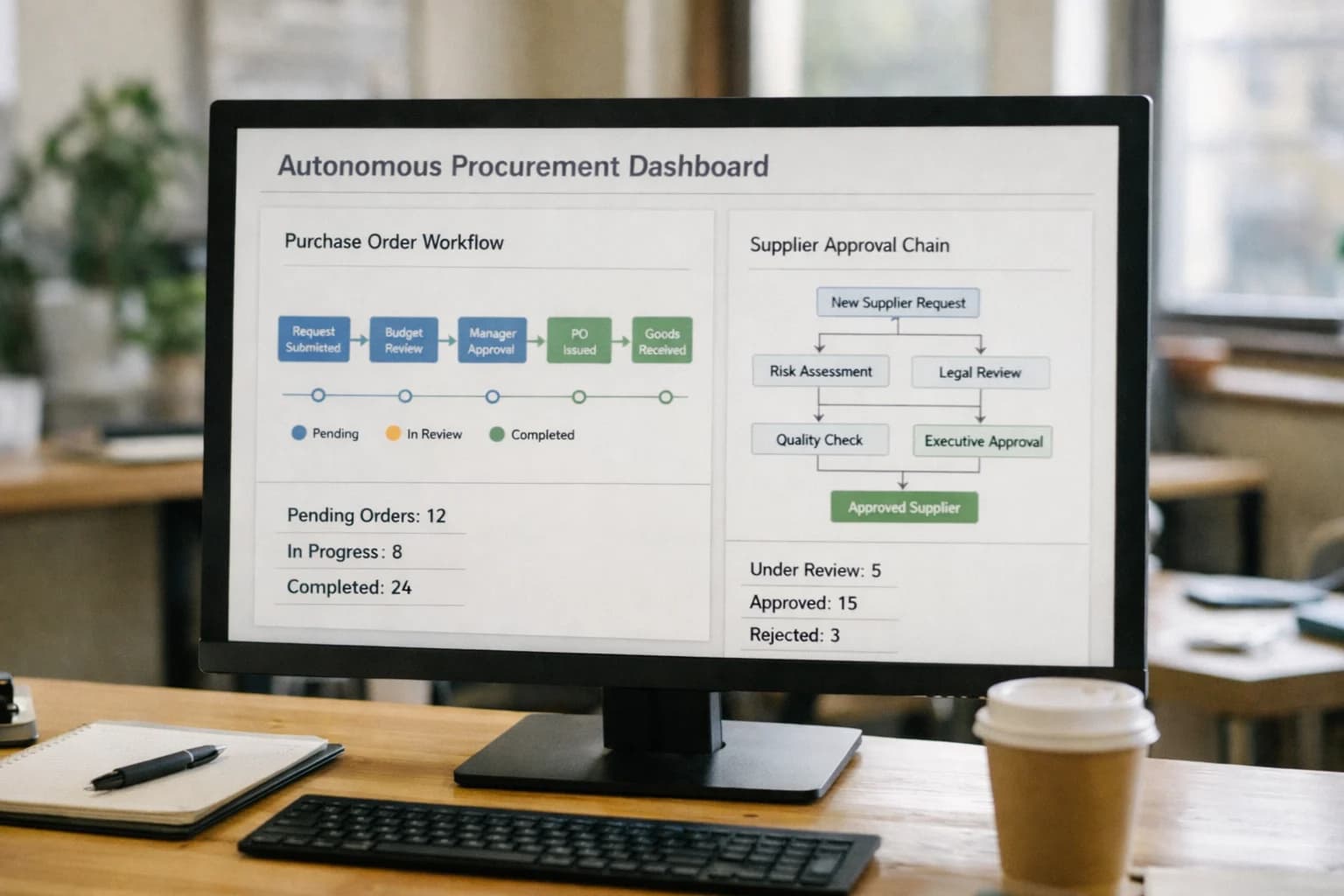
This pillar focuses on enterprise supply workflows that monitor inventory, demand, supplier conditions, and external disruption signals to trigger procurement and routing decisions automatically. Content should position these pages as architecture-level guides for custom supply chain orchestration that improves resilience, reduces working-capital waste, and connects agents to ERP, sourcing, and logistics systems.
This foundational page outlines the architecture for a custom, end-to-end orchestration system that monitors inventory, demand, and supplier signals to trigger procurement and logistics decisions automatically. It details how multi-agent workflows integrate with ERP, sourcing platforms, and logistics APIs to reduce working capital, improve resilience, and create a closed-loop, self-optimizing supply chain for enterprise buyers.
This page details a custom workflow where specialized agents automate the creation, distribution, and analysis of RFPs, RFQs, and RFIs, scoring supplier responses against cost, risk, and capability criteria. The architecture connects to supplier databases and contract systems, reducing sourcing cycle times by weeks and improving negotiation leverage through data-driven comparison.
This page explains a custom automation that continuously scans global supplier databases, validates financial and operational data, and orchestrates the compliance and system integration steps for new vendor onboarding. It reduces manual diligence from weeks to days, lowers risk, and creates a scalable architecture for expanding the supplier base.
This page covers a custom system where AI agents analyze contract drafts, compare clauses against playbooks, suggest redlines, and track obligation compliance post-signature. The workflow integrates with CLM and ERP systems to shorten negotiation cycles and automatically flag non-compliance, reducing legal overhead and contractual risk.
This page details the implementation of an autonomous accounts payable workflow where agents extract data from invoices, match them to POs and goods receipts, and route exceptions for human review. The architecture combines OCR, LLMs, and ERP integrations to achieve straight-through processing, drastically cutting invoice processing costs and cycle times.
This page describes a continuous monitoring workflow where agents ingest financial news, ESG data, geopolitical feeds, and performance metrics to dynamically score and re-qualify suppliers. The system triggers alerts and mitigation plans for high-risk vendors, providing procurement teams with a proactive risk management architecture.
This page outlines a custom solution that uses AI to identify fragmented, off-contract purchases across the organization, categorize them, and recommend consolidation strategies or preferred supplier channels. The workflow integrates with expense and P2P systems to capture savings and improve spend visibility without heavy manual analysis.
This page explains a workflow that automates the collection and verification of supplier sustainability data (e.g., carbon emissions, labor practices) against regulatory and internal ESG frameworks. It creates audit-ready reports and flags non-compliant suppliers, helping procurement teams operationalize ethical sourcing commitments at scale.
This page details a custom inventory workflow where agents analyze demand forecasts, lead time variability, and service-level targets to dynamically calculate and trigger safety stock replenishment orders. The architecture connects forecasting models with inventory management systems to prevent stockouts while minimizing excess inventory carrying costs.
This page covers a real-time workflow where agents ingest point-of-sale data, market trends, and external events (e.g., weather, social sentiment) to adjust statistical demand forecasts continuously. The system automatically updates planning systems, reducing forecast error and improving inventory alignment with actual consumption patterns.
This page describes a custom orchestration layer that evaluates incoming customer orders against real-time inventory positions across multiple nodes, calculates optimal sourcing, and provides accurate delivery promises. The workflow integrates OMS and WMS systems to maximize fill rates, reduce shipping costs, and improve customer experience.
This page outlines an automated workflow where agents analyze inventory turnover, shelf-life, and market data to identify slow-moving or obsolete stock. The system then orchestrates liquidation actions—such as promotions, bundling, or channel shifts—to recover capital and free up warehouse space, integrating with sales and marketing platforms.
This page details a custom system that monitors stock levels and demand signals across a distribution network, automatically creating and executing inter-warehouse transfer orders to optimize service levels and transportation costs. The architecture includes digital twin simulation for what-if analysis and integrates with TMS and WMS.
This page explains a workflow specific to food and pharma where agents track lot-level expiration dates, demand forecasts, and storage conditions to prioritize picking and recommend markdowns or donations. The system reduces waste, improves margin, and ensures compliance with FEFO (First-Expiry-First-Out) principles through integration with warehouse execution systems.
This page describes a custom risk workflow where agents scan news, regulatory publications, and trade data for geopolitical events and tariff changes that impact supply routes and costs. The system models impact on active shipments and procurement plans, triggering alternate sourcing or routing recommendations to mitigate duty and delay exposure.
This page details an automated due diligence workflow where agents continuously pull and analyze supplier financial statements, credit ratings, and news for signs of distress. The system scores risk and triggers procurement team alerts or contract mitigation clauses, providing a proactive architecture for preventing supply disruption from supplier insolvency.
This page covers a custom orchestration system that ingests weather forecasts, seismic data, and flood models to predict disruptions at supplier or logistics hub locations. The workflow automatically assesses impact on open orders and inventory, suggesting pre-emptive rerouting or buffer stock increases to maintain continuity.
This page explains a workflow that uses AI to parse procurement data, supplier disclosures, and external databases to dynamically map sub-tier suppliers and critical dependencies. The system visualizes single points of failure and simulates disruption scenarios, enabling procurement and risk teams to build resilience plans based on actual network topology.
This page details a disruption response workflow where, upon detecting a risk signal (e.g., port closure, factory fire), agents automatically evaluate pre-qualified alternate suppliers or logistics lanes, calculate cost/time trade-offs, and initiate purchase or booking changes. The system reduces response time from days to hours, minimizing operational impact.
This page describes a workflow that automates the screening of supplier entities, shipment details, and end-use certificates against global sanctions and denied-party lists. The system flags violations before orders are placed or shipments are dispatched, integrating with global trade management software to ensure regulatory compliance and avoid fines.
This page outlines a logistics workflow where agents analyze shipment characteristics, lane history, and real-time carrier capacity/rate feeds to select the optimal carrier and tender loads. The system can autonomously execute spot negotiations or book against pre-negotiated contracts, reducing freight costs and improving load acceptance rates.
This page details a custom workflow where agents analyze outgoing orders from multiple facilities, identify consolidation opportunities based on destination and delivery windows, and create optimized multi-stop truckload or LTL shipments. The architecture integrates with OMS and TMS to achieve significant transportation savings through improved cube and weight utilization.
This page explains an automation that matches carrier invoices against rate contracts and shipment tenders, validates accessorial charges, and processes payments for approved invoices. The workflow flags discrepancies for review, integrating with ERP and banking systems to eliminate manual auditing, reduce errors, and capture early payment discounts.
This page covers a workflow where agents ingest tracking events from multiple carriers, predict delays using historical lane data, and autonomously manage exceptions by rerouting shipments or notifying customers. The system provides a unified visibility layer and reduces manual tracking labor, improving customer service and reducing detention/demurrage costs.
This page details a workflow that automates the generation of commercial invoices, packing lists, and customs declarations by extracting data from orders and inventory systems. The system validates against destination country rules, submits documents to brokers or authorities, and tracks clearance status, reducing delays and compliance risks in cross-border trade.
This page describes a customer-facing workflow where agents interact with consumers to qualify returns, issue RMAs, and determine disposition (refund, repair, resale). The system orchestrates carrier pickup, updates inventory, and triggers financial reconciliation, reducing returns processing costs and recovering value from returned goods.
This page outlines a manufacturing synchronization workflow where agents receive production schedules from MES/ERP, calculate precise material requirement timings, and orchestrate deliveries from suppliers or onsite warehouses to the line-side. The architecture minimizes line-side inventory and prevents production stoppages through tight integration with supplier portals and yard management systems.
This page details a workflow where agents analyze engineering BOMs against current inventory, supplier lead times, and alternate part databases to validate producibility before work order release. The system flags sourcing risks and suggests substitutions, preventing delays in manufacturing and new product introduction (NPI) cycles.
This page explains a workflow for brands using external manufacturers, where agents translate finished goods demand into raw material orders, production schedules, and quality documentation for each co-packer. The system ensures material availability and production alignment across a decentralized network, reducing coordination overhead and improving order fulfillment reliability.
This page covers a workflow where agents assess the ripple effect of an ECO, identifying all affected WIP, finished goods, and purchased components. The system calculates obsolescence cost, recommends disposition actions (use-as-is, rework, scrap), and updates procurement plans, helping manufacturers manage change efficiently and minimize write-offs.
This page describes a predictive maintenance workflow where agents analyze telemetry from equipment sensors, diagnose impending failures, and automatically generate purchase orders for the required spare parts from pre-approved suppliers. The system ensures part availability before breakdowns occur, integrating CMMS and procurement systems to reduce unplanned downtime.
This page details a retail workflow where agents monitor promotional calendars and real-time demand spikes to dynamically allocate inventory from central stock to specific channels or regions. The system prevents stockouts during high-velocity events and maximizes sell-through, integrating with e-commerce platforms and order management systems.
This page explains a workflow for retailers where agents continuously synchronize product catalogs, pricing, and inventory from drop-ship suppliers. The system automatically routes customer orders to the optimal vendor based on cost and availability, and tracks fulfillment, enabling a scalable extended network without manual vendor management overhead.
This page covers a retail workflow where agents analyze store-level POS data, on-hand inventory, and seasonal profiles to generate automated replenishment orders for each SKU-store combination. The system optimizes case packs and delivery frequencies, reducing out-of-stocks and minimizing store backroom inventory through integration with store systems and DC WMS.
This page details a healthcare-specific workflow where agents manage par levels for high-value, life-critical devices across hospital networks, factoring in surgical schedules and expiration dates. The system automates replenishment from distributors or central warehouses, ensuring availability while complying with strict traceability (UDI) and regulatory requirements.
This page explains a cold chain workflow where agents monitor IoT temperature logs for pharmaceutical shipments, validate conditions against specifications, and automatically quarantine or release lots upon receipt. The system maintains complete audit trails for regulatory compliance and reduces manual quality check labor in distribution centers.
This page describes a food & beverage workflow where agents track lot-level expiry dates and storage locations across the supply chain. The system directs warehouse picking and shipment sequencing to adhere to FEFO principles, integrates with WMS and TMS, and significantly reduces spoilage and waste for perishable products.
This page outlines a workflow for multi-unit food service where agents forecast ingredient demand per restaurant based on sales data and menu changes, then consolidate orders and optimize deliveries from distribution centers. The system reduces food waste, improves kitchen efficiency, and lowers logistics costs through automated, data-driven replenishment.
This page details an automotive workflow where agents receive the vehicle build sequence from the plant and orchestrate the precise, just-in-sequence delivery of components (e.g., seats, dashboards) from nearby sequencing centers. The architecture integrates with OEM and tier-1 supplier systems to support mixed-model production without line-side inventory.
This page explains a workflow for automotive and industrial manufacturers where agents forecast demand for service parts based on product population, failure rates, and seasonal factors. The system optimizes stocking levels across a global network of distribution centers and dealers, improving part availability while reducing global inventory investment.
This page covers a high-tech electronics workflow where agents monitor component supply/demand imbalances, allocate scarce chips to highest-priority products, and identify alternate parts or redesign opportunities. The system helps navigate shortages by providing a dynamic allocation engine that integrates with PLM, ERP, and supplier portals.
This page details a workflow where agents monitor component EOL notices from suppliers, analyze future demand from active products, and calculate optimal last-time buy quantities to avoid production stoppages. The system factors in lead times, cost, and potential redesigns, providing a data-driven recommendation to procurement and engineering teams.
This page describes an aerospace & defense workflow where agents manage the procurement of FAA/EASA-certified parts, ensuring every purchase order includes required documentation (C of C, 8130-3). The system maintains a digital thread for each part from supplier to installation, automating compliance and audit readiness for highly regulated environments.
This page outlines a defense and aerospace workflow where agents segregate inventory by specific aircraft or defense program, preventing commingling. The system automates the kitting of parts for specific work orders based on serialized requirements, ensuring traceability and compliance with contract-specific procurement rules.
This page details a construction workflow where agents analyze project schedules, weather forecasts, and site storage constraints to schedule precise deliveries of bulk materials (e.g., concrete, steel) from suppliers. The system coordinates truck arrivals to minimize crane time and site congestion, reducing project delays and material waste.
This page explains a workflow for engineering and construction firms where agents track procurement against project budgets and schedules. The system automates PO creation for approved requisitions, monitors commitments, and flags cost overruns, providing real-time financial visibility and control for project managers.
How We Work
One-fit-all AI don't work for modern businesses. At Inferensys, we aim to understand your business & custom requirements; which we use to define most efficient agentic workflows, the data, and the tools for your business.
01
We understand the task, the users, and where AI can actually help.
Read more02
We define what needs search, automation, or product integration.
Read more03
We implement the part that proves the value first.
Read more04
We add the checks and visibility needed to keep it useful.
Read moreThe first call is a practical review of your use case and the right next step.
Talk to Us





