
Use Cases
Supply Chain Resilience and Logistics Intelligence
Supply Chain Resilience and Logistics Intelligence
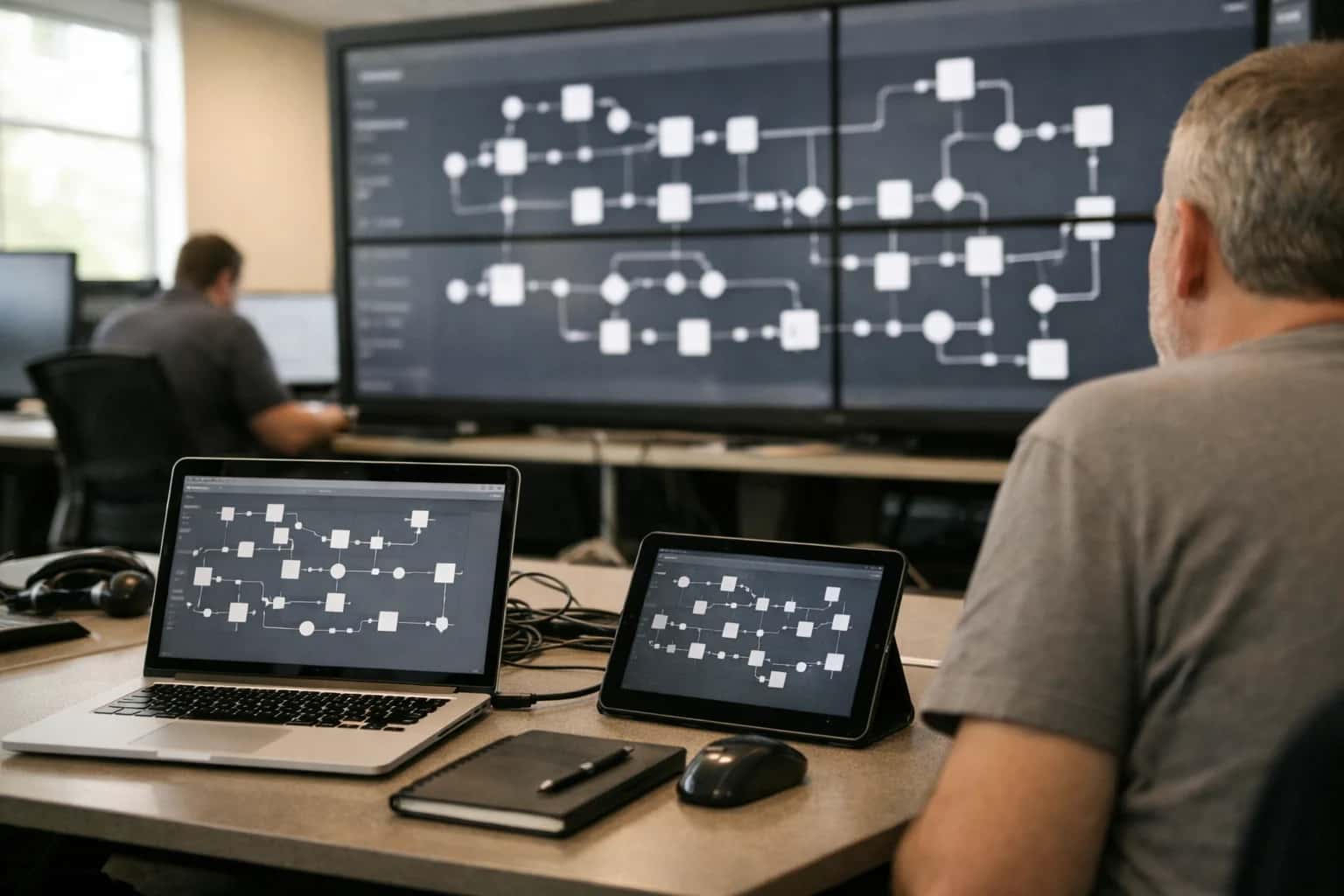
Supply chain orchestration in 2026 requires systems that can sense, decide, and act as a unified organism to navigate global volatility. This pillar focuses on dynamic supply chain orchestration, route optimization, and autonomous dispatch. It encompasses 'Logistics Control Tower' agents that integrate data from across the ecosystem to stabilize operations under pressure. Use cases cluster around warehouse automation, autonomous last-mile delivery, and predictive analytics to manage fuel consumption and shipping routes.
Dynamic Supply Chain Stress Testing
Simulate thousands of disruption scenarios to identify vulnerabilities and build resilient, cost-effective contingency plans before a crisis hits.
Predictive Port Congestion Avoidance
Anticipate global port delays and automatically reroute shipments to maintain schedules and avoid millions in demurrage fees.
Autonomous Last-Mile Delivery Orchestration
Dynamically assign and route a mixed fleet of drivers, drones, and lockers to slash delivery costs and improve customer satisfaction.
AI-Powered Warehouse Slotting Optimization
Continuously reposition inventory to minimize picker travel time, increasing throughput by up to 25% without expanding your footprint.
Predictive Equipment Failure for Fleets
Move from scheduled to condition-based maintenance, preventing unplanned downtime and extending asset life for trucks and heavy machinery.
Real-Time Carrier Performance Intelligence
Continuously score and rank carriers on cost, reliability, and service, enabling automated, data-driven tender decisions.
Cross-Border Compliance Auto-Clearance
Automate the generation and submission of customs documentation, reducing clearance times from days to hours and minimizing compliance risk.
Dynamic Inventory Rebalancing Across Nodes
Automatically shift stock between warehouses and stores to prevent local stockouts and reduce overall safety stock by 15-30%.
AI-Driven Demand-Sensing for Procurement
Fuse real-time sales, social, and weather data to predict short-term demand spikes, optimizing purchase orders and reducing bullwhip effect.
Multi-Modal Shipment Orchestration
Intelligently combine air, ocean, rail, and road legs in real-time to optimize for cost, speed, and carbon footprint on every shipment.
Predictive Fuel Consumption Optimization
Analyze vehicle telemetry, traffic, and weather to recommend driving behaviors and routes that cut fleet fuel costs by 8-12%.
Real-Time Cold Chain Integrity Monitoring
Continuously track temperature and humidity for perishables, triggering automatic alerts and corrective actions to prevent spoilage claims.
Autonomous Freight Audit and Payment
Automatically verify invoices against contracts and rate sheets, flagging discrepancies and processing payments, reducing administrative overhead by 70%.
Predictive Supply Chain Risk Scoring
Continuously monitor geopolitical, weather, and supplier financial data to score and alert on potential disruptions across your entire network.
Partnered with leading AI, data, and software stack.





How We Work
Custom AI workflows for your Business
One-fit-all AI don't work for modern businesses. At Inferensys, we aim to understand your business & custom requirements; which we use to define most efficient agentic workflows, the data, and the tools for your business.
01
Review the use case
We understand the task, the users, and where AI can actually help.
Read more02
Pick the right approach
We define what needs search, automation, or product integration.
Read more03
Build the first useful version
We implement the part that proves the value first.
Read more04
Improve from there
We add the checks and visibility needed to keep it useful.
Read moreThe first call is a practical review of your use case and the right next step.
Talk to Us