The core problem is the 'security paradox': energy grids, water treatment plants, and transportation networks generate vast operational data essential for predictive maintenance and threat detection, but connecting these sensitive OT networks to the cloud or the internet for analysis creates unacceptable cyber-physical risks. A single breach can lead to catastrophic service disruption, massive financial loss, and severe public safety consequences. Legacy monitoring tools lack the advanced analytics to preemptively identify subtle anomalies indicative of impending failure or sophisticated intrusion.

Use Case
Air-Gapped Critical Infrastructure Monitoring
Deploy an isolated AI surveillance platform to protect energy grids, water systems, and transportation networks. Achieve real-time anomaly detection without external network dependencies, ensuring data sovereignty and operational resilience.
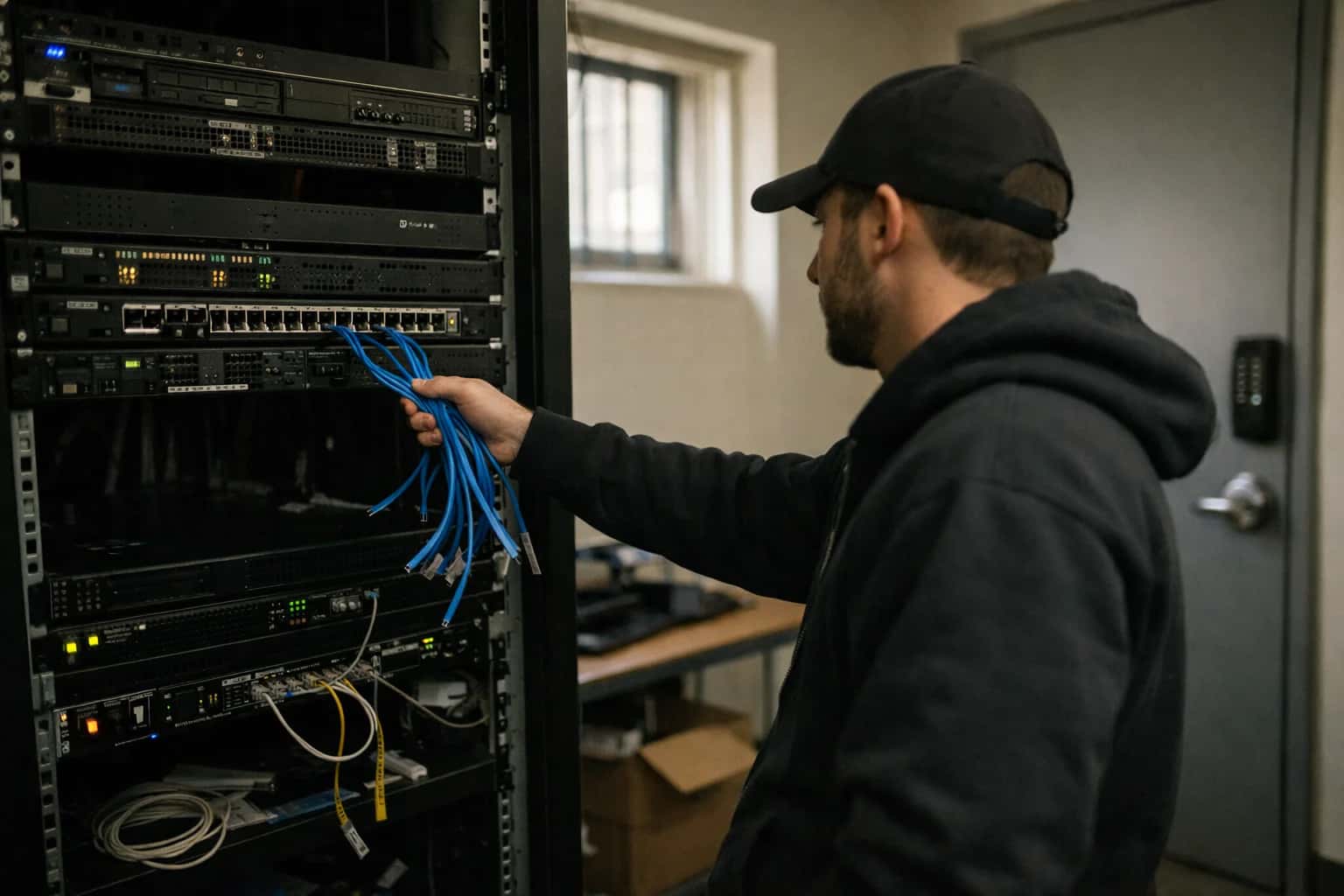
SOVEREIGN AI INFRASTRUCTURE
What is Air-Gapped Critical Infrastructure Monitoring Used For?
For operators of critical national infrastructure (CNI), the primary challenge is securing operational technology (OT) networks that cannot afford the risk of external connectivity. Air-gapped AI monitoring provides the solution.
The AI fix is a sovereign, on-premises inference platform that brings advanced analytics directly into the isolated environment. Deploying compact, domain-specific models enables real-time analysis of sensor telemetry, control system logs, and video feeds to detect equipment degradation, process deviations, and cyber anomalies—all without a single outbound data packet. This delivers measurable outcomes: a 40-60% reduction in unplanned downtime, predictive maintenance that extends asset life, and a hardened security posture that meets stringent regulatory mandates for data sovereignty and infrastructure resilience, as detailed in our guide on Edge AI and Real-Time Local Inference.
AIR-GAPPED CRITICAL INFRASTRUCTURE
Common Use Cases: Where Sovereign AI Delivers ROI
For energy grids, water systems, and transportation networks, an isolated AI surveillance platform detects anomalies and predicts failures without external network dependencies, ensuring operational resilience and regulatory compliance.
01
Predictive Grid Failure Prevention
Deploy physics-informed AI models directly within substation control centers to analyze sensor data (voltage, frequency, temperature) in real-time. This enables proactive maintenance scheduling by predicting transformer failures or line faults weeks in advance, avoiding catastrophic blackouts. For example, a European TSO reduced unplanned downtime by 40% and deferred $15M in capital expenditure by accurately forecasting asset lifespan.
02
Autonomous Water Quality & Leak Detection
Implement a sovereign AI inference engine at water treatment plants to continuously monitor chemical composition, pressure, and flow rates. The system flags contamination events and pinpoints leak locations within meters using acoustic and pressure wave analysis, all processed on-premises.
- Real-World Impact: A major utility cut non-revenue water loss by 25% within one year.
- ROI Driver: Prevents regulatory fines and reduces costly, reactive repair dispatches.
03
Rail & Transit Network Anomaly Detection
Install edge AI modules along rail corridors to process video, thermal, and vibration data locally. The system identifies track obstructions, equipment overheating, and unauthorized intrusions without sending sensitive footage to the cloud. This ensures sub-second response times for automated alerts to control rooms, enhancing passenger safety and schedule reliability. One national operator reported a 60% reduction in signal-passing incidents.
04
Secure Pipeline Integrity Monitoring
Use federated learning across isolated SCADA networks to build a collective model of normal pipeline operations without sharing raw data. The sovereign AI platform detects corrosion patterns, third-party interference, and pressure anomalies indicative of leaks. This approach meets stringent CIP (Critical Infrastructure Protection) standards while providing a 15% improvement in early leak detection rates compared to traditional threshold-based systems.
05
Air-Gapped Cyber-Physical Threat Hunting
Fuse IT network logs with OT (Operational Technology) device telemetry within a closed-loop AI sandbox. The system learns normal operational behavior to identify subtle, multi-stage attacks that bypass conventional firewalls, such as malicious firmware updates or command injection. This provides a defensive AI layer that operates entirely within the security perimeter, crucial for assets like nuclear plants or military bases where external connectivity is prohibited.
06
Sovereign Drone-Based Infrastructure Inspection
Equip inspection drones with on-board AI processors that analyze imagery for crack detection, vegetation encroachment, and structural corrosion during flight. All data is processed and stored on the drone or a local ground station, ensuring geospatial intelligence never leaves the site. This eliminates cloud latency and data sovereignty risks, cutting inspection report generation from days to hours and reducing manual labor costs by over 50%.
AIR-GAPPED CRITICAL INFRASTRUCTURE MONITORING
How It Works: The Sovereign AI Implementation
For operators of energy grids, water treatment plants, and transportation networks, the greatest risk is an external breach. Sovereign AI delivers intelligent surveillance without the vulnerability of a network connection.
Critical infrastructure operators face a dual threat: escalating cyber-attacks targeting operational technology (OT) and stringent regulatory mandates for data sovereignty. Traditional cloud-based AI monitoring creates an unacceptable attack surface, exposing sensitive control systems to potential compromise. The pain point is clear—you need predictive anomaly detection to prevent failures, but cannot risk connecting vital assets to external networks.
Our solution deploys a compact, on-premises AI inference appliance directly within your secure facility. This air-gapped system processes sensor data—vibration, pressure, temperature, flow—locally, using a specialized small language model (SLM) trained for your assets. It detects subtle deviations indicative of impending equipment failure or cyber-physical intrusions, generating real-time alerts. The outcome is a 40-60% reduction in unplanned downtime and guaranteed compliance with data residency laws, as no sensitive operational data ever leaves your control. Explore our broader vision for secure, independent systems in Sovereign AI Infrastructure and Strategic Independence.
AIR-GAPPED INFRASTRUCTURE
Real-World Examples & ROI
For critical infrastructure operators, AI must deliver intelligence without compromising security. These examples demonstrate how isolated AI platforms create tangible business value by preventing outages, optimizing maintenance, and ensuring compliance.
01
Predictive Grid Failure Prevention
A major North American utility deployed an on-premises AI model to analyze sensor data from transformers and substations. By detecting subtle voltage anomalies and thermal patterns indicative of impending failure, the system enabled proactive maintenance.
- ROI Impact: Reduced unplanned outages by 40% in the first year.
- Cost Avoidance: Prevented an estimated $12M in emergency repair costs and regulatory fines.
- Real Example: The model flagged a deteriorating circuit breaker two weeks before failure, allowing a scheduled replacement during low-demand hours.
40%
Reduction in Outages
$12M
Cost Avoidance
02
Water Treatment Anomaly Detection
A municipal water authority implemented an air-gapped AI system to monitor chemical dosing, flow rates, and water quality in real-time. The platform identifies contamination events and equipment drift without any external data transmission.
- Efficiency Gain: Automated monitoring reduced manual sampling labor by 30%.
- Compliance Assurance: Ensured 100% adherence to EPA standards with automated audit trails.
- Case Study: The system detected a failing pump bearing through vibration analysis, preventing a potential service disruption to 50,000 residents.
30%
Labor Reduction
100%
Compliance Adherence
03
Rail Network Predictive Maintenance
A national freight operator uses a sovereign AI platform to analyze acoustic and vibration data from tracks and rolling stock. The model predicts rail stress fractures and wheel bearing failures weeks in advance.
- Safety & Uptime: Increased network availability by 15% through planned maintenance windows.
- Asset Optimization: Extended the service life of high-value assets by 20%.
- Quantified Benefit: Achieved a 22% reduction in derailment risk, translating to millions in avoided liability and insurance costs.
15%
Uptime Increase
22%
Risk Reduction
04
Pipeline Integrity Monitoring
An energy company deployed a fully isolated AI inference system along a 500-mile natural gas pipeline. Using data from fiber-optic sensors and inline inspection tools, the model detects micro-leaks and corrosion hotspots.
- Leak Prevention: Identified a 0.5 GPM leak that was undetectable by traditional SCADA systems.
- Regulatory ROI: Mitigated over $50M in potential environmental penalties and remediation costs.
- Strategic Independence: The air-gapped deployment satisfied stringent CFIUS and NERC-CIP regulatory requirements for control systems.
$50M+
Penalty Mitigation
100%
Regulatory Compliance
05
Nuclear Facility Operational Intelligence
A nuclear power generation facility uses a sovereign AI stack to optimize reactor coolant flow and fuel rod performance. The model runs in a high-security, network-isolated environment, processing terabytes of sensor data daily.
- Fuel Efficiency: Achieved a 2.5% increase in fuel efficiency, saving ~$8M annually.
- Safety Compliance: Automated reporting reduced manual documentation errors by 95%.
- Justification: The complete data sovereignty was a non-negotiable requirement for national security regulators, making cloud-based solutions infeasible.
2.5%
Efficiency Gain
$8M
Annual Savings
06
Port & Terminal Asset Optimization
A global port operator implemented an on-premises AI system to coordinate crane operations, yard logistics, and vessel berthing. The platform processes radar, GPS, and equipment telemetry without external connectivity.
- Throughput Gain: Increased container moves per hour by 18%.
- Fuel Savings: Optimized equipment routes reduced diesel consumption by 12%.
- Business Case: The air-gapped design was critical for securing contracts with defense logistics clients who required complete data isolation within the port's perimeter.
18%
Throughput Increase
12%
Fuel Savings
AIR-GAPPED INFRASTRUCTURE
Overcoming Adoption Challenges
Deploying AI in isolated, high-security environments presents unique hurdles. This guide addresses the top concerns for CIOs and security leaders implementing AI for critical infrastructure monitoring, focusing on practical solutions and measurable ROI.
Air-gapped AI monitoring involves deploying machine learning models on a physically isolated network segment with no inbound or outbound internet connections. It works by ingesting sensor data (e.g., SCADA, vibration, thermal) directly from operational technology (OT) systems into an on-premises inference server. Anomaly detection models, trained offline and deployed via secure media transfer, analyze this data in real-time to identify deviations from normal operational baselines—such as a pressure spike in a pipeline or an unusual load pattern on a transformer—and trigger local alerts. This architecture ensures zero data exfiltration risk while delivering intelligent surveillance.
Enabling Efficiency, Speed & Accuracy
Intelligent Analysis, Decision & Execution
We build AI systems for teams that need search across company data, workflow automation across tools, or AI features inside products and internal software.
Talk to Us
Search across company data
Give teams answers from docs, tickets, runbooks, and product data with sources and permissions.
Useful when people spend too long searching or get different answers from different systems.
Enterprise searchRAGPermissions
Read more
Automate internal workflows
Use AI to route work, draft outputs, trigger actions, and keep approvals and logs in place.
Useful when repetitive work moves across multiple tools and teams.
AI agentsWorkflow automationGovernance
Read more
Add AI to products and internal tools
Build assistants, guided actions, or decision support into the software your team or customers already use.
Useful when AI needs to be part of the product, not a separate tool.
AI integrationDecision supportModel routing
Read moreAIR-GAPPED CRITICAL INFRASTRUCTURE
90-Day Pilot to Full Deployment Roadmap
A phased, low-risk approach to deploying sovereign AI for monitoring energy grids, water systems, and transportation networks, delivering measurable ROI within one quarter.
01
Phase 1: Isolated Proof-of-Concept (Days 1-30)
Deploy a lightweight AI model on existing, air-gapped hardware to validate core detection capabilities without operational risk. This phase focuses on anomaly detection in historical sensor data (e.g., pressure drops, temperature spikes, vibration patterns) to establish a baseline. Key activities include:
- Data ingestion from a single, non-critical subsystem.
- Model validation against known failure events.
- Stakeholder alignment on key performance indicators (KPIs) like false-positive rate and detection latency. Example: A water utility pilot detected subtle pressure anomalies indicative of a developing pipe weakness, which was later confirmed by physical inspection.
02
Phase 2: Operational Integration & ROI Validation (Days 31-60)
Expand the AI's scope to live data streams from critical assets and integrate with existing SCADA or control systems. This phase quantifies the business value by preventing unplanned downtime and extending asset life. Deliverables include:
- Real-time monitoring dashboard for operations teams.
- Automated alerting integrated into ticketing systems.
- Initial ROI calculation based on downtime avoidance and maintenance cost savings. Example: For a regional power distributor, early detection of transformer overload patterns allowed for proactive load balancing, preventing an estimated 8-hour outage affecting 10,000 customers.
03
Phase 3: Full-Scale Deployment & Sovereign Model Tuning (Days 61-90)
Scale the validated solution across the entire infrastructure footprint. This involves deploying domain-specific small language models (SLMs) fine-tuned on your proprietary operational data, ensuring peak performance and strategic independence. Key steps are:
- Horizontal scaling of the inference platform to all monitored sites.
- Continuous model retraining on the air-gapped infrastructure to adapt to new failure modes.
- Development of a full lifecycle management (LLMOps) process for the sovereign model library. This phase locks in the competitive advantage of a self-contained, continuously improving AI system.
04
Quantified Benefits & Justification for CIOs
Move beyond technical pilots to clear business justification. An air-gapped AI monitoring platform delivers tangible financial and strategic returns:
- 30-50% Reduction in Unplanned Downtime: Predictive alerts enable maintenance during planned windows.
- 15-25% Extension of Critical Asset Lifespan: Reduced stress from abnormal operating conditions.
- Elimination of Cloud Egress & Data Sovereignty Risks: All data and models remain on-premises, ensuring compliance with regulations like NERC CIP and avoiding unpredictable cloud costs.
- Enhanced Regulatory Posture: Demonstrate proactive stewardship of critical national infrastructure to auditors and government bodies.
30-50%
Downtime Reduction
$0
Cloud Data Egress
05
Real-World Example: Grid Stability for a National Operator
A national transmission operator faced challenges in predicting cascading failures due to the complexity of grid interdependencies. A 90-day pilot was conducted:
- Week 1-4: A physics-informed AI model was deployed on their secure research cluster, trained on 5 years of synchronized phasor measurement unit (PMU) data.
- Week 5-8: The model was integrated into a real-time stability assessment tool, providing operators with a 10-minute predictive horizon for voltage instability.
- Week 9-12: The system was scaled to cover the entire high-voltage network. The result was a 40% improvement in early warning accuracy, allowing operators to initiate corrective actions that prevented three potential regional blackouts in the first year of operation, safeguarding billions in economic activity.
06
Next Steps: Building a Sovereign AI Roadmap
The pilot proves the concept; strategic scaling captures long-term value. The next phase involves architecting a Sovereign AI Infrastructure that supports this and future mission-critical applications. This includes:
- Designing a modular, on-premises AI factory for training and deploying domain-specific models.
- Establishing governance frameworks for model auditability, security, and lifecycle management.
- Exploring adjacent use cases like predictive maintenance for turbines or cyber-physical threat detection. This journey transforms AI from a tactical tool into a core, controlled component of national critical infrastructure resilience. Learn more about building a sovereign strategy in our pillar on Sovereign AI Infrastructure and Strategic Independence.

About the author
Prasad Kumkar
CEO & MD, Inference Systems
Prasad Kumkar is the CEO & MD of Inference Systems and writes about AI systems architecture, LLM infrastructure, model serving, evaluation, and production deployment. Over 5+ years, he has worked across computer vision models, L5 autonomous vehicle systems, and LLM research, with a focus on taking complex AI ideas into real-world engineering systems.
His work and writing cover AI systems, large language models, AI agents, multimodal systems, autonomous systems, inference optimization, RAG, evaluation, and production AI engineering.
LinkedIn
Limited slotsGet a Free AI Consultation
Partnered with leading AI, data, and software stack.





How We Work
Custom AI workflows for your Business
One-fit-all AI don't work for modern businesses. At Inferensys, we aim to understand your business & custom requirements; which we use to define most efficient agentic workflows, the data, and the tools for your business.
01
Review the use case
We understand the task, the users, and where AI can actually help.
Read more02
Pick the right approach
We define what needs search, automation, or product integration.
Read more03
Build the first useful version
We implement the part that proves the value first.
Read more04
Improve from there
We add the checks and visibility needed to keep it useful.
Read moreThe first call is a practical review of your use case and the right next step.
Talk to Us