The greatest security risks often come from within. Malicious insiders, compromised credentials, or negligent employees can exfiltrate intellectual property, sabotage systems, or leak sensitive data. Traditional security tools, focused on external threats, fail to analyze nuanced user behavior patterns across emails, network logs, and file access. This creates a dangerous blind spot where breaches can occur undetected for months, leading to catastrophic financial and reputational damage.

Use Case
Confidential Insider Threat Detection
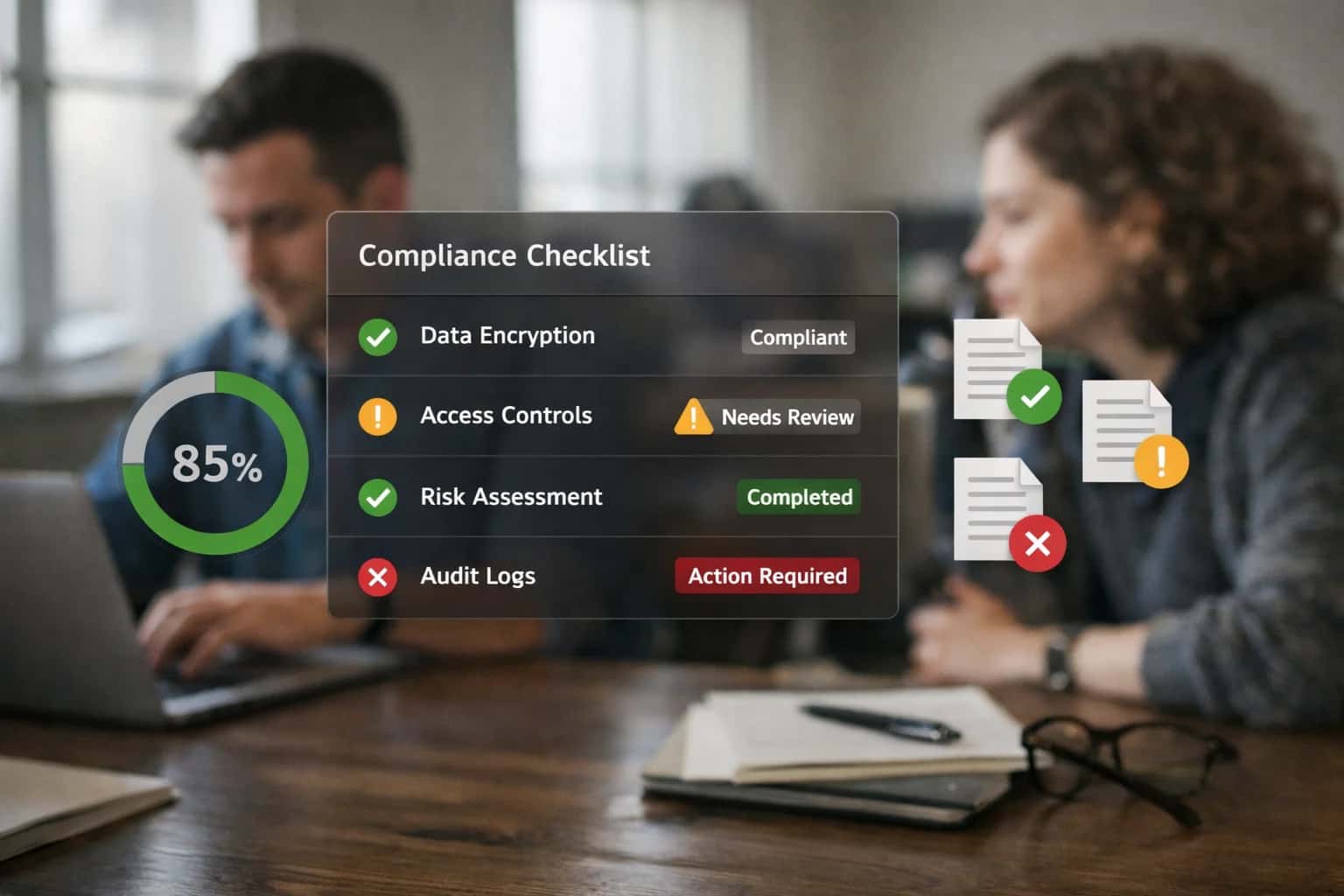
Identify internal security risks by analyzing user behavior and network activity with an AI system that keeps all sensitive audit logs and models within your firewall, ensuring data sovereignty and regulatory compliance.
USE CASES
What is Confidential Insider Threat Detection Used For?
Insider threats are a critical vulnerability, often undetectable by perimeter security. This use case explains how sovereign AI identifies internal risks while keeping all data and analysis on-premises.
A sovereign AI solution for insider threat detection operates entirely within your firewall. It continuously analyzes user behavior and network activity using models trained on your specific environment. The system identifies anomalous patterns—like abnormal data downloads or access at odd hours—and flags potential threats in real-time. Because all audit logs and AI inference remain on-premises, you gain actionable intelligence without exposing sensitive data to third-party clouds, ensuring compliance and protecting your most valuable assets. For related architectures, see our insights on Air-Gapped Financial Intelligence Platforms and On-Premises AML Transaction Monitoring.
CONFIDENTIAL INSIDER THREAT DETECTION
Common Use Cases
Identify and mitigate internal security risks with an AI system that analyzes user behavior and network activity while keeping all sensitive data and models within your sovereign infrastructure.
01
Prevent Data Exfiltration by Departing Employees
Detect anomalous data access and transfer patterns signaling potential intellectual property theft. Our AI analyzes user and entity behavior analytics (UEBA) to establish baselines and flag high-risk activities like mass downloads to unauthorized devices or unusual cloud uploads.
- Real Example: A financial services firm prevented a trader from exfiltrating proprietary algorithms by flagging abnormal database queries and encrypted file transfers in the week before their resignation.
- ROI Impact: Mitigates multi-million dollar IP loss and protects competitive advantage by stopping theft before it occurs.
02
Detect Credential Misuse & Privilege Escalation
Identify compromised or maliciously used accounts by monitoring for lateral movement and access to systems outside an employee's normal purview. The system correlates login times, geolocation, and accessed resources to spot credential sharing or takeover.
- Real Example: A manufacturing company uncovered a contractor using shared admin credentials to access sensitive R&D servers, triggering an immediate revocation and investigation.
- ROI Impact: Reduces breach remediation costs and potential regulatory fines by containing incidents early.
03
Monitor for Insider Trading & Financial Fraud
Analyze communications, database access, and trading activity to identify potential market abuse. The AI cross-references employee access to material non-public information (MNPI) with personal trading patterns or unusual communications with external parties.
- Compliance Benefit: Provides an auditable, automated surveillance layer that strengthens compliance with SEC Rule 10b5-1 and MiFID II, keeping all analysis on-premises to meet data sovereignty requirements for financial institutions.
04
Identify Malicious IT Admin Activity
Apply stringent monitoring to high-privilege IT administrators by tracking configuration changes, security policy modifications, and log tampering. The system uses predictive analytics to distinguish between routine maintenance and actions that weaken security postures.
- Strategic Independence: By deploying this capability on sovereign infrastructure, you eliminate the risk of a cloud provider's admin accessing your threat detection logic or audit logs, closing a critical trust gap.
05
Analyze Workforce Sentiment & Behavioral Shifts
Proactively identify employees at elevated risk of committing insider acts by analyzing digital behavioral markers. This includes changes in communication patterns, after-hours activity spikes, and access requests denied—correlated with HR data like performance reviews.
- Human-Centric ROI: Enables targeted, supportive interventions by security and HR teams, potentially preventing costly incidents and preserving valuable talent. This transforms security from a purely punitive function to a strategic, human-aware operation.
06
Air-Gapped Audit & Forensic Analysis
Maintain a immutable, on-premises repository of all user activity logs and AI-generated risk scores. This enables forensic readiness and rapid incident response without ever sending sensitive audit data to a third-party cloud.
- Regulatory Advantage: Provides a sovereign evidence chain that satisfies the strictest data residency laws (e.g., GDPR, CCPA, sector-specific mandates) and supports legal discovery processes with verifiable, tamper-resistant logs.
CONFIDENTIAL AI
How Sovereign Insider Threat Detection Works
Traditional security tools fail to detect the subtle, non-malicious actions that cause the most damaging data breaches. A sovereign AI approach keeps your most sensitive behavioral analysis entirely in-house.
The most costly security incidents often originate from trusted employees—whether through negligence, credential theft, or deliberate malice. Legacy tools that rely on external cloud analytics create a critical vulnerability: your most sensitive user behavior and network audit logs are exposed to third-party vendors. This creates regulatory compliance nightmares and an unacceptable attack surface for finance, defense, and government sectors where data sovereignty is non-negotiable.
Our solution deploys a small language model (SLM) and behavioral analytics engine directly within your secure, on-premises environment. It establishes a baseline of normal activity for every user and device, flagging subtle anomalies like unusual data access patterns or after-hours logins from atypical locations. By keeping all models, training data, and inference air-gapped, you eliminate external data exposure, ensure compliance with strict data residency laws, and gain a definitive audit trail for investigations. This sovereign approach transforms insider risk from an opaque threat into a managed, quantifiable business risk.
Enabling Efficiency, Speed & Accuracy
Intelligent Analysis, Decision & Execution
We build AI systems for teams that need search across company data, workflow automation across tools, or AI features inside products and internal software.
Talk to Us
Search across company data
Give teams answers from docs, tickets, runbooks, and product data with sources and permissions.
Useful when people spend too long searching or get different answers from different systems.
Enterprise searchRAGPermissions
Read more
Automate internal workflows
Use AI to route work, draft outputs, trigger actions, and keep approvals and logs in place.
Useful when repetitive work moves across multiple tools and teams.
AI agentsWorkflow automationGovernance
Read more
Add AI to products and internal tools
Build assistants, guided actions, or decision support into the software your team or customers already use.
Useful when AI needs to be part of the product, not a separate tool.
AI integrationDecision supportModel routing
Read moreCONFIDENTIAL INSIDER THREAT DETECTION
Implementation Roadmap: From Pilot to Production
A phased approach to deploying a sovereign AI system that identifies internal risks by analyzing behavior and activity, with all sensitive data and models remaining securely within your enterprise firewall.
01
Phase 1: Pilot & Proof of Concept
Deploy a focused pilot to validate detection capabilities and quantify initial ROI. This phase establishes a baseline and builds stakeholder confidence.
- Target a high-risk department (e.g., R&D, Finance) to monitor user and entity behavior analytics (UEBA).
- Define clear KPIs: Measure reduction in manual audit hours, early detection of policy violations, and false positive rates.
- Real Example: A financial institution piloting in their trading division identified 3 anomalous data access patterns within 30 days, preventing potential intellectual property theft.
8-12
Weeks to Value
>40%
Reduction in Manual Reviews
02
Phase 2: Integration & Scale
Integrate the AI engine with existing security tools and data sources to expand coverage and contextual awareness.
- Connect to core systems: Seamlessly ingest logs from HR systems, network proxies, endpoint detection, and data loss prevention (DLP) tools.
- Deploy on sovereign infrastructure: Ensure all model inference and audit trails reside on-premises or in a private cloud, meeting data residency mandates.
- Business Benefit: Creates a unified risk profile for each employee, moving from siloed alerts to a holistic view of insider activity.
03
Phase 3: Production & Autonomous Operation
Transition to a fully operational system with automated alerting, response playbooks, and continuous model retraining.
- Implement automated workflows: Trigger tiered responses—from manager notifications to automated session termination—based on risk scores.
- Establish a feedback loop: Continuously retrain models with new, labeled internal data to adapt to evolving threat patterns without external dependencies.
- ROI Driver: Shifts security teams from constant monitoring to managing exceptions, enabling a 20-30% increase in operational efficiency.
04
Phase 4: Strategic Intelligence & Proactive Defense
Leverage the system for predictive risk forecasting and strategic planning, transforming security from a cost center to a business enabler.
- Generate predictive risk scores: Forecast departments or projects with elevated insider risk based on behavioral trends and external stressors (e.g., layoffs, mergers).
- Inform policy and training: Use anonymized insights to strengthen security protocols and target employee awareness programs.
- Competitive Advantage: Protects crown-jewel IP and trade secrets, directly safeguarding market valuation and enabling secure collaboration in regulated partnerships.
05
Quantifying the Business Case: Hard ROI
Justify the investment with tangible financial metrics that speak directly to the CFO.
- Cost Avoidance: Prevent data breach costs, which average $4.45 million per incident (IBM Cost of a Data Breach Report).
- Operational Efficiency: Reduce manual security investigation time by 50-70%, reallocating FTEs to higher-value strategic initiatives.
- Compliance & Insurance: Demonstrate proactive controls to regulators, potentially reducing audit scope and qualifying for lower cyber insurance premiums.
- Asset Protection: Safeguard proprietary algorithms and customer data that form the core of enterprise valuation.
06
Navigating Key Challenges & Mitigations
Acknowledge and plan for common hurdles to ensure a smooth, successful rollout.
- Challenge: Employee Privacy Concerns
- Mitigation: Implement strict role-based access, anonymize data for analysts, and maintain transparent communication about monitoring policies.
- Challenge: Alert Fatigue & False Positives
- Mitigation: Start with high-fidelity detection rules, use risk-based scoring to prioritize alerts, and continuously refine models.
- Challenge: Integrating with Legacy Systems
- Mitigation: Use modular APIs and consider a phased integration approach, prioritizing systems with the highest risk data flows.

About the author
Prasad Kumkar
CEO & MD, Inference Systems
Prasad Kumkar is the CEO & MD of Inference Systems and writes about AI systems architecture, LLM infrastructure, model serving, evaluation, and production deployment. Over 5+ years, he has worked across computer vision models, L5 autonomous vehicle systems, and LLM research, with a focus on taking complex AI ideas into real-world engineering systems.
His work and writing cover AI systems, large language models, AI agents, multimodal systems, autonomous systems, inference optimization, RAG, evaluation, and production AI engineering.
LinkedIn
Limited slotsGet a Free AI Consultation
Partnered with leading AI, data, and software stack.





How We Work
Custom AI workflows for your Business
One-fit-all AI don't work for modern businesses. At Inferensys, we aim to understand your business & custom requirements; which we use to define most efficient agentic workflows, the data, and the tools for your business.
01
Review the use case
We understand the task, the users, and where AI can actually help.
Read more02
Pick the right approach
We define what needs search, automation, or product integration.
Read more03
Build the first useful version
We implement the part that proves the value first.
Read more04
Improve from there
We add the checks and visibility needed to keep it useful.
Read moreThe first call is a practical review of your use case and the right next step.
Talk to Us