The core pain point is inventory inaccuracy, which costs global retail and manufacturing over $1.8 trillion annually. Manual counts are slow, error-prone (often below 70% accuracy), and pull skilled labor from value-added tasks. This leads to stockouts, lost sales, excess safety stock, and costly expedited shipping. In regulated industries like pharmaceuticals or aerospace, inaccurate records can trigger compliance failures and recalls.

Use Case
Automated Inventory Management with Robotics
Mobile robots and AI vision systems that autonomously scan, count, and reconcile warehouse stock in real-time, eliminating costly manual audits and stockouts.
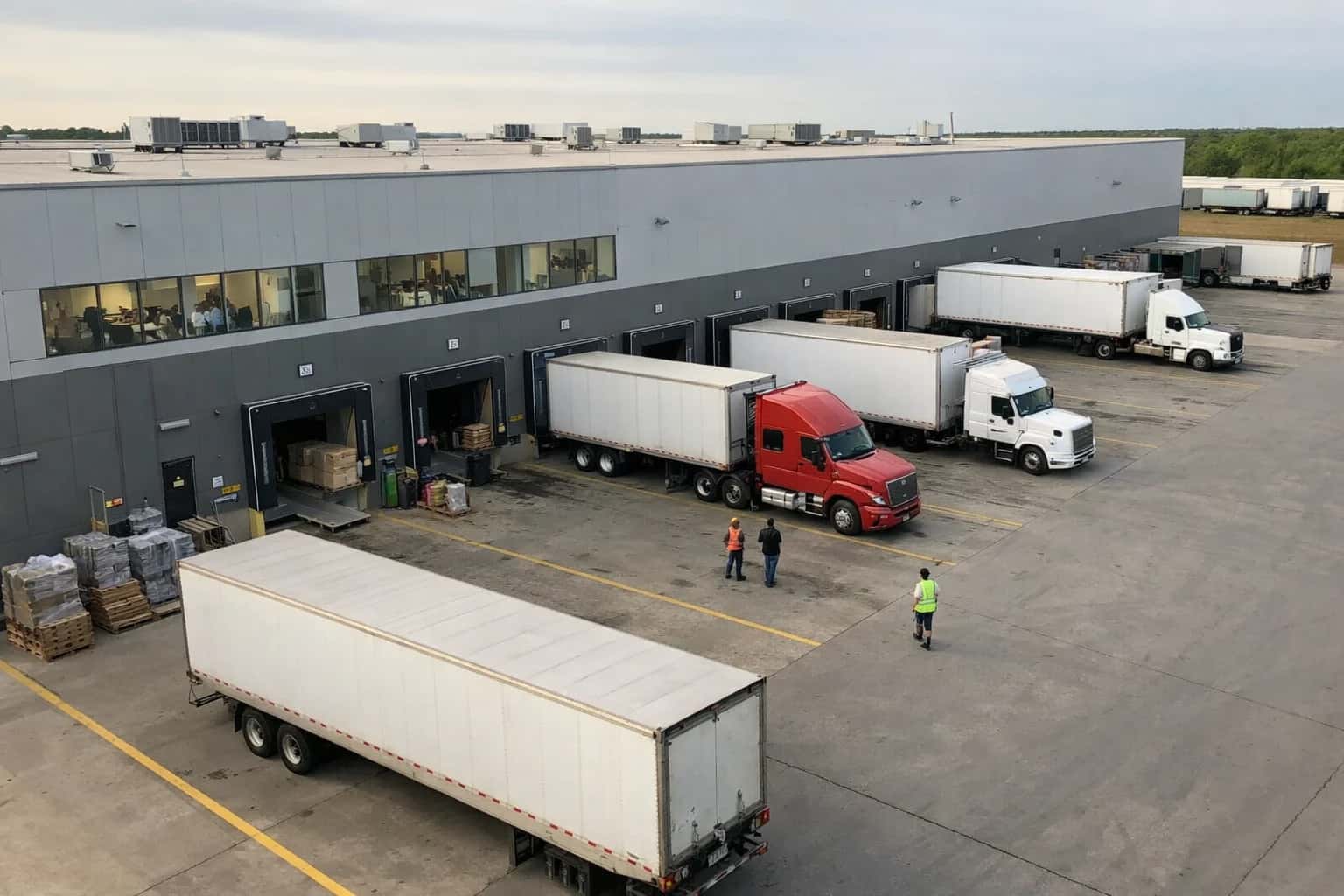
SOLVING THE $1.8T INVENTORY PROBLEM
What is Automated Inventory Management with Robotics Used For?
Manual inventory counts are a massive, costly drain on operational efficiency and accuracy. This section details how robotics and AI deliver a permanent fix.
The AI fix deploys mobile robots and fixed smart cameras that autonomously scan warehouse shelves 24/7. These systems use computer vision to read barcodes and identify items, reconciling physical stock with digital records in real time. The outcome is 99.9% inventory accuracy, a 70% reduction in audit labor, and the elimination of annual physical counts. This directly unlocks working capital and ensures perfect order fulfillment. For a deeper dive into the vision systems enabling this, explore our pillar on Physical Intelligence and Industrial Robotics Vision.
PHYSICAL INTELLIGENCE
Key Automated Inventory Management Use Cases
Move beyond manual counts and static spreadsheets. These real-world applications demonstrate how robotics and vision AI deliver measurable ROI by turning inventory from a cost center into a strategic asset.
01
Perpetual Inventory with 99.9% Accuracy
Replace disruptive, labor-intensive quarterly wall-to-wall counts with a continuous, real-time inventory record. Mobile robots equipped with RFID scanners and computer vision autonomously patrol aisles, scanning thousands of SKUs per hour. This eliminates human error and shrinkage blind spots, providing finance and operations with a single source of truth for audits and financial reporting.
- Real Example: A global electronics distributor reduced annual inventory variance from 3.2% to 0.1%, reclaiming over $2.5M in working capital previously tied up in inaccurate records.
- ROI Driver: Eliminates 100% of manual audit labor costs and reduces capital tied up in safety stock by 15-25%.
02
Automated Cycle Counting & Exception Handling
Shift from scheduled counts to intelligent, exception-driven workflows. The AI system prioritizes counts for high-value, fast-moving, or discrepant items. When a robot or fixed camera detects a stock level mismatch, it automatically triggers a recount, creates a discrepancy ticket, and can even initiate a replenishment task for an autonomous forklift.
- Real Example: A pharmaceutical warehouse uses this system to maintain strict compliance for controlled substances, automatically generating audit trails for every count and reconciliation action.
- ROI Driver: Increases warehouse labor productivity by 30% by focusing human effort only on problem resolution, not routine counting.
03
Dynamic Slotting & Space Optimization
Transform warehouse layout from a static plan into a dynamically optimized asset. AI analyzes real-time data on pick rates, item dimensions, and velocity to recommend optimal storage locations. Mobile robots can then be instructed to autonomously relocate pallets or cases to maximize pick density and minimize travel time for order fulfillment.
- Real Example: An e-commerce 3PL implemented dynamic slotting, increasing picks per hour by 22% and delaying a costly warehouse expansion by 18 months.
- ROI Driver: Increases storage density by up to 20% and reduces order picking travel distance by 30-40%, directly lowering operational costs.
04
Receiving & Put-Away Verification
Automate the first and most critical touchpoint in the supply chain. As goods arrive, vision systems on dock doors or mobile robots scan and identify pallets, cross-referencing against Advanced Shipping Notices (ASNs). The system verifies quantity and condition, then immediately directs an autonomous forklift to the optimal put-away location, updating the WMS in real time.
- Real Example: An automotive parts distributor reduced receiving dock congestion by 50% and eliminated mis-shipment chargebacks from suppliers by catching discrepancies at the door.
- ROI Driver: Cuts receiving labor by 60% and virtually eliminates costly errors from manual data entry and mis-shipments.
05
Proactive Out-of-Stock & Overstock Prevention
Move from reactive to predictive inventory control. The system continuously monitors stock levels against historical demand and seasonal trends. It generates alerts for potential stockouts weeks in advance and identifies slow-moving or obsolete inventory that is taking up valuable space, recommending promotions or transfers.
- Real Example: A retail chain using this system reduced out-of-stock events by 65% and decreased overall inventory carrying costs by 18% through better turnover.
- ROI Driver: Directly protects sales revenue by preventing stockouts and reduces holding costs by optimizing inventory turnover rates.
06
Seamless Integration with Autonomous Fleet Orchestration
Unify inventory intelligence with physical movement. Inventory data from robots and cameras feeds directly into the fleet management system for Autonomous Guided Vehicles (AGVs) and robotic forklifts. This creates a closed-loop where inventory discrepancies automatically generate material movement tasks, and put-away locations are dynamically assigned based on real-time space availability.
- Real Example: A major appliance manufacturer integrated these systems, achieving a 40% increase in overall warehouse throughput without expanding their footprint or headcount.
- ROI Driver: Maximizes ROI on both inventory management and robotics investments by creating a synergistic, self-optimizing material flow system. Explore our related insights on Autonomous Warehouse Fleet Orchestration.
FROM MANUAL AUDITS TO AUTONOMOUS ACCURACY
Implementation: How Robotic Inventory Management Works
Manual inventory counts are a costly, error-prone necessity. Robotic systems transform this reactive chore into a continuous, data-driven process that delivers tangible financial returns.
The core pain point is inventory inaccuracy, which directly impacts revenue through stockouts, overstocking, and lost sales. Manual cycle counts are labor-intensive, disruptive, and prone to human error, leading to discrepancies that cascade into poor demand forecasting and inefficient warehouse space utilization. This operational blind spot creates a significant financial drag, making true supply chain optimization impossible.
The solution deploys mobile robots equipped with vision AI and RFID scanners to autonomously navigate aisles, scanning every item 24/7. This creates a real-time, digital twin of warehouse stock with 99.9% accuracy. The outcome is a direct ROI: a 70-90% reduction in audit labor, a 30% decrease in carrying costs from optimized stock levels, and the elimination of costly reconciliation processes. For a deeper dive into the orchestration layer that makes this possible, explore our insights on Agentic Enterprise Orchestration.
Enabling Efficiency, Speed & Accuracy
Intelligent Analysis, Decision & Execution
We build AI systems for teams that need search across company data, workflow automation across tools, or AI features inside products and internal software.
Talk to Us
Search across company data
Give teams answers from docs, tickets, runbooks, and product data with sources and permissions.
Useful when people spend too long searching or get different answers from different systems.
Enterprise searchRAGPermissions
Read more
Automate internal workflows
Use AI to route work, draft outputs, trigger actions, and keep approvals and logs in place.
Useful when repetitive work moves across multiple tools and teams.
AI agentsWorkflow automationGovernance
Read more
Add AI to products and internal tools
Build assistants, guided actions, or decision support into the software your team or customers already use.
Useful when AI needs to be part of the product, not a separate tool.
AI integrationDecision supportModel routing
Read moreAUTOMATED INVENTORY MANAGEMENT
FAQs for Enterprise Decision Makers
Addressing the critical business, compliance, and implementation questions for deploying robotics and vision AI to achieve 99.9% inventory accuracy and significant labor savings.
The primary ROI drivers are labor cost reduction and inventory accuracy. A typical system can reduce manual audit labor by 70-90%, directly cutting operational expenses. Achieving 99.9% inventory accuracy eliminates costly stockouts, overstocking, and the associated lost sales or write-downs. The payback period often ranges from 12-24 months, factoring in hardware, software, and integration costs. Beyond direct savings, the competitive advantage of reliable fulfillment and optimized warehouse space utilization provides significant strategic value. For a deeper dive into quantifying AI ROI, see our guide on Outcome-Based AI Service Models and ROI Analytics.

About the author
Prasad Kumkar
CEO & MD, Inference Systems
Prasad Kumkar is the CEO & MD of Inference Systems and writes about AI systems architecture, LLM infrastructure, model serving, evaluation, and production deployment. Over 5+ years, he has worked across computer vision models, L5 autonomous vehicle systems, and LLM research, with a focus on taking complex AI ideas into real-world engineering systems.
His work and writing cover AI systems, large language models, AI agents, multimodal systems, autonomous systems, inference optimization, RAG, evaluation, and production AI engineering.
LinkedIn
Limited slotsGet a Free AI Consultation
Partnered with leading AI, data, and software stack.





How We Work
Custom AI workflows for your Business
One-fit-all AI don't work for modern businesses. At Inferensys, we aim to understand your business & custom requirements; which we use to define most efficient agentic workflows, the data, and the tools for your business.
01
Review the use case
We understand the task, the users, and where AI can actually help.
Read more02
Pick the right approach
We define what needs search, automation, or product integration.
Read more03
Build the first useful version
We implement the part that proves the value first.
Read more04
Improve from there
We add the checks and visibility needed to keep it useful.
Read moreThe first call is a practical review of your use case and the right next step.
Talk to Us