The core pain point is human fallibility and escalating compliance costs. Traditional visual inspection is slow, subjective, and prone to fatigue, risking undetected defects like cracks, particulates, or improper seals. Simultaneously, abnormal machine sounds during the filling and stoppering process—indicating misalignment or component wear—often go unnoticed until they cause a production halt or batch contamination. This creates a critical vulnerability in quality assurance, where undetected faults lead to multi-million dollar recalls, regulatory penalties, and severe brand damage.

Use Case
Audio-Enhanced Visual Inspection in Pharma
Use AI to combine visual inspection of vials with acoustic monitoring of filling machines, ensuring sterile compliance, reducing batch loss by 40%, and cutting manual inspection costs by 90%.
AUDIO-VISUAL AI FOR COMPLIANCE
What is Audio-Enhanced Visual Inspection in Pharma Used For?
In sterile pharmaceutical manufacturing, a single defective vial can lead to a catastrophic recall. Audio-Enhanced Visual Inspection is a cross-modal AI solution that unifies sight and sound to guarantee product integrity.
The AI fix deploys a Large Conceptual Model (LCM) that understands the concept of a 'good vial' across sensory modes. It simultaneously analyzes high-resolution camera feeds for visual defects and processes real-time acoustic data from the production line to detect anomalous machine signatures. This unified perception enables 100% inline inspection with sub-millisecond latency, catching defects and predicting mechanical failures before they impact product quality. The measurable outcome is a 30-50% reduction in false rejects, near-zero escape of defective units, and a robust, audit-ready compliance record. This directly protects revenue and patient safety. For related applications, see our insights on Unified Asset Inspection with Audio-Visual AI and Audio-Visual Predictive Maintenance.
AUDIO-ENHANCED VISUAL INSPECTION
Common Use Cases: Solving Specific Pharma Pain Points
Move beyond manual checks with AI that unifies sight and sound to ensure product integrity, regulatory compliance, and operational efficiency on the production line.
01
Zero-Defect Sterile Vial Inspection
Manual visual inspection is slow, subjective, and prone to human error, risking costly batch rejections. AI-powered systems perform high-speed, pixel-level analysis of every vial for critical defects like cracks, particulates, and fill-level inconsistencies. By simultaneously analyzing the acoustic signature of the filling machine, the system can correlate visual anomalies with specific mechanical faults (e.g., a worn pump seal), enabling root-cause analysis.
- Real Example: A biologics manufacturer reduced visual inspection false positives by 85%, accelerating batch release by 40%.
- ROI Driver: Prevents multi-million dollar batch losses and FDA 483 observations.
02
Predictive Maintenance for Filling & Capping Lines
Unexpected equipment downtime halts production, causing revenue loss and supply chain delays. Traditional maintenance is calendar-based, not condition-based. Our solution uses cross-modal AI to monitor equipment health in real time. It analyzes vibration patterns and operational sounds from motors, conveyors, and cappers, fusing this data with live video of mechanical components.
- Identifies subtle wear indicators like bearing degradation or misalignment long before failure.
- Enables just-in-time maintenance scheduling, avoiding unplanned stops.
- ROI Driver: Achieves up to a 25% reduction in unplanned downtime and extends asset life.
03
Secondary Packaging Integrity Assurance
Ensuring tamper-evidence, correct labeling, and child-safety cap functionality is critical for patient safety and brand integrity. AI performs multimodal verification: visually inspecting print quality, barcodes, and package seals while using acoustic analysis to verify the distinct 'click' of a properly engaged child-resistant cap.
- Catches mislabeled packages and compromised seals that human inspectors miss.
- Creates a digital audit trail for every pack, simplifying compliance reporting.
- ROI Driver: Eliminates costly recalls and protects brand reputation from packaging failures.
04
Lyophilization (Freeze-Drying) Process Monitoring
The lyophilization cycle is complex and sensitive; deviations can ruin an entire batch of high-value drugs. Manual monitoring is intermittent. Our AI provides continuous, non-invasive oversight by analyzing thermal camera feeds of vial ice fronts and listening to the distinct sound profiles of the vacuum pump and condenser.
- Detects early signs of cake collapse or melt-back by correlating visual and auditory cues.
- Provides real-time alerts to engineers, allowing for immediate process adjustments.
- ROI Driver: Maximizes yield from expensive active pharmaceutical ingredients (APIs) and reduces cycle times.
05
Cleanroom Contamination & Gowning Compliance
Maintaining sterile conditions is non-negotiable. Human monitoring is inconsistent and can itself be a contamination vector. AI-powered cameras with privacy-preserving analytics visually verify proper gowning procedures (hood, gloves, booties). Concurrently, ambient sound analysis can detect abnormal noises like a dropped tool or torn garment that might indicate a breach.
- Ensures continuous adherence to SOPs without intrusive human supervision.
- ROI Driver: Drastically reduces the risk of microbial contamination events that can shut down a production suite for weeks.
06
Automated Audit Trail & Deviation Documentation
During regulatory audits, proving consistent process control is paramount. Manually compiling evidence from disparate logs and reports is time-intensive. Our AI system acts as a unified sensory log, automatically documenting every inspection event, anomaly, and correlated machine sound with timestamps.
- Generates searchable, timestamped reports that link visual defects to specific equipment states.
- Dramatically reduces the labor and stress of preparing for FDA or EMA inspections.
- ROI Driver: Cuts audit preparation time by over 70% and provides irrefutable evidence of quality control.
AUDIO-ENHANCED VISUAL INSPECTION IN PHARMA
How It Works: The Implementation Roadmap
Sterile manufacturing is a zero-defect environment where a single contaminated vial can lead to catastrophic product recalls and regulatory action. This roadmap details how AI-driven cross-modal inspection transforms this high-stakes process.
The core pain point is the inherent limitation of human or single-sensor inspection. Visual checks can miss microscopic cracks or subtle particulate matter, while standalone audio monitoring lacks contextual correlation. This creates a critical compliance gap where abnormal machine sounds during the filling process—indicative of misalignment or component wear—go unlinked to the specific vials being produced at that moment. The business risk is immense, encompassing multi-million dollar batch losses, regulatory fines, and severe brand damage.
The solution deploys a Large Conceptual Model (LCM) trained to unify visual and auditory concepts. High-resolution cameras capture every vial, while microphones monitor filling equipment. The LCM correlates visual defects with their concurrent acoustic signatures, creating a unified fault profile. This enables real-time rejection of compromised units and generates predictive alerts for machine maintenance. The measurable outcome is a >99.99% inspection accuracy, a 30-50% reduction in false rejects, and the elimination of sterility-related recalls, securing both product quality and supply chain resilience.
Enabling Efficiency, Speed & Accuracy
Intelligent Analysis, Decision & Execution
We build AI systems for teams that need search across company data, workflow automation across tools, or AI features inside products and internal software.
Talk to Us
Search across company data
Give teams answers from docs, tickets, runbooks, and product data with sources and permissions.
Useful when people spend too long searching or get different answers from different systems.
Enterprise searchRAGPermissions
Read more
Automate internal workflows
Use AI to route work, draft outputs, trigger actions, and keep approvals and logs in place.
Useful when repetitive work moves across multiple tools and teams.
AI agentsWorkflow automationGovernance
Read more
Add AI to products and internal tools
Build assistants, guided actions, or decision support into the software your team or customers already use.
Useful when AI needs to be part of the product, not a separate tool.
AI integrationDecision supportModel routing
Read moreAUDIO-ENHANCED VISUAL INSPECTION
Key Implementation Challenges & How to Mitigate Them
Deploying AI for combined audio-visual inspection in pharmaceutical manufacturing presents unique hurdles. This guide addresses the most common enterprise objections with pragmatic, ROI-focused solutions.
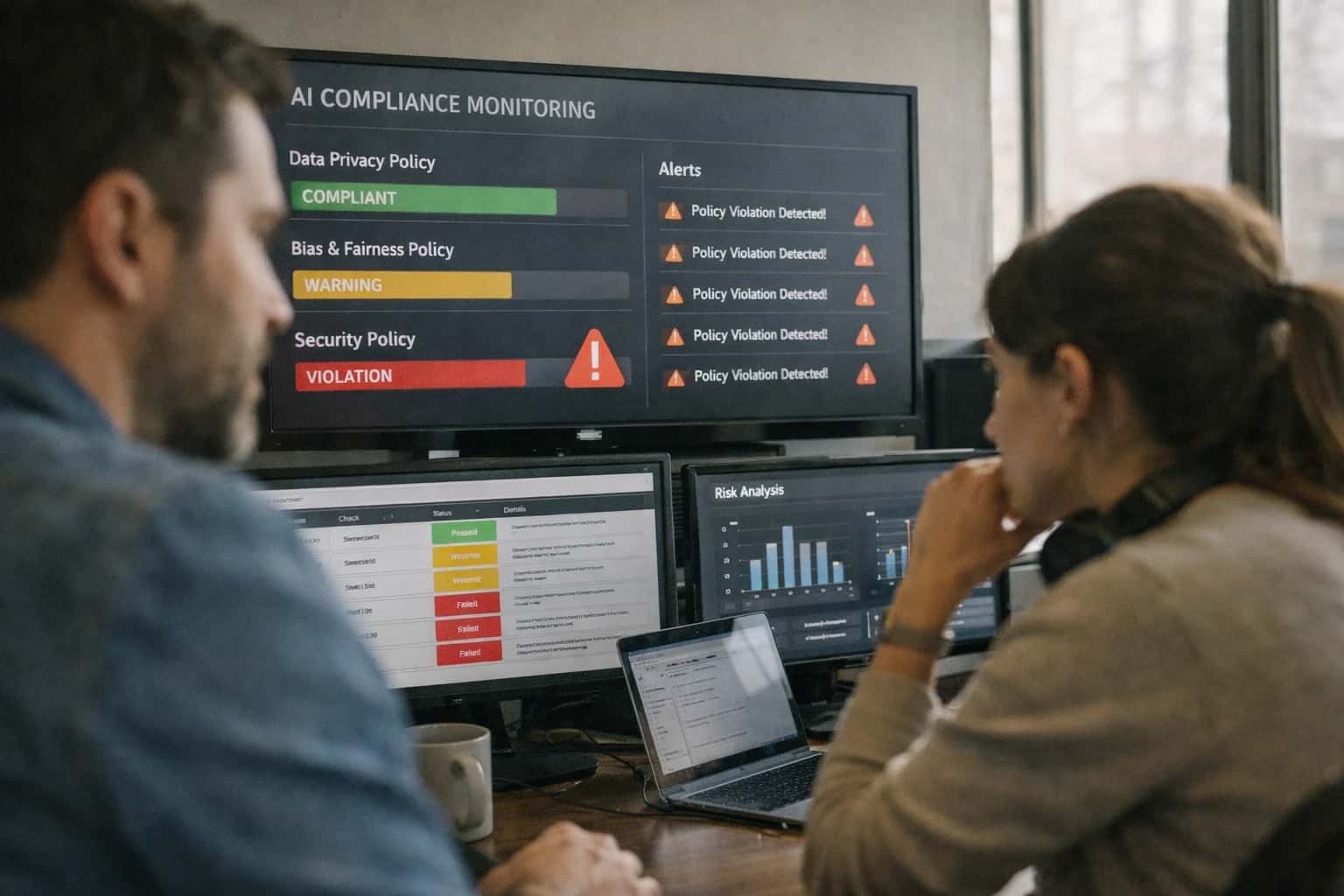
Regulatory compliance is non-negotiable. The key is to treat the AI system as a validated piece of equipment. We implement a risk-based validation approach (following GAMP 5 principles) from day one.
- Audit Trails & Data Integrity: Every AI inference—both visual and acoustic—generates a timestamped, immutable log with the raw sensor data, model version, and decision rationale. This satisfies FDA 21 CFR Part 11 requirements for electronic records.
- Model Change Control: Any retraining or update to the Large Conceptual Model (LCM) triggers a pre-defined change control procedure, ensuring the model's performance and explainability are re-validated before deployment.
- Documentation: We deliver a complete Validation Master Plan (VMP), Installation/Operational/Performance Qualification (IQ/OQ/PQ) protocols, and traceability matrices as part of the deployment.

About the author
Prasad Kumkar
CEO & MD, Inference Systems
Prasad Kumkar is the CEO & MD of Inference Systems and writes about AI systems architecture, LLM infrastructure, model serving, evaluation, and production deployment. Over 5+ years, he has worked across computer vision models, L5 autonomous vehicle systems, and LLM research, with a focus on taking complex AI ideas into real-world engineering systems.
His work and writing cover AI systems, large language models, AI agents, multimodal systems, autonomous systems, inference optimization, RAG, evaluation, and production AI engineering.
LinkedIn
Limited slotsGet a Free AI Consultation
Partnered with leading AI, data, and software stack.





How We Work
Custom AI workflows for your Business
One-fit-all AI don't work for modern businesses. At Inferensys, we aim to understand your business & custom requirements; which we use to define most efficient agentic workflows, the data, and the tools for your business.
01
Review the use case
We understand the task, the users, and where AI can actually help.
Read more02
Pick the right approach
We define what needs search, automation, or product integration.
Read more03
Build the first useful version
We implement the part that proves the value first.
Read more04
Improve from there
We add the checks and visibility needed to keep it useful.
Read moreThe first call is a practical review of your use case and the right next step.
Talk to Us