The monthly and quarterly close is a universal pain point, consuming hundreds of analyst hours on manual data extraction, consolidation, and narrative drafting. This process is slow, prone to human error, and diverts top talent from high-value analysis. The result is delayed insights, compliance risks, and a reactive financial posture that struggles to keep pace with market demands.

Use Case
Automated Financial Report Generation
Cut monthly close and reporting cycles by 80% by automating the extraction, consolidation, and narrative generation for financial statements and regulatory filings.
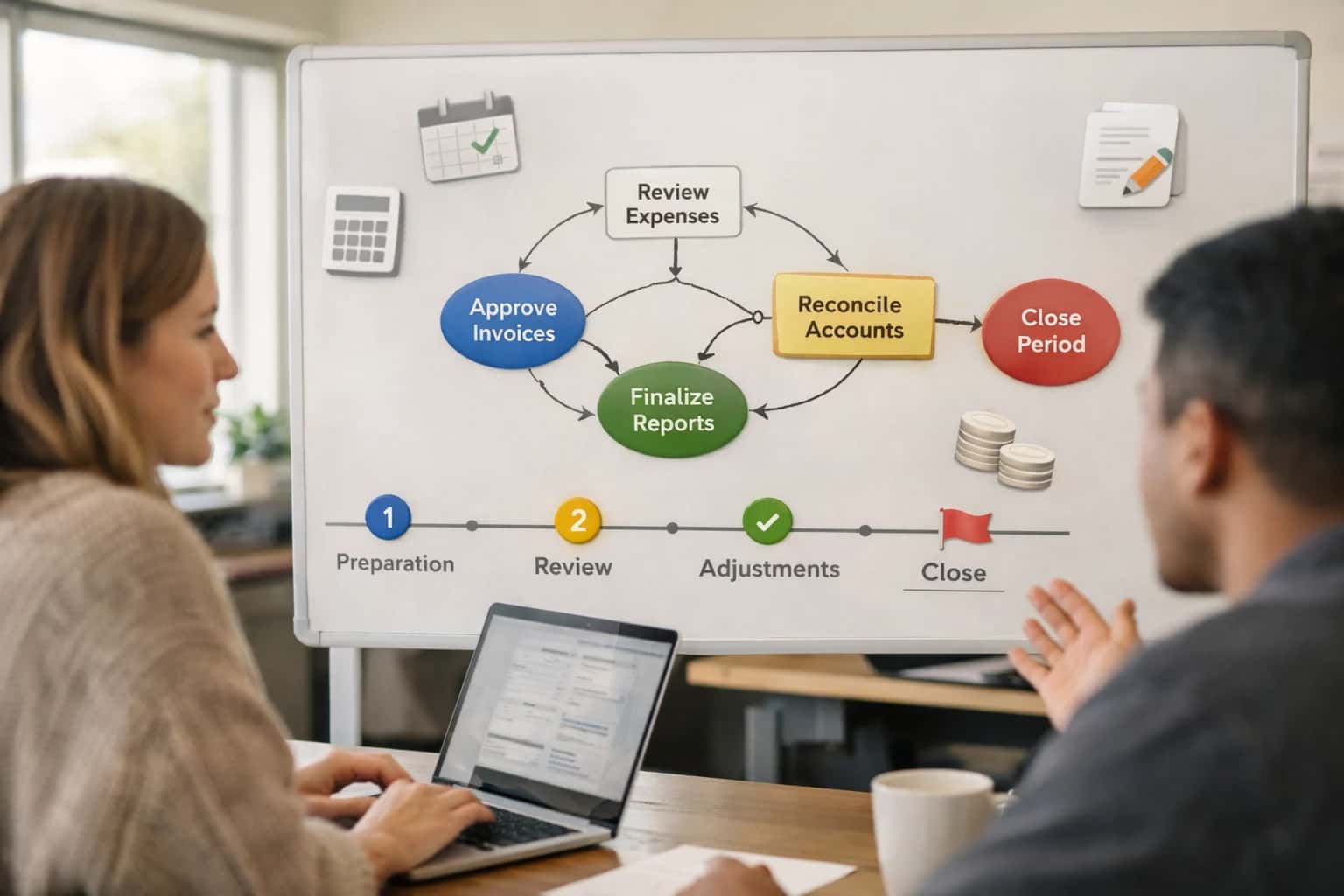
FROM MANUAL BURDEN TO STRATEGIC INSIGHT
What is Automated Financial Report Generation Used For?
Automated financial report generation transforms a costly, error-prone administrative task into a strategic asset for speed, accuracy, and insight.
AI automation fixes this by ingesting data from ERPs, spreadsheets, and databases to produce auditable financial statements and regulatory filings in hours, not weeks. This delivers an 80% reduction in reporting cycles, near-zero error rates, and frees finance teams to focus on strategic forecasting and business partnership. The measurable outcome is faster decision velocity and a direct boost to the bottom line through operational efficiency. For related solutions, explore our work on Predictive Cash Flow Forecasting and AI-Driven Investment Research Assistant.
FINANCIAL REPORTING
Common Use Cases
Move beyond basic automation to intelligent systems that extract, analyze, and narrate financial data, transforming a compliance burden into a strategic advantage.
01
Accelerate the Monthly Close
Eliminate the manual bottleneck of consolidating data from disparate ERPs and spreadsheets. AI agents autonomously extract trial balances, perform intercompany reconciliations, and flag anomalies for review. This compresses the financial close from weeks to days, freeing your team for high-value analysis.
- Real Example: A regional bank reduced its monthly close cycle from 12 to 3 business days.
- Key Benefit: Faster closes mean earlier visibility into financial performance for leadership.
02
Automate Regulatory Filings (10-K/Q)
Generate draft SEC filings with consistent, compliant narrative. The system pulls data directly from audited statements and populates the required sections, including MD&A. It ensures numerical consistency across all tables and footnotes, drastically reducing review time and error risk.
- Quantified ROI: Cut preparation time for quarterly filings by over 70%.
- Business Value: Mitigate regulatory risk and reallocate legal and accounting resources.
03
Dynamic Management & Board Reporting
Transform static PDFs into interactive, insight-driven dashboards. AI doesn't just populate numbers—it analyzes variances, identifies trends, and generates executive summaries in plain language. Reports are tailored to the audience, from detailed operational reviews for VPs to high-level strategic dashboards for the board.
- Outcome: Shift finance from 'number crunchers' to 'business partners'.
- Example: Automatically highlight the 3 most significant P&L drivers each period.
04
Audit Trail & Explainability Engine
Every figure in an AI-generated report is fully traceable. The system maintains a verifiable audit trail from source system to final output, with clear annotations for any adjustments or calculations. This provides the transparency required by internal audit and external regulators, building trust in automated processes.
- Critical for Compliance: Essential for Sarbanes-Oxley (SOX) and other financial controls.
- Business Justification: Reduces audit fees and internal control testing time.
05
Personalized Investor Communications
Automate the creation of earnings release materials, investor presentations, and fact sheets. AI tailors content by pulling the latest financials, creating consistent messaging, and ensuring all public documents are synchronized. This ensures a professional, timely, and accurate external narrative.
- ROI Driver: Enables a small IR team to operate with the efficiency of a large department.
- Competitive Advantage: Faster, more consistent communication builds investor confidence.
06
Cost & Efficiency Analytics
Embed continuous cost intelligence into routine reporting. Beyond generating P&L statements, AI models can segment costs by driver, business unit, and initiative, automatically flagging areas of overspend or efficiency opportunities. This turns the financial report into a live tool for operational improvement.
- Quantifiable Benefit: One manufacturer identified 5% in annual SG&A savings through automated spend analysis.
- Strategic Impact: Directly links financial data to operational decision-making.
FINANCIAL INTELLIGENCE
Automated Financial Report Generation
Manual financial reporting is a costly bottleneck, consuming valuable analyst time and delaying critical business insights. This narrative explores how AI-driven automation transforms this process from a monthly burden into a strategic asset.
The manual process of financial reporting is a significant operational drain. Teams spend weeks each month on data extraction, consolidation, and narrative writing, creating a high-risk environment for human error and compliance gaps. This labor-intensive cycle delays strategic decision-making, ties up expensive talent in repetitive tasks, and creates a constant scramble to meet regulatory deadlines, ultimately costing the business in both efficiency and opportunity.
AI automation provides a concrete fix. By deploying intelligent systems for automated data extraction and narrative generation, companies can compress monthly close cycles by up to 80%. This transforms finance teams from data processors into strategic advisors, enabling real-time business intelligence. The measurable outcome is clear: a direct reduction in labor costs, faster access to insights for competitive advantage, and a robust, audit-ready compliance framework. Explore how this integrates with broader Financial Decision Intelligence or our approach to Intelligent Content Management.
Enabling Efficiency, Speed & Accuracy
Intelligent Analysis, Decision & Execution
We build AI systems for teams that need search across company data, workflow automation across tools, or AI features inside products and internal software.
Talk to Us
Search across company data
Give teams answers from docs, tickets, runbooks, and product data with sources and permissions.
Useful when people spend too long searching or get different answers from different systems.
Enterprise searchRAGPermissions
Read more
Automate internal workflows
Use AI to route work, draft outputs, trigger actions, and keep approvals and logs in place.
Useful when repetitive work moves across multiple tools and teams.
AI agentsWorkflow automationGovernance
Read more
Add AI to products and internal tools
Build assistants, guided actions, or decision support into the software your team or customers already use.
Useful when AI needs to be part of the product, not a separate tool.
AI integrationDecision supportModel routing
Read moreAUTOMATED FINANCIAL REPORTING
Quantifiable Business Benefits
Move from a monthly grind to a strategic advantage. AI-powered automation transforms financial reporting from a cost center into a source of speed, accuracy, and insight.
01
Slash the Monthly Close Cycle
The traditional financial close is a manual, error-prone bottleneck. AI automation streamlines the entire process:
- Automated Data Extraction: Pulls figures from ERPs, spreadsheets, and bank feeds with 99.9% accuracy, eliminating manual entry.
- Intelligent Consolidation: Automatically reconciles inter-company transactions and currency conversions.
- Real Result: A global insurer reduced its monthly close from 12 days to 3, freeing its finance team for value-added analysis.
80%
Faster Close
>99%
Data Accuracy
02
Eliminate Costly Regulatory Errors
Manual report preparation for filings like 10-Qs, Solvency II, or Basel III is high-risk. AI ensures compliance and audit-readiness:
- Rule-Based Validation: Continuously checks data against regulatory frameworks (GAAP, IFRS) as it's consolidated.
- Automated Narrative Generation: Produces consistent, plain-English explanations for variances and results.
- Audit Trail: Every figure is automatically sourced and tagged, cutting audit preparation time by up to 50%.
03
Transform FP&A with Predictive Insights
Static reports tell you what happened. AI-powered reports tell you what will happen.
- Trend Analysis & Forecasting: Models automatically highlight significant variances and project trends forward.
- Executive Summaries: Delivers board-ready summaries with key drivers of performance and risk flags.
- Real Result: A retail bank used AI-generated insights to re-forecast quarterly revenue within 2% accuracy, enabling proactive strategy shifts.
50%
Faster Forecasting
95%
Insight Adoption
04
Achieve Rapid, Quantifiable ROI
Justifying AI investment requires clear financials. Automated reporting delivers a compelling, fast ROI:
- Direct Cost Savings: Reduces FTEs required for manual compilation and review by 60-70%.
- Risk Mitigation: Virtually eliminates fines from filing errors or missed deadlines.
- Strategic Value: Enables the finance function to shift from reporting to advising, directly influencing profitability. A typical ROI payback period is under 12 months.
05
Enable Real-Time Stakeholder Reporting
In today's fast-moving markets, decision-makers can't wait for month-end. AI enables continuous intelligence.
- Self-Service Dashboards: Executives and department heads access real-time P&L and KPI views.
- Automated Board Packs: Dynamically updates presentation materials with the latest data.
- Competitive Advantage: Provides a 'single source of truth' that accelerates strategic decision-making across the organization.
06
Build a Foundation for Advanced AI
Automated reporting is the critical first step in a broader FinTech and High-Fidelity Decision Intelligence strategy. Clean, structured, timely financial data is the fuel for:
- AI-Powered Credit Scoring and Predictive Default Risk Modeling.
- Dynamic Capital Allocation Optimizers and Real-Time Portfolio Risk Analytics.
- By mastering your core financial data, you unlock the potential for transformative AI across lending, trading, and risk management.

About the author
Prasad Kumkar
CEO & MD, Inference Systems
Prasad Kumkar is the CEO & MD of Inference Systems and writes about AI systems architecture, LLM infrastructure, model serving, evaluation, and production deployment. Over 5+ years, he has worked across computer vision models, L5 autonomous vehicle systems, and LLM research, with a focus on taking complex AI ideas into real-world engineering systems.
His work and writing cover AI systems, large language models, AI agents, multimodal systems, autonomous systems, inference optimization, RAG, evaluation, and production AI engineering.
LinkedIn
Limited slotsGet a Free AI Consultation
Partnered with leading AI, data, and software stack.





How We Work
Custom AI workflows for your Business
One-fit-all AI don't work for modern businesses. At Inferensys, we aim to understand your business & custom requirements; which we use to define most efficient agentic workflows, the data, and the tools for your business.
01
Review the use case
We understand the task, the users, and where AI can actually help.
Read more02
Pick the right approach
We define what needs search, automation, or product integration.
Read more03
Build the first useful version
We implement the part that proves the value first.
Read more04
Improve from there
We add the checks and visibility needed to keep it useful.
Read moreThe first call is a practical review of your use case and the right next step.
Talk to Us