The CSRD mandates a granular double materiality assessment, requiring companies to report on both how sustainability issues affect their business and their impact on people and the planet. The pain point is immense: manually interpreting hundreds of pages of regulatory text, identifying relevant data across siloed departments (finance, operations, supply chain), and mapping it to the correct disclosure requirements is a high-cost, high-risk endeavor prone to errors and audit failures. This isn't just a reporting task; it's a complex data integration and legal interpretation challenge that distracts core teams from strategic work.

Use Case
AI-Powered CSRD Compliance Assistant
A specialist AI that interprets complex EU CSRD requirements, identifies data gaps, and guides teams through the double materiality assessment and reporting process, cutting compliance costs by up to 70%.
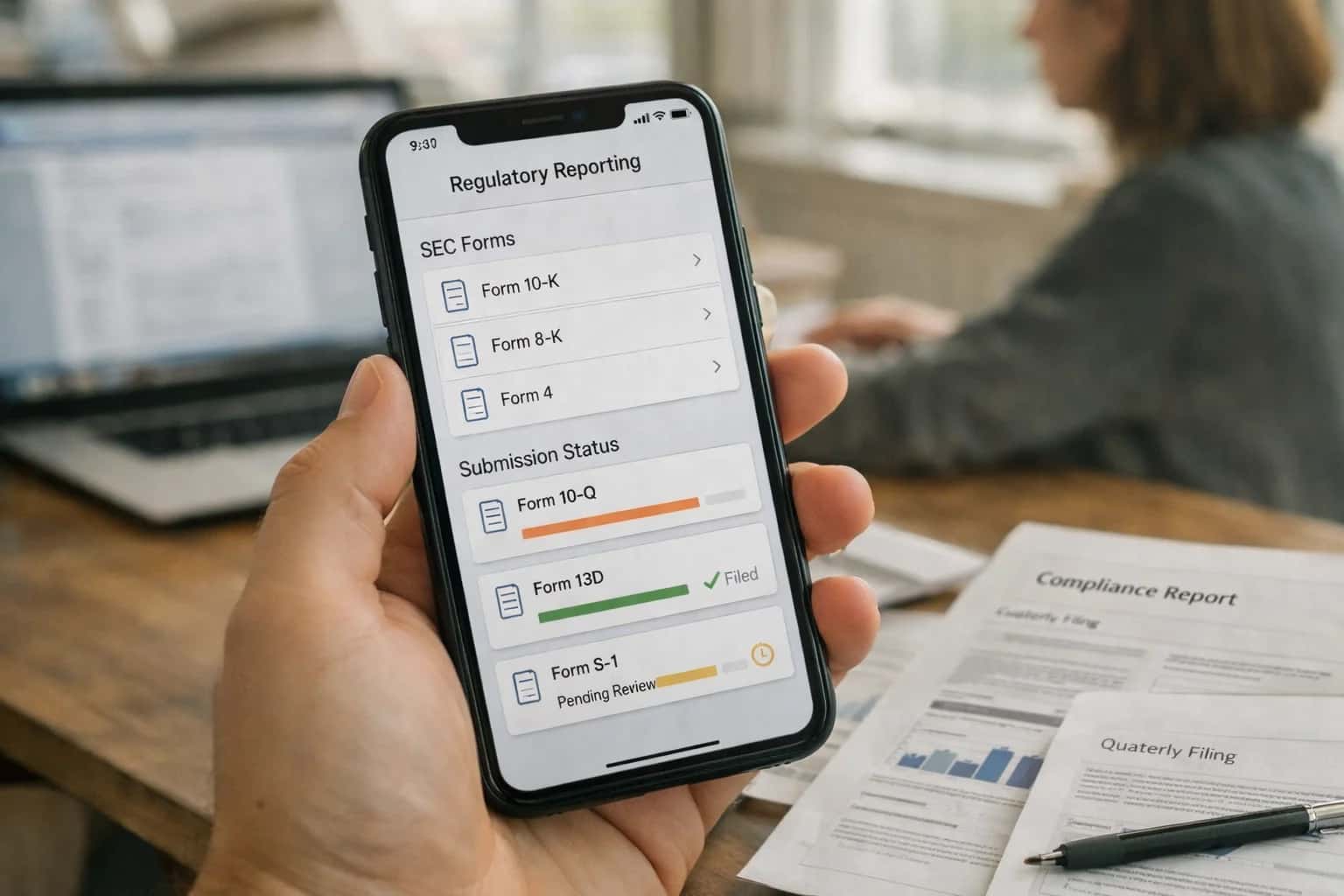
FROM MANUAL BURDEN TO STRATEGIC ASSET
What is an AI-Powered CSRD Compliance Assistant Used For?
The EU's Corporate Sustainability Reporting Directive (CSRD) transforms sustainability from a PR exercise into a rigorous, auditable financial disclosure. An AI-powered CSRD Compliance Assistant is the operational engine that turns this regulatory burden into a manageable, value-generating process.
An AI CSRD Assistant acts as a specialist co-pilot. It ingests the ESRS standards, interprets requirements in your specific context, and identifies data gaps against your internal systems. It guides teams through the materiality process with structured workflows and automates the assembly of audit-ready disclosures. The measurable outcome is a 60-80% reduction in manual compilation time, a defensible audit trail, and the transformation of compliance from a cost center into a source of operational intelligence. This allows leadership to focus on strategy, not spreadsheets, while ensuring robust compliance. For a deeper dive into automating the entire reporting pipeline, see our overview of the Automated ESG Disclosure Engine.
SUSTAINABILITY INTELLIGENCE
Common Use Cases: Where AI Drives Immediate ROI
The EU's Corporate Sustainability Reporting Directive (CSRD) is a complex, high-stakes operational challenge. These use cases demonstrate how a specialized AI assistant turns compliance from a cost center into a source of strategic insight and efficiency.
05
Benchmark & Identify Strategic Opportunities
CSRD data, when analyzed properly, reveals competitive insights. An AI assistant provides strategic ESG intelligence:
- Benchmarks your performance against anonymized industry peers on key metrics.
- Identifies operational inefficiencies (e.g., energy, waste, water) with the highest cost-saving potential.
- Models the financial impact of sustainability initiatives, supporting ROI-based investment cases.
Business Outcome: A logistics company used these insights to prioritize a fleet electrification project, projecting a 15% reduction in fuel costs and improved brand positioning with eco-conscious clients.
06
Centralize Knowledge & Train Teams
CSRD compliance requires cross-functional alignment. An AI assistant serves as an always-available expert guide:
- Answers team questions in plain language about ESRS requirements and procedures.
- Provides consistent, version-controlled guidance across finance, operations, and sustainability departments.
- Reduces reliance on expensive external consultants for routine clarifications.
Efficiency Gain: This creates a single source of truth, drastically reducing miscommunication and rework, and accelerating the onboarding of new team members.
SUSTAINABILITY INTELLIGENCE
AI-Powered CSRD Compliance Assistant
Navigating the EU's Corporate Sustainability Reporting Directive (CSRD) is a complex, high-stakes operational challenge. This roadmap details how a specialist AI assistant transforms this burden into a structured, efficient process.
The CSRD introduces a labyrinth of new requirements, from double materiality assessments to granular data disclosures. Manual compliance is a costly drain, consuming hundreds of analyst hours, creating data silos, and introducing significant risk of error or omission. This operational friction delays strategic action and exposes the organization to regulatory and reputational penalties, turning sustainability from an opportunity into a liability.
An AI-Powered CSRD Assistant acts as a virtual expert, interpreting regulations, mapping them to your data landscape, and guiding teams step-by-step. It automates data gap analysis, drafts disclosure content, and generates audit-ready documentation. The outcome is a 40-60% reduction in manual effort, faster reporting cycles, and a defensible, consistent compliance posture that builds stakeholder trust. For a deeper look at automating the entire reporting workflow, explore our Automated ESG Disclosure Engine.
Enabling Efficiency, Speed & Accuracy
Intelligent Analysis, Decision & Execution
We build AI systems for teams that need search across company data, workflow automation across tools, or AI features inside products and internal software.
Talk to Us
Search across company data
Give teams answers from docs, tickets, runbooks, and product data with sources and permissions.
Useful when people spend too long searching or get different answers from different systems.
Enterprise searchRAGPermissions
Read more
Automate internal workflows
Use AI to route work, draft outputs, trigger actions, and keep approvals and logs in place.
Useful when repetitive work moves across multiple tools and teams.
AI agentsWorkflow automationGovernance
Read more
Add AI to products and internal tools
Build assistants, guided actions, or decision support into the software your team or customers already use.
Useful when AI needs to be part of the product, not a separate tool.
AI integrationDecision supportModel routing
Read moreAI-POWERED CSRD COMPLIANCE ASSISTANT
Addressing Key Adoption Challenges
Navigating the EU's Corporate Sustainability Reporting Directive (CSRD) is a complex, high-stakes operational challenge. This section addresses the most common enterprise objections and implementation hurdles, providing clear, ROI-focused answers on how a specialist AI assistant transforms compliance from a cost center into a strategic advantage.
A CSRD Compliance Assistant is a specialist AI agent trained to interpret the complex requirements of the EU's Corporate Sustainability Reporting Directive. It functions as an expert guide embedded in your workflow. The system works by first ingesting and mapping your existing data against the European Sustainability Reporting Standards (ESRS). It then identifies critical data gaps and inconsistencies. Its core function is to guide teams through the double materiality assessment, using natural language to interview stakeholders and analyze business impacts. Finally, it assists in drafting disclosures and generating audit-ready documentation, ensuring every output aligns with the mandated structure and legal nuance.

About the author
Prasad Kumkar
CEO & MD, Inference Systems
Prasad Kumkar is the CEO & MD of Inference Systems and writes about AI systems architecture, LLM infrastructure, model serving, evaluation, and production deployment. Over 5+ years, he has worked across computer vision models, L5 autonomous vehicle systems, and LLM research, with a focus on taking complex AI ideas into real-world engineering systems.
His work and writing cover AI systems, large language models, AI agents, multimodal systems, autonomous systems, inference optimization, RAG, evaluation, and production AI engineering.
LinkedIn
Limited slotsGet a Free AI Consultation
Partnered with leading AI, data, and software stack.





How We Work
Custom AI workflows for your Business
One-fit-all AI don't work for modern businesses. At Inferensys, we aim to understand your business & custom requirements; which we use to define most efficient agentic workflows, the data, and the tools for your business.
01
Review the use case
We understand the task, the users, and where AI can actually help.
Read more02
Pick the right approach
We define what needs search, automation, or product integration.
Read more03
Build the first useful version
We implement the part that proves the value first.
Read more04
Improve from there
We add the checks and visibility needed to keep it useful.
Read moreThe first call is a practical review of your use case and the right next step.
Talk to Us