Today's pain point is static, lagging data. Enterprises rely on manual, quarterly reports for Scope 1, 2, and 3 emissions, creating a blind spot for operational inefficiencies and supply chain risks. This reactive approach makes it impossible to manage carbon as a cost center or to respond swiftly to investor queries and regulatory demands like the EU CSRD. The result is compliance vulnerability, missed reduction opportunities, and inflated energy costs.

Use Case
Real-Time Carbon Footprint Intelligence
AI-driven systems that continuously monitor and calculate Scope 1, 2, and 3 emissions, providing live dashboards for proactive carbon management, cost reduction, and audit-ready compliance.
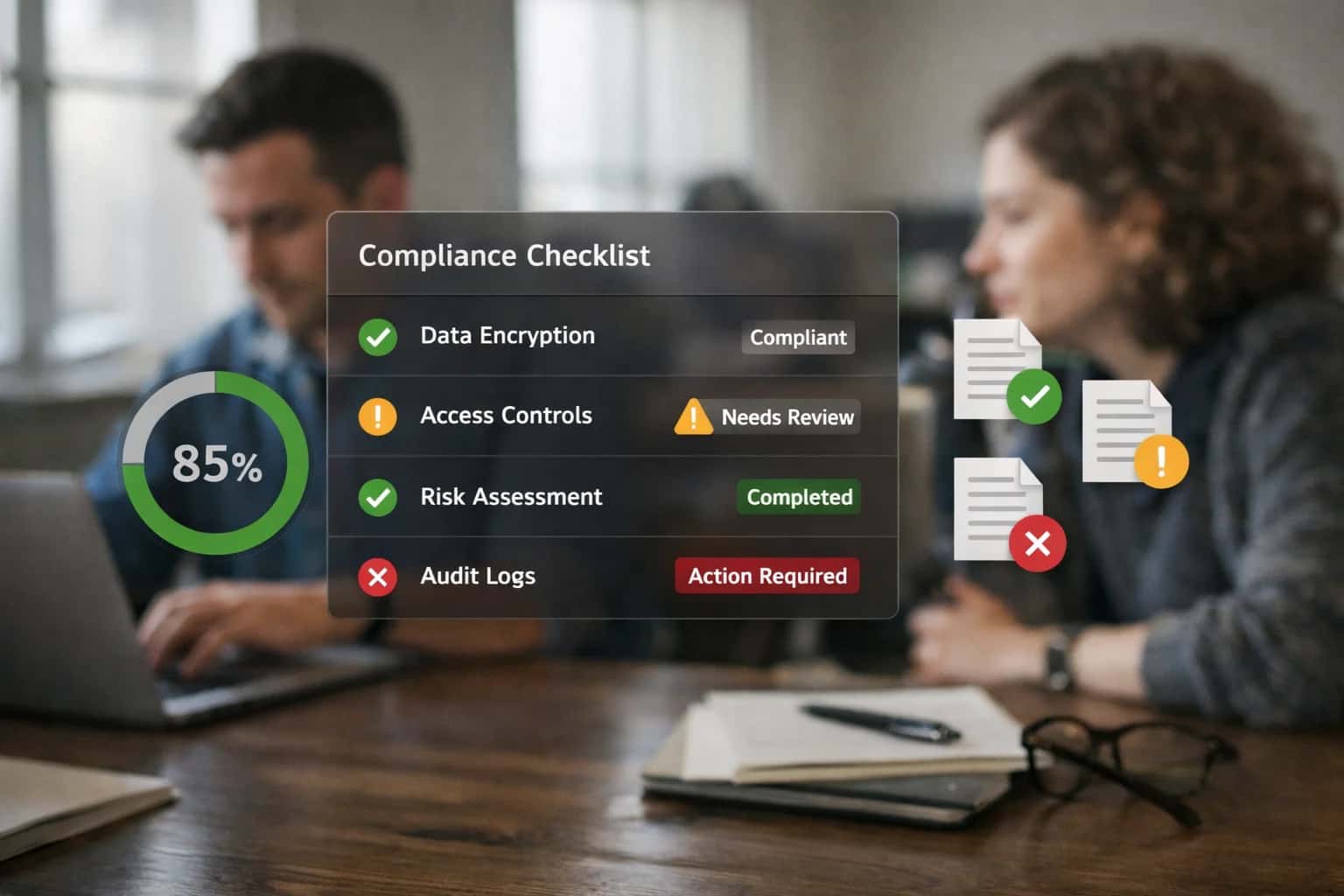
FROM REPORTING TO OPERATIONAL CONTROL
What is Real-Time Carbon Footprint Intelligence Used For?
Move beyond annual sustainability reports to a dynamic, operational view of your emissions. Real-time intelligence transforms carbon from a compliance metric into a lever for cost savings and strategic advantage.
The AI fix is a live operational dashboard. By integrating IoT sensor data, utility feeds, and supplier inputs, AI models calculate emissions continuously. This provides granular visibility—pinpointing a malfunctioning compressor or a high-emission shipping lane—enabling immediate corrective action. The measurable outcome is proactive carbon management, turning data into decisions that reduce costs, ensure audit-ready compliance for frameworks like CSRD, and strengthen supply chain resilience through tools like our Supply Chain Emissions Tracker.
FROM COMPLIANCE TO COMPETITIVE ADVANTAGE
Common Use Cases for Real-Time Carbon Intelligence
Move beyond annual reporting to operationalize decarbonization. These proven applications deliver measurable ROI by turning carbon data into a lever for cost savings, risk mitigation, and strategic growth.
01
Dynamic Supply Chain Decarbonization
Pinpoint and quantify Scope 3 emissions deep within your multi-tier supply chain. This intelligence transforms procurement from a cost center into a strategic decarbonization lever.
- Identify high-impact suppliers for targeted engagement and collaborative reduction programs.
- Model the carbon and cost impact of alternative sourcing or logistics strategies.
- Real-world example: A global manufacturer reduced its Scope 3 footprint by 18% within two years by prioritizing low-carbon suppliers identified by AI, while securing more resilient supply lines.
02
Live Carbon-Aware Operations & Scheduling
Integrate real-time grid carbon intensity data with operational systems to automatically shift energy-intensive processes to times of higher renewable availability.
- Apply to data center compute loads, manufacturing batch schedules, or EV fleet charging.
- Achieve immediate Scope 2 emission reductions and capitalize on lower energy tariffs during off-peak green periods.
- Real-world example: A cloud provider uses this to offer 'Green Compute' SLAs, attracting sustainability-conscious enterprise clients and reducing its energy costs by 12%.
03
Proactive CSRD & ESG Compliance Engine
Automate the collection, validation, and audit-trail creation for carbon data required under CSRD, SEC, and other frameworks. Slash the manual effort and cost of compliance.
- Continuously monitor data streams from IoT sensors, ERP, and utility feeds to flag anomalies and gaps.
- Generate audit-ready reports and disclosures on-demand, not just at year-end.
- Real-world example: A multinational reduced its ESG reporting team's effort by 70%, reallocating FTEs to strategic sustainability initiatives instead of data wrangling.
04
Carbon-Powered Financial Decisioning
Embed an internal shadow carbon price or real carbon cost into capital allocation, product pricing, and investment models.
- Evaluate CapEx projects (e.g., new facilities, equipment) not just on NPV, but on their lifetime carbon liability.
- Design green premium pricing or customer incentives based on accurate product-level footprint data.
- Real-world example: An automotive supplier prioritized R&D into a low-carbon material after AI models showed it would future-proof them against anticipated carbon taxes, securing a first-mover advantage.
05
Asset-Level Performance & Anomaly Detection
Move from facility-level to individual asset-level carbon tracking. Correlate emissions with output, efficiency, and maintenance data.
- Instantly identify malfunctioning or inefficient equipment (e.g., a compressor, boiler) that is driving up both energy costs and emissions.
- Enable predictive maintenance triggered by carbon performance deviations, preventing costly downtime.
- Real-world example: A chemical plant identified a single heat exchanger responsible for 5% of site emissions through anomaly detection, leading to a fix that paid for itself in 8 months through energy savings.
06
M&A and Portfolio ESG Due Diligence
Conduct rapid, deep-dive carbon analysis on acquisition targets or investment portfolios. Quantify embedded carbon liability and transition risk that impacts valuation.
- Model the cost of bringing an asset to net-zero alignment as part of the deal thesis.
- Real-world example: A private equity firm avoided a high-risk acquisition after AI analysis revealed the target's supply chain was locked into carbon-intensive practices with no viable abatement pathway, representing a major future financial risk.
REAL-TIME CARBON FOOTPRINT INTELLIGENCE
How It Works: The AI Implementation Roadmap
Moving from annual estimates to continuous, actionable carbon intelligence requires a structured, technology-led approach. This roadmap outlines how AI transforms opaque emissions data into a strategic lever for cost reduction and compliance.
The pain point is a costly data black hole. Most enterprises rely on manual, quarterly estimates for Scope 1, 2, and 3 emissions, creating lagging indicators prone to error. This reactive approach makes proactive reduction impossible, exposes the business to compliance risk under frameworks like the EU CSRD, and obscures the true financial impact of carbon-intensive processes. You're managing blind, unable to tie emissions directly to operational levers.
The AI fix is a live intelligence layer. We deploy specialized models that ingest real-time data streams—from IoT sensors, utility APIs, and supplier portals—to calculate a continuous, granular carbon footprint. The outcome is a live dashboard providing millisecond-level visibility. This enables proactive management, identifies the highest-ROI reduction opportunities (often cutting energy costs by 15-25%), and automates audit-ready reporting for frameworks like CSRD and GRI. You shift from reporting to actively managing a key cost and risk driver.
Enabling Efficiency, Speed & Accuracy
Intelligent Analysis, Decision & Execution
We build AI systems for teams that need search across company data, workflow automation across tools, or AI features inside products and internal software.
Talk to Us
Search across company data
Give teams answers from docs, tickets, runbooks, and product data with sources and permissions.
Useful when people spend too long searching or get different answers from different systems.
Enterprise searchRAGPermissions
Read more
Automate internal workflows
Use AI to route work, draft outputs, trigger actions, and keep approvals and logs in place.
Useful when repetitive work moves across multiple tools and teams.
AI agentsWorkflow automationGovernance
Read more
Add AI to products and internal tools
Build assistants, guided actions, or decision support into the software your team or customers already use.
Useful when AI needs to be part of the product, not a separate tool.
AI integrationDecision supportModel routing
Read moreREAL-TIME CARBON FOOTPRINT INTELLIGENCE
Key Challenges & Mitigation Strategies
Implementing real-time carbon intelligence is a strategic imperative, but enterprises face significant hurdles in data, cost, and compliance. This section addresses the most common objections and provides a clear roadmap to measurable ROI.
The ROI is driven by cost avoidance and operational efficiency, not just compliance. Real-time intelligence allows you to:
- Identify energy waste instantly, leading to direct utility cost savings of 5-15%.
- Avoid non-compliance fines from misreported emissions under regulations like the EU's CSRD.
- Unlock green financing and preferential supplier status by demonstrating credible, auditable data.
- Optimize supply chain logistics based on carbon cost, not just financial cost, future-proofing against carbon taxes. The initial investment is offset by these tangible savings, typically achieving payback within 12-24 months. For a deeper dive on quantifying AI value, see our framework on Outcome-Based AI Service Models and ROI Analytics.

About the author
Prasad Kumkar
CEO & MD, Inference Systems
Prasad Kumkar is the CEO & MD of Inference Systems and writes about AI systems architecture, LLM infrastructure, model serving, evaluation, and production deployment. Over 5+ years, he has worked across computer vision models, L5 autonomous vehicle systems, and LLM research, with a focus on taking complex AI ideas into real-world engineering systems.
His work and writing cover AI systems, large language models, AI agents, multimodal systems, autonomous systems, inference optimization, RAG, evaluation, and production AI engineering.
LinkedIn
Limited slotsGet a Free AI Consultation
Partnered with leading AI, data, and software stack.





How We Work
Custom AI workflows for your Business
One-fit-all AI don't work for modern businesses. At Inferensys, we aim to understand your business & custom requirements; which we use to define most efficient agentic workflows, the data, and the tools for your business.
01
Review the use case
We understand the task, the users, and where AI can actually help.
Read more02
Pick the right approach
We define what needs search, automation, or product integration.
Read more03
Build the first useful version
We implement the part that proves the value first.
Read more04
Improve from there
We add the checks and visibility needed to keep it useful.
Read moreThe first call is a practical review of your use case and the right next step.
Talk to Us