Today's pain point is reactive, costly compliance. CIOs face escalating pressure from boards and regulators (like the EU CSRD) to meet strict carbon targets, but lack the tools to forecast the emissions impact of planned digital initiatives. Launching a new AI model or scaling cloud inference becomes a gamble—will it blow the annual carbon budget? This leads to last-minute, expensive carbon offset purchases and strategic paralysis, where innovation is stifled by fear of missing sustainability goals.

Use Case
Predictive Carbon KPI Forecasting
AI-powered forecasting of future carbon emissions from AI workloads, enabling proactive budgeting, strategic planning, and compliance with sustainability targets.
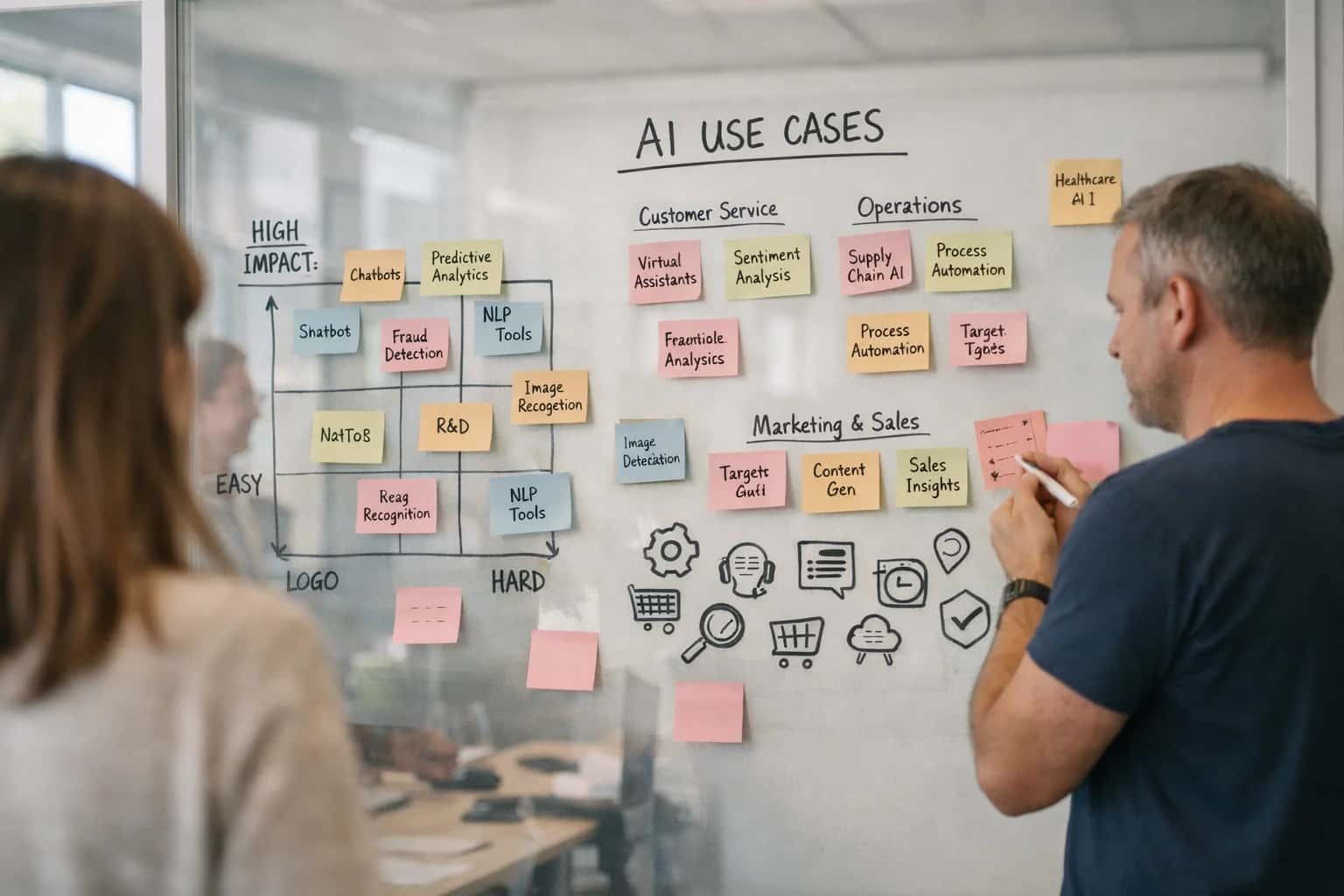
FROM REACTIVE REPORTING TO PROACTIVE STRATEGY
What is Predictive Carbon KPI Forecasting Used For?
Predictive Carbon KPI Forecasting transforms sustainability from a compliance exercise into a core financial and operational planning tool. It allows enterprises to model the future carbon emissions of their AI and IT operations before they happen.
The AI fix is a forward-looking simulation engine. By integrating data on planned workloads, infrastructure efficiency (PUE), and regional grid carbon intensity, our Green AI Infrastructure FinOps Platform generates accurate emissions forecasts. This enables proactive budgeting, strategic workload scheduling, and vendor selection to stay within targets. The measurable outcome is a 15-30% reduction in operational carbon footprint through informed planning, turning sustainability from a cost center into a source of competitive advantage and resilience.
PREDICTIVE CARBON KPI FORECASTING
Common Use Cases
Transform sustainability from a reactive cost center into a proactive strategic lever. These use cases demonstrate how forecasting future AI emissions enables precise budgeting, risk mitigation, and competitive advantage.
01
Proactive Carbon Budgeting for AI Initiatives
CIOs can now forecast the carbon cost of planned AI projects before a single GPU is spun up. This allows for strategic trade-off analysis between model performance, speed, and sustainability. For example, a bank can compare the emissions of a high-accuracy fraud detection model against a slightly less accurate but far more efficient alternative, ensuring new initiatives stay within annual ESG budgets. This shifts sustainability from an after-the-fact report to a key input in the project approval process.
02
Scenario Planning for Infrastructure Scaling
Predict the carbon impact of scaling AI workloads by 50%, 100%, or 200%. This is critical for capacity planning and vendor selection. By modeling different growth scenarios, you can evaluate whether to build in-house, leverage a specific cloud provider's green regions, or invest in edge infrastructure. This prevents costly, carbon-intensive re-architecting later and ensures your scaling strategy is aligned with both business and sustainability goals from day one.
03
Risk Mitigation Against Carbon Taxes & Regulations
With carbon pricing mechanisms and regulations like the EU's CSRD expanding, unforecasted emissions are a direct financial liability. Predictive KPI forecasting acts as an early warning system. It allows you to model the financial impact of potential carbon taxes on your AI operations and adjust strategies proactively. This protects the organization from future cost shocks and demonstrates to investors a mature, forward-looking approach to regulatory compliance.
04
Optimizing the AI Model Lifecycle for Carbon Efficiency
Not all phases of an AI model's lifecycle have equal carbon intensity. Use forecasting to allocate resources strategically:
- Schedule heavy training jobs for periods of high renewable energy availability.
- Right-size inference infrastructure based on predicted usage patterns, avoiding over-provisioning.
- Plan model retraining cycles based on performance drift data, not arbitrary schedules, to eliminate unnecessary compute cycles. This applies FinOps principles directly to carbon, maximizing the business value per ton of CO2 emitted.
05
Integrating Carbon KPIs into Enterprise Strategic Planning
Elevate AI's carbon footprint from an IT metric to a board-level KPI. Predictive forecasting enables leadership to answer critical questions: Can we achieve our 2030 net-zero target if AI adoption grows as planned? What is the carbon ROI of replacing legacy systems with AI-driven automation? By integrating carbon forecasts with business growth projections, AI transitions from a sustainability challenge to a quantifiable driver of long-term resilience and brand value.
06
Enhancing Green Procurement and Vendor Negotiations
Use your internal carbon forecasts as leverage in cloud and hardware procurement. When you can precisely predict your future compute needs, you can negotiate not just on price, but on carbon performance. Demand guarantees for renewable energy matching or preferential access to green data centers. This transforms procurement from a cost-centric activity to a strategic function that directly reduces the organization's Scope 3 emissions and advances circular economy goals.
PREDICTIVE CARBON KPI FORECASTING
How It Works: The Implementation Roadmap
Transform sustainability from reactive reporting to proactive strategy by forecasting the carbon cost of your AI initiatives before you run them.
Today, AI's carbon footprint is a costly surprise. You launch a new model or scale an application, only to discover the emissions impact weeks later in a quarterly ESG report. This reactive approach makes it impossible to stay within sustainability budgets or align AI growth with net-zero commitments. The pain point is a lack of foresight, turning ambitious green goals into compliance liabilities and missed targets.
Our solution integrates with your MLOps and FinOps platforms to model planned workloads against infrastructure data—including energy sources, PUE, and vendor circularity scores. It generates a forecasted carbon KPI, allowing you to simulate scenarios, rightsize models, or shift schedules to greener zones before execution. The outcome is a 15-30% reduction in forecasted emissions and the strategic confidence to scale AI responsibly, as detailed in our guide on Green AI Infrastructure FinOps.
Enabling Efficiency, Speed & Accuracy
Intelligent Analysis, Decision & Execution
We build AI systems for teams that need search across company data, workflow automation across tools, or AI features inside products and internal software.
Talk to Us
Search across company data
Give teams answers from docs, tickets, runbooks, and product data with sources and permissions.
Useful when people spend too long searching or get different answers from different systems.
Enterprise searchRAGPermissions
Read more
Automate internal workflows
Use AI to route work, draft outputs, trigger actions, and keep approvals and logs in place.
Useful when repetitive work moves across multiple tools and teams.
AI agentsWorkflow automationGovernance
Read more
Add AI to products and internal tools
Build assistants, guided actions, or decision support into the software your team or customers already use.
Useful when AI needs to be part of the product, not a separate tool.
AI integrationDecision supportModel routing
Read morePREDICTIVE CARBON KPI FORECASTING
Key Implementation Challenges & Mitigations
Forecasting the carbon footprint of future AI workloads is a strategic necessity for meeting ESG mandates, but implementation faces significant data, modeling, and organizational hurdles. This guide addresses the top enterprise objections with practical, ROI-focused solutions.
The primary challenge is aggregating granular, real-time data from disparate sources: cloud provider carbon APIs, on-prem energy meters, workload schedulers, and hardware telemetry. Without this, forecasts are guesses.
The AI Fix: Implement a unified data ingestion layer that normalizes metrics across your entire AI infrastructure stack. This creates a single source of truth for historical carbon intensity (gCO2eq/kWh), compute utilization, and workload patterns. Start by instrumenting your highest-impact projects and use that data to build initial models, then expand coverage. For a foundational tool, see our AI Workload Carbon Footprint Dashboard.

About the author
Prasad Kumkar
CEO & MD, Inference Systems
Prasad Kumkar is the CEO & MD of Inference Systems and writes about AI systems architecture, LLM infrastructure, model serving, evaluation, and production deployment. Over 5+ years, he has worked across computer vision models, L5 autonomous vehicle systems, and LLM research, with a focus on taking complex AI ideas into real-world engineering systems.
His work and writing cover AI systems, large language models, AI agents, multimodal systems, autonomous systems, inference optimization, RAG, evaluation, and production AI engineering.
LinkedIn
Limited slotsGet a Free AI Consultation
Partnered with leading AI, data, and software stack.





How We Work
Custom AI workflows for your Business
One-fit-all AI don't work for modern businesses. At Inferensys, we aim to understand your business & custom requirements; which we use to define most efficient agentic workflows, the data, and the tools for your business.
01
Review the use case
We understand the task, the users, and where AI can actually help.
Read more02
Pick the right approach
We define what needs search, automation, or product integration.
Read more03
Build the first useful version
We implement the part that proves the value first.
Read more04
Improve from there
We add the checks and visibility needed to keep it useful.
Read moreThe first call is a practical review of your use case and the right next step.
Talk to Us