The core pain point is the 'invisible cost' of AI innovation. As models scale, their energy and water consumption skyrockets, creating significant financial, regulatory, and reputational risks. Without granular visibility, CIOs cannot attribute emissions to specific projects, optimize infrastructure, or meet stringent ESG reporting mandates like the EU's CSRD. This lack of data turns sustainability into a compliance liability rather than a source of competitive advantage.

Use Case
AI Workload Carbon Footprint Dashboard
A real-time dashboard that tracks, attributes, and optimizes the carbon emissions of AI workloads, turning sustainability from a compliance cost into a source of efficiency and competitive advantage.
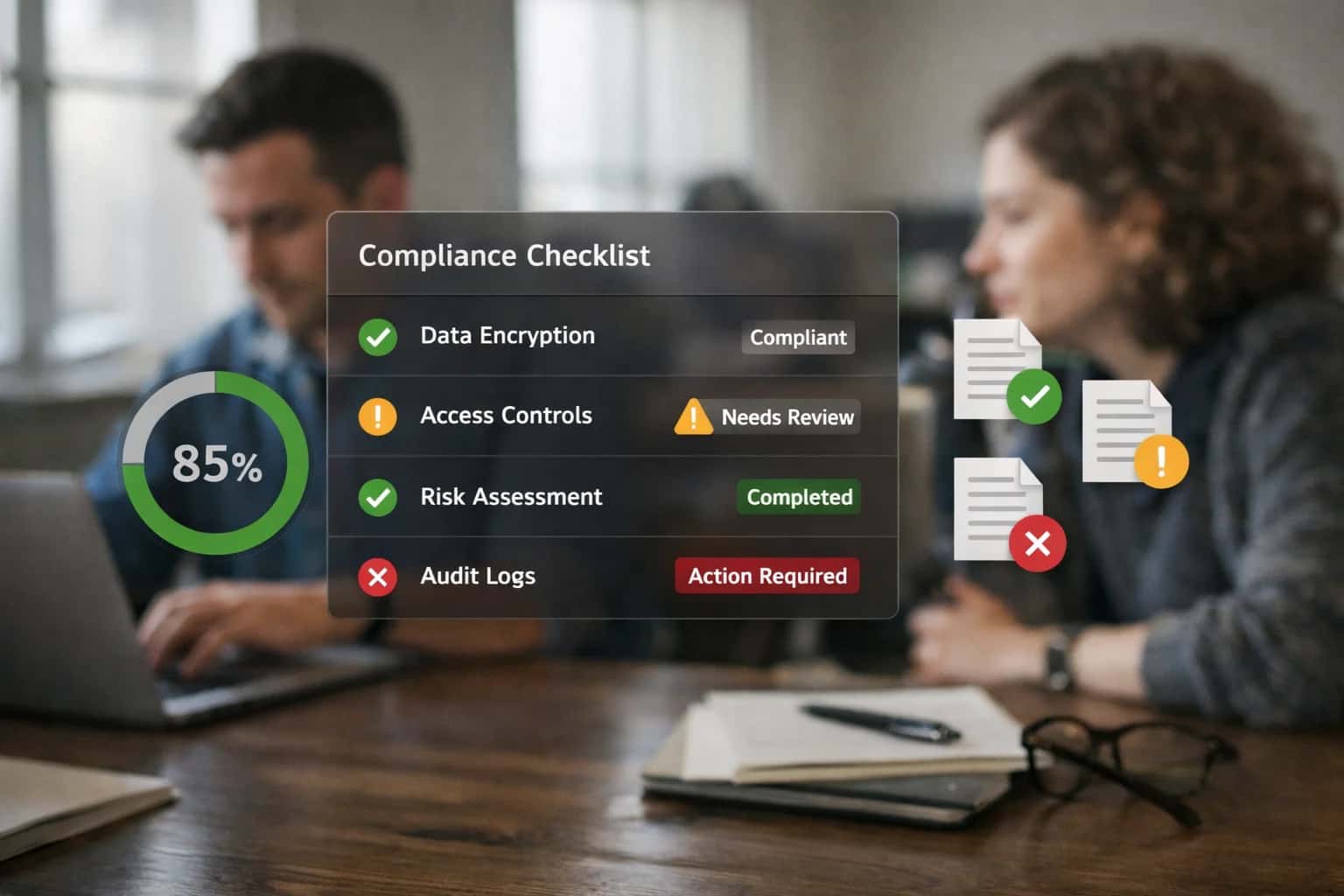
CIRCULAR IT & SUSTAINABLE COMPUTE
What is an AI Workload Carbon Footprint Dashboard Used For?
An AI Workload Carbon Footprint Dashboard is the critical command center for enterprises to measure, manage, and mitigate the environmental impact of their AI operations, transforming sustainability from an abstract goal into a quantifiable, actionable business metric.
The dashboard provides the fix with real-time, model-level carbon attribution. It integrates data from cloud providers, on-prem hardware, and energy grids to deliver actionable KPIs. This enables rightsizing models, shifting workloads to greener regions via Carbon-Aware Load Balancing, and automating reports. The outcome is a 15-30% reduction in compute-related emissions, direct cost savings from optimized infrastructure, and audit-ready proof of your Green AI strategy for stakeholders.
AI WORKLOAD CARBON FOOTPRINT DASHBOARD
Common Use Cases: From Compliance to Competitive Edge
Move from opaque energy costs to actionable carbon intelligence. These use cases demonstrate how real-time tracking transforms sustainability from a reporting burden into a driver of efficiency and strategic advantage.
01
Automated ESG & Regulatory Reporting
Eliminate manual data aggregation for frameworks like the EU's CSRD or SEC climate rules. The dashboard automatically pulls energy, water, and carbon data from cloud providers and on-prem infrastructure to generate audit-ready reports.
- Real-world example: A financial services firm reduced its ESG reporting cycle from 3 weeks to 2 days, ensuring timely compliance and freeing analyst time for strategic reduction initiatives.
- Directly links emissions to specific business units and projects for precise accountability.
90%
Faster Report Generation
02
Cost & Carbon Optimization (Green FinOps)
Unify cloud spend (FinOps) with carbon KPIs to identify waste. The dashboard highlights idle resources and over-provisioned models that drain budget and generate unnecessary emissions.
- Real-world example: An e-commerce company identified underutilized GPU instances for its recommendation engine, rightsizing the workload and achieving a 35% reduction in associated compute costs and carbon.
- Enables 'what-if' analysis to compare the cost and emission impact of different model architectures or hosting regions before deployment.
35%
Potential Cost/Carbon Reduction
03
Vendor & Procurement Scoring
Make data-driven decisions when selecting cloud providers or hardware. The dashboard scores vendors based on real-time Power Usage Effectiveness (PUE), carbon intensity of their energy grid, and water usage.
- Real-world example: A manufacturing firm used carbon intensity data to shift its batch training workloads to a cloud region with higher renewable energy penetration, cutting the carbon footprint of those jobs by over 60% without changing the model.
- Supports procurement teams in negotiating contracts that include sustainability SLAs.
60%+
Emissions Reduction via Sourcing
04
Product Carbon Footprinting & Labeling
Accurately attribute the embedded carbon cost of AI-powered features to specific products or customer services. This enables carbon-aware product design and potential customer-facing transparency.
- Real-world example: A SaaS company calculated the per-query carbon cost of its AI assistant. This insight led to optimizing prompt efficiency and offered a 'green mode' for eco-conscious clients, creating a competitive differentiation.
- Provides the metrics needed for internal carbon budgeting or voluntary carbon offset programs tied to digital services.
Measurable
Per-Feature Carbon Cost
05
Strategic Planning & Forecasting
Move from reactive tracking to proactive strategy. Use historical data and workload forecasts to model the carbon impact of future AI initiatives, supporting sustainable growth planning.
- Real-world example: A media company forecasted the emissions from scaling its new generative AI content tool. The forecast justified an upfront investment in model pruning and edge deployment, keeping emissions within annual ESG targets while still achieving growth.
- Aligns AI roadmap with corporate sustainability goals, turning constraints into innovation drivers.
Proactive
Emission Budget Management
06
Developer Empowerment & Green AI Culture
Embed sustainability directly into the AI development lifecycle. Provide developers with real-time feedback on the carbon impact of their model training runs and architecture choices.
- Real-world example: A tech firm integrated carbon metrics into its MLops platform. Developers began competing on 'efficiency leaderboards,' leading to widespread adoption of quantization and distillation techniques, reducing average training emissions by 25%.
- Fosters a culture where efficiency is a key performance indicator alongside accuracy and latency.
25%
Avg. Training Efficiency Gain
IMPLEMENTATION BLUEPRINT
AI Workload Carbon Footprint Dashboard
A real-time dashboard that tracks and attributes the carbon emissions of every AI model and service, transforming sustainability from an abstract goal into a manageable operational metric.
The pain point is the 'carbon blind spot.' AI's explosive growth creates massive, unaccounted-for emissions from training and inference, leading to regulatory risk, inflated cloud costs, and reputational damage. Without granular attribution, you cannot identify which models or teams are the biggest emitters, making targeted reduction impossible and jeopardizing ESG reporting mandates.
The solution is a unified dashboard that ingests telemetry from cloud providers, on-prem infrastructure, and edge AI deployments. It applies carbon conversion factors to compute usage, providing per-model, per-team, and per-project emissions in real-time. This enables FinOps-style accountability, pinpoints high-impact optimization targets like our Automated Model Pruning for Efficiency, and generates audit-ready reports for frameworks like the EU CSRD.
Enabling Efficiency, Speed & Accuracy
Intelligent Analysis, Decision & Execution
We build AI systems for teams that need search across company data, workflow automation across tools, or AI features inside products and internal software.
Talk to Us
Search across company data
Give teams answers from docs, tickets, runbooks, and product data with sources and permissions.
Useful when people spend too long searching or get different answers from different systems.
Enterprise searchRAGPermissions
Read more
Automate internal workflows
Use AI to route work, draft outputs, trigger actions, and keep approvals and logs in place.
Useful when repetitive work moves across multiple tools and teams.
AI agentsWorkflow automationGovernance
Read more
Add AI to products and internal tools
Build assistants, guided actions, or decision support into the software your team or customers already use.
Useful when AI needs to be part of the product, not a separate tool.
AI integrationDecision supportModel routing
Read moreFROM COST CENTER TO COMPETITIVE ADVANTAGE
Your 90-Day Roadmap to Carbon Visibility
Move from opaque energy bills to precise, actionable carbon intelligence. This dashboard provides the granular attribution CIOs need to meet ESG mandates, optimize infrastructure spend, and build a defensible green AI strategy.
01
Quantify ESG Compliance & Avoid Regulatory Fines
Automate the collection of energy, water, and carbon data across cloud providers and on-premises infrastructure to generate audit-ready reports for frameworks like CSRD and SEC climate rules. This turns a manual, error-prone process into a continuous compliance engine.
- Real Example: A financial services firm avoided potential $2M+ in non-compliance penalties by automating their Scope 3 (cloud) emissions reporting.
- Directly attribute emissions to specific business units, projects, and AI models for precise accountability.
02
Slash Cloud & Compute Costs by 15-30%
Apply FinOps principles to carbon, identifying the most wasteful AI workloads and infrastructure. The dashboard highlights idle resources, over-provisioned models, and opportunities to rightsize or shift to more efficient regions.
- Case in Point: An e-commerce company reduced its monthly AI inference costs by 22% after identifying that 40% of their GPU clusters were underutilized outside peak hours.
- Actionable Insight: Correlate carbon spikes with cost spikes to prioritize high-ROI optimization efforts.
03
Enable Sustainable Procurement & Vendor Scoring
Move beyond marketing claims. Score and compare cloud providers and hardware vendors on actual, real-time carbon intensity and circularity metrics (e.g., PUE, water usage, renewable energy %).
- Make procurement decisions that align with corporate sustainability goals.
- Strategic Leverage: Use data to negotiate better terms with providers competing on green credentials.
04
De-Risk Operations with Predictive Carbon Forecasting
Move from reactive to proactive. Use AI to forecast future carbon emissions based on planned AI training runs, product launches, and seasonal traffic.
- Model the carbon impact of strategic decisions before committing resources.
- Business Benefit: Proactively manage carbon budgets and avoid unexpected ESG target shortfalls, protecting brand reputation.
05
Build a Marketable Green AI Advantage
Transform sustainability from a cost center into a competitive differentiator. Use verifiable, granular carbon data in marketing, sales, and investor relations.
- Real-World Impact: A SaaS company won a major enterprise contract by providing a carbon-per-API-call metric, directly addressing the client's net-zero commitments.
- Attract talent and investment by demonstrating authentic, data-backed environmental stewardship.
06
Accelerate the Shift to Efficient AI Models
Empower your data science teams with carbon-aware development. The dashboard tags models in your registry with their training and inference carbon footprint, enabling comparison.
- Drive Efficiency: Incentivize the use of pruned, quantized, or smaller models that meet accuracy requirements with a fraction of the compute.
- Outcome: Faster, cheaper inference and a significantly reduced operational carbon footprint for your AI portfolio.

About the author
Prasad Kumkar
CEO & MD, Inference Systems
Prasad Kumkar is the CEO & MD of Inference Systems and writes about AI systems architecture, LLM infrastructure, model serving, evaluation, and production deployment. Over 5+ years, he has worked across computer vision models, L5 autonomous vehicle systems, and LLM research, with a focus on taking complex AI ideas into real-world engineering systems.
His work and writing cover AI systems, large language models, AI agents, multimodal systems, autonomous systems, inference optimization, RAG, evaluation, and production AI engineering.
LinkedIn
Limited slotsGet a Free AI Consultation
Partnered with leading AI, data, and software stack.





How We Work
Custom AI workflows for your Business
One-fit-all AI don't work for modern businesses. At Inferensys, we aim to understand your business & custom requirements; which we use to define most efficient agentic workflows, the data, and the tools for your business.
01
Review the use case
We understand the task, the users, and where AI can actually help.
Read more02
Pick the right approach
We define what needs search, automation, or product integration.
Read more03
Build the first useful version
We implement the part that proves the value first.
Read more04
Improve from there
We add the checks and visibility needed to keep it useful.
Read moreThe first call is a practical review of your use case and the right next step.
Talk to Us