Phi-4 excels at cost-effective, low-latency inference because of its specialized 14B-parameter architecture designed for efficient deployment. For example, it can achieve sub-100ms latency on a single A10 GPU with 8-bit quantization, translating to a cost-per-token often 10-20x lower than GPT-4 for comparable throughput. This makes it ideal for high-volume, routine tasks like intent classification, entity extraction, or smart routing within a larger AI system, as discussed in our guide on edge deployment trade-offs.

Comparison
Phi-4 vs GPT-4
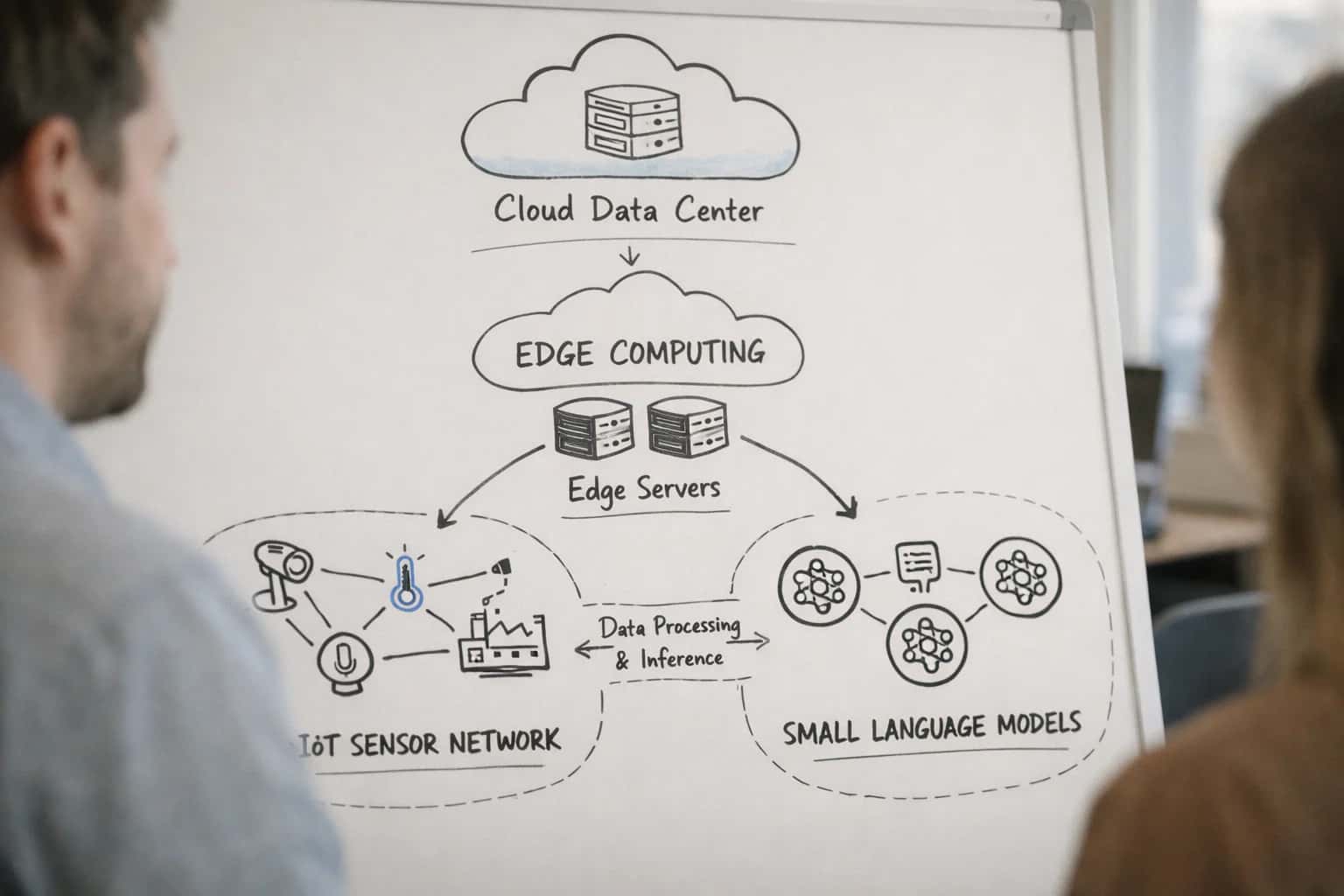
A technical comparison for CTOs and engineering leads evaluating the trade-offs between Microsoft's efficient 14B-parameter Small Language Model (SLM) and OpenAI's frontier GPT-4 model. This analysis focuses on cost-per-token, latency for edge deployment, and reasoning capability trade-offs critical for designing smart routing architectures in 2026.
THE ANALYSIS
Introduction
A direct comparison of Microsoft's efficient Phi-4 against OpenAI's frontier GPT-4, framing the core trade-off between cost/latency and reasoning breadth.
GPT-4 takes a different approach by leveraging its massive, multimodal parameter count (estimated >1T) to deliver superior reasoning breadth, complex instruction following, and few-shot learning capabilities. This results in a trade-off: significantly higher API costs and latency, but unmatched performance on open-ended tasks requiring deep chain-of-thought reasoning, creative synthesis, or handling highly ambiguous user queries. Its performance is a benchmark in evaluations of multimodal foundation models.
The key trade-off: If your priority is minimizing inference cost and latency for predictable, high-volume tasks—especially in edge or on-premise deployments—choose Phi-4. If you prioritize maximizing reasoning accuracy and capability for low-volume, high-stakes, or highly creative tasks where cost is secondary, choose GPT-4. For architectures that need both, consider implementing a smart router to direct queries based on complexity, a core concept in small vs. foundation model strategies.
HEAD-TO-HEAD COMPARISON
Phi-4 vs GPT-4 Feature Comparison
Direct comparison of Microsoft's efficient SLM against OpenAI's frontier model for smart routing architectures.
| Metric | Phi-4 (Microsoft) | GPT-4 (OpenAI) |
|---|---|---|
Cost per 1M Input Tokens | $0.15 | $5.00 |
Model Size (Parameters) | 14B | ~1.8T |
Typical Latency (p50) | < 100 ms | ~500 ms |
Context Window | 128K tokens | 128K tokens |
Vision Capabilities (Multimodal) | ||
Open Weights / Local Hosting | ||
SWE-bench Pass@1 Score | ~45% | ~75% |
Quantization Support (4-bit) |
Phi-4 vs GPT-4
TL;DR Summary
Key strengths and trade-offs at a glance for Microsoft's efficient SLM versus OpenAI's frontier model.
03
Phi-4's Key Limitation
Narrower Knowledge & Reasoning Depth: As a Small Language Model (SLM), Phi-4 is optimized for efficiency, not breadth. It may struggle with highly nuanced queries, multi-step complex reasoning, or esoteric knowledge domains compared to a frontier model. This trade-off is critical for applications where cognitive density and extended thinking are required, as discussed in our guide on Small Language Models (SLMs) vs. Foundation Models.
04
GPT-4's Key Limitation
High Latency & Operational Cost: GPT-4's superior performance comes with significant operational overhead: higher API costs, slower response times (latency), and dependency on external cloud endpoints. This makes it unsuitable for real-time edge applications or cost-sensitive, high-volume workloads. For managing these costs, see our analysis on Token-Aware FinOps and AI Cost Management.
CHOOSE YOUR PRIORITY
When to Choose Phi-4 vs GPT-4
Phi-4 for Cost & Speed
Verdict: The definitive choice for high-volume, latency-sensitive tasks. Strengths: As a 14B-parameter model, Phi-4's primary advantage is its inference efficiency. It delivers significantly lower latency and a fraction of the cost-per-token compared to GPT-4, making it ideal for edge deployment and smart routing architectures where you need to handle thousands of requests per second. Its smaller size allows for aggressive quantization (e.g., to 4-bit) without severe performance loss, enabling it to run on consumer-grade GPUs or even CPUs. Trade-off: You sacrifice some reasoning depth and broad knowledge for this efficiency. It's less suited for highly complex, multi-step problems that require extensive world knowledge.
GPT-4 for Cost & Speed
Verdict: Use only when complexity demands it; otherwise, cost-prohibitive for scale. Strengths: GPT-4's unparalleled performance comes at a high operational cost. For simple, high-volume tasks, its inference latency and API cost are often unjustifiable. Its value in this context is only realized when a significant percentage of requests are so complex that they require a frontier model's capability, justifying the expense within a cost-aware model orchestration system that routes simple queries to SLMs like Phi-4. Consider: For pure speed and cost, GPT-4 is not competitive. Its role is as a specialized tool in a multi-model routing pipeline, not as the primary workhorse. Learn more about building such systems in our guide on smart routing architectures.
Enabling Efficiency, Speed & Accuracy
Intelligent Analysis, Decision & Execution
We build AI systems for teams that need search across company data, workflow automation across tools, or AI features inside products and internal software.
Talk to Us
Search across company data
Give teams answers from docs, tickets, runbooks, and product data with sources and permissions.
Useful when people spend too long searching or get different answers from different systems.
Enterprise searchRAGPermissions
Read more
Automate internal workflows
Use AI to route work, draft outputs, trigger actions, and keep approvals and logs in place.
Useful when repetitive work moves across multiple tools and teams.
AI agentsWorkflow automationGovernance
Read more
Add AI to products and internal tools
Build assistants, guided actions, or decision support into the software your team or customers already use.
Useful when AI needs to be part of the product, not a separate tool.
AI integrationDecision supportModel routing
Read moreTHE ANALYSIS
Verdict and Final Recommendation
A final, data-driven breakdown to help you choose between Microsoft's efficient SLM and OpenAI's frontier model for your 2026 architecture.
Phi-4 excels at cost-effective, low-latency inference for high-volume, routine tasks. Its 14B-parameter architecture, designed for quantization and edge deployment, can achieve sub-100ms response times on consumer-grade hardware while costing a fraction per token compared to frontier models. For example, a smart routing system handling thousands of customer support queries per hour could see a 70-80% reduction in inference costs by offloading simple intent classification to Phi-4, as detailed in our guide on Inference Placement Strategies.
GPT-4 takes a different approach by prioritizing raw reasoning capability and broad knowledge. This results in superior performance on complex, open-ended tasks requiring deep synthesis, advanced coding, or nuanced instruction-following, but at a significantly higher cost and latency. The trade-off is clear: you pay for cognitive density and reliability in high-stakes scenarios where a single error is more expensive than the entire inference bill.
The key trade-off is between operational efficiency and cognitive capability. If your priority is minimizing cost-per-token and latency for scalable, predictable workloads—such as powering a RAG pipeline, classifying documents, or handling basic chatbot interactions—choose Phi-4. Its efficiency makes it ideal for the Small Language Models (SLMs) vs. Foundation Models paradigm shift toward specialized, distributed AI. If you prioritize reasoning depth, task versatility, and handling novel, high-complexity prompts where accuracy is paramount—such as strategic analysis, creative ideation, or agentic workflow orchestration—choose GPT-4 and accept its cloud-centric operational model.

About the author
Prasad Kumkar
CEO & MD, Inference Systems
Prasad Kumkar is the CEO & MD of Inference Systems and writes about AI systems architecture, LLM infrastructure, model serving, evaluation, and production deployment. Over 5+ years, he has worked across computer vision models, L5 autonomous vehicle systems, and LLM research, with a focus on taking complex AI ideas into real-world engineering systems.
His work and writing cover AI systems, large language models, AI agents, multimodal systems, autonomous systems, inference optimization, RAG, evaluation, and production AI engineering.
LinkedIn
Limited slotsGet a Free AI Consultation
Partnered with leading AI, data, and software stack.





How We Work
Custom AI workflows for your Business
One-fit-all AI don't work for modern businesses. At Inferensys, we aim to understand your business & custom requirements; which we use to define most efficient agentic workflows, the data, and the tools for your business.
01
Review the use case
We understand the task, the users, and where AI can actually help.
Read more02
Pick the right approach
We define what needs search, automation, or product integration.
Read more03
Build the first useful version
We implement the part that proves the value first.
Read more04
Improve from there
We add the checks and visibility needed to keep it useful.
Read moreThe first call is a practical review of your use case and the right next step.
Talk to Us