Real-time model adaptation enables AI systems to learn continuously from live data streams, moving beyond static, batch-trained models. This is the core of Non-Situational AI, allowing systems to update in response to shifting environments—like changing user behavior in a recommendation engine or volatile market signals in trading—without a full retraining cycle. The goal is to build production systems that balance adaptation speed with stability, using online learning algorithms and robust deployment patterns.

Guide
Setting Up Real-Time Model Adaptation in Production Systems
A step-by-step guide to deploying AI models that adapt their parameters in response to live data streams. Implement online learning algorithms, design a versioning and rollback system with Seldon Core, and set up canary deployments for safety.
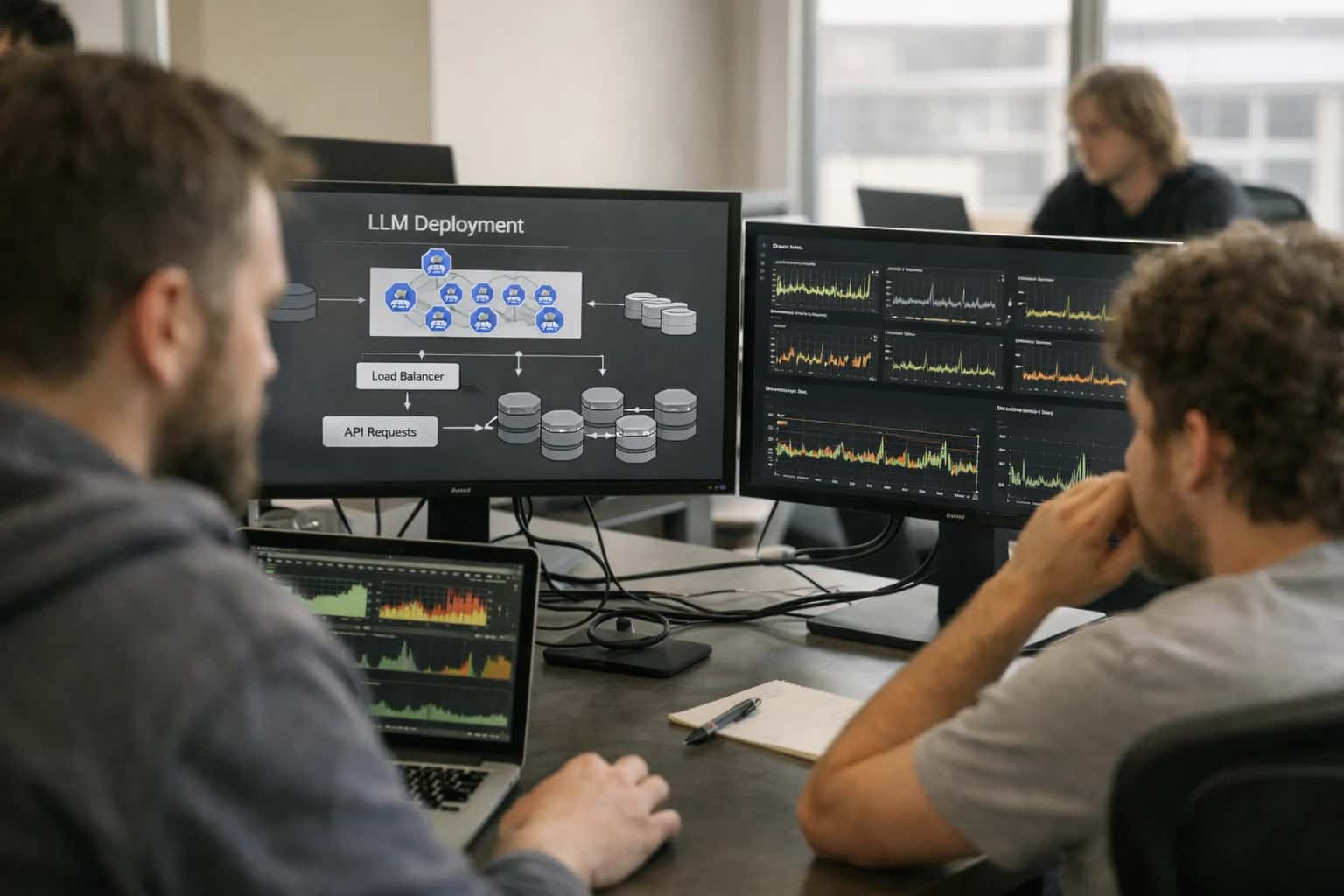
Deploy AI models that can adapt their parameters in response to live data streams without manual intervention.
Implementing this requires a specialized pipeline. You will architect a system using tools like Seldon Core for model versioning and canary deployments, design a rollback strategy for safety, and implement concept drift detection to trigger updates. This guide provides the practical steps to transition from static inference to a dynamic, self-improving system, a foundational skill for building the next generation of autonomous applications covered in our guide on Transitioning from Static to Dynamic AI Models.
CORE ALGORITHMS
Online Learning Algorithm Comparison
A practical comparison of algorithms for implementing real-time model adaptation, balancing adaptation speed, stability, and implementation complexity.
| Algorithm / Feature | Stochastic Gradient Descent (SGD) | Adaptive Moment Estimation (Adam) | Follow-The-Regularized-Leader (FTRL) |
|---|---|---|---|
Primary Use Case | High-frequency streaming data (e.g., trading) | Sparse, noisy data (e.g., recommendations) | Extremely high-dimensional sparse data (e.g., click-through rate) |
Update Speed | < 1 ms per sample | 1-5 ms per sample | 2-10 ms per sample |
Memory Footprint | Low (one vector) | Medium (two momentum vectors) | High (per-coordinate learning rates) |
Handles Concept Drift | |||
Hyperparameter Sensitivity | High (learning rate critical) | Medium (robust defaults exist) | Low (adaptive per parameter) |
Built-in Regularization | |||
Production Maturity | Very High | High | High (esp. for ads/search) |
Best for Non-Situational AI | Rapid, fine-grained weight tuning | Stable learning in volatile feature spaces | Massive feature spaces with rare events |
Enabling Efficiency, Speed & Accuracy
Intelligent Analysis, Decision & Execution
We build AI systems for teams that need search across company data, workflow automation across tools, or AI features inside products and internal software.
Talk to Us
Search across company data
Give teams answers from docs, tickets, runbooks, and product data with sources and permissions.
Useful when people spend too long searching or get different answers from different systems.
Enterprise searchRAGPermissions
Read more
Automate internal workflows
Use AI to route work, draft outputs, trigger actions, and keep approvals and logs in place.
Useful when repetitive work moves across multiple tools and teams.
AI agentsWorkflow automationGovernance
Read more
Add AI to products and internal tools
Build assistants, guided actions, or decision support into the software your team or customers already use.
Useful when AI needs to be part of the product, not a separate tool.
AI integrationDecision supportModel routing
Read moreTROUBLESHOOTING
Common Mistakes
Real-time model adaptation is a powerful but complex paradigm. These are the most frequent technical pitfalls developers encounter when moving from static to dynamic AI systems in production.
Catastrophic forgetting occurs when an online learning model overwrites previously learned knowledge while adapting to new data. This happens because standard gradient descent updates all model parameters without protecting the weights responsible for old tasks.
The fix is to implement stability-plasticity techniques:
- Elastic Weight Consolidation (EWC): Add a penalty to the loss function that discourages large changes to weights deemed important for previous tasks.
- Experience Replay: Maintain a buffer of past data samples and intermittently retrain on them alongside new data.
- Progressive Neural Networks: Freeze the original model and add new, lateral connections for learning new tasks, preserving the old network intact.
Without these guards, your model's performance on core, historical tasks will degrade rapidly, breaking the system's reliability.

About the author
Prasad Kumkar
CEO & MD, Inference Systems
Prasad Kumkar is the CEO & MD of Inference Systems and writes about AI systems architecture, LLM infrastructure, model serving, evaluation, and production deployment. Over 5+ years, he has worked across computer vision models, L5 autonomous vehicle systems, and LLM research, with a focus on taking complex AI ideas into real-world engineering systems.
His work and writing cover AI systems, large language models, AI agents, multimodal systems, autonomous systems, inference optimization, RAG, evaluation, and production AI engineering.
LinkedIn
Limited slotsGet a Free AI Consultation
Partnered with leading AI, data, and software stack.





How We Work
Custom AI workflows for your Business
One-fit-all AI don't work for modern businesses. At Inferensys, we aim to understand your business & custom requirements; which we use to define most efficient agentic workflows, the data, and the tools for your business.
01
Review the use case
We understand the task, the users, and where AI can actually help.
Read more02
Pick the right approach
We define what needs search, automation, or product integration.
Read more03
Build the first useful version
We implement the part that proves the value first.
Read more04
Improve from there
We add the checks and visibility needed to keep it useful.
Read moreThe first call is a practical review of your use case and the right next step.
Talk to Us