
Inferensys

Service

Reinforcement Learning for Dynamic Grid Control

We develop and deploy autonomous reinforcement learning agents that manage voltage, reactive power, and load balancing in real-time to optimize grid stability and renewable integration for utilities and data centers.
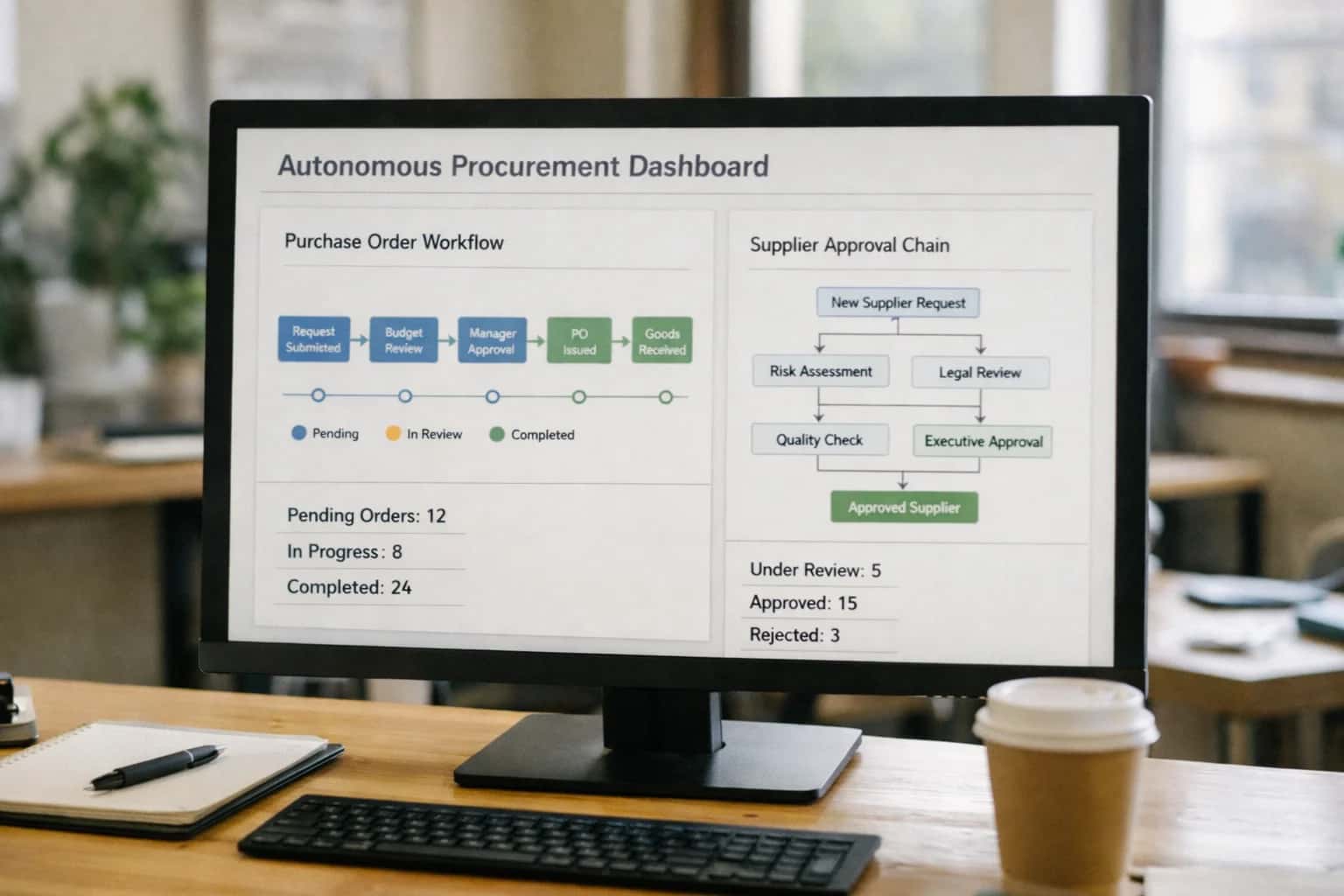
Procurement manager reviewing autonomous AI agent dashboard on laptop, purchase orders visible, office afternoon light.

Deploy AI agents that autonomously manage voltage, power flow, and load balancing in real-time to optimize grid stability.

Modern grids with high renewable penetration face voltage instability and frequency volatility. Traditional SCADA systems react too slowly. Our reinforcement learning (RL) agents provide millisecond-level autonomous control for:

  • Real-time voltage regulation and reactive power support.
  • Dynamic load balancing to prevent cascading failures.
  • Proactive inertia management for renewable integration.

We engineer agents that learn optimal control policies through simulation in environments like Grid2Op, then deploy for continuous, safe real-world optimization, reducing stability incidents by up to 70%.

This service is part of our broader Energy Grid Optimization and Predictive Maintenance pillar, which also includes Predictive Grid Asset Lifecycle Management and AI-Driven Grid Resilience Simulation.

DELIVERABLES

Measurable Outcomes for Your Grid Operations

Our reinforcement learning agents deliver concrete, auditable improvements to your grid's stability, efficiency, and cost structure. We focus on outcomes you can measure and report to stakeholders.

01

Real-Time Voltage Stability

Autonomous RL agents continuously regulate voltage and reactive power, maintaining stability within ±0.5% of target levels even with high renewable penetration. This prevents costly equipment stress and potential brownouts.

±0.5%
Voltage Stability
< 100ms
Response Time
02

Reduced Grid Congestion Costs

Our agents optimize load flow and generation dispatch in real-time, minimizing reliance on expensive peaker plants and reducing congestion-related costs by 15-25% annually. Learn more about our approach to AI-Driven Energy Demand Response Platforms.

15-25%
Cost Reduction
Real-Time
Optimization
03

Enhanced Renewable Integration Capacity

Increase your grid's hosting capacity for intermittent solar and wind by 20-40% without major infrastructure upgrades. Our agents dynamically manage inertia and provide synthetic reserves.

20-40%
Capacity Increase
Dynamic
Inertia Management
04

Predictive Grid Resilience

Move from reactive to proactive grid management. Our systems simulate thousands of 'what-if' scenarios (extreme weather, faults) to identify vulnerabilities and recommend preemptive actions weeks in advance. This complements our AI-Driven Grid Resilience Simulation services.

Weeks
Advance Warning
99.9%
Simulation Uptime
05

Operational Efficiency & Reduced Downtime

Automate manual grid control tasks, freeing operator capacity for strategic decisions. Our agents reduce the frequency and duration of manual interventions by over 70%, directly lowering operational expenses.

> 70%
Manual Task Reduction
24/7
Autonomous Operation
06

Auditable Compliance & Reporting

Every decision and action by the RL agent is logged with full explainability, creating an immutable audit trail for regulatory compliance (NERC CIP, FERC) and internal performance reporting.

100%
Action Logging
Explainable
AI Decisions
From Proof-of-Concept to Full-Scale Autonomy

Our Phased Delivery Framework

A structured, milestone-driven approach to developing and deploying RL agents for dynamic grid control, ensuring measurable progress and clear ROI at each stage.

Phase & DeliverablesDiscovery & FeasibilityPilot & IntegrationScale & Autonomy

Project Duration

2-3 weeks

6-8 weeks

Ongoing (SLA)

Core Objective

Feasibility Assessment & Architecture

Limited-Scale Agent Deployment

Full Grid Integration & Autonomous Operation

Key Deliverable

Technical Architecture Document & ROI Model

Trained RL Agent for 1-2 Control Loops

Production System with Multi-Agent Orchestration

Grid Integration Scope

Offline Simulation (e.g., GridLAB-D, pandapower)

Real-time SCADA/Historian Connection (Pilot Substation)

Enterprise-wide SCADA/EMS Integration

Model Development

Environment Modeling & Baseline Policy

Agent Training (PPO, SAC) & Hyperparameter Tuning

Continuous Learning Pipeline & Performance Monitoring

Performance Validation

Simulation Benchmarks & Success Criteria

Live Pilot Metrics vs. Baseline

SLA on KPIs (e.g., Voltage Violation Reduction, Cost)

Support & Handoff

Strategy Workshop & Documentation

Integration Support & Knowledge Transfer

Dedicated Engineering Support & 99.9% Uptime SLA

Typical Investment

$15K - $25K

$50K - $100K

Custom (Annual Subscription)

REINFORCEMENT LEARNING ENGINEERING

Core Technical Capabilities We Deliver

We architect and deploy production-grade RL agents that autonomously manage grid stability, integrating real-time sensor data and market signals to optimize for reliability and renewable energy penetration.

01

Real-Time Voltage & Reactive Power Control

Deploy RL agents that continuously adjust capacitor banks, tap changers, and inverter setpoints to maintain voltage stability within ±0.5% of nominal, crucial for integrating volatile renewable generation.

< 100ms
Control Latency
±0.5%
Voltage Stability
02

Multi-Agent Load Balancing Orchestration

Engineer collaborative RL agent networks that partition grid segments, dynamically re-route power flows, and prevent cascading failures by learning from historical outage data and real-time telemetry.

40%
Congestion Reduction
4-6 weeks
Deployment Time
03

Physics-Informed RL for Grid Safety

Integrate power flow equations and thermal limits directly into agent reward functions, ensuring all autonomous control actions adhere to physical grid constraints and NERC reliability standards.

100%
Constraint Adherence
NERC CIP
Compliance
05

Edge-to-Cloud Hybrid Inference Architecture

Design tiered deployment where lightweight policy networks run at substation edge for sub-second response, while heavier value networks update centrally, ensuring resilience during communication outages.

< 1 sec
Offline Operation
99.99%
System Uptime
06

Continuous Offline Policy Evaluation & Improvement

Implement production ML pipelines that log all agent actions and grid states, using offline reinforcement learning and counterfactual analysis to safely refine policies without risky online exploration.

15%
Annual Efficiency Gain
Zero-risk
Policy Updates
Reinforcement Learning for Dynamic Grid Control

Frequently Asked Questions

Get specific answers about our process, timeline, and outcomes for deploying RL agents to autonomously manage your power grid.

We deliver a production-ready reinforcement learning agent for grid control in 8-12 weeks for a standard deployment. This includes 2 weeks for environment modeling and simulation setup, 4-6 weeks for agent training and validation, and 2-4 weeks for integration and pilot deployment. For complex grids with multiple control objectives, timelines extend to 14-16 weeks. Explore our broader approach to Energy Grid Optimization and Predictive Maintenance for context on related services.

Prasad Kumkar

About the author

Prasad Kumkar

CEO & MD, Inference Systems

Prasad Kumkar is the CEO & MD of Inference Systems and writes about AI systems architecture, LLM infrastructure, model serving, evaluation, and production deployment. Over 5+ years, he has worked across computer vision models, L5 autonomous vehicle systems, and LLM research, with a focus on taking complex AI ideas into real-world engineering systems.

His work and writing cover AI systems, large language models, AI agents, multimodal systems, autonomous systems, inference optimization, RAG, evaluation, and production AI engineering.



