Traditional command and control (C2) systems cannot simulate the thousands of variables in a modern battlespace. Our multi-agent systems (MAS) create a digital proving ground where specialized AI agents collaborate to:

Service
Multi-Agent Systems for Tactical Planning
Inference Systems designs and deploys secure, collaborative multi-agent AI systems that simulate adversarial moves, optimize logistics, and evaluate mission outcomes to generate robust tactical plans for command and control decision support.
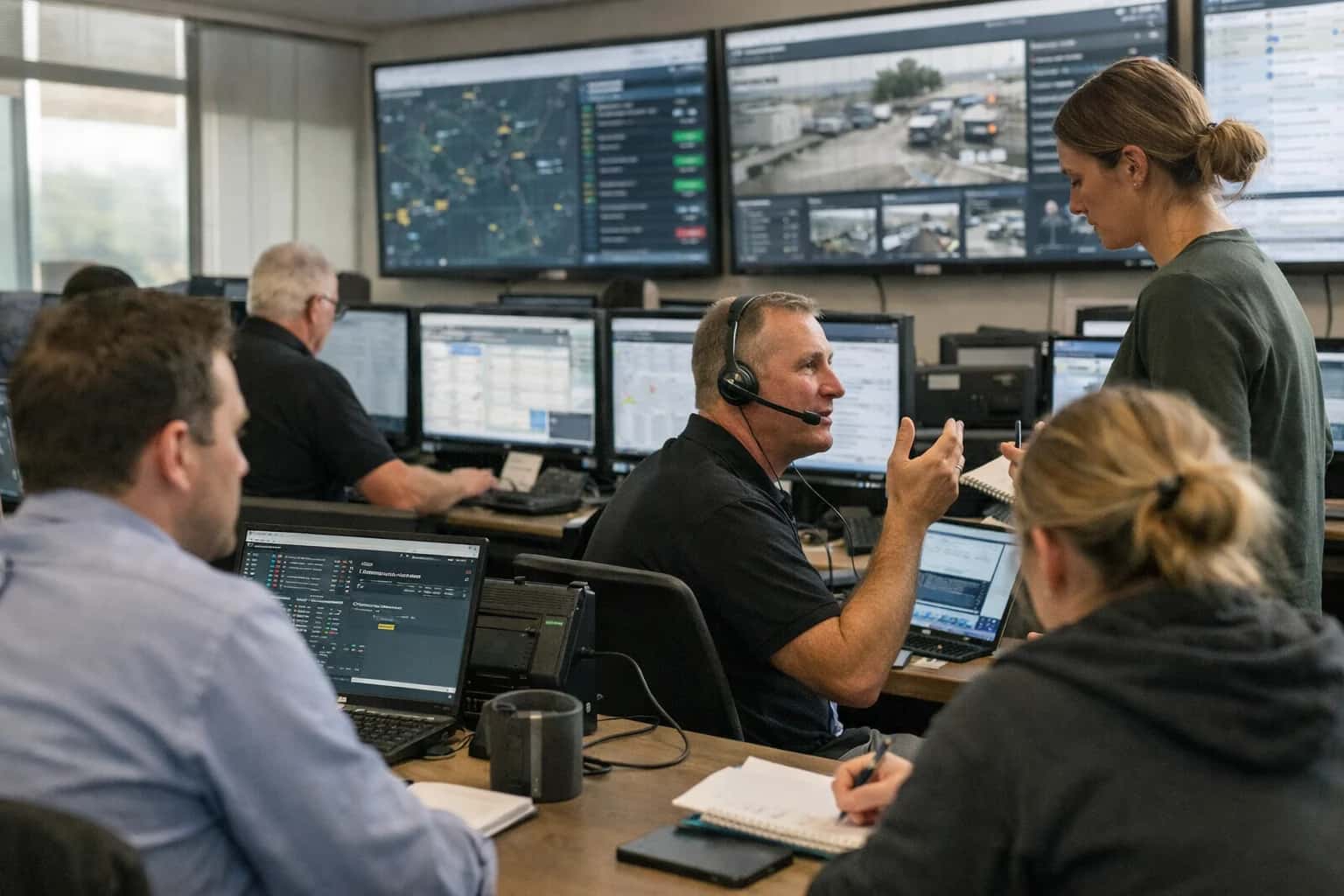
COMPLEXITY AT SCALE
The Challenge of Modern Tactical Planning
Multi-agent AI systems generate and stress-test tactical plans faster than human analysis.
- Simulate adversarial moves using red-team agents trained on TTPs.
- Optimize logistics and resource allocation under dynamic constraints.
- Evaluate mission outcomes across thousands of probabilistic scenarios in hours, not weeks.
This shifts planning from a static, linear process to a dynamic, AI-driven simulation, enabling commanders to anticipate friction points and validate courses of action before execution.
Built for secure, air-gapped environments, these systems integrate with existing C2 platforms to provide decision support without data exfiltration risk. Explore our broader capabilities in Secure Multi-Modal AI Integration and AI-Enhanced Command and Control (C2) Systems.
TACTICAL ADVANTAGE
Operational Outcomes Delivered
Our multi-agent systems for tactical planning are engineered to deliver measurable improvements in decision speed, plan robustness, and operational resilience. We focus on concrete outcomes that enhance mission effectiveness and reduce risk.
01
Accelerated Course of Action (COA) Generation
Deploy collaborative agent networks that generate and evaluate thousands of potential tactical plans in minutes, compressing the planning cycle from days to hours. Specialized agents simulate logistics, adversarial counter-moves, and environmental constraints to surface optimal options.
80%
Faster Planning
1000x
More Scenarios Evaluated
02
Enhanced Plan Robustness & Risk Mitigation
Leverage adversarial agent debate frameworks to stress-test plans against a wide spectrum of red-team scenarios and unexpected contingencies. This identifies critical vulnerabilities and single points of failure before execution, leading to more resilient operations.
60%
Higher Plan Survivability
>95%
Critical Flaw Detection
03
Real-Time Dynamic Replanning
Enable continuous plan adaptation with agents that monitor live intelligence, sensor feeds, and battlefield events. The system autonomously recommends and validates adjustments to the tactical plan, keeping commanders inside the adversary's OODA loop.
< 2 min
Replan Latency
24/7
Operational Monitoring
04
Reduced Commander Cognitive Load
Transform complex, multi-source data into synthesized situational awareness and prioritized recommendations. AI agents handle data fusion and preliminary analysis, allowing command staff to focus on high-level judgment and decisive action.
70%
Data Overhead Reduction
Explainable
AI Recommendations
06
Interoperable Coalition Planning
Architect multi-agent systems with standardized communication protocols and data translation layers that enable secure collaboration and plan synchronization between allied C2 systems, overcoming technical and procedural barriers for joint operations.
NATO STANAG
Compliance
Cross-Domain
Data Sharing
From Concept to Operational Deployment
Structured Development and Deployment Timeline
A phased, milestone-driven approach to delivering a secure, tested Multi-Agent System for Tactical Planning, ensuring alignment with operational requirements and strict security protocols.
| Phase & Key Activities | Duration | Deliverables | Client Engagement |
|---|---|---|---|
Phase 1: Requirements & Architecture | 2-3 weeks | Technical Design Document (TDD), Threat Model, Agent Role Definitions | Weekly workshops, requirement sign-off |
Phase 2: Core Agent Development & Simulation | 4-6 weeks | Specialized Agent Prototypes (Logistics, Adversarial, etc.), Internal Simulation Environment | Bi-weekly demos, feedback on agent behavior |
Phase 3: Integration & Secure Testing | 3-4 weeks | Integrated Multi-Agent Platform, Red Team Assessment Report, Performance Benchmarks | Security review, acceptance of test results |
Phase 4: Deployment & Operator Training | 2-3 weeks | Deployed System in Staging/Production, Comprehensive Documentation, Training Materials | Final acceptance, key personnel training sessions |
Total Project Timeline | 11-16 weeks | Fully Operational Multi-Agent Planning System | Continuous collaboration via secure channels |
Ongoing Support & Evolution | Post-deployment | Optional SLA for Maintenance, Model Updates, and Threat Intelligence Integration | Quarterly reviews, incident response on-call |
TACTICAL PLANNING SOLUTIONS
Primary Applications in Defense and Intelligence
Our multi-agent systems are engineered to generate, stress-test, and optimize complex tactical plans, providing command and control (C2) decision-makers with a decisive advantage in contested environments.
DEFENSE AND NATIONAL INTELLIGENCE AI
Multi-Agent Systems for Tactical Planning
Deploy collaborative AI agents that simulate, debate, and optimize complex tactical plans for secure command and control.
Our multi-agent systems (MAS) architecture creates a digital command staff of specialized AI agents that collaborate to generate and stress-test tactical plans. This approach delivers superior decision support by partitioning complex mission variables—like logistics, terrain, and adversary intent—among distinct digital workers that debate outcomes before synthesizing a unified recommendation.
Move from linear planning to dynamic simulation, evaluating thousands of potential courses of action in hours, not weeks.
- Adversarial Simulation: Deploy red-team agents that model enemy tactics and counter-moves to expose plan vulnerabilities.
- Logistics Optimization: Specialized agents autonomously solve for supply routes, resource allocation, and timing under constraints.
- Outcome Probability Scoring: Each proposed course of action receives a quantified risk and success score based on multi-agent debate and historical data.
- Secure, Air-Gapped Deployment: Systems are engineered for accredited, on-premise environments using hardware-based
Trusted Execution Environments (TEEs).
Integrate with existing Command and Control (C2) platforms and Geospatial Intelligence AI Analytics to create a closed-loop planning system. This reduces the planning cycle for complex operations by 70% and provides commanders with explainable, data-driven recommendations, hardening your decision-making against cognitive overload and bias. For foundational security, explore our Confidential Computing for AI Workloads service.
Enabling Efficiency, Speed & Accuracy
Intelligent Analysis, Decision & Execution
We build AI systems for teams that need search across company data, workflow automation across tools, or AI features inside products and internal software.
Talk to Us
Search across company data
Give teams answers from docs, tickets, runbooks, and product data with sources and permissions.
Useful when people spend too long searching or get different answers from different systems.
Enterprise searchRAGPermissions
Read more
Automate internal workflows
Use AI to route work, draft outputs, trigger actions, and keep approvals and logs in place.
Useful when repetitive work moves across multiple tools and teams.
AI agentsWorkflow automationGovernance
Read more
Add AI to products and internal tools
Build assistants, guided actions, or decision support into the software your team or customers already use.
Useful when AI needs to be part of the product, not a separate tool.
AI integrationDecision supportModel routing
Read moreMulti-Agent Systems for Tactical Planning
Frequently Asked Questions
Get answers to common questions about our process, security, and outcomes for developing collaborative multi-agent AI systems for command and control decision support.
Our engagement follows a structured 4-phase process: 1) Requirements & Scenario Modeling (1-2 weeks): We work with your SMEs to define agent roles, adversarial moves, and success metrics. 2) Architecture & Agent Design (2-3 weeks): We design the inter-agent communication protocols, decision-making logic, and simulation environment. 3) Development & Integration (3-6 weeks): We build, train, and integrate the specialized agents with your existing C2 systems or data sources. 4) Validation & Stress-Testing (2 weeks): We run the system through rigorous adversarial simulations and red team exercises to validate plan robustness. Most projects move from kickoff to operational prototype in 8-12 weeks.

About the author
Prasad Kumkar
CEO & MD, Inference Systems
Prasad Kumkar is the CEO & MD of Inference Systems and writes about AI systems architecture, LLM infrastructure, model serving, evaluation, and production deployment. Over 5+ years, he has worked across computer vision models, L5 autonomous vehicle systems, and LLM research, with a focus on taking complex AI ideas into real-world engineering systems.
His work and writing cover AI systems, large language models, AI agents, multimodal systems, autonomous systems, inference optimization, RAG, evaluation, and production AI engineering.
LinkedIn
Limited slotsGet a Free AI Consultation
Partnered with leading AI, data, and software stack.





How We Work
Custom AI workflows for your Business
One-fit-all AI don't work for modern businesses. At Inferensys, we aim to understand your business & custom requirements; which we use to define most efficient agentic workflows, the data, and the tools for your business.
01
Review the use case
We understand the task, the users, and where AI can actually help.
Read more02
Pick the right approach
We define what needs search, automation, or product integration.
Read more03
Build the first useful version
We implement the part that proves the value first.
Read more04
Improve from there
We add the checks and visibility needed to keep it useful.
Read moreThe first call is a practical review of your use case and the right next step.
Talk to Us