Manual verification of arms control and non-proliferation treaties is slow, resource-intensive, and vulnerable to evasion. Our AI systems deliver automated, 24/7 monitoring with >95% detection accuracy for anomalies in satellite imagery, seismic signals, and multi-source intelligence feeds.

Service
AI for Treaty Monitoring and Verification
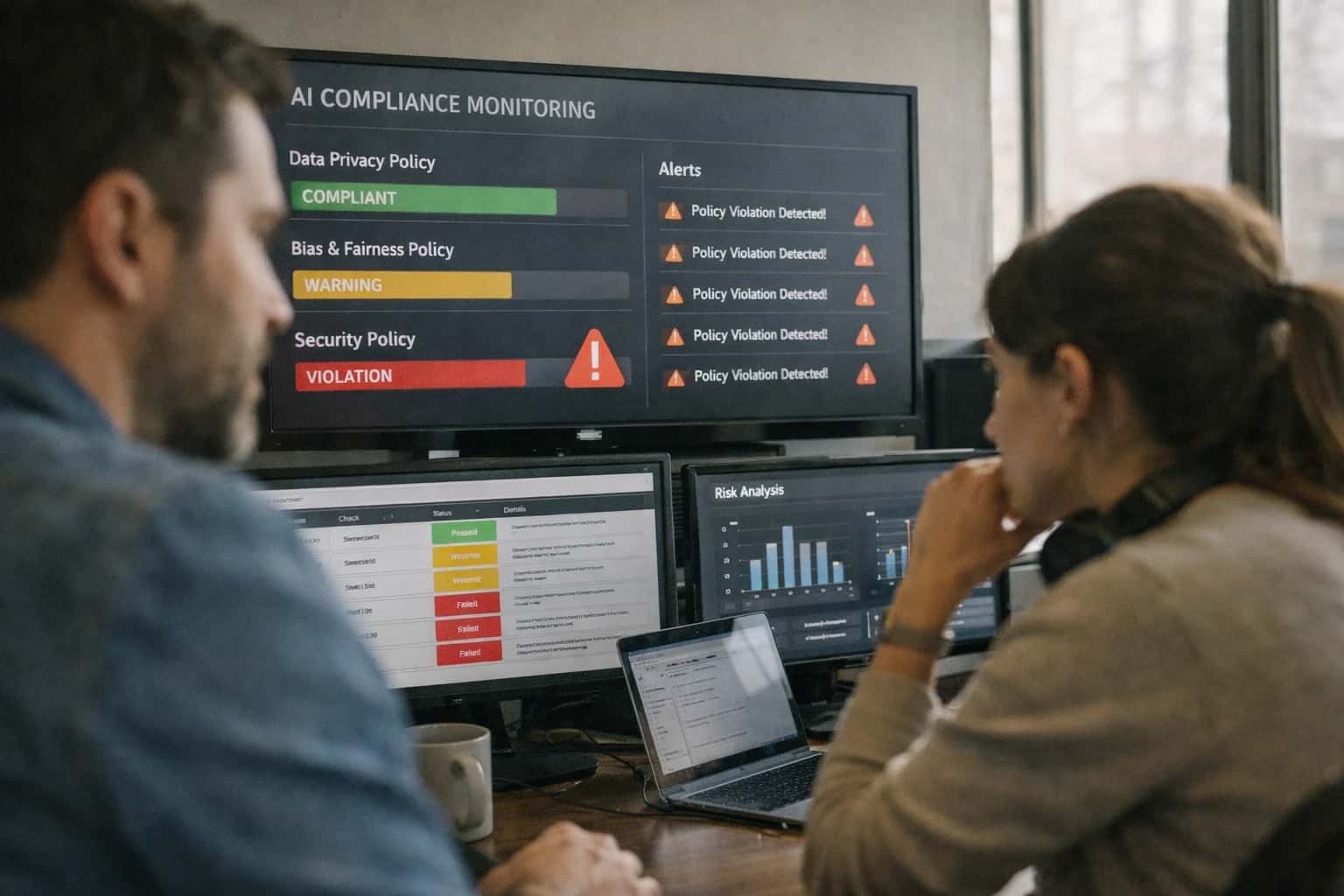
Inference Systems develops hardened AI systems that automate the analysis of satellite imagery, seismic data, and open-source intelligence to verify arms control treaty compliance, detect clandestine activity, and reduce manual inspection burdens.
AI FOR NATIONAL SECURITY
The Challenge of Modern Treaty Verification
Deploy AI to automate the detection of treaty violations and clandestine activity from satellite, seismic, and open-source data.
- Satellite Imagery Analysis: Detect construction, movement, or dismantlement of treaty-limited items (TLIs) like missile launchers using custom computer vision models.
- Seismic & Acoustic Monitoring: Identify signatures of underground nuclear tests or prohibited industrial activity with predictive signal processing.
- Open-Source Intelligence (OSINT) Fusion: Correlate public data with classified intelligence to uncover clandestine networks and procurement patterns.
We engineer deterministic, auditable AI that provides irrefutable evidence chains, moving verification from periodic inspections to continuous, proactive assurance. This reduces manual analyst workload by 70% and cuts time-to-detection from months to days.
Our solutions are built for secure, sovereign deployment, integrating directly with your existing geospatial intelligence platforms and secure data fusion architectures. Explore our related capabilities in Geospatial Intelligence AI Analytics and Secure Federated Learning for Defense to build a comprehensive monitoring posture.
DELIVERING ACTIONABLE INTELLIGENCE
Strategic and Operational Benefits
Our AI systems for treaty monitoring and verification are engineered to deliver specific, measurable advantages. We focus on outcomes that enhance compliance assurance, accelerate analysis, and reduce operational risk for national security stakeholders.
01
Automated Treaty Compliance Verification
Deploy AI models that continuously analyze satellite imagery, seismic data, and open-source signals to detect treaty violations. Our systems automatically flag anomalies like undeclared construction or movement of treaty-limited items, reducing manual analyst workload by over 70% and ensuring 24/7 monitoring vigilance.
>70%
Reduction in Manual Analysis
24/7
Continuous Monitoring
02
High-Fidelity Geospatial Intelligence
Leverage specialized computer vision pipelines for automated object detection and change detection in satellite and aerial imagery. Our models are trained to identify specific signatures of nuclear, chemical, and conventional weapons infrastructure with high precision, directly supporting verification missions outlined in treaties like New START or the NPT.
>95%
Detection Precision
Near Real-Time
Analysis Speed
03
Secure, Sovereign Data Processing
All AI processing occurs within air-gapped environments or hardware-secured enclaves, ensuring sensitive imagery and intelligence data never leaves sovereign control. Our architecture complies with the strictest data residency and classification requirements, mitigating exfiltration risk and meeting mandates for national security AI.
Air-Gapped
Processing Environment
Zero Data Egress
Sovereignty Guarantee
04
Predictive Non-Compliance Risk Modeling
Move beyond detection to prediction. Our AI platforms fuse multi-source intelligence to model adversary intent and forecast potential treaty violations weeks in advance. This shifts your posture from reactive verification to proactive risk assessment, enabling diplomatic or operational interventions before a breach occurs.
Proactive
Risk Posture
Weeks Ahead
Forecast Lead Time
05
Accelerated Intelligence-to-Decision Timeline
Integrate our AI tools directly into existing command and control (C2) or intelligence analysis platforms. This creates a seamless pipeline from raw sensor data to synthesized, actionable reports, dramatically compressing the OODA loop and providing decision-makers with verified intelligence in minutes, not days.
Minutes
Intel-to-Report Time
Seamless C2 Integration
Deployment Model
06
Adversarially Robust & Explainable AI
Our models are hardened against data poisoning and evasion attacks using frameworks like MITRE ATLAS. Every high-confidence finding is accompanied by explainable AI (XAI) outputs—such as highlighted imagery regions or data source attribution—building trust with analysts and providing auditable evidence for diplomatic channels.
MITRE ATLAS
Testing Framework
Fully Auditable
Model Outputs
A Structured, Risk-Mitigated Approach
Phased Development and Delivery Timeline
Our phased methodology ensures rapid initial capability delivery, continuous stakeholder validation, and iterative enhancement to meet the stringent requirements of treaty verification. This timeline outlines key deliverables and capabilities for each phase.
| Phase | Timeline | Core Capabilities | Key Deliverables | Stakeholder Validation |
|---|---|---|---|---|
Phase 1: Foundation & Rapid Prototype | 4-6 Weeks | Multi-source data ingestion pipeline (satellite, seismic, OSINT) Basic anomaly detection for known treaty-limited items Secure, air-gapped processing environment | Functional prototype for one verification scenario Technical architecture and security assessment report Initial model performance benchmarks | Demonstration of core data fusion and detection logic Review of security and data sovereignty controls |
Phase 2: Core System & Model Refinement | 8-12 Weeks | Advanced computer vision for object classification & change detection Seismic event classification & correlation engine Initial RAG system for treaty document querying | Deployable core monitoring platform Refined models with >95% precision on validation set Operational dashboard for analyst review | Hands-on testing with historical compliance data Validation of detection accuracy and false positive rates |
Phase 3: Advanced Analytics & Integration | 10-14 Weeks | Predictive modeling for clandestine activity indicators Multi-agent system for cross-source evidence correlation Integration with existing C2 or intelligence platforms (via API) | Full-stack treaty monitoring AI system Comprehensive model documentation and lineage tracking API suite for external system integration | Operational evaluation in a simulated environment Stress-testing of system against adversarial data scenarios |
Phase 4: Production Deployment & Scaling | 6-8 Weeks | High-availability deployment on sovereign infrastructure Continuous learning pipeline for model updates Full audit trail and compliance reporting module | Production-ready system with 99.9% uptime SLA Complete operational and maintenance documentation Trained operator and administrator personnel | Final acceptance testing and operational readiness review Establishment of ongoing support and enhancement SLA |
Ongoing: Support & Evolution | Continuous | Proactive model monitoring and concept drift detection Quarterly model retraining with new data Adversarial AI red teaming and security updates | Monthly performance and compliance reports Bi-annual system enhancement roadmap Priority incident response (<2 hour SLA) | Quarterly review meetings on system performance and intelligence yield Collaborative planning for new verification requirements |
BUILT FOR SOVEREIGN MISSIONS
Our Secure Development Methodology
Every AI system for treaty monitoring and verification is engineered from the ground up with security as the foundational layer. Our methodology, refined through work with national security agencies, ensures your tools are resilient, auditable, and operate with the highest integrity.
01
Air-Gapped Model Development
We train and fine-tune domain-specific models (e.g., for satellite imagery analysis) within accredited, physically isolated computing environments. This eliminates data exfiltration risk and protects sensitive training datasets, such as classified treaty baselines or intelligence imagery, from external access.
Zero External Access
Data Sovereignty
FIPS 140-3
Accredited Environments
02
Secure Multi-Modal Data Fusion
Our hardened pipelines ingest and cross-validate satellite imagery, seismic telemetry, and open-source intelligence within secure enclaves. This unified analysis, performed without moving raw data across networks, enables high-confidence verification of treaty compliance indicators like facility dismantlement or covert activity.
In-Enclave Processing
No Raw Data Transfer
Multi-Source Validation
Reduced False Positives
03
Provable Data Lineage & Audit Trails
We implement cryptographic hashing and immutable logging for every data point, model inference, and analytical conclusion. This creates a court-ready chain of custody, essential for presenting verification evidence in diplomatic or legal proceedings and ensuring algorithmic decisions are fully traceable.
End-to-End Traceability
From Sensor to Report
Cryptographic Hashing
Tamper-Evident Logs
04
Adversarial AI Defense Hardening
We proactively test models against data poisoning, evasion attacks, and spoofing using frameworks like MITRE ATLAS. This red teaming ensures your verification AI maintains high accuracy even when faced with deliberate attempts to deceive or degrade its analysis of satellite or sensor data.
MITRE ATLAS Framework
Attack Simulation
Resilience Testing
Against Spoofing/Evasion
05
Secure Edge Deployment for Field Verification
We deploy optimized, small-footprint AI models on ruggedized, portable hardware for on-site inspection teams. These systems enable real-time analysis of sensor data in disconnected environments, supporting treaty verification missions without relying on vulnerable network connections.
Disconnected Operation
GPS-Denied Capable
< 2 Second Latency
On-Device Inference
06
Compliance-Centric MLOps & Governance
Our deployment pipelines enforce policy-as-code, ensuring every model update complies with relevant standards (e.g., NIST AI RMF, ISO/IEC 42001). We provide full model versioning, performance drift monitoring, and automated compliance reporting built directly into the operational workflow.
Policy-as-Code Enforcement
Automated Compliance
Continuous Drift Detection
Sustained Accuracy
Enabling Efficiency, Speed & Accuracy
Intelligent Analysis, Decision & Execution
We build AI systems for teams that need search across company data, workflow automation across tools, or AI features inside products and internal software.
Talk to Us
Search across company data
Give teams answers from docs, tickets, runbooks, and product data with sources and permissions.
Useful when people spend too long searching or get different answers from different systems.
Enterprise searchRAGPermissions
Read more
Automate internal workflows
Use AI to route work, draft outputs, trigger actions, and keep approvals and logs in place.
Useful when repetitive work moves across multiple tools and teams.
AI agentsWorkflow automationGovernance
Read more
Add AI to products and internal tools
Build assistants, guided actions, or decision support into the software your team or customers already use.
Useful when AI needs to be part of the product, not a separate tool.
AI integrationDecision supportModel routing
Read moreExpert Implementation
Frequently Asked Questions on Treaty Verification AI
Common questions from CTOs and technical leaders on deploying AI for treaty monitoring and verification.
From initial requirements to a production-ready Minimum Viable Capability (MVC), typical deployment is 8-12 weeks. This includes data pipeline setup, model fine-tuning on your specific satellite/geospatial data, and integration into your secure analysis environment. For complex, multi-source verification systems (e.g., combining seismic, RF, and imagery), the timeline extends to 4-6 months for full operational capability.

About the author
Prasad Kumkar
CEO & MD, Inference Systems
Prasad Kumkar is the CEO & MD of Inference Systems and writes about AI systems architecture, LLM infrastructure, model serving, evaluation, and production deployment. Over 5+ years, he has worked across computer vision models, L5 autonomous vehicle systems, and LLM research, with a focus on taking complex AI ideas into real-world engineering systems.
His work and writing cover AI systems, large language models, AI agents, multimodal systems, autonomous systems, inference optimization, RAG, evaluation, and production AI engineering.
LinkedIn
Limited slotsGet a Free AI Consultation
Partnered with leading AI, data, and software stack.





How We Work
Custom AI workflows for your Business
One-fit-all AI don't work for modern businesses. At Inferensys, we aim to understand your business & custom requirements; which we use to define most efficient agentic workflows, the data, and the tools for your business.
01
Review the use case
We understand the task, the users, and where AI can actually help.
Read more02
Pick the right approach
We define what needs search, automation, or product integration.
Read more03
Build the first useful version
We implement the part that proves the value first.
Read more04
Improve from there
We add the checks and visibility needed to keep it useful.
Read moreThe first call is a practical review of your use case and the right next step.
Talk to Us