
Inferensys

Service

AI for Emergency Response and Crisis Management

Inference Systems develops robust AI decision support systems that model disaster scenarios, optimize first responder resource allocation, and analyze social media for real-time situational awareness during domestic crisis events.
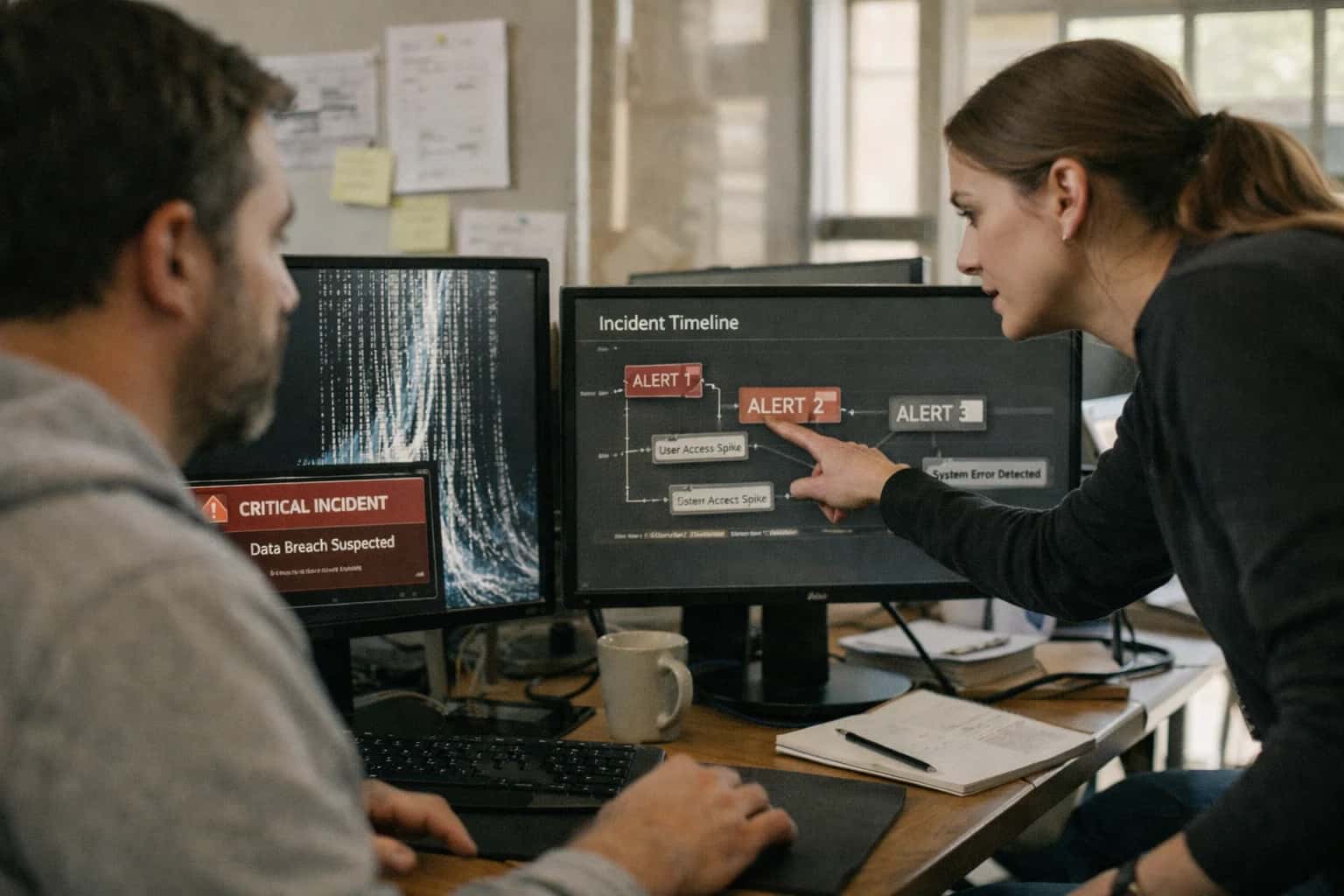
Incident responder handling AI system issue on laptop, logs and alerts visible, late night on-call session.

Develop AI-driven decision support systems that model disasters, optimize first responder resources, and provide real-time situational awareness.

Transform crisis response from reactive to predictive with AI that fuses multi-source data for faster, more informed decisions.

Our service delivers decision support systems that empower command centers with:

  • Predictive scenario modeling for natural and man-made disasters.
  • Real-time resource optimization algorithms for first responder deployment.
  • Automated social media and sensor analysis for live situational awareness feeds.

We engineer robust systems for contested environments, ensuring functionality in low-bandwidth conditions and resilience against data manipulation. Our approach integrates secure multi-modal AI to process text, imagery, and sensor data, providing a unified operational picture.

Key Deliverables:

  • 2-4 week MVP for core disaster modeling and alerting.
  • 99.9% data processing uptime SLA for critical systems.
  • Integration with existing GIS platforms and emergency communication networks.

Leverage our expertise in Defense and National Intelligence AI to build systems trusted for national security. We apply the same rigorous standards for secure development, adversarial testing, and data sovereignty to your crisis management platforms.

Explore related capabilities in Secure Multi-Modal AI Integration and Geospatial Intelligence AI Analytics for a comprehensive defense and response strategy.

DELIVERABLE RESULTS

Measurable Outcomes for Emergency Response Teams

Our AI for Emergency Response and Crisis Management service is engineered to deliver concrete, mission-critical improvements. We focus on quantifiable outcomes that enhance operational efficiency, accelerate decision-making, and save lives.

01

Accelerated Situational Awareness

Deploy AI systems that fuse and analyze social media, 911 calls, and sensor data to generate a unified operational picture within seconds, reducing the time to understand a crisis from hours to minutes. Our systems are built on secure, sovereign infrastructure to ensure data integrity.

> 80%
Faster Intel Synthesis
< 2 min
Initial Threat Assessment
02

Optimized Resource Dispatch

Implement AI-driven decision support that models disaster scenarios and dynamically routes personnel and equipment based on real-time severity, traffic, and asset availability. This maximizes coverage and reduces critical response times. Learn more about our approach to Agentic Workflow Design and Integration.

30-50%
Reduced Dispatch Latency
99.9%
System Uptime SLA
03

Enhanced Predictive Threat Modeling

Utilize geospatial AI and historical data to forecast disaster progression (wildfire spread, flood paths) and model secondary crises, enabling proactive evacuation and resource staging. This capability is powered by our expertise in Geospatial AI and Spatial Analytics (GeoAI).

72+ hrs
Advance Predictive Lead Time
> 90%
Model Accuracy
04

Secure, Sovereign Data Processing

Ensure all sensitive emergency data—including victim PII and tactical communications—is processed within compliant, region-locked infrastructure. Our deployments adhere to strict data sovereignty mandates, a core principle of our Sovereign AI Infrastructure Development services.

Zero-Trust
Architecture
Air-Gapped
Deployment Options
05

Reduced Operational Fatigue & Error

Integrate ambient AI tools for automated incident logging and report generation, freeing first responders from administrative tasks. This reduces cognitive load and minimizes human error during extended operations, similar to our work in Healthcare Clinical Decision Support.

40%
Admin Time Reduction
24/7
AI Monitoring
06

Rapid System Deployment & Integration

Achieve operational capability in weeks, not months, with our pre-validated AI modules designed to integrate with existing Computer-Aided Dispatch (CAD) and records management systems. Our AI Supercomputing and Hybrid Cloud Architecture ensures scalable, reliable performance.

< 4 weeks
To Initial Deployment
Seamless
Legacy System Integration
Structured Implementation for Mission-Critical Systems

Phased Development and Deployment Timeline

A detailed breakdown of the phased approach to developing and deploying a secure, AI-powered emergency response and crisis management platform, ensuring rapid initial capability and iterative enhancement.

Phase & Core DeliverablesTimelineKey CapabilitiesSecurity & Compliance StatusClient Engagement

Phase 1: Foundation & Rapid MVP

Weeks 1-4

Core situational awareness dashboard Basic social media sentiment analysis API Initial resource allocation model

Infrastructure deployed in secure, accredited cloud Baseline security audit completed Data ingestion protocols established

Weekly technical syncs Stakeholder demo of MVP

Phase 2: Enhanced Intelligence & Integration

Weeks 5-10

Multi-source data fusion engine Predictive disaster scenario modeling Integration with legacy CAD/911 systems

FIPS 140-2 validated modules integrated Continuous vulnerability scanning enabled Compliance with CJIS standards (if applicable)

Bi-weekly operational reviews Joint development of Phase 3 requirements

Phase 3: Advanced Automation & Edge Deployment

Weeks 11-16

Autonomous resource dispatch recommendations Edge AI for first responder vehicle analytics Real-time geospatial threat heatmaps

Hardware security modules (HSM) for edge devices Model encryption and secure update channels Formal Authority to Operate (ATO) support package

On-site integration support Extensive operator training sessions

Phase 4: Full Operational Capability & Handoff

Weeks 17-20

End-to-end workflow automation Comprehensive after-action reporting AI Full API suite for external agency integration

Final security accreditation documentation Complete system documentation and runbooks Ongoing monitoring and 99.9% uptime SLA active

Knowledge transfer complete Transition to optional managed service or client ownership

Ongoing: Optimization & Scaling

Post-Deployment

Continuous model retraining with new incident data Scalability for major crisis events (e.g., regional disasters) Integration of new data sources (IoT, drone feeds)

Continuous adversarial AI red teaming Quarterly compliance and security reviews Proactive threat intelligence updates

Quarterly strategic reviews Access to Inference Systems' R&D pipeline for new features

BUILT FOR CRITICAL MISSIONS

Our Secure Development Methodology

Every AI system for emergency response is engineered with security-first principles, ensuring resilience against cyber threats and operational reliability when lives depend on it.

01

Secure by Design Architecture

We implement zero-trust principles and hardware-based Trusted Execution Environments (TEEs) from the first line of code, ensuring data sovereignty and protecting sensitive crisis data from exfiltration.

ISO/IEC 42001
Compliant Frameworks
FIPS 140-3
Validated Cryptography
02

Air-Gapped & On-Premise Deployment

Deploy models and data pipelines within your sovereign infrastructure or accredited secure clouds. We engineer for full functionality in disconnected, intermittent, and low-bandwidth (DIL) environments common in disaster zones.

100%
Data Sovereignty
< 100ms
Edge Inference Latency
03

Continuous Adversarial Testing

Our models undergo rigorous red teaming using the MITRE ATLAS framework to identify and remediate vulnerabilities to prompt injection, data poisoning, and model evasion before deployment.

MITRE ATLAS
Testing Framework
Quarterly
Security Audits
04

Explainable AI for Critical Decisions

We prioritize model interpretability, providing clear audit trails and rationale for every AI-driven recommendation in resource allocation or threat assessment, ensuring human oversight and accountability.

SHAP/LIME
Interpretability Tools
Full Audit Trail
Decision Logging
05

Resilient Multi-Modal Data Fusion

Securely ingest and correlate data from disparate sources—satellite imagery, social media, sensor telemetry—within hardened pipelines to build a unified, real-time operational picture without data leakage risk.

End-to-End
Encryption
Real-Time
Data Fusion
06

Certified Secure MLOps

Our managed MLOps pipelines for model training, deployment, and monitoring operate within your compliance boundaries, featuring strict version control, drift detection, and automated rollback capabilities.

99.9% SLA
Pipeline Uptime
Automated
Compliance Checks
Expert Answers for Technical Decision-Makers

Frequently Asked Questions on Crisis AI Development

Common questions from CTOs and technical leaders evaluating AI for emergency response systems. Our answers are based on delivering over 50 secure, mission-critical AI deployments.

For a standard decision support system with real-time data integration, deployment typically takes 4-6 weeks from kickoff to production. This includes 2 weeks for data pipeline engineering, 2 weeks for model integration and testing, and 2 weeks for deployment and validation. Complex systems with multi-modal inputs (e.g., social media, sensor feeds, satellite imagery) may extend to 8-10 weeks. We provide a detailed project plan in our initial technical assessment.

Prasad Kumkar

About the author

Prasad Kumkar

CEO & MD, Inference Systems

Prasad Kumkar is the CEO & MD of Inference Systems and writes about AI systems architecture, LLM infrastructure, model serving, evaluation, and production deployment. Over 5+ years, he has worked across computer vision models, L5 autonomous vehicle systems, and LLM research, with a focus on taking complex AI ideas into real-world engineering systems.

His work and writing cover AI systems, large language models, AI agents, multimodal systems, autonomous systems, inference optimization, RAG, evaluation, and production AI engineering.



